Find the Best Trenchless Sewer Repair Companies for Your Business
No obligation • Fast responses • Nationwide coverage

Why you can trust Search a Plumber
Search a Plumber is a leading United States resource for finding and evaluating professional plumbing services. Our team researches licensing, experience, and customer feedback to create unbiased, fact-driven overviews. Companies cannot pay to change ratings or placement, ensuring homeowners get trustworthy information.
Search providers near you
Find Trenchless Sewer Repair Companies near you
A damaged sewer line is a major headache for any homeowner, but the thought of traditional repair-with its massive trenches, destroyed landscaping, and lengthy disruption-can be even more daunting. Trenchless sewer repair offers a modern, less invasive solution. This advanced method allows professionals to repair or replace underground pipes with minimal digging, preserving your yard, driveway, and peace of mind. Understanding the two main techniques, pipe lining and pipe bursting, can help you make an informed decision and connect with the right local specialist for your specific situation.
Search providers near you
What is Trenchless Sewer Repair?
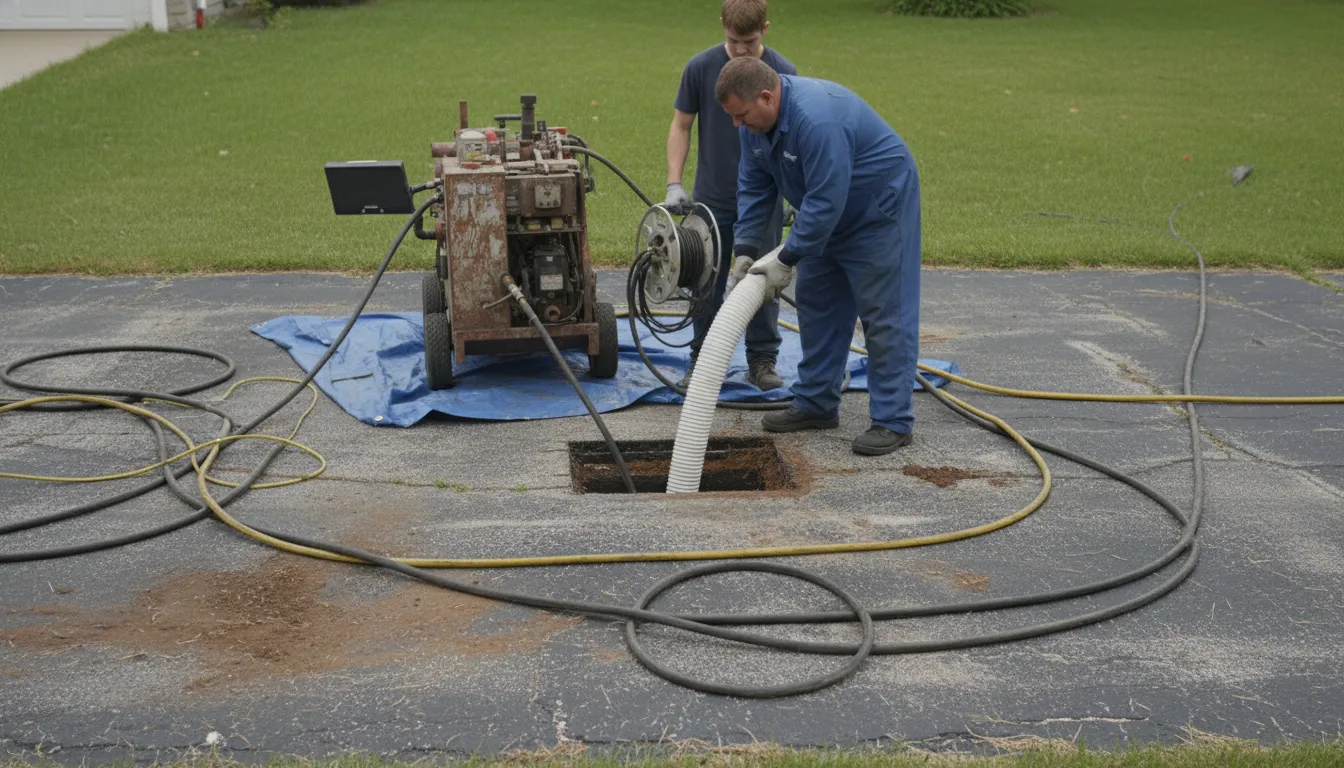
Trenchless sewer repair, often called "no-dig" plumbing, is a collection of techniques used to fix or replace underground sewer and drain pipes without the need for extensive excavation. Instead of digging a long, deep trench to access the entire pipe, technicians use strategically placed access points-usually at the beginning and end of the damaged section-to perform the repair from inside the pipe itself.
The core principle is to minimize surface disruption. This means your lawn, garden, driveway, and walkways remain largely intact. The process is faster, cleaner, and often more cost-effective in the long run when you factor in the savings on landscape restoration and reduced labor 1. It's a sophisticated approach that relies on specialized equipment, including high-resolution video cameras for inspection and powerful machinery to install new pipe linings or pull through replacement pipes.
The Two Main Trenchless Methods: Lining vs. Bursting
Not all sewer problems are the same, and neither are trenchless solutions. The two primary methods, cured-in-place pipe (CIPP) lining and pipe bursting, serve different purposes. Choosing the right one depends on the condition of your existing pipe, your goals for the new line, and your budget.
Pipe Lining (Cured-In-Place Pipe / CIPP)
How It Works: Pipe lining creates a new pipe inside your old one. A flexible, resin-saturated liner tube is inserted through an access point and fed into the damaged pipe. Once in position, the liner is inflated using air or water pressure, pressing it tightly against the interior walls of the host pipe. The resin is then cured, typically using hot water or UV light, hardening it into a seamless, jointless "pipe-within-a-pipe".
-
Best For: This method is ideal for pipes with minor to moderate damage. It's excellent for sealing:
- Cracks and fractures
- Small holes and leaks
- Joint failures
- Corrosion and deterioration
- Intrusions from tree roots (once cleared)
-
Key Advantages:
- Minimal Access: Often requires only one access pit.
- Highly Disruption-Free: The least invasive trenchless option.
- Smooth Interior: The new lining is seamless, which can improve flow and reduce future clogging.
- Corrosion Resistance: The resin materials are inert and resist chemical and root intrusion.
-
Considerations:
- Slight Diameter Reduction: The new liner takes up space, slightly reducing the internal diameter of the pipe.
- Not for Collapsed Pipes: The old pipe must be structurally sound enough to act as a host; it cannot be fully collapsed or severely misaligned.
- Curing Time: The hardening process can add 12-24 hours to the project timeline 2.
Pipe Bursting
How It Works: Pipe bursting is a true replacement method. A conical bursting head, attached to a cable and a new high-density polyethylene (HDPE) pipe, is pulled through the old, damaged pipe. As it moves, the bursting head fractures the old pipe outward into the surrounding soil. Simultaneously, it pulls the new, durable HDPE pipe into the space left behind, completely replacing the old line 3.
-
Best For: This is the solution for severely compromised pipes. Choose pipe bursting for:
- Fully collapsed or crushed sections
- Pipes with severe bellies or misalignment
- When you want to upsize to a larger diameter pipe
- Old, brittle materials like Orangeburg or clay that are beyond repair
-
Key Advantages:
- Complete Replacement: You get a brand-new pipe with no remnants of the old, failed one.
- Can Upsize: You can often replace an old, small pipe with a larger one to improve capacity.
-
Superior Longevity: HDPE pipe has a projected lifespan of 100+ years and is highly resistant to roots and corrosion.
- No Diameter Loss: The new pipe is typically the same size or larger.
-
Considerations:
- Two Access Points Required: Requires an insertion pit and a pulling pit.
- Slightly More Invasive: While still far less disruptive than traditional digging, it involves more excavation than lining.
- Equipment-Intensive: The process requires powerful hydraulic equipment to pull the bursting head.
Find the perfect trenchless sewer repair companies for your needs
Get personalized recommendations and expert advice
Cost Factors for Trenchless Repairs
Understanding the cost structure of trenchless sewer rehabilitation helps in budgeting and comparing quotes. Pricing is primarily calculated on a per-linear-foot basis, but the final total depends on several variables.
- Method Used: Pipe lining typically ranges from $80 to $250 per foot, while pipe bursting can range from $60 to $300 per foot 4 5 6. Bursting can sometimes be more expensive due to the need for two access pits and more complex equipment, but this isn't always the case.
- Project Length & Depth: The total length of pipe being repaired is the biggest driver of cost. Deeper pipes may require more specialized equipment.
- Pipe Condition & Location: Severe damage, multiple bends, or difficult access can increase labor time and complexity. The location under a driveway, garden, or mature tree can also influence the approach and cost.
- Pipe Material: The existing pipe material (clay, cast iron, PVC) can affect the difficulty of the lining or bursting process.
- Regional Labor Rates: Costs vary across the country based on local market conditions.
A typical trenchless repair project in the US can range from $3,000 for a shorter, straightforward job to $20,000 or more for extensive repairs on long lines 7 8. It's crucial to get a detailed, itemized quote that includes a video inspection, which is the only way to accurately diagnose the problem and recommend the correct solution.
How to Choose: Lining or Bursting?
Making the right choice between sewer pipe lining and pipe bursting comes down to a professional assessment of a few key factors:
- The Condition of Your Existing Pipe: This is the most critical factor. A video inspection will reveal if the pipe is intact enough to host a liner (choose lining) or if it's so broken that it needs to be removed (choose bursting).
- Your Goals for the New Pipe: If maintaining or increasing flow capacity is a priority, bursting (with potential upsizing) may be better. If the goal is simply to seal leaks and extend the life of the current line with minimal fuss, lining is often sufficient.
- Property Layout and Access: The location of the sewer line and what lies above it (e.g., a concrete pool deck vs. an open lawn) can determine which method is more practical. Lining often wins where access is extremely limited.
- Long-Term Value: While both methods offer excellent longevity, pipe bursting provides a completely new pipe system with the longest potential lifespan, which can be a significant consideration for long-term homeowners 9 10.
A qualified trenchless specialist will perform a thorough camera inspection and discuss these points with you to recommend the most effective and economical solution for your specific circumstances.
The Trenchless Repair Process: Step by Step
While the specifics vary between lining and bursting, the overall workflow for a professional trenchless sewer repair follows a logical sequence:
- Video Camera Inspection: A flexible, waterproof camera is snaked through the sewer line to pinpoint the exact location, nature, and extent of the damage. This is the essential first step for an accurate diagnosis and quote.
- Cleaning the Line: High-pressure water jetting is used to scour the interior of the pipe, removing debris, roots, and scale to prepare for the repair.
- Creating Access Points: Small, strategic pits are excavated at the start and end points of the repair section. For lining, one pit may suffice; for bursting, two are needed.
- Executing the Repair:
- For Lining: The resin-saturated liner is inverted or pulled into place, inflated, and cured.
- For Bursting: The bursting head and new pipe are fed into the insertion pit and hydraulically pulled through, breaking the old pipe and laying the new one.
- Final Connections & Cleanup: The new liner or pipe is connected to the existing system at the access points. The pits are backfilled, compacted, and the site is cleaned up, leaving your property nearly as it was before.
From start to finish, a typical trenchless repair can be completed in a few days to a week, a fraction of the time required for traditional excavation.
Frequently asked questions
Sources
Footnotes
-
What Is Trenchless Sewer Repair, Replacement And Pipe Relining - https://canyonhillsplumbing.com/what-is-trenchless-sewer-repair-replacement-and-pipe-relining/ ↩
-
Trenchless Sewer Repair In Ventura - https://hansensplumbing.com/trenchless-sewer-repair-ventura-ca/ ↩
-
How Trenchless Sewer Repair Works: A Step-by-Step Breakdown - https://fivestarservicepros.com/blog/how-trenchless-sewer-repair-works-a-step-by-step-breakdown/ ↩
-
Pipe Lining vs. Pipe Bursting: Cost, Lifespan & Best Choice for Your ... - https://www.drainandwater.com/trenchless-plumbing-blog/pipe-lining-cipp/trenchless-sewer-repair-lining/ ↩
-
Cost Comparison: Trenchless vs. Traditional Sewer Line Repair - https://www.advancedtrenchlesssolutions.com/blog/cost-comparison-trenchless-vs-traditional-sewer-line-repair ↩
-
Is Trenchless Sewer Line Repair Cheaper? - AP Plumbing - https://applumbing.com/blog/is-trenchless-sewer-line-repair-cheaper/ ↩
-
How Much Does a Trenchless Sewer Repair Cost? - https://nodig.com/blog/trenchless-technology/how-much-does-a-trenchless-sewer-repair-cost ↩
-
Empower Your Decisions: The Truth Behind Trenchless Pipe Bursting Cost - https://pipelinerpros.com/trenchless-pipe-bursting-cost/ ↩
-
Pipe Bursting vs Pipe Lining: Why Pipe Bursting is Superior - https://www.callmother.com/blogs/pipe-bursting-vs-pipe-lining ↩
-
Trenchless vs. Traditional Sewer Repair in San Diego - https://epoxypipeline.com/blog/trenchless-vs-traditional-sewer-repair-comparison/ ↩