Find the Best Trenchless Sewer Repair Companies for Your Business
No obligation • Fast responses • Nationwide coverage

Why you can trust Search a Plumber
Search a Plumber is a leading United States resource for finding and evaluating professional plumbing services. Our team researches licensing, experience, and customer feedback to create unbiased, fact-driven overviews. Companies cannot pay to change ratings or placement, ensuring homeowners get trustworthy information.
Search providers near you
Best Trenchless Sewer Repair Companies in Montana Ranked
When a sewer line fails, the traditional solution involves extensive excavation-trenching through your yard, driveway, or landscaping to reach the damaged pipe. In Montana, where properties can be expansive and landscapes cherished, this disruptive method is often the last resort. Trenchless sewer repair offers a modern, minimally invasive alternative. This advanced technique repairs or replaces damaged sewer laterals through small access points, saving your property from major disruption. Understanding the methods, regulations, and costs specific to Montana is crucial for homeowners facing sewer line issues. This guide provides the essential information to help you evaluate your options and connect with qualified local specialists who can assess your situation.
How Trenchless Sewer Repair Works
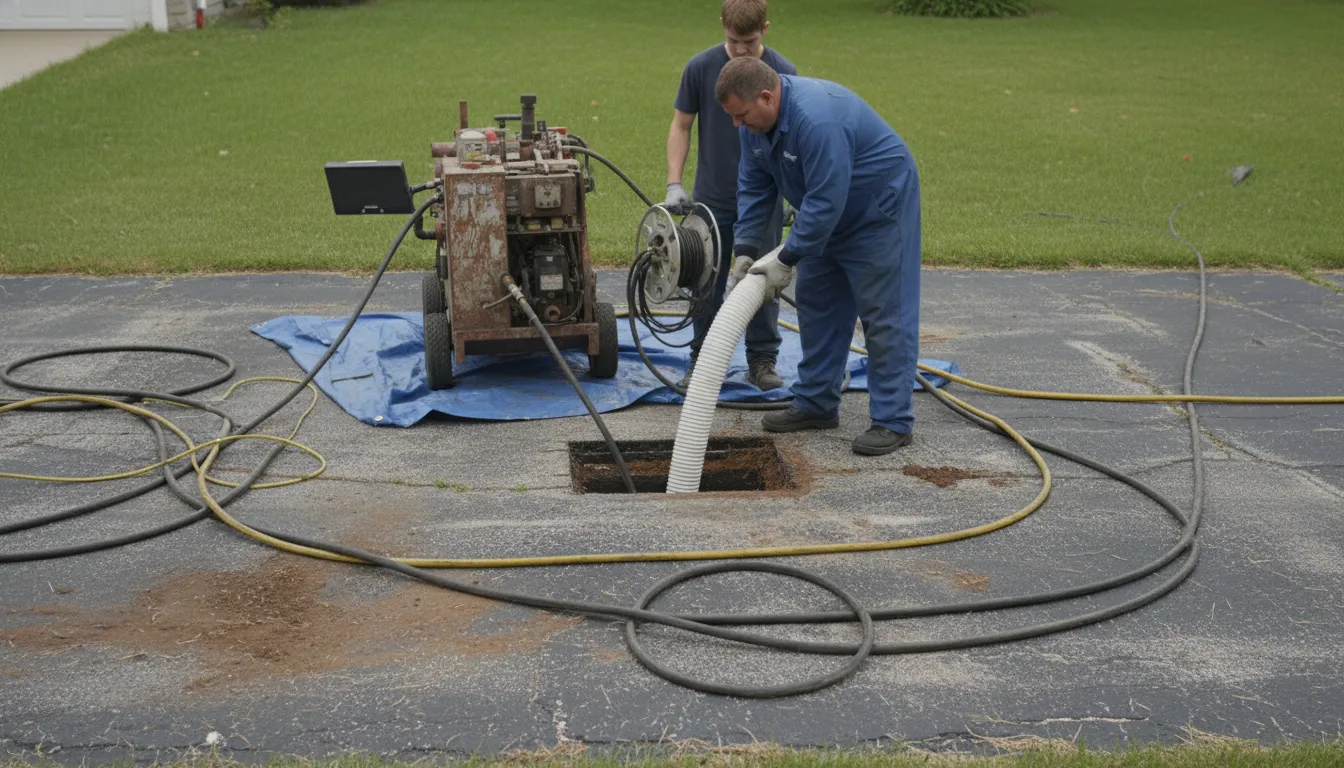
Trenchless technology is a broad term for methods that fix underground pipes with minimal digging. Instead of a long, deep trench, contractors typically need only two small access pits: one at the beginning and one at the end of the damaged section. The repair is performed from within the pipe itself. The two primary methods used in Montana are cured-in-place pipe (CIPP) lining and pipe bursting.
Pipe Lining (CIPP): This method is ideal for pipes that are cracked, leaking, or suffering from root intrusion but are not fully collapsed. A flexible tube coated with a resin-saturated felt liner is inserted into the existing pipe. Using air or water pressure, the liner is inflated to press against the host pipe's interior walls. The resin is then cured, usually with hot water or steam, hardening to form a new, seamless, and jointless pipe within the old one. The result is a corrosion-resistant barrier that can extend the life of your sewer line by decades 1.
Pipe Bursting: This technique is used for complete sewer line replacement when the old pipe is too damaged to be lined. A conical bursting head is pulled through the old, failing pipe. As it moves, it fractures the old pipe outward into the surrounding soil. Simultaneously, it pulls a new, high-density polyethylene (HDPE) pipe into place behind it. This method effectively replaces the old line with a new, durable one of equal or larger diameter, all without excavating the entire length 2.
Key Advantages for Montana Homeowners
The benefits of trenchless methods are particularly compelling in Montana's varied climates and landscapes.
- Preserves Landscaping and Hardscapes: This is often the most significant advantage. You avoid the cost and labor of restoring lawns, gardens, trees, patios, and driveways that would be destroyed by traditional trenching 3.
- Faster Completion: Most trenchless repairs can be completed in one to two days, compared to a week or more for extensive excavation and restoration 4 5.
- Long-Lasting and Durable: The new pipe liners or HDPE pipes are highly resistant to root intrusion, corrosion, and joint leaks, offering a solution that often comes with a 50-year warranty.
- Reduced Overall Impact: The smaller worksite means less noise, less mess, and less disruption to your daily life and property.
Understanding Costs in Montana
Trenchless sewer repair costs in Montana are influenced by the length and diameter of the pipe, the chosen method, soil conditions, and site accessibility. While the upfront cost can be higher than a simple traditional dig, it often becomes more economical when factoring in the avoided costs of landscape and hardscape restoration 6.
- Per-Foot Cost: On average, trenchless repair costs between $55 and $250 per linear foot in Montana 7. Pipe lining tends to be on the lower end of this range, while pipe bursting is often higher due to the more intensive equipment and process.
- Project Range Estimates:
- Small Residential Job (under 100 feet): $2,000 - $5,000.
- Mid-Size Job (100-200 feet): $5,000 - $8,000+.
- Complex or Long Runs (200+ feet, obstacles): $8,000 - $50,000+ 8.
- Cost Factors: The final price includes the repair itself, a mandatory video camera inspection to diagnose the problem, permits, and post-repair inspection. The diameter of the pipe significantly affects material costs, and difficult access (e.g., under buildings or dense tree roots) can increase labor.
Find the perfect trenchless sewer repair companies for your needs
Get personalized recommendations and expert advice
Regulations, Permits, and Safety
Adhering to Montana's specific regulations is a non-negotiable part of any sewer repair project.
- Call Montana 811 Before Any Digging: This is a critical safety and legal step. A free call to 811 at least three business days before any work begins will prompt utility companies to mark the location of all public underground lines (gas, water, electric, communications) on your property. In Montana, special attention is paid to preventing cross-bores-where a utility line (especially a gas line) is inadvertently drilled through an existing sewer line. This dangerous situation is a major focus of state safety guidelines, and proper locating is essential to avoid it 9.
- Local Permits and DEQ Guidelines: Your local city or county jurisdiction will require a permit for sewer line repair or replacement. The permitting process ensures the work meets local building and health codes. Furthermore, the Montana Department of Environmental Quality (DEQ) sets standards for wastewater systems. Contractors should be familiar with relevant DEQ circulars, such as Circular DEQ-2, which addresses wastewater discharge requirements that can influence system design and materials 10.
- Inspections: Most local authorities require a post-repair video camera inspection to be submitted before the permit is signed off, verifying the integrity and proper installation of the new line.
Is Trenchless Repair Right for Your Situation?
While highly effective, trenchless methods are not a universal solution. A professional inspection is required to determine suitability.
Ideal Candidates:
- Pipes with cracks, holes, or root intrusion.
- Pipes that are misaligned (offset joints) but not fully collapsed.
- Lines running under driveways, gardens, or near tree roots.
- Situations where minimizing surface disruption is a top priority.
Potential Limitations:
- Severely Collapsed Pipes: If the pipe has lost its shape entirely, a liner cannot be installed, and pipe bursting may be the only trenchless option.
- Major Bellies or Sags: Sections where the pipe has sunk and holds standing water may require excavation to correct the grade before lining.
- Access Constraints: The technology requires adequate space at the start and end points of the repair run to set up equipment.
The only way to know for sure is through a detailed sewer camera inspection conducted by a qualified trenchless specialist.
Choosing a Qualified Montana Contractor
Selecting the right professional is paramount. Look for a licensed, insured plumbing contractor with specific experience and training in trenchless methods. Ask for proof of insurance and references from past trenchless projects. A reputable contractor will always recommend a camera inspection first, provide a detailed written estimate that includes all costs (permits, inspections, etc.), and clearly explain why a particular method (lining vs. bursting) is recommended for your specific problem 11 12. They should also proactively discuss the process for calling Montana 811 and pulling the necessary local permits.
Frequently asked questions
Sources
Footnotes
-
What is Trenchless Sewer Repair: Benefits, Cost & more - https://wizardplumbinganddrain.com/what-is-trenchless-sewer-repair/ ↩
-
What Are Trenchless Sewer Pipe Repair Methods? - https://www.superiorplumbingjax.com/what-are-trenchless-sewer-pipe-repair-methods ↩
-
Trenchless Sewer Repair - A Minimally Invasive Solution - https://montanaconstructioninc.com/trenchless-sewer-repair-minimally-invasive-solution/ ↩
-
Trenchless Sewer Line Repairs: Top 3 Proven Benefits - https://bayshoreplumbers.com/plumber/trenchless-sewer-line-repairs/ ↩
-
Sewer Repair Options: Trenchless vs. Traditional Methods | TYCO - https://tycoplumbingco.com/sewer-repair-options-trenchless-vs-traditional-methods/ ↩
-
Cost Comparison: Traditional Sewer Repair vs. Trenchless ... - https://trenchfree.com/cost-comparison-traditional-sewer-repair-vs-trenchless-sewer-options/ ↩
-
Your Guide to Calculating Trenchless Sewer Repair Costs - https://sekisui-spr.com/blog/2021/05/17/trenchless-sewer-repair-costs/ ↩
-
Empower Your Decision: Decoding Trenchless Sewer Repair Costs - https://pipelinerpros.com/trenchless-sewer-repair-cost/ ↩
-
Cross Bore Best Practices - Montana 811 - https://www.montana811.org/wp-content/uploads/2020/02/otd_1_11_d_finalreport_nov2012_publicversion.pdf ↩
-
Circular DEQ 2 - Montana Department of Environmental Quality - https://deq.mt.gov/files/water/WQInfo/Documents/Circulars/Circulars/2018DEQ-2.pdf ↩
-
What Trenchless Sewer Repair Costs & What Impacts the Price - https://www.sunsethc.com/what-trenchless-sewer-repair-really-costs-and-what-impacts-the-price/ ↩
-
What Are The Pros and Cons of Trenchless Sewer Repair? - https://www.southernairnow.com/blog/what-are-the-pros-and-cons-of-trenchless-sewer-repair/ ↩