Find the Best Trenchless Sewer Repair Companies for Your Business
No obligation • Fast responses • Nationwide coverage

Why you can trust Search a Plumber
Search a Plumber is a leading United States resource for finding and evaluating professional plumbing services. Our team researches licensing, experience, and customer feedback to create unbiased, fact-driven overviews. Companies cannot pay to change ratings or placement, ensuring homeowners get trustworthy information.
Search providers near you
Best Trenchless Sewer Repair Companies in Vermont Ranked
A damaged sewer line is a serious problem for any Vermont homeowner, but the solution doesn't have to mean tearing up your beautiful yard or driveway. Trenchless sewer repair offers a modern, less invasive alternative to traditional excavation. This method allows professionals to repair or replace your sewer lateral with minimal digging, saving your landscaping and reducing project time. This guide will help you understand the process, benefits, and local considerations for trenchless sewer repair in Vermont, so you can make an informed decision when connecting with a qualified professional.
Understanding Trenchless Sewer Repair Methods
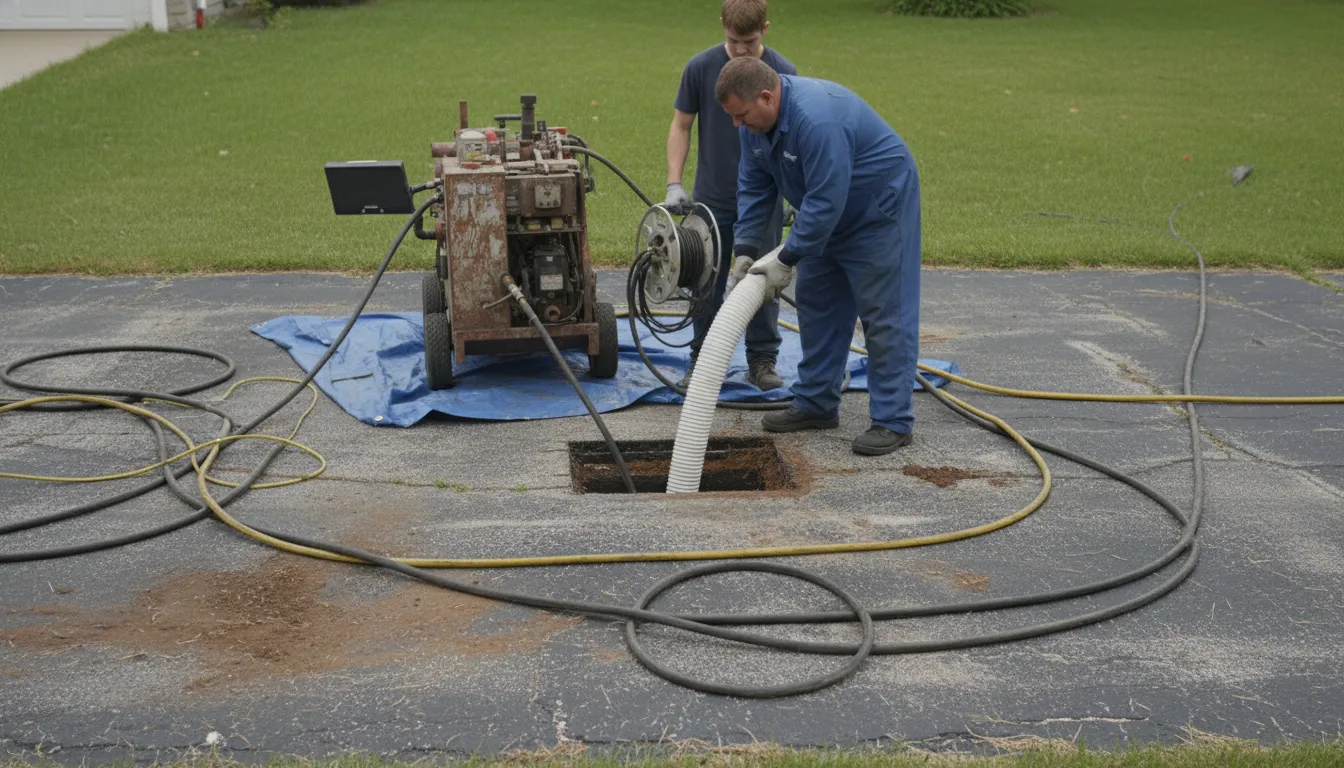
Trenchless technology encompasses several techniques designed to fix sewer lines from the inside out or with very small access points. The two most common methods for residential repairs are pipe lining and pipe bursting.
Pipe Lining (Cured-in-Place Pipe or CIPP) This is a form of sewer rehabilitation. A flexible tube coated with a resin (like epoxy) is saturated and then inserted into the damaged pipe. Using air or water pressure, the liner is inflated to press against the host pipe's interior walls. The resin is then cured, typically with hot water or UV light, forming a hard, seamless "pipe within a pipe." This new lining seals cracks, blocks root intrusion, and restores flow capacity without removing the old pipe.
Pipe Bursting This is a trenchless replacement method. A conical bursting head is pulled through the old, damaged pipe. As it moves, it fractures the existing pipe outward into the surrounding soil. Simultaneously, it pulls a new, high-density polyethylene (HDPE) pipe into place behind it. This method completely replaces the old line with a new, durable pipe of equal or larger diameter 1.
Sewer Boring (Jack and Bore) Often used for new installations or to navigate specific obstacles, this technique uses a horizontal auger to drill a precise underground path. A new pipe is then installed through this bore. It's particularly useful for installing lines under driveways, roads, or foundations with minimal surface disruption 2.
Benefits of Choosing Trenchless Repair in Vermont
Opting for a trenchless solution offers distinct advantages, especially in a state like Vermont where properties often feature mature landscaping, long driveways, and challenging terrain.
- Minimal Landscape Disruption: The most celebrated benefit is the preservation of your yard, gardens, patios, and walkways. Instead of a long, deep trench, work is confined to small access pits at the beginning and end of the line 3.
- Speed and Efficiency: Many trenchless repairs can be completed in a single day, compared to the multi-day excavation, backfill, and restoration required by traditional methods.
- Increased Durability: The materials used, especially in CIPP lining and HDPE pipe, are highly resistant to corrosion, root intrusion, and joint leaks. The smooth interior of a new liner can also improve flow efficiency 4.
- Cost-Effectiveness: While the upfront material costs can be higher, trenchless repair often proves more cost-effective overall by eliminating thousands of dollars in landscape restoration, hardscape repair, and labor-intensive digging.
Cost Considerations for Vermont Homeowners
The cost of trenchless sewer repair in Vermont varies based on several factors, but it generally offers a competitive and predictable range compared to traditional excavation.
General Cost Ranges:
- Trenchless Repair: Typically between $3,000 and $12,000+ for a standard residential lateral repair.
- Traditional Excavation: Often ranges from $4,000 to $20,000+, with the higher end accounting for extensive restoration work 5 6.
- Per-Foot Cost: Trenchless methods are frequently priced per linear foot, ranging from $30 to $250+, depending on the specific technique, pipe diameter, and site conditions 7 8 9.
Key Factors Influencing Price in Vermont:
- Pipe Length and Depth: The total linear footage of the damaged section is a primary cost driver. Deeper lines may require more specialized equipment.
- Method Used: Pipe lining (CIPP) and pipe bursting have different material and equipment costs. The choice depends on the condition of the existing pipe.
- Job Complexity: Multiple bends, connections, or collapses in the line increase the difficulty and cost. The location of cleanouts and access points is also critical.
- Local Regulations and Permits: All sewer repairs, including trenchless, typically require permits and inspections. In Vermont, work must comply with state and local codes, including the Vermont Department of Environmental Conservation's Wastewater System and Potable Water Supply (WWPWS) Rules 10. Permit fees and the cost of ensuring compliance are factored into the project price.
- Contractor Expertise: Specialized trenchless equipment and training command a premium. Choosing a licensed, insured, and experienced professional is crucial for a successful outcome.
Find the perfect trenchless sewer repair companies for your needs
Get personalized recommendations and expert advice
Vermont Regulations and Compliance
Sewer line repairs are regulated to protect public health and the environment. In Vermont, this involves state and often local municipal oversight. Reputable trenchless sewer contractors will manage this process for you, but it's important to understand what's involved.
- Permits: A permit is almost always required before any sewer lateral repair or replacement can begin. This ensures the work meets current plumbing and environmental codes.
- Inspections: The work will need to be inspected at certain stages, typically after the repair is complete but before the access pits are backfilled, to verify proper installation and connection.
- State Codes: Contractors must adhere to the Vermont DEC WWPWS Rules and other applicable state regulations governing wastewater systems. These rules cover materials, installation standards, and connection procedures.
- Local Requirements: Your town or city may have additional ordinances or requirements. A qualified local professional will be familiar with these specifics.
Navigating these regulations is a key part of a professional's job. The cost for permits, plan reviews, and inspections is a standard part of the overall project estimate 11.
Is Trenchless Repair Right for Your Situation?
Trenchless technology is versatile but not a universal fix. A professional assessment via a sewer camera inspection is essential to determine suitability. Ideal candidates for trenchless repair include lines with:
- Cracks, fractures, or holes.
- Root intrusion at joints.
- Corrosion or deterioration.
- Minor offsets or misalignments.
Pipe lining generally requires the existing pipe to have a mostly intact structure to serve as a host for the new liner. Pipe bursting can handle more severely damaged pipes but requires a clear path for the bursting head. Situations where trenchless may not be feasible include pipes that have completely collapsed, have severe sags or bellies, or are improperly graded.
The Professional Assessment Process
When you contact a professional for a sewer issue, a thorough process should follow:
- Sewer Camera Inspection: A specialized camera is snaked through the line to visually identify the exact location, nature, and extent of the damage.
- Diagnosis & Method Recommendation: Based on the video, the professional will diagnose the problem and recommend the most effective repair method (trenchless or traditional), explaining why.
- Detailed Estimate: You should receive a written, detailed estimate that outlines the scope of work, the method to be used, the total cost, and a timeline. This estimate should account for permits and inspections.
- Project Execution: If you proceed, the contractor will obtain necessary permits, perform the repair, coordinate any required inspections, and restore the small access areas.
Frequently asked questions
Sources
Footnotes
-
What Are Trenchless Sewer Pipe Repair Methods? - https://www.superiorplumbingjax.com/what-are-trenchless-sewer-pipe-repair-methods ↩
-
Sewer Boring - Vermont Trenchless - https://vermonttrenchless.com/sewer-boring/ ↩
-
Residential Trenchless Pipelining in New England | WRE - https://www.wrenvironmental.com/new-england-pipelining/trenchless-pipelining/residential/ ↩
-
Trenchless Sewer Line Repairs: Top 3 Proven Benefits - https://bayshoreplumbers.com/plumber/trenchless-sewer-line-repairs/ ↩
-
What Trenchless Sewer Repair Costs & What Impacts the Price - https://www.sunsethc.com/what-trenchless-sewer-repair-really-costs-and-what-impacts-the-price/ ↩
-
Cost Comparison: Trenchless vs. Traditional Sewer Line Repair - https://www.advancedtrenchlesssolutions.com/blog/cost-comparison-trenchless-vs-traditional-sewer-line-repair ↩
-
Empower Your Decision: Decoding Trenchless Sewer Repair Costs - https://pipelinerpros.com/trenchless-sewer-repair-cost/ ↩
-
What is Trenchless Sewer Repair: Benefits, Cost & more - https://wizardplumbinganddrain.com/what-is-trenchless-sewer-repair/ ↩
-
Your Guide to Calculating Trenchless Sewer Repair Costs - https://sekisui-spr.com/blog/2021/05/17/trenchless-sewer-repair-costs/ ↩
-
State of Vermont - https://dec.vermont.gov/sites/dec/files/dwgwp/rorules/pdf/2018.08.27%20-%20Amended%20Unannotated%20WWPWS%20Rules.pdf ↩
-
Trenchless Construction Methods, and Implementation Support - https://rosap.ntl.bts.gov/view/dot/16597/dot_16597_DS1.pdf ↩