Find the Best Trenchless Sewer Repair Companies for Your Business
No obligation • Fast responses • Nationwide coverage

Why you can trust Search a Plumber
Search a Plumber is a leading United States resource for finding and evaluating professional plumbing services. Our team researches licensing, experience, and customer feedback to create unbiased, fact-driven overviews. Companies cannot pay to change ratings or placement, ensuring homeowners get trustworthy information.
Search providers near you
Best Trenchless Sewer Repair Companies in New Hampshire Ranked
A damaged sewer line is a serious problem that can disrupt your home and property. Trenchless sewer repair offers a modern solution, fixing pipes with minimal digging, less mess, and faster completion times compared to traditional excavation. This method is especially valuable in New Hampshire, where rocky soil, mature landscaping, and paved driveways can make digging a major undertaking. Understanding the available techniques, local regulations, and cost factors can help you make an informed decision when you need to connect with a qualified professional for your repair project.
How Trenchless Sewer Repair Works
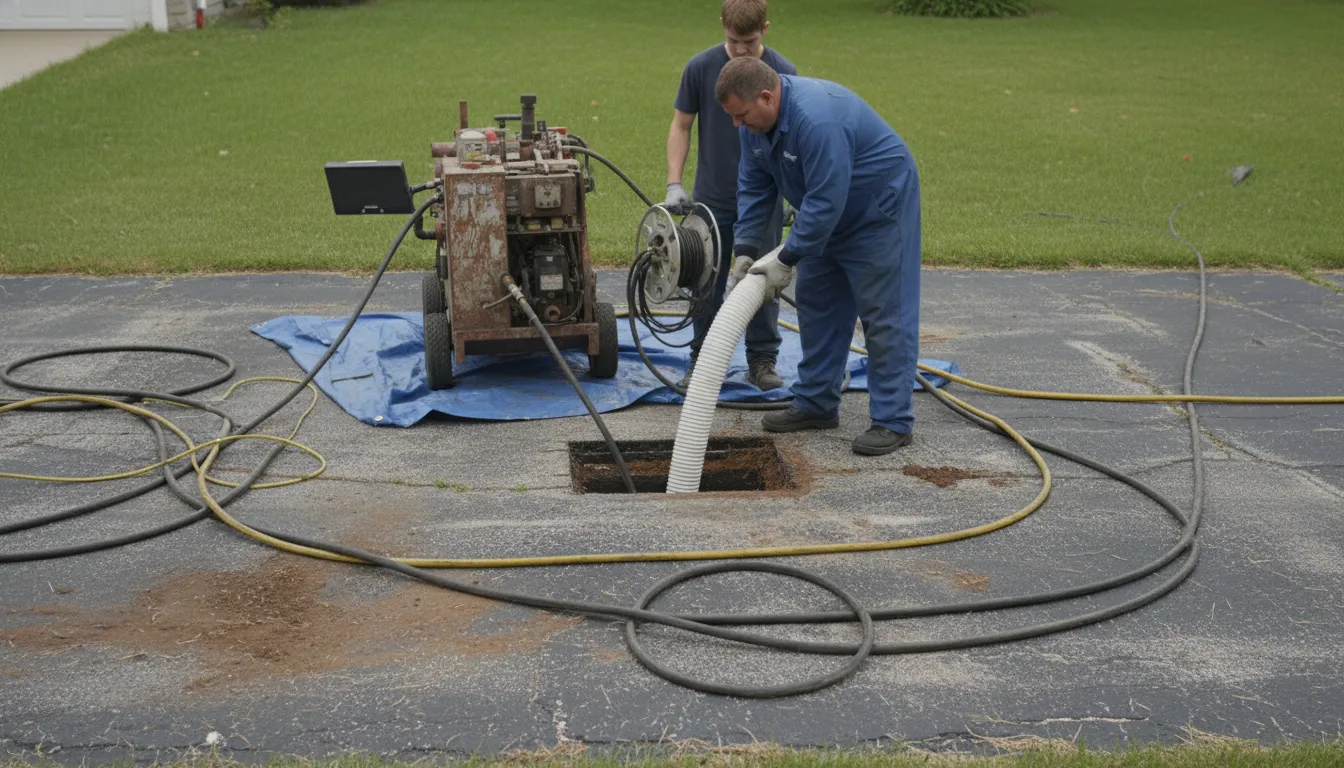
Trenchless technology is a broad term for methods that repair or replace underground pipes without the need for extensive trenches. Instead of digging up your entire yard, technicians use small access pits at the beginning and end of the damaged section. Specialized equipment is then used to rehabilitate the pipe from the inside or to pull a new pipe through the old one. The primary goal is to restore proper flow and structural integrity with the least possible disruption to your property.
The most common trenchless methods for residential sewer lines are Cured-In-Place Pipe (CIPP) and pipe bursting. Each is suited for different types of damage and pipe conditions. A professional assessment using a sewer camera inspection is essential to determine which method is appropriate for your specific situation in New Hampshire.
Cured-In-Place Pipe (CIPP) Lining
CIPP lining is often called the "pipe within a pipe" method. It involves inserting a flexible, resin-saturated tube (liner) into the damaged host pipe. This liner is typically made of a felt or fiberglass material. Once in position, the liner is inflated using air or water pressure, pressing it firmly against the interior walls of the old pipe. The resin is then cured using hot water, steam, or UV light, hardening it into a strong, seamless, and jointless new pipe.
This method is ideal for pipes suffering from cracks, holes, joint failures, or root intrusion, provided the original pipe hasn't completely collapsed. It slightly reduces the internal diameter of the pipe, but the smooth new surface often improves flow. CIPP is a rehabilitation technique, not a full replacement, and it can extend the life of your sewer line by decades.
Pipe Bursting (Pipe Replacement)
Pipe bursting is a true replacement method. A conical bursting head, attached to a cable, is pulled through the old, damaged pipe. This head fractures the existing pipe outward into the surrounding soil. Simultaneously, it pulls a new, high-density polyethylene (HDPE) pipe behind it, immediately occupying the space 1.
This technique is necessary when the old pipe is severely deformed, collapsed, or made of materials like Orangeburg (bituminous fiber pipe) that cannot be reliably lined. It can also be used to upsize a pipe to a larger diameter if needed. While it requires slightly larger access pits than CIPP, it is still far less invasive than digging a trench the entire length of the pipe 2.
Other Trenchless Techniques
- Epoxy Coating / Spray Lining: This is a thinner, spray-applied epoxy coating used to seal minor leaks, pinholes, and joint gaps. It creates a smooth, corrosion-resistant barrier but does not add significant structural strength. It's best for pipes in relatively good condition that need sealing rather than structural renewal.
- Pipe Reaming / Slip Lining: An older method where a new pipe, smaller in diameter, is physically pulled or pushed through the old one. It results in a more significant reduction in internal diameter than CIPP and is less common today for main sewer lines.
Key Considerations for New Hampshire Homeowners
Successfully navigating a trenchless sewer repair project in the Granite State involves more than just choosing a method. Local geology, climate, and regulations play a crucial role.
New Hampshire Plumbing Code and Slope Requirements
Proper drainage is governed by slope, or "pitch." The New Hampshire State Plumbing Code, which is based on model codes like the International Plumbing Code (IPC), mandates minimum slopes for sewer pipes to ensure waste flows by gravity without settling and causing blockages 3.
A common standard for 3-inch to 6-inch diameter sewer pipes is a minimum slope of 1/8 inch per foot (about 1%) 4. A professional contractor will assess the existing slope during a camera inspection. One significant advantage of trenchless methods, especially pipe bursting, is the ability to install the new pipe at the correct slope, potentially correcting drainage issues caused by a settled or improperly installed old line.
Permits and Inspections
Sewer repair work almost always requires a permit from your local municipality, typically issued by the building department or health department. The permitting process ensures the work meets state and local codes for public health and safety 5.
Your contractor should handle pulling the necessary permits. The project will also require inspections-usually one after the new pipe is installed but before the access pits are backfilled, so the inspector can verify proper installation and slope. Never hire a contractor who suggests skipping permits; it can lead to fines, problems when selling your home, and substandard work.
Contractor Licensing and Qualifications
Always verify that a contractor is properly licensed and insured to perform plumbing and sewer work in New Hampshire. Trenchless repair requires specialized training and equipment. Look for contractors who are certified by equipment manufacturers (like Insituform or Perma-Liner) or industry associations (like NASSCO-the National Association of Sewer Service Companies). Ask for references and examples of past trenchless projects similar to yours.
Find the perfect trenchless sewer repair companies for your needs
Get personalized recommendations and expert advice
Cost Factors for Trenchless Repair in NH
Trenchless sewer repair costs in New Hampshire vary widely based on several project-specific factors. While often more expensive per linear foot than traditional digging, the savings in landscape restoration, time, and inconvenience can make it a cost-effective overall choice 6.
Primary Cost Drivers:
- Pipe Length and Depth: The total linear footage of pipe needing repair is the most significant factor. Deeper pipes may require more complex excavation for access pits.
- Pipe Diameter: Larger diameter pipes (common in commercial applications or main lines) require more material (liner resin or HDPE pipe), increasing the cost.
- Method Chosen: CIPP lining and pipe bursting have different material and equipment costs. The appropriate method depends on the pipe's condition.
- Pipe Condition and Accessibility: Severe damage, multiple offsets, or difficult access (e.g., under a deck or large tree) can increase labor time and complexity.
- Labor and Location: Contractor rates vary, and projects in remote areas of New Hampshire may incur higher travel or mobilization fees.
- Permits and Inspections: Local permit fees are an additional, required cost.
Estimated Cost Ranges
Based on industry data, here are general cost estimates for trenchless sewer repair in New Hampshire:
- Cost Per Linear Foot: $50 to $250+
- Typical Residential Project (under 200 feet): $2,000 to $8,000+
- Under 100 feet: Often in the range of $2,000 to $5,000.
- 100 to 200 feet: Often in the range of $5,000 to $8,000+.
These are estimates. The only way to get an accurate price is to have a licensed professional perform a camera inspection and provide a detailed, written quote for your specific situation.
Benefits of Choosing Trenchless Repair
- Minimal Property Disruption: This is the foremost benefit. Your lawn, garden, driveway, and landscaping remain largely intact, saving thousands in restoration costs and preserving your property's aesthetics 7 8.
- Speed: Most trenchless repairs can be completed in one to two days, compared to a week or more for traditional excavation, backfilling, and restoration.
- Durability: The new CIPP liner or HDPE pipe is highly resistant to corrosion, root intrusion, and joint leaks, often with a 50-year or longer lifespan.
- Improved Flow: The smooth interior of a new liner or pipe can improve flow capacity and reduce future clogging.
- Environmental Impact: Less excavation means less soil disturbance and less material hauled to landfills.
Frequently asked questions
Sources
Footnotes
-
Determining Trenchless Sewer Repair Costs - https://www.trenchlessinnovations.com/determining-trenchless-sewer-repair-costs/ ↩
-
What Are Trenchless Sewer Pipe Repair Methods? - Pipe Spy - https://www.pipespy.com/blog/what-are-trenchless-sewer-pipe-repair-methods ↩
-
Trenchless vs. Traditional Sewer Repair in San Diego - https://epoxypipeline.com/blog/trenchless-vs-traditional-sewer-repair-comparison/ ↩
-
Empower Your Decision: Decoding Trenchless Sewer Repair Costs - Pipeliner Pros - https://pipelinerpros.com/trenchless-sewer-repair-cost/ ↩
-
TSR Trenchless Sewer Repair, LLC - https://sewerdrainrepair.com/tsr-trenchless-sewer-repair/ ↩
-
What are trenchless sewer pipe repair methods? - https://www.pipespy.com/blog/what-are-trenchless-sewer-pipe-repair-methods-1 ↩
-
Trenchless Sewer Line Repairs: Top 3 Proven Benefits - https://bayshoreplumbers.com/plumber/trenchless-sewer-line-repairs/ ↩
-
Understanding Trenchless No-Dig Pipe Repair - https://piperestorationsolutions.com/understanding-trenchless-no-dig-pipe-repair-an-introductory-guide/ ↩