Find the Best Trenchless Sewer Repair Companies for Your Business
No obligation • Fast responses • Nationwide coverage

Why you can trust Search a Plumber
Search a Plumber is a leading United States resource for finding and evaluating professional plumbing services. Our team researches licensing, experience, and customer feedback to create unbiased, fact-driven overviews. Companies cannot pay to change ratings or placement, ensuring homeowners get trustworthy information.
Search providers near you
Best Trenchless Sewer Repair Companies in Maryland Ranked
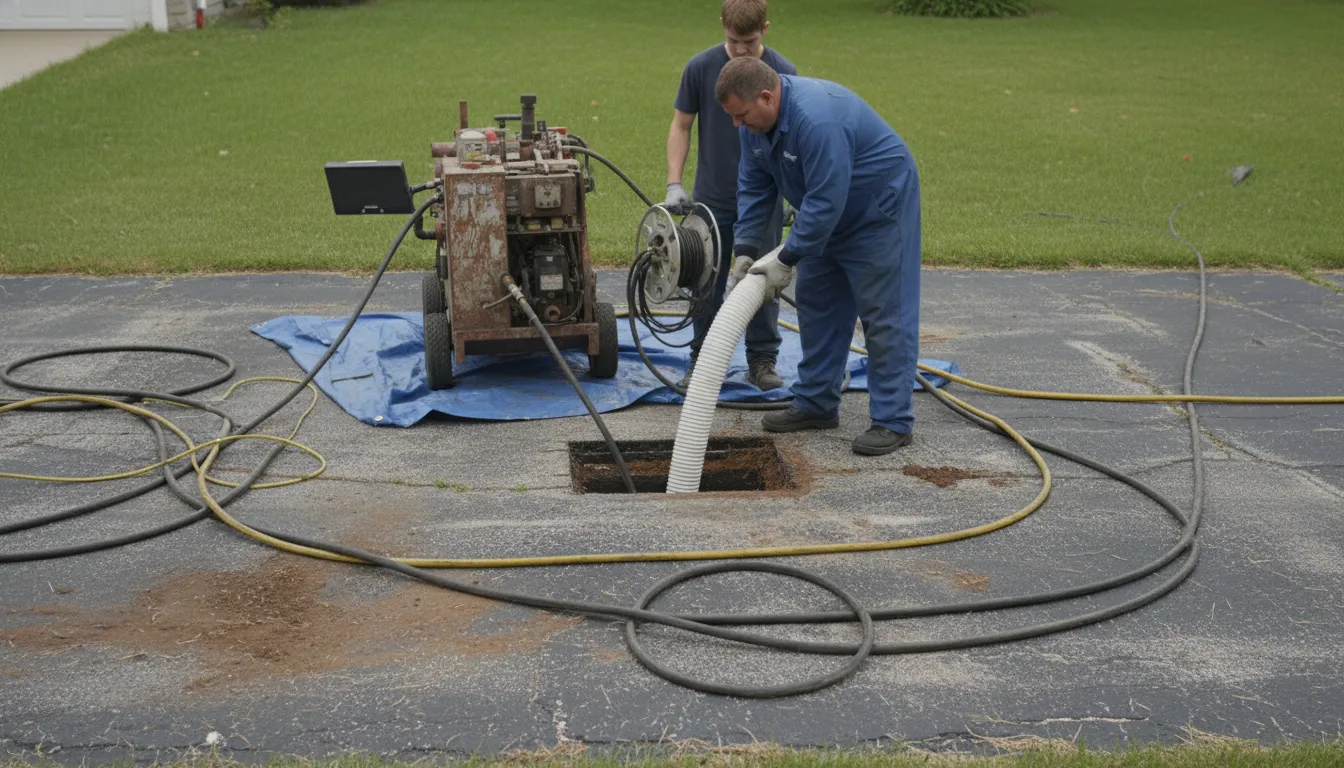
A damaged sewer line is a serious problem, but the solution no longer has to mean destroying your yard. Trenchless sewer repair is a modern method for fixing or replacing underground pipes with minimal excavation. This approach is crucial for Maryland homeowners as it preserves landscaping, hardscapes, and driveways while often being more cost-effective in the long run. The following information will help you understand the process, costs, and local considerations, empowering you to find qualified professionals for your project.
Wes Plumbing & Mechanical
8612 Saxon Cir, Nottingham, MD 21236
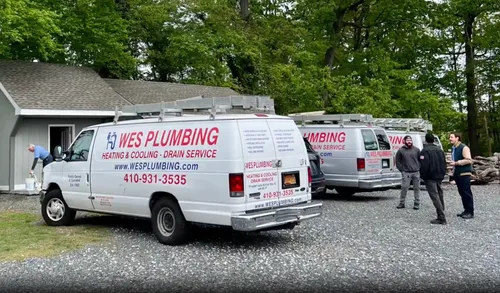
Wes Plumbing & Mechanical is a family-owned plumbing and mechanical service provider located in Baltimore, MD. Serving both residential and light commercial customers, they offer a wide range of plumbing services including water heater repair and installation, sewer line video inspections, drain cleaning, sump pump repair, and gas line installation. The company is equipped with advanced tools such as sewer line cameras and pro press technology to efficiently address plumbing issues, especially in older homes. Established in 1982, Wes Plumbing & Mechanical brings over 75 years of combined experience to its work.
Twin Plumbing Solutions
Baltimore, MD
Twin Plumbing Solutions offers a range of plumbing services for homeowners and businesses in Baltimore, MD. Their services include water heater installation, repair, and maintenance, drain cleaning, toilet repair, sump pump repair, and trenchless sewer pipe patching. They specialize in trenchless pipe repair, which allows for fixing sewer damage without extensive digging. Twin Plumbing Solutions also provides 24-hour plumbing service to address urgent needs.
DrainPro, LLC
1612 Colony Rd, Pasadena, MD 21122
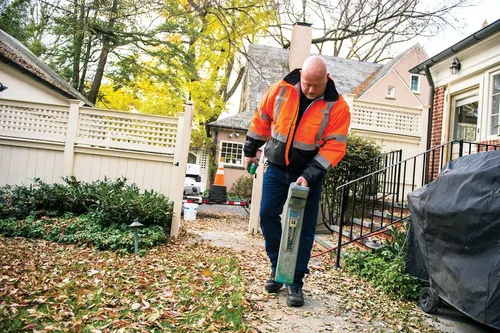
DrainPro, LLC is a plumbing and drain specialist serving Baltimore, MD. Since 2011, they have provided residential and commercial services including drain cleaning, sewer line repair, hydro jetting, smoke testing, leak detection, and trenchless sewer repair. Their licensed contractors use video pipe inspection and underground line locating to accurately diagnose issues. DrainPro offers 24/7 emergency services and specializes in non-invasive trenchless rehabilitation to protect landscaping during repairs.
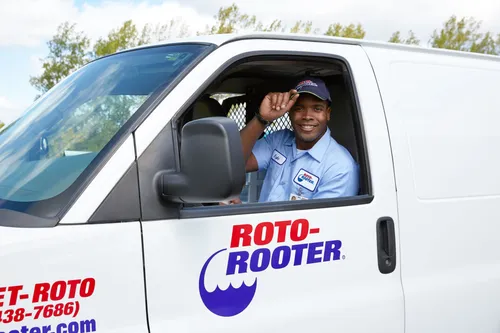
Roto-Rooter Plumbing & Water Cleanup
3545 Ellicott Mills Dr Ste 102, Ellicott City, MD 21043
Roto-Rooter Plumbing & Water Cleanup provides plumbing and drain services in Baltimore, MD. They offer a wide range of services including water heater repair and installation, sump pump repair, drain cleaning, sewer line repair, trenchless sewer repair, leak detection, repiping, and toilet repair. Their team uses specialized equipment such as proprietary machines and drain snakes to clear blockages and restore proper water flow. With over 85 years of experience, Roto-Rooter is equipped to handle emergency plumbing needs and offers 24/7 availability, including nights and holidays.
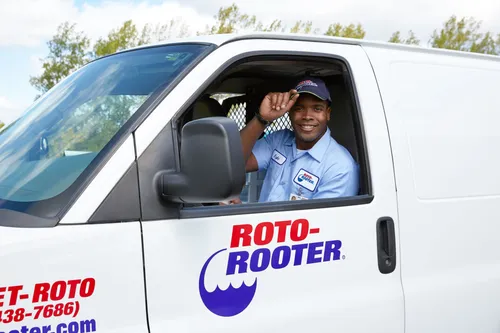
Roto-Rooter Plumbing & Water Cleanup
606 Baltimore Ave Ste 402-E, Towson, MD 21204
Roto-Rooter Plumbing & Water Cleanup provides a wide range of plumbing services in Baltimore, MD, including water heater repair and installation, sump pump repair, drain cleaning, sewer line repair, trenchless sewer repair, leak detection, repiping, and toilet repair. The company offers 24/7 emergency plumbing services with licensed technicians ready to address urgent issues such as clogged drains, broken pipes, and water damage cleanup. With over 85 years of experience, Roto-Rooter is equipped with state-of-the-art tools for no-dig pipe restoration and comprehensive sewer maintenance.
Understanding Trenchless Sewer Rehabilitation
Traditional sewer repair involves digging a long, deep trench to access the entire length of the pipe-a disruptive, time-consuming, and expensive process. Trenchless technology, in contrast, requires only one or two small access points. Specialized equipment is used to repair or replace the pipe from the inside out, leaving your property largely intact. This method is not only less invasive but is often faster and can address a wide range of issues from cracks and leaks to complete pipe failure.
For Maryland properties with mature trees, intricate landscaping, patios, or pools, the value of a trenchless approach is clear. It eliminates the need for massive restoration work after the repair is complete, saving you significant time and money on landscaping costs.
Common Trenchless Methods Used in Maryland
Two primary techniques dominate the trenchless repair industry, each suited for different types of damage.
Cured-in-Place Pipe (CIPP) Lining
This is a popular "pipe-within-a-pipe" solution. A flexible tube saturated with a resin (like epoxy) is inverted or pulled into the damaged host pipe. Using air or water pressure, the liner is expanded to fit tightly against the old pipe's walls. The resin is then cured, typically using hot water or UV light, forming a new, seamless, and structurally sound pipe inside the old one 1.
- Best For: Pipes with cracks, holes, joint failures, or minor corrosion. It's excellent for stopping leaks and preventing root intrusion.
- Limitations: It slightly reduces the internal diameter of the pipe and requires the existing line to be structurally sound enough to act as a host. It cannot fix a completely collapsed pipe.
Pipe Bursting
When a pipe is too damaged for lining or needs to be upsized, pipe bursting is the trenchless replacement method. A conical bursting head is pulled through the old pipe, fracturing it outward. Simultaneously, a new, high-density polyethylene (HDPE) pipe of equal or larger diameter is pulled in behind the head, immediately replacing the old line 2 3.
- Best For: Severely damaged, collapsed, or undersized pipes. It allows for a complete replacement without digging.
- Advantage: The new HDPE pipe is highly resistant to corrosion and root penetration, offering a long-term solution.
Regulatory and Permit Considerations in Maryland
Sewer laterals (the pipe from your house to the public main) are typically the homeowner's responsibility. In Maryland, any work on this lateral usually requires permits to ensure it meets local building and health codes.
- Local Authorities: The permitting process varies by county and municipality. In the densely populated areas around Washington, D.C., the Washington Suburban Sanitary Commission (WSSC Water) is a key authority. They manage the public mains and have specific requirements for how private laterals connect and are rehabilitated to protect the broader system 4 5.
- Professional Compliance: A licensed Maryland plumbing contractor will handle the permit application process. They understand the local codes regarding pipe materials, slope (grade), connection seals, and protections for environmentally sensitive areas. This expertise is vital to avoid failed inspections, future blockages, or damage to the public sewer system 6.
Find the perfect trenchless sewer repair companies for your needs
Get personalized recommendations and expert advice
Typical Cost Factors for Trenchless Repair in Maryland
The cost of a trenchless sewer project is not a flat fee; it depends on several variables unique to your property. Understanding these factors will help you interpret estimates from professionals.
- Pipe Length and Depth: This is the most significant factor. Longer and deeper pipes require more material and labor.
- Extent of Damage: Simple cracks are less expensive to line than a pipe shattered by roots or ground movement, which may require bursting.
- Access Difficulty: The location of cleanouts and the need to navigate around other utilities can affect the price.
- Method Used: CIPP lining is generally less expensive per foot than pipe bursting, which involves more powerful equipment and a full pipe pull.
Estimated Price Ranges
While every project is unique, Maryland costs often fall within these general tiers based on research and industry estimates:
- Per-Foot Cost: Trenchless repairs can range from $60 to $250+ per linear foot, with lining often on the lower end and bursting on the higher end.
- Small Project (under 100 feet): Often between $2,000 and $5,000.
- Mid-Size Project (100-200 feet): Frequently in the $5,000 to $8,000 range.
- Large or Complex Project: Can range from $8,000 to $50,000+ for very long runs, multiple bends, difficult soil conditions, or repairs under structures.
Important Note: While the upfront cost of trenchless methods can be comparable to or sometimes higher than traditional digging, the total project cost is often lower when you factor in the thousands of dollars saved on landscape, concrete, and hardscape restoration 7 8.
The Professional Process: What to Expect
- Inspection & Diagnosis: A professional will first conduct a video camera inspection of your sewer line. This is non-negotiable. It identifies the exact location, nature, and extent of the problem, ensuring the correct repair method is chosen.
- Recommendation & Estimate: Based on the video, the contractor will recommend either CIPP lining or pipe bursting and provide a detailed written estimate covering all costs, including permits.
- Permitting & Preparation: They will pull the necessary local permits. On-site, they will locate all utilities and prepare the small access pits.
- Cleaning & Calibration: The existing pipe is thoroughly cleaned via hydro-jetting. A final calibration pass with the camera ensures the pipe is ready for the liner or bursting head.
- Installation: For lining, the resin-saturated liner is installed and cured. For bursting, the old pipe is fractured and the new one is pulled through.
- Final Inspection & Restoration: A post-repair camera inspection verifies the work's integrity. The small access points are backfilled and restored, leaving your property neat.
Benefits Beyond Avoiding a Trench
The advantages of trenchless sewer repair extend far beyond saving your lawn:
- Speed: Most trenchless repairs can be completed in one to two days, compared to a week or more for traditional excavation.
- Durability: Both CIPP liners and HDPE pipes are highly resistant to corrosion and root intrusion, offering a lifespan of 50 years or more.
- Environmental Impact: It minimizes soil disturbance and reduces the carbon footprint associated with heavy excavation equipment and material hauling.
- Increased Flow: Removing corrosion, scale, and joint misalignments often improves water flow. Pipe bursting can also upgrade you to a larger diameter pipe.
Is Trenchless Repair Right for Your Maryland Home?
Trenchless technology is suitable for most common sewer problems, but not all. A professional inspection is essential to confirm it's the right choice. It may be less feasible if the pipe has extreme, multiple collapses, severe sags (belly), or is located under a building foundation with no accessible ends. However, for the vast majority of homes with aging clay, cast iron, or Orangeburg pipes, trenchless methods offer a superior, modern solution 9.
Frequently asked questions
Sources
Footnotes
-
Trenchless Sewer Line Repairs: Top 3 Proven Benefits - https://bayshoreplumbers.com/plumber/trenchless-sewer-line-repairs/ ↩
-
Trenchless Sewer Repair: Lower Cost, Lower Impact Sewer Repair - https://www.sewerflowllc.com/2025/03/06/trenchless-sewer-repair-lower-cost-lower-impact-sewer-repair/ ↩
-
What Are Trenchless Sewer Pipe Repair Methods? - https://www.superiorplumbingjax.com/what-are-trenchless-sewer-pipe-repair-methods ↩
-
Sewer Repair, Replacement & Rehabilitation - WSSC Water - https://www.wsscwater.com/what-we-do/major-projects/sewer-rehabilitation-replacement-and-repair/sewer-repair-replacement ↩
-
Methods for Cost-Effective Rehabilitation of Private Lateral ... - https://mwrd.org/sites/default/files/documents/Cost-Effective_Rehabilitation_of_Private_Lateral_Sewers.pdf ↩
-
RELINING - Trenchless Technology Magazine - https://trenchlesstechnology.com/pdfs/2014-pipe-relining-guide.pdf ↩
-
Is Trenchless Sewer Line Repair Cheaper? - AP Plumbing - https://applumbing.com/blog/is-trenchless-sewer-line-repair-cheaper/ ↩
-
Trenchless Sewer Repairs in Central Maryland - https://primeplumbingmd.com/sewer/trenchless/ ↩
-
Trenchless Sewer Repair - https://toptiertrenchless.com/services/trenchless-sewer-repair/ ↩