Find the Best Toilet Repair & Replacement Contractors for Your Business
No obligation • Fast responses • Nationwide coverage

Why you can trust Search a Plumber
Search a Plumber is a leading United States resource for finding and evaluating professional plumbing services. Our team researches licensing, experience, and customer feedback to create unbiased, fact-driven overviews. Companies cannot pay to change ratings or placement, ensuring homeowners get trustworthy information.
Search providers near you
Find Toilet Repair & Replacement Contractors near you
A malfunctioning toilet is more than an inconvenience; it's a disruption to your home's essential functions. Whether you're dealing with a persistent leak, a stubborn clog, or a toilet that's simply seen better days, understanding your options for repair or replacement is key to a functional bathroom. This guide provides clear, practical information on common toilet problems, their solutions, and how to decide between fixing what you have and installing a new one, helping you connect with the right local expertise for the job.
Search providers near you
Common Toilet Problems and How to Fix Them
Most toilet troubles fall into a few predictable categories. Identifying the issue is the first step toward a solution, whether you plan a DIY fix or call a professional.
Constant Running or Leaking
A toilet that runs intermittently or constantly is often wasting a significant amount of water. The most common culprits are inside the tank.
- The Flapper: This rubber seal at the bottom of the tank can become warped or degraded, allowing water to leak into the bowl. A simple adjustment of the chain or a replacement flapper (typically $5-$20) often solves the problem.
- The Fill Valve: If you hear a constant refilling sound, the fill valve (also called a ballcock) may be stuck open or failing. Replacing this part ($15-$50) is a standard repair.
- The Flush Valve: The larger gasket or seal where the flapper sits can also crack. Repairing this is more involved but stops water from seeping through.
Method: For a running toilet, start by checking and adjusting the flapper chain. If that doesn't work, part replacement is usually needed. These are common DIY repairs, but a professional can diagnose and resolve the issue quickly if you're unsure.
Persistent or Severe Clogs
While a plunger can handle most simple blockages, some clogs are more tenacious. Signs include water draining very slowly or rising dangerously high in the bowl during a flush.
- DIY Approach: A flange plunger (designed for toilets) or a toilet auger (a specialized snake) can often dislodge the obstruction. These tools are inexpensive to own or rent.
- Professional Help: For deep, repeated, or severe clogs-especially if you suspect a problem deeper in the drain line-a professional plumber has powerful motorized augers to clear the line completely. Professional snaking services typically range from $120 to $275+.
Toilet Rocking or Leaking at the Base
This is a more serious issue that can lead to water damage on your bathroom floor and subfloor. A rocking toilet almost always indicates a broken seal.
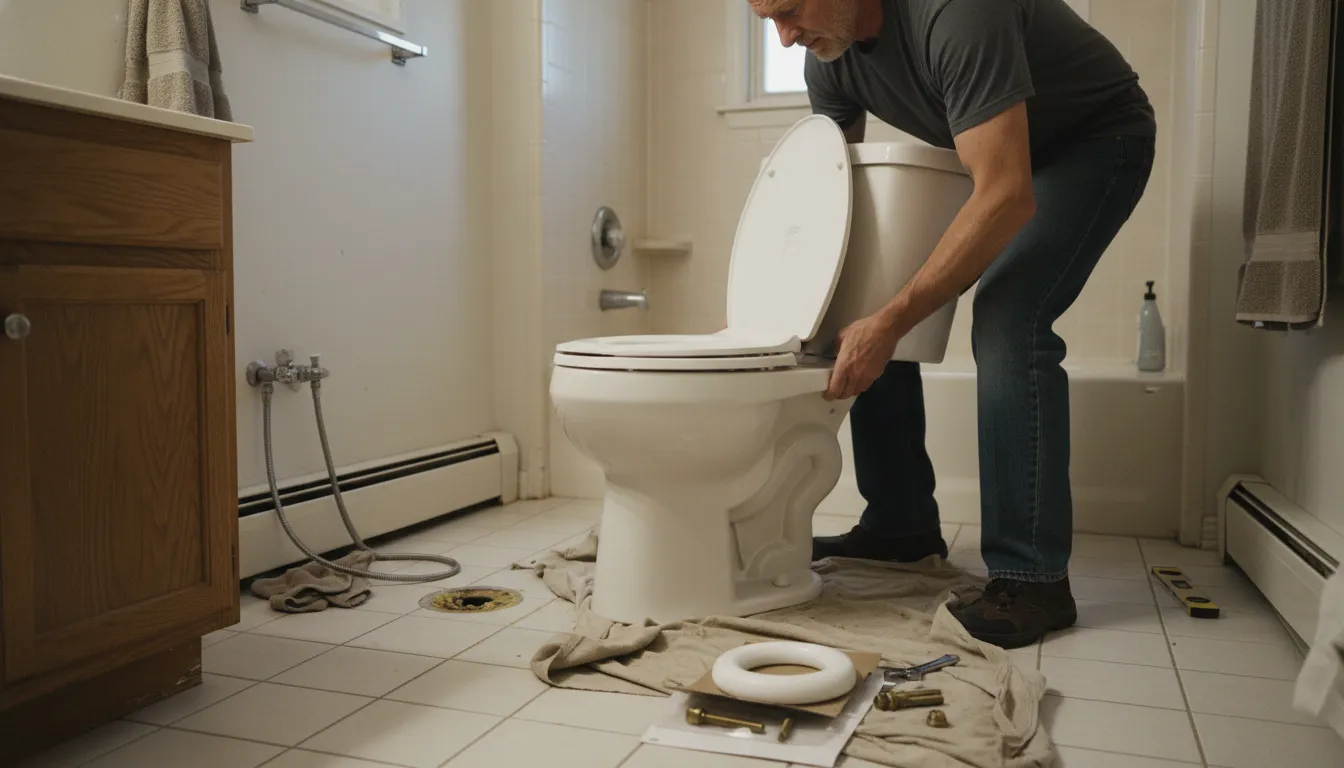
- The Wax Ring: This ring creates a watertight seal between the toilet base and the sewer flange. Over time, it can dry out, compress, or fail. Replacing it requires removing the toilet.
- Closet Flange Damage: The flange itself (the piece that connects the toilet to the drain pipe) can crack or become damaged. This repair is more complex, as it may involve accessing the subfloor.
- Loose Bolts: The closet bolts that secure the toilet to the floor can also come loose, causing movement.
Method: Fixing a leak at the base always involves removing the toilet, cleaning the area, and installing a new wax ring and bolts. While a determined DIYer can tackle this, it's a messy job. Professional repair for a wax ring typically costs between $50 and $200, depending on whether the flange needs work.
Slow Filling or Weak Flush
If your tank takes a long time to refill or the flush seems anemic, the problem is often a restricted water supply.
- Faulty Fill Valve: A partially clogged or malfunctioning fill valve is a prime suspect. Sediment can block the valve's small ports. Replacing the fill valve is the usual fix.
- Clogged Supply Line: The flexible water supply line connecting the toilet to the wall valve can also become restricted with mineral deposits. This line is inexpensive and easy to replace.
- Low Water Level: Ensure the water level in the tank is marked about an inch below the top of the overflow tube. Adjust the float on the fill valve if it's too low.
Essential Toilet Parts and Repair Tools
Knowing the key components of your toilet will help you communicate issues clearly, whether you're shopping for parts or describing a problem to a professional.
Inside the Tank:
- Flapper: The rubber seal that releases water into the bowl during a flush.
- Fill Valve: Controls the refilling of the tank after a flush.
- Flush Valve: The large assembly in the center of the tank where the flapper sits.
- Handle/Lever and Lift Chain/Strap: The external handle connects to the internal chain that lifts the flapper.
At the Base (Bowl Installation):
- Wax Ring: Forms the critical seal between the toilet and the drain pipe.
- Closet Bolts and Caps: The bolts that secure the toilet to the floor and the decorative caps that cover them.
- Closet Flange: The fitting bolted to the floor that connects the toilet to the drain pipe.
Basic Repair Tools:
- Plunger: A flange-style plunger is essential for every household.
- Toilet Auger (Snake): A hand-cranked cable designed to navigate the toilet's trap and clear clogs without scratching the porcelain1 2.
- Adjustable Wrench, Screwdrivers, and a Putty Knife: For part replacement and wax ring jobs.
Find the perfect toilet repair & replacement contractors for your needs
Get personalized recommendations and expert advice
Understanding Toilet Repair and Replacement Costs
Cost is a major factor in deciding whether to repair or replace. Prices can vary based on your location, the complexity of the job, and the parts required.
DIY Repair Parts:
- Simple parts like a handle or flapper can cost as little as $5-$20.
- More complex internal parts like a fill valve or flush valve assembly typically range from $15 to $50 3.
Professional Repair Services (Parts & Labor):
- Minor Internal Fix: Repairing a running toilet by replacing a flapper, fill valve, or handle typically costs between $100 and $200.
- Wax Ring Replacement: Resealing a leaking toilet base generally runs $50 to $200. The price increases if the underlying closet flange is damaged and needs repair.
- Severe Clog Removal: Professional snaking for a tough obstruction can cost $120 to $275 or more, depending on the tools and time required4 5.
Complete Toilet Installation: The total cost to remove an old toilet and install a new one, including the price of a standard new toilet, typically falls in the range of $200 to $400+. This covers labor, the new fixture, and necessary supplies like a wax ring and bolts6 7. High-end toilet models or complex installation scenarios will increase the price.
Repair vs. Replacement: Making the Right Choice
So, when do you fix it, and when do you start fresh? Here's a practical framework to help you decide.
When Repair is the Smart Choice:
- Single, Simple Issue: The problem is isolated to one inexpensive, easy-to-replace part like a flapper, fill valve, or handle.
- Toilet is Otherwise Sound: The toilet is relatively new, efficient, and not cracked or chipped.
- Cost-Effective: The repair cost is significantly lower than the price of a new toilet plus installation. For example, spending $150 to fix a running toilet on a modern model is usually worthwhile8 9.
When Replacement is the Better Long-Term Investment:
- Multiple or Persistent Problems: You're frequently repairing different issues, indicating the fixture is failing overall.
- Visible Damage: Cracks in the porcelain of the bowl or tank can lead to catastrophic leaks and are not repairable.
- Old, Inefficient Model: Toilets installed before 1994 use 3.5-7 gallons per flush. Replacing it with a WaterSense-labeled model (using 1.28 gpf) can save thousands of gallons of water annually, paying for itself over time.
- Frequent Clogs: An older toilet with a poorly designed trap may clog regularly. A new model with a superior flushing system can solve this.
- Cost of Repairs Adds Up: If the next repair will be the third in a short period, or if a major repair (like a flush valve replacement) approaches half the cost of a new installation, replacement often makes more financial sense.
Frequently asked questions
Sources
Footnotes
-
Common Toilet Problems You Can Tackle Yourself - https://blog.expertsinyourhome.com/common-toilet-problems-you-can-tackle-yourself ↩
-
Parts Needed for Toilet Replacement - PVC Fittings Online - https://www.pvcfittingsonline.com/blogs/resource-center/parts-needed-for-toilet-replacement ↩
-
Ultimate Guide to Toilet Parts & Toilet Problems Repairs (2025) - https://horow.com/blogs/guide/ultimate-guide-to-toilet-parts-toilet-problems-repairs-2025 ↩
-
Toilet Repair Costs 2024: Find A Plumber For Fixing Toilets - https://www.superbrothers.com/toilet-repair-costs-2024-find-a-plumber-for-fixing-toilets/ ↩
-
How much does toilet repair cost in 2024? - Yelp - https://www.yelp.com/costs/toilet_repair ↩
-
Cost Factors for Toilet Repair vs Replacement - https://www.fastresponseplumbingsf.com/cost-factors-for-toilet-repair-vs-replacement/ ↩
-
Cost to Install a Toilet - The Home Depot - https://www.homedepot.com/services/c/cost-install-toilet/55af3b94a ↩
-
Is It Cheaper To Replace Or Repair A Toilet? - Boulden Brothers - https://bouldenbrothers.com/plumber-newark-de/toilet-repair/replace-or-repair/ ↩
-
How Much Does Toilet Repair Cost in 2026? | Angi - https://www.angi.com/articles/how-much-should-toilet-repairs-cost.htm ↩