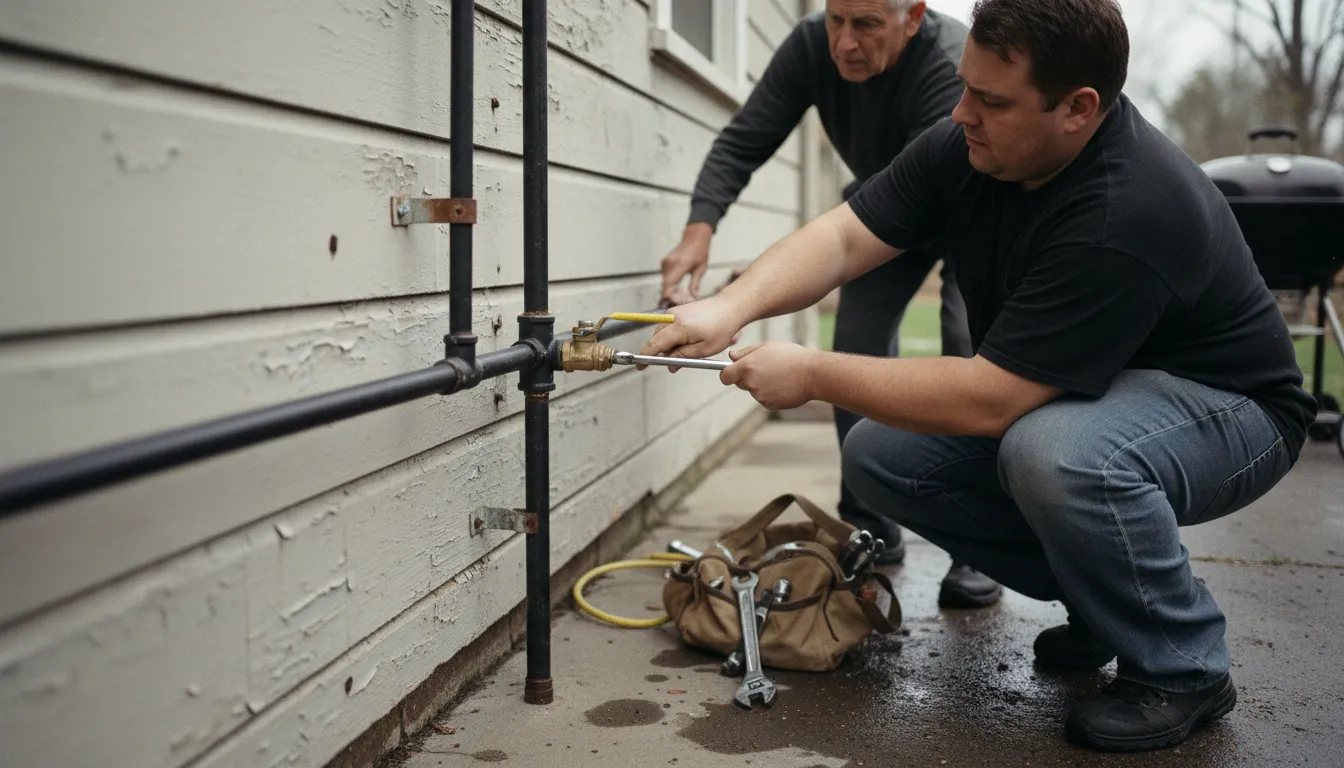
Find the Best Gas Line Plumbing Companies for Your Business
No obligation • Fast responses • Nationwide coverage

Why you can trust Search a Plumber
Search a Plumber is a leading United States resource for finding and evaluating professional plumbing services. Our team researches licensing, experience, and customer feedback to create unbiased, fact-driven overviews. Companies cannot pay to change ratings or placement, ensuring homeowners get trustworthy information.
Search providers near you
Top Gas Line Plumbing Companies in Orlando, Florida Ranked
Connecting your home or business to natural gas can be a smart move for efficiency and comfort, powering everything from water heaters and stoves to fireplaces and dryers. However, installing or repairing gas piping is a complex task governed by strict safety codes and local regulations. This guide explains the critical process for gas line work in Orlando, helping you understand why hiring a licensed professional is essential and what to expect from a safe, code-compliant installation.
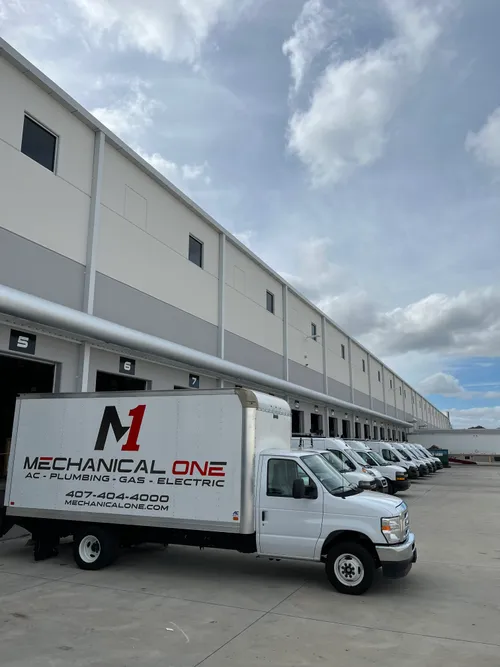
Mechanical One
217 N Westmonte Dr #1007, Altamonte Springs, FL 32714
Mechanical One is a full-service HVAC, plumbing, gas, and electrical company based in Altamonte Springs, FL, serving the Orlando area and surrounding communities. They provide a wide range of services including water heater repair and installation, drain cleaning, sewer line repair, leak detection, and gas line installation. Their licensed technicians work with leading brands and offer capabilities such as gas safety inspections and leak detection to ensure home safety. Mechanical One has been part of the Altamonte Springs community since its founding and offers 24/7 emergency repair services for HVAC, plumbing, electrical, and gas line issues.
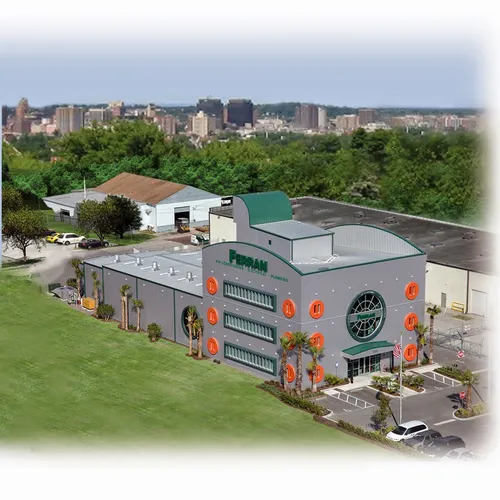
Mechanical One of Orlando - Air Conditioning, Plumbing and Electrical
5257 L B McLeod Rd Suite 1200, Orlando, FL 32811
Mechanical One of Orlando - Air Conditioning, Plumbing and Electrical provides comprehensive HVAC, plumbing, gas line, and electrical services in Orlando, FL. Their team handles AC installation and repair, plumbing maintenance and repairs, gas line installation and inspections, and electrical system repairs. They maintain a fully stocked warehouse in Orlando to support same-day and next-day HVAC installations and offer 24/7 emergency HVAC repair services to address urgent needs. Mechanical One has multiple years of experience serving the Orlando area and is known for their skilled technicians and broad service capabilities.
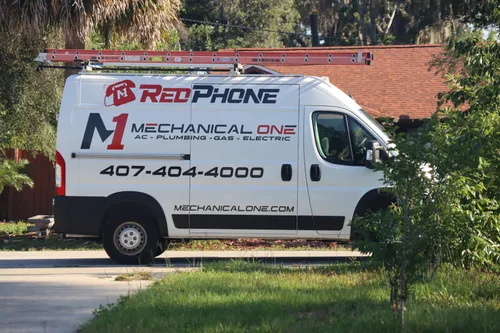
Mechanical One
307 Cranes Roost Blvd #2010, Altamonte Springs, FL 32701
Mechanical One is a multi-service company based in Orlando, FL, offering plumbing, HVAC, gas, and electrical services. They provide water heater repair and installation, drain cleaning, sewer line repair, leak detection, and gas line installation. Their licensed technicians work with leading brands and handle a wide range of residential systems. Mechanical One serves the Orlando area and surrounding communities, with a strong presence in Altamonte Springs and Seminole County. They offer 24/7 emergency repair services for HVAC, plumbing, electrical, and gas line issues, ensuring timely assistance when needed.
Blue Sky Plumbing
4602 N Orange Blossom Trail, Mt Dora, FL 32757
Blue Sky Plumbing is a licensed plumbing company serving Orlando, FL, and surrounding areas. They offer a wide range of services including sewer camera inspections, water heater repair and installation, tankless water heater services, water softener installation, drain cleaning, hydro jetting, sewer line repair, leak detection, repiping, gas line installation, toilet repair, and garbage disposal repair. The company is equipped to handle complex plumbing issues such as sewer line jetting and thorough leak detection using advanced technology. With over 10 years in business, Blue Sky Plumbing provides 24-hour emergency plumbing services to assist customers outside of regular business hours.
Blessed solutions Plumbing
12141 Ryegrass Trail, Orlando, FL 32824
Blessed Solutions Plumbing is a licensed and insured plumbing contractor based in Orlando, FL, serving Central Florida and the West Coast of Florida. They offer a wide range of plumbing services including water heater installation and repair, drain cleaning, hydro jetting, sewer line repair, leak detection, repiping, gas line installation, and backflow testing. The company is also one of the few certified specialists in medical gas installations, following strict standards for healthcare facilities. Blessed Solutions Plumbing is a family-run business focused on quality, safety, and long-term value, with 24/7 emergency availability to assist customers whenever needed.
Understanding Local Regulations and Permits
In Orlando, all significant gas line installation or repair work requires permits from the local building department. This is not merely bureaucratic red tape; it is a vital safety checkpoint. The permitting process ensures that your project is reviewed and inspected by qualified officials who verify that the planned work meets the stringent requirements of the Florida Building Code (FBC), Fuel Gas. Attempting to bypass this process can lead to dangerous situations, failed inspections, and significant fines.
Who Needs a Permit? Permits are mandatory for new gas line installations, relocating existing lines, or making major repairs. Homeowners can sometimes apply for their own permits, but given the technical knowledge required for the application (which includes detailed plans and site surveys), it is highly recommended to have your licensed contractor handle this step.
Where to Apply: Depending on your property's location, you will apply through either the City of Orlando or Orange County Fast Track online permitting system 1 2. For jobs valued over $2,500, you may also need to file a Notice of Commencement (NOC) with the county clerk 3.
The Inspection Hurdle: The permit triggers two crucial inspections. First, a pressure test is performed on the sealed system to confirm there are no leaks. Only after this test and a final visual inspection of the piping, supports, and connections passes can the gas utility be authorized to activate the line. Never allow a contractor to bypass final inspection.
The Professional Installation Process: Step-by-Step
A proper gas piping installation by a licensed professional follows a meticulous sequence designed for long-term safety and performance.
-
Initial Consultation and Design: A qualified technician will visit your property to assess the route from the gas meter, calculate the total BTU (British Thermal Unit) demand of all appliances, and determine the correct pipe sizing. This planning phase is critical, as undersized pipes can cause appliance malfunction and safety hazards.
-
Trenching and Path Preparation: For underground lines, trenches must be dug to a code-specified depth, typically between 18 and 24 inches in Florida, to protect the pipe from accidental damage 4. The trench is often prepared with a bed of sand or other suitable material to cushion the pipe and prevent sharp rocks from causing wear.
-
Piping and Material Selection: The two primary materials used are traditional black steel pipe and more flexible Corrugated Stainless Steel Tubing (CSST). Both are code-approved, but CSST requires special attention to bonding and grounding to protect against damage from lightning strikes or electrical surges. The installer will carefully lay and join the pipes, ensuring all connections are perfectly sealed.
-
Support and Valve Installation: Above-ground piping must be securely supported with hangers or straps at regular intervals to prevent stress on the joints from vibration or movement. Accessible, approved shutoff valves are installed at the meter and near each appliance for emergency isolation.
-
Critical Testing and Inspection: Before any appliance is connected, the entire system is pressurized with air (a "pressure test") and monitored for drops that indicate a leak. The installer will also use leak-detection solution on every fitting. This step, followed by the official city or county inspection, is the most important part of the process 5.
Find the perfect gas line plumbing companies for your needs
Get personalized recommendations and expert advice
Why Licensing and Code Compliance Are Non-Negotiable
The risks associated with gas lines-fires, explosions, and carbon monoxide poisoning-make professional expertise indispensable. A licensed plumbing or gas contractor brings essential knowledge that goes beyond simple pipe fitting.
- Safety First: Professionals are trained in leak prevention, proper ventilation requirements for appliances, and emergency procedures. They ensure systems are not just operational, but inherently safe 6.
- Code Mastery: The Florida Building Code is complex. Licensed pros understand the nuances of material specifications, pipe sizing formulas, required clearances, and the mandatory bonding of CSST systems 7 8. Their work is designed to pass rigorous municipal inspections.
- Liability and Insurance: Reputable contractors carry both liability and workers' compensation insurance. This protects you, the homeowner, from financial responsibility if an accident or injury occurs on your property during the project.
- System Longevity: A correctly installed gas line, with proper drip legs (to catch sediment), adequate support, and corrosion protection, can last for decades without issue 9.
Factors Influencing Project Cost
The cost for gas line installation or repair in Orlando is not a flat fee; it varies based on several project-specific factors. Understanding these can help you interpret estimates from contractors.
- Pipe Length and Route: The distance from the meter to the appliance(s) is the most basic cost driver. Long runs require more materials and labor. Obstacles like concrete driveways, landscaping, or multiple floors add complexity 10.
- Materials: While material costs themselves are a smaller portion of the total, the choice between black steel and CSST can affect the labor time for installation.
- Trenching Complexity: Digging a simple trench in soft soil is far less expensive than dealing with rocky ground, tree roots, or needing to tunnel under a sidewalk or driveway.
- Appliance Connections: The number and type of appliances being connected significantly impact the project scope. Connecting a high-BTU tankless water heater or a pool heater requires larger pipe sizing and more labor than a simple gas stove hookup 11.
- Permits and Inspections: Permit fees from the City of Orlando or Orange County are a standard part of the project cost and will be included in a professional estimate 12.
Given these variables, prices can range from several hundred dollars for a short, straightforward extension to several thousand dollars for a whole-house system with multiple appliance runs and challenging trenching. The only way to get an accurate price is to obtain detailed, written estimates from multiple licensed and insured contractors 13 14.
Maintaining Your Gas System
Once your new gas lines are safely installed, simple vigilance is key to ongoing safety. Be aware of the smell of natural gas (a sulfur-like, "rotten egg" odor added by the utility). If you smell gas, leave the building immediately and call your gas company or 911 from a safe distance. Schedule regular maintenance for gas-fired appliances like furnaces and water heaters with a qualified technician, who can also visually check accessible gas piping during the service call. Never store chemicals or flammable materials near your gas meter or appliances.
Frequently asked questions
Sources
Footnotes
-
Residential Permitting Requirements - City of Orlando - https://www.orlando.gov/Building-Development/Permits-Inspections/Get-a-Permit/Permitting-Checklists/Residential-Permitting-Requirements ↩
-
Gas Permit - Orange County Government - https://www.ocfl.net/PermitsLicenses/Permits/GasPermit.aspx ↩
-
Gas Permit Application - Orlando.gov - https://www.orlando.gov/files/sharedassets/public/v/1/departments/edv/permitting-services-division/bld/gas-permit-5.22-app.pdf ↩
-
How to Install Natural Gas Lines Safely and Correctly - https://bluegasexpress.com/how-to-install-natural-gas-lines/ ↩
-
Gas Line Repair & Installation: Costs in Gainesville & Ocala - https://www.alwayshomerepair.com/natural-gas-line-installation-cost-gainesville-leak-repair/ ↩
-
Central Florida Gas Line Installation - Dial Duron - https://www.dialduron.com/plumbing/gas-line-installation/ ↩
-
Gas Line Installation: What You Need to Know - https://www.pasoroblesheating.com/gas-line-installation-what-you-need-to-know-before-starting-your-project/ ↩
-
2023 Florida Building Code, Fuel Gas, Eighth Edition - 407.2 Design ... - https://codes.iccsafe.org/s/FLFGC2023P1/chapter-4/gas-piping-installations/FLFGC2023P1-Ch04-Sec407.2 ↩
-
The Essential Guide to Gas Piping: Installation, Maintenance, and ... - https://mcmackinmechanical.com/2025/01/07/the-essential-guide-to-gas-piping-installation-maintenance-and-upgrades-for-your-home/ ↩
-
Foot by Foot: Understanding Gas Line Installation Costs - https://jollyplumbing.com/gas-line-installation-cost-per-foot/ ↩
-
Fueling Your Florida Home's Comfort: A Guide to Gas Line ... - https://mechanicalone.com/blog/fueling-your-florida-homes-comfort-a-guide-to-gas-line-installation/ ↩
-
Cost to install gas line in Orlando, FL - Handoff AI Estimating - https://www.handoff.ai/construction-costs/install-gas-line/orlando-fl ↩
-
Gas Line Installation & Repair in Florida - Mechanical One - https://mechanicalone.com/gas/gas-line-installation-repair/ ↩
-
Gas Line Installation: Who Should Do It? - Flamingo Plumbing - https://flamingoplumbing.com/news/gas-line-installation-who-should-do-it/ ↩