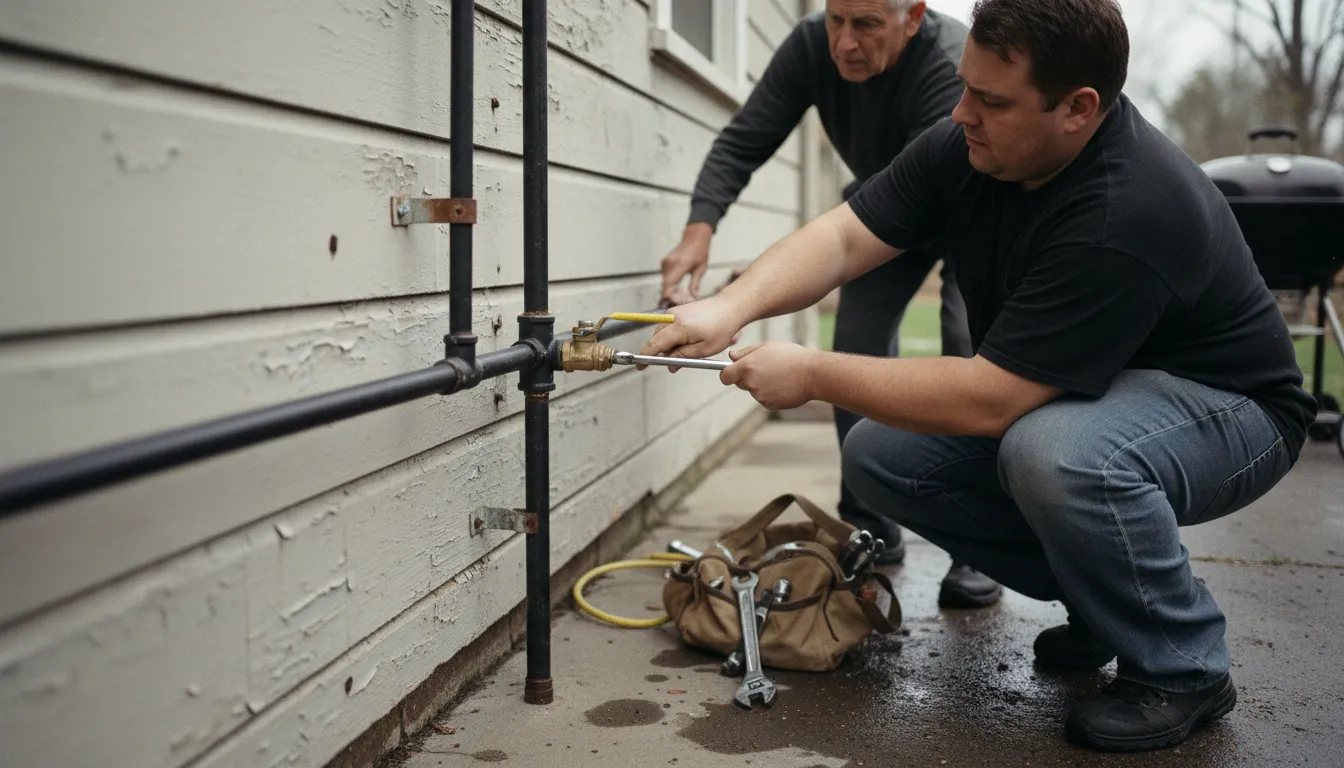
Find the Best Gas Line Plumbing Companies for Your Business
No obligation • Fast responses • Nationwide coverage

Why you can trust Search a Plumber
Search a Plumber is a leading United States resource for finding and evaluating professional plumbing services. Our team researches licensing, experience, and customer feedback to create unbiased, fact-driven overviews. Companies cannot pay to change ratings or placement, ensuring homeowners get trustworthy information.
Search providers near you
Top Gas Line Plumbing Companies in Oro Valley, Arizona Ranked
Connecting your home to natural gas or ensuring your existing gas lines are safe and functional is a critical task that directly impacts your household's safety and comfort. Proper gas line work involves navigating local permits, strict building codes, and precise installation techniques to prevent dangerous leaks. This guide provides essential information for Oro Valley homeowners considering new gas line installation, repairs, or connections for appliances, helping you understand the process, requirements, and why professional expertise is non-negotiable.
Sampson's Plumbing and Water Treatment
5333 W Swallow Dr, Tucson, AZ 85742
Sampson's Plumbing and Water Treatment is a licensed plumbing service provider based in Tucson, AZ. They offer a range of plumbing and water treatment services including water heater repair and installation, water softener installation, drain cleaning, sewer line repair, and gas line installation. With over 25 years of experience and a background that includes commercial projects and municipal water system work, the company provides skilled and certified plumbing solutions. They focus on transparent pricing and respect for customer property.
Hydro Rooter & Plumbing
7057 E 21st St, Tucson, AZ 85710
Hydro Rooter & Plumbing is a full-service plumbing company based in Tucson, AZ, offering a wide range of sewer, drain, and plumbing services. With over a decade of experience, they provide solutions including sewer camera inspections, hydro jetting, trenchless sewer repairs, water heater installation and repair, sump pump services, gas line installation, and water softener systems. Their team uses advanced technology such as cured-in-place pipe (CIPP) lining and epoxy pipe coating to address pipe damage effectively. Hydro Rooter & Plumbing operates 24/7 to handle emergency plumbing needs across Tucson and nearby communities.
Al Coronado Plumbing
6149 N Travel Center Dr, Tucson, AZ 85741
Al Coronado Plumbing is a plumbing service provider based in Tucson, AZ, specializing in emergency plumbing repairs. They offer a range of services including water heater repair, drain cleaning, sewer line repair, leak detection, gas line installation, and toilet repair. The company is equipped to handle urgent plumbing issues such as burst pipes, sewer backups, and gas line repairs with fully stocked emergency vehicles to begin repairs immediately. With over 40 years of experience, Al Coronado Plumbing emphasizes proper permit pulling and system sizing for gas lines to ensure safety and efficiency. Their emergency plumbers are available around the clock to address urgent plumbing needs in Tucson and nearby communities like Sahuarita and Picture Rocks.
AirZona Heating & Cooling LLC / Zona Plumbing LLC
2502 E Benson Hwy, Tucson, AZ 85706
AirZona Heating & Cooling LLC / Zona Plumbing LLC provides HVAC and plumbing services in Tucson, AZ. They offer a range of services including water heater repair and installation, tankless water heater plumbing, water softener installation, hydro jetting, leak detection, and gas line installation. The company is equipped to handle both residential and commercial needs, with capabilities such as water hydro jetting and comprehensive plumbing system evaluations. They provide 24-hour emergency service to address urgent HVAC and plumbing issues. Their team includes licensed and NATE-certified technicians committed to customer satisfaction.
88DRAIN
4377 S Sky High Pl a, Tucson, AZ 85730
88DRAIN is a plumbing and drain service provider based in Tucson, AZ. The company offers a wide range of services including water heater repair and installation, drain cleaning, leak detection, repiping, gas line installation, toilet repair, and garbage disposal repair. With over 44 years of experience serving Tucson and Pima County, 88DRAIN has recently joined the Rite Way family, expanding its capabilities to include HVAC, septic, and electrical services. Customers can expect continued service from the original team under the new partnership.
Understanding Gas Line Work in Oro Valley
Installing or repairing a residential gas line is a regulated construction project in Oro Valley. Unlike simple plumbing tasks, working with natural gas piping requires permits, detailed planning, and inspections by the Town to ensure public safety. The process is governed by the International Residential Code (IRC), which sets the standards for materials, depth, pressure testing, and connections to mitigate the risk of fire or explosion. Whether you're adding a gas fireplace, stove, or dryer, or replacing an aging line, understanding these foundational steps is the first move toward a successful and safe project.
The Critical Role of Permits and Inspections
Before any trench is dug or pipe is fitted, securing the proper permit is a legal requirement in Oro Valley. The permit application, which can be submitted by a homeowner or a licensed contractor, must include detailed plans. These plans typically consist of a site plan showing the pipe's route, a piping layout diagram, and specifications for the appliances being connected.
The inspection process is multi-stage and rigorous. A town inspector will verify several key safety points before the gas service can be restored or activated 1:
- Trench Depth and Bedding: The inspector will check that the trench is dug to the proper depth-at least 18 inches for polyethylene (PE) plastic pipe and 12 inches for coated black iron pipe. They will also ensure the pipe is laid on a bed of clean sand or fine gravel for support and protection.
- Materials and Tracer Wire: All piping materials must be approved for gas service. If flexible PE pipe is used, a yellow-colored tracer wire must be buried alongside it to allow future electronic locating.
- Pressure Test: This is the most crucial inspection. The entire newly installed section of pipe is pressurized with air and monitored for any drop in pressure. A successful "no-drop" test confirms the system is leak-free.
- Final Connections: The inspector will verify that all connections to the meter and appliances are correct, secure, and include any required bonding or corrosion protection.
The Step-by-Step Installation Process
A professional gas line installation follows a meticulous sequence to ensure code compliance and long-term reliability.
1. Planning and Design A qualified technician will calculate the required pipe size based on the length of the run and the cumulative demand (BTU/hour) of all appliances it will supply. This ensures adequate gas flow and pressure to every appliance when they are in use simultaneously 2.
2. Excavation and Trenching The planned route is excavated. In Oro Valley, trenching costs typically range from $10 to $20 per linear foot 3. The trench must be dug with straight, vertical sides and a smooth, rock-free bottom to prevent damage to the pipe.
3. Pipe Laying and Bedding A 2-3 inch layer of clean sand or fine gravel is placed in the trench bottom. The gas pipe is then laid in this bedding material, which cushions it and helps with drainage. For PE pipe, the mandatory yellow tracer wire is laid directly on top of the pipe before backfilling begins 4.
4. Connections and Testing The pipe is connected to the main gas meter at one end and to shut-off valves at each appliance location on the other. All connections use fittings designed specifically for gas. Once the system is assembled, the mandatory pressure test is performed to certify its integrity before the trench is completely backfilled 5.
5. Final Appliance Hookup After the pressure test passes inspection, a licensed professional can make the final connections from the new gas line's shut-off valves to the appliances themselves. This step often involves installing a flexible appliance connector and ensuring proper ventilation for the appliance.
Find the perfect gas line plumbing companies for your needs
Get personalized recommendations and expert advice
Why Professional Installation is Mandatory, Not Optional
The dangers of improper gas line work cannot be overstated. Natural gas is highly combustible, and a small leak can lead to fire, explosion, or carbon monoxide poisoning. For this reason, gas line installation and repair should never be a DIY project.
Licensed, insured contractors bring essential expertise:
- Code Knowledge: They are fluent in the IRC and Oro Valley's specific amendments, ensuring every aspect of the job meets legal safety standards 6 7.
- Permit Navigation: They manage the entire permit application and inspection scheduling process, reducing hassle and preventing costly delays 8 9.
- Proper Tools and Techniques: They have the specialized equipment for pressure testing, leak detection, and making safe, durable connections.
- Liability and Insurance: Professional work is backed by insurance, protecting your home and family in the unlikely event of a problem.
Recognizing Signs of a Gas Line Problem
Even with a properly installed system, aging pipes, accidental damage, or shifting soil can cause issues. Every homeowner should know the signs of a potential gas leak 10 11:
- The Smell of Rotten Eggs: Natural gas is odorless; utilities add mercaptan to give it a distinctive, sulfur-like smell as a safety warning.
- Hissing or Whistling Sounds: An audible noise near a gas pipe or appliance can indicate gas escaping under pressure.
- Dead or Discolored Vegetation: A leak underground may kill grass or plants in a specific line along the pipe's path.
- Physical Pipe Damage: Visible corrosion, dents, or damage to exposed piping or valves.
If you suspect a leak, leave the area immediately, avoid creating sparks (including flipping light switches), and call 911 or your gas utility from a safe distance.
Cost Considerations for Oro Valley Homeowners
The total cost of a gas line project depends on its scope. Key factors include the length of the new line, the complexity of the trenching (e.g., crossing driveways or landscaping), and the number of appliances being connected. Based on local data, homeowners can anticipate the following cost ranges:
- Permit Fees: $50 - $200
- Trenching: $10 - $20 per linear foot
- Appliance Connection Fee: $150 - $300 per appliance (e.g., water heater, stove, fireplace)
- Leak Repair: $150 - $750, depending on the location and complexity of the repair.
Investing in a professionally executed installation avoids the far greater costs-both financial and personal-associated with gas-related accidents.