Find the Best Gas Line Plumbing Companies for Your Business
No obligation • Fast responses • Nationwide coverage

Why you can trust Search a Plumber
Search a Plumber is a leading United States resource for finding and evaluating professional plumbing services. Our team researches licensing, experience, and customer feedback to create unbiased, fact-driven overviews. Companies cannot pay to change ratings or placement, ensuring homeowners get trustworthy information.
Search providers near you
Top Gas Line Plumbing Companies in Glendale, Arizona Ranked
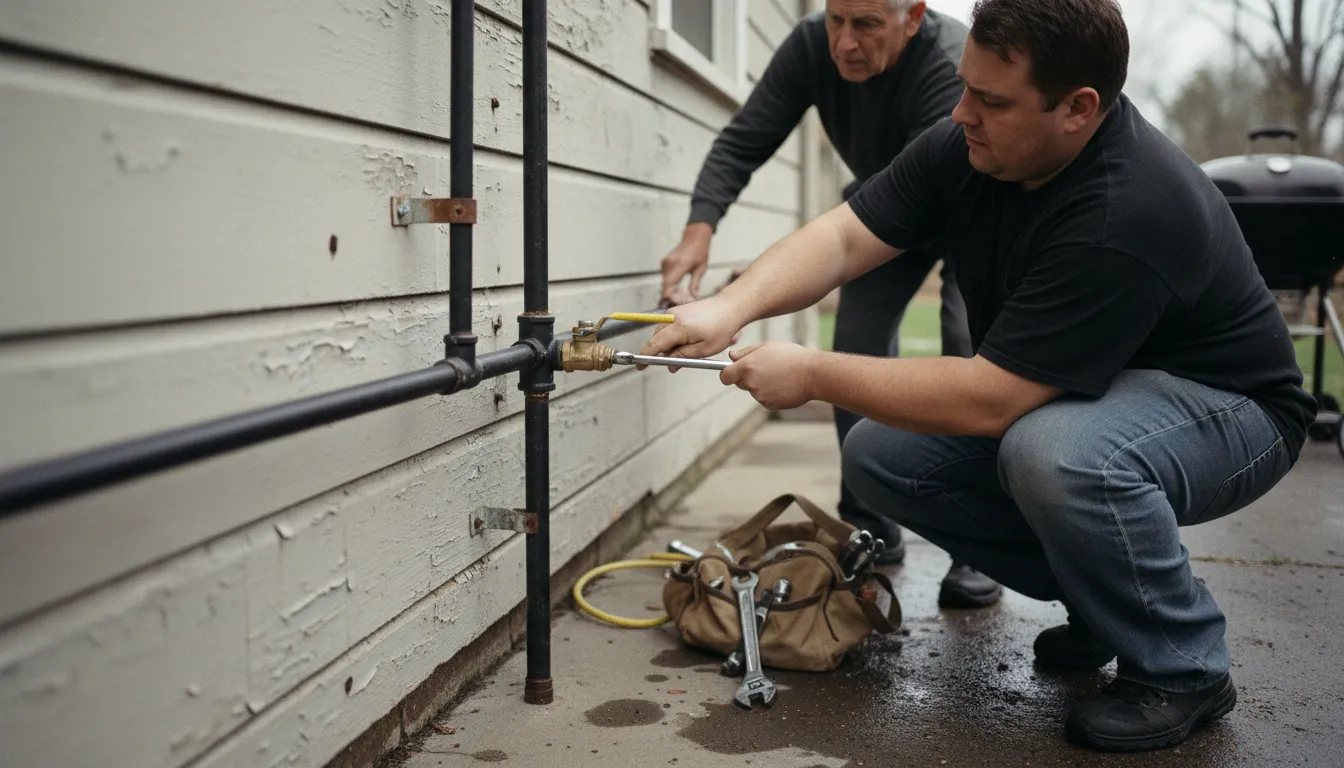
Installing or repairing a gas line is a critical home improvement project that directly impacts the safety and functionality of your property. Whether you're adding a gas fireplace, connecting an outdoor kitchen, or addressing a leak, this work involves high-pressure fuel lines that require expert knowledge and strict adherence to local codes. In Glendale, this process is governed by specific permits, inspections, and safety protocols to protect homeowners from the risks of fire, explosion, or carbon monoxide poisoning. This guide will help you understand the local requirements and the process for finding qualified professionals to handle your gas piping needs safely and effectively.
Dignity Plumbers Service & Water Softeners
11200 W Wisconsin Ave #5A, Youngtown, AZ 85363
Dignity Plumbers Service & Water Softeners is a family-owned plumbing company serving Phoenix, AZ, and surrounding West Valley communities. They provide a wide range of plumbing services including water heater repair and installation, tankless water heater services, water softener installation, drain cleaning, sewer line repair, leak detection, gas line installation, toilet repair, and garbage disposal repair. With over 20 years of experience, their master plumbers are equipped to handle emergency plumbing needs 24/7, ensuring prompt attention to urgent issues. They also specialize in tankless water heater installation and recommend water softeners to protect plumbing investments.
Roto-Rooter Plumbing & Water Cleanup
12133 W Bell Rd #104, Surprise, AZ 85378
Roto-Rooter Plumbing & Water Cleanup provides comprehensive plumbing and water cleanup services in Phoenix, AZ, and the surrounding areas. They serve both residential and commercial clients with a wide range of services including sewer and drain cleaning, water heater repair and installation, leak detection, gas line installation, and trenchless sewer repair. The company is equipped to handle emergency plumbing situations and offers 24/7 availability to address urgent issues such as sewer backups, flooding, and gas leaks. Roto-Rooter also specializes in hydro jetting and mold remediation, using advanced technology to maintain and restore plumbing systems effectively. Serving the greater Phoenix area, Roto-Rooter has a strong local presence and understands the unique plumbing challenges posed by the region's weather and infrastructure. Their team is experienced in both conventional and trenchless sewer repair methods, providing tailored solutions for each property. The company emphasizes emergency readiness with around-the-clock service to minimize damage and disruption during plumbing crises.
Top Notch Plumbing and Drain
Chandler, AZ
Top Notch Plumbing and Drain is a licensed plumbing service provider based in Chandler, AZ, offering residential and commercial plumbing solutions. Their services include water heater repair and installation, sewer line repair, drain cleaning, leak detection, gas line installation, and water softener installation. The company uses advanced tools such as sewer camera inspections to diagnose plumbing issues accurately. With 30 years of combined experience, Top Notch Plumbing and Drain serves Chandler and surrounding areas, providing 24-hour emergency plumbing services to address urgent needs any time of day or night.
Instant Plumbing and Rooter
4340 W Charleston Ave, Glendale, AZ 85308
Instant Plumbing and Rooter is a family-owned plumbing business serving Glendale, AZ, and surrounding Arizona communities since 2001. They offer a wide range of plumbing services including drain and sewer restoration, water heater installation and repair, water softener installation, leak detection, and gas line installation. Their capabilities include sewer line camera inspections to accurately diagnose and address drainage issues. The company focuses on both residential and commercial plumbing needs, providing solutions to maintain functional and efficient household plumbing systems.
Solace Plumbing
Phoenix, AZ
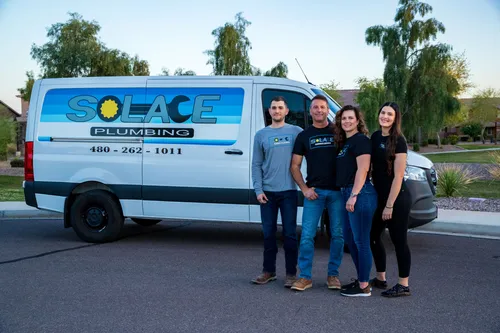
Solace Plumbing is a full-service plumbing company serving Phoenix, AZ, and surrounding areas including Gilbert, Mesa, Chandler, and Scottsdale. They provide a wide range of plumbing services for residential and commercial properties, including water heater installation and repair, drain cleaning, sump pump services, leak detection, gas line installation, and sewer line repair. The company is led by Dax Reed, who brings 26 years of experience in commercial and residential plumbing. Solace Plumbing offers 24/7 emergency service to address urgent plumbing needs at any time.
Understanding Local Gas Line Regulations
In Glendale, all gas line work-whether it's a new installation, a repair, or an extension-requires a permit from the City of Glendale Building Safety Department. This is not a mere formality; it's a mandatory step to ensure the work is planned and executed to code. The permit process triggers necessary inspections, which are your primary safeguard against faulty workmanship. Only licensed and certified plumbing professionals are legally allowed to perform this hazardous work in Arizona. Attempting a DIY gas line project or hiring an unlicensed handyman is extremely dangerous and illegal, potentially voiding your homeowner's insurance in the event of an incident.
The cornerstone of the inspection process is the pressure test. Before any trench is backfilled, a city inspector will require the installer to pressurize the new line with air-typically at 10 PSI-and hold that pressure for a minimum of 15 minutes (often longer for complex systems) to confirm there are no leaks. It's crucial to note that permits have an expiration timeline; if an inspection is not scheduled and passed within 180 days, or if the work fails inspection, the permit becomes void 1.
The Step-by-Step Process for Gas Piping Projects
A professional gas line project follows a meticulous sequence designed for safety and longevity.
- Call 811 Before Digging: This is the non-negotiable first step. Arizona 811 will coordinate with local utilities to mark the location of all underground lines (water, electric, sewer, communications) on your property for free. Striking an existing line can cause injury, service outages, and costly repairs 2 3.
- Planning and Design: A qualified plumber will assess your appliance needs (e.g., furnace, water heater, stove, fire pit) to calculate the required gas load and determine the correct pipe diameter and material. They will also plan the most efficient and code-compliant route from the meter to the appliance(s) 4 5.
- Excavation and Trenching: The required trench depth depends on the pipe material and local code. For standard steel pipe, the trench typically needs to be 18 inches deep. For smaller-diameter lines serving appliances like a grill or patio lights, a depth of 8 inches may be acceptable if the pipe is protected 6. Trenching is often the most labor-intensive part of the job and significantly influences the overall cost.
- Install Tracer Wire: For any buried plastic (PE) gas line, a copper tracer wire (usually 18-gauge) must be buried alongside the pipe. This wire allows future utility locators to easily find the buried gas line, preventing accidental damage during later digging projects 7.
- Pipe Installation: Approved materials include coated steel or specially rated polyethylene (PE) pipe for buried sections. The pipe is laid in the trench, and all above-ground sections are securely fastened to the structure. Critical safety components like drip legs (to catch sediment) and shut-off valves are installed. Code requires an accessible shut-off valve within 3 feet of each appliance.
- Pressure Test and Inspection: The system is sealed and pressurized with air. The plumber will monitor it before the inspector arrives to ensure it holds steady. The official city inspection and pressure test must be passed before the trench is backfilled.
- Backfill and Final Connection: Once approved, the trench is carefully backfilled. The utility company or plumber will then make the final connection to the meter, and the system can be purged and put into service.
Critical Safety Considerations for Glendale Homes
Safety is paramount when dealing with natural gas or propane (Liquefied Petroleum Gas - LPG). Beyond hiring a licensed professional, there are key code requirements to be aware of:
- Appliance Clearances: Gas lines must be kept away from potential ignition sources. For example, LPG containers and lines must be at least 10 feet away from open flames, electrical meters, and mechanical air intakes.
- Fireplace Shut-Offs: Gas lines serving fireplaces have specific rules. The shut-off valve must be located in the same room as the fireplace and cannot be hidden behind a removable access panel 8.
- Lines Under Slabs: Running a gas line directly under a concrete slab is generally prohibited due to the inability to inspect for leaks. If it is absolutely necessary, it may only be done inside a larger, vented protective sleeve that is specifically approved by the building department.
- Leak Prevention: Proper installation by a certified technician is your best defense against leaks that can lead to fire, explosion, or deadly carbon monoxide buildup from incomplete combustion in appliances 9 10.
Find the perfect gas line plumbing companies for your needs
Get personalized recommendations and expert advice
Material and Cost Factors
The cost of gas line services in Glendale is highly variable and depends on the project's scope. A simple, short extension to connect a gas grill or log lighter on an existing patio might start in the range of $300 to $600 for labor and materials, not including the permit fees 11 12. However, most whole-house projects or lines requiring significant trenching will cost considerably more.
The primary factors influencing price include:
- Length and Diameter of Pipe: Longer runs and larger-diameter pipes cost more.
- Material: Choices between black iron, coated steel, or flexible CSST (Corrugated Stainless Steel Tubing) have different price points.
- Excavation Complexity: Digging through rocky soil, navigating a complex landscape, or having to tunnel under driveways or sidewalks adds major labor and equipment costs.
- Number of Appliances: Each new branch line, shut-off valve, and connection adds to the labor.
- Permit and Inspection Fees: These are fixed costs set by the City of Glendale.
Always get detailed, written estimates from multiple licensed plumbers that break down labor, materials, and permit costs.
Maintaining Your Gas System
After a proper installation, maintenance is straightforward but important. Be aware of the smell of natural gas (a rotten egg odor added by the utility) or hissing sounds near gas lines. Regularly ensure that the areas around gas appliances are clear of flammable materials. It's a good practice to test your carbon monoxide detectors monthly and replace them according to the manufacturer's instructions. If you ever suspect a leak, leave the area immediately and call 911 or the emergency number for your gas utility from a safe distance.
Finding Qualified Professionals
Your search should focus exclusively on plumbing contractors who are licensed, bonded, and insured in the state of Arizona and who explicitly list gas line installation as a core service. Verify their license status online and ask for proof of insurance. Look for companies with strong local references in Glendale, as they will be most familiar with the specific inspectors and processes at the Glendale Building Safety Department. A reputable professional will handle the entire permit process, schedule all inspections, and provide you with documentation of the passed inspection-this paperwork is crucial for your home's records and future resale.
Frequently asked questions
Sources
Footnotes
-
Q & A | City of Glendale, AZ - https://www.glendaleaz.gov/Work/Building-Safety-Codes-Services/Building-Permits/Q-A ↩
-
Frequently Asked Questions - CivicPlus.CMS.FAQ - https://www.rpvca.gov/faq.aspx?TID=40 ↩
-
Gas Line Installation Glendale, AZ - Christian Brothers - https://cbrothers.com/gas-line-repair-installation/ ↩
-
Residential Gas lines in the Phoenix Area | Robins Plumbing - https://www.robinsplumbing.com/gas-lines/residential-gas-lines-in-the-phoenix-area/ ↩
-
Expectations During a New Gas Line Installation for Your Home? - https://magnificentplumbing.com/new-gas-line-installation-for-your-home/ ↩
-
Residential Gas Pipe Installation - Coolidge, AZ - https://www.coolidgeaz.com/vertical/Sites/%7BAE188E70-DD7F-47BE-99EF-B58B70641DF9%7D/uploads/Residential_Gas_Pipe_Installation%281%29.pdf ↩
-
GAS LINE DIAGRAM - Glendale, AZ - https://www.glendaleaz.gov/files/assets/city/v/1/development-services/documents/building-permits/2024-cog-gas-line-diagram.pdf ↩
-
CITY OF GLENDALE LIQUIFIED PETROLEUM GAS REQUIREMENTS - https://www.glendaleaz.gov/files/assets/city/v/1/transportation/documents/residential-pdf/2019-liquified-ptroleum-gas-requirements.pdf ↩
-
Plumbing Permits Arizona 2025 | Essential Homeowner Guide - https://rapidfireplumbing.com/plumbing-permits-in-arizona-what-you-need-to-know-in-2025/ ↩
-
Gas Line Installation Near Phoenix, AZ - Maloney Plumbing - https://www.maloneyplumbing.com/plumbing-services/gas-line-installation/ ↩
-
Essential Guide to Gas Line Installation: Tips and Safety Precautions - https://gaeberly.com/gas-line-installation/ ↩
-
Gas Lines - Rapid Rooter Plumbing - https://rapidrooteraz.com/gas-lines ↩