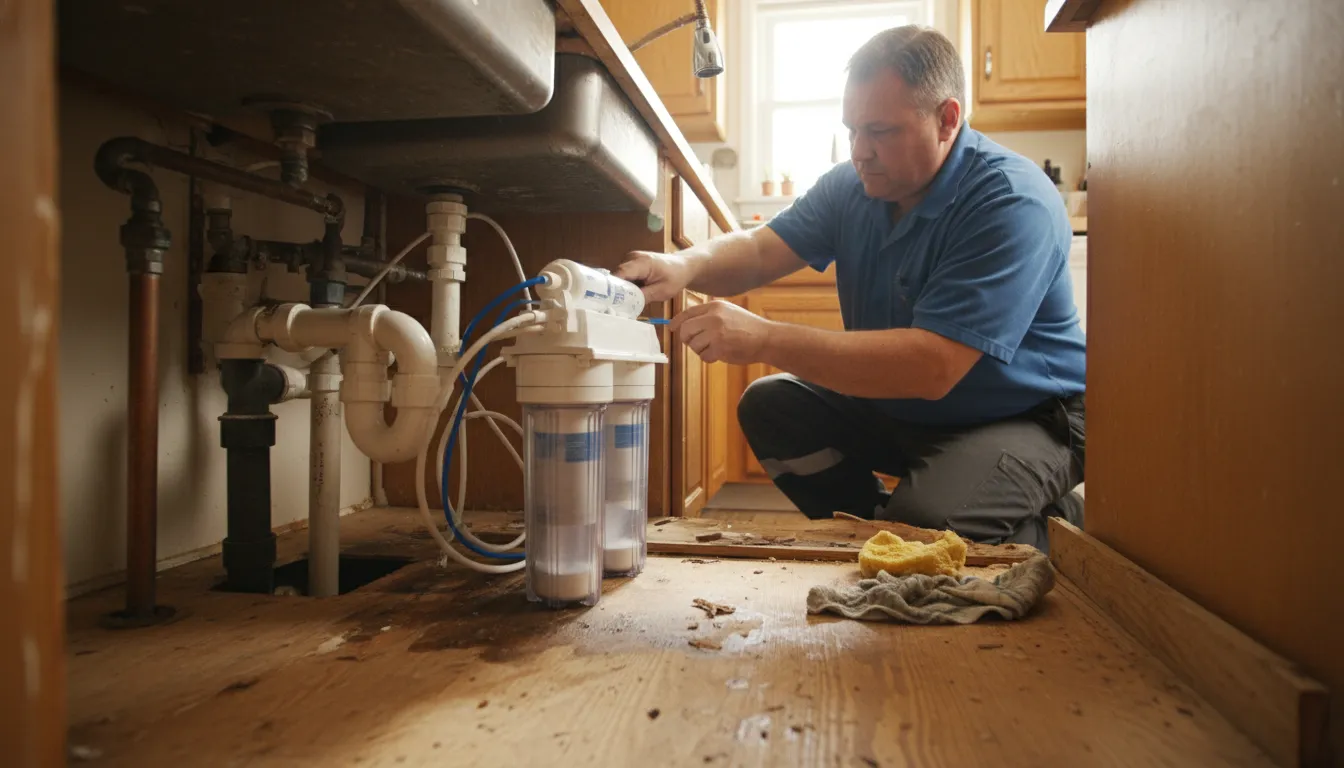
Find the Best Water Treatment Installation Companies for Your Business
No obligation • Fast responses • Nationwide coverage

Why you can trust Search a Plumber
Search a Plumber is a leading United States resource for finding and evaluating professional plumbing services. Our team researches licensing, experience, and customer feedback to create unbiased, fact-driven overviews. Companies cannot pay to change ratings or placement, ensuring homeowners get trustworthy information.
Search providers near you
Top Water Treatment Installation Companies in St Paul, Minnesota Ranked
Living in St. Paul means enjoying the beauty of the seasons, but it also means dealing with the unique characteristics of our local water supply. Whether you're noticing spots on your glassware, a strange taste in your tap water, or concerns about scale buildup in your appliances, a water treatment solution can make a significant difference in your home's water quality and comfort. This guide is designed to help you understand the common water challenges in the St. Paul area and the types of water conditioning and filtration systems available to address them, connecting you with the information needed to explore local professional services.
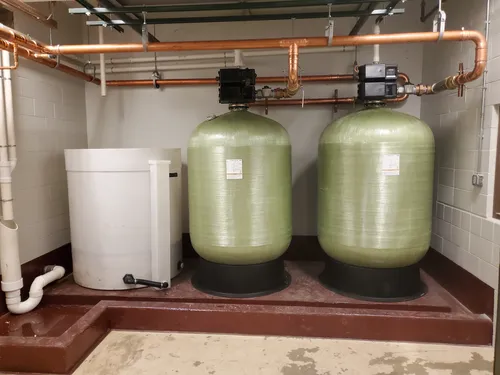
Merle's Water Conditioning
2200 MN-36, St Paul, MN 55109
Merle's Water Conditioning is a water treatment company serving Minneapolis, MN, and surrounding areas. They provide residential and commercial water softener installation, whole house filtration, iron removal, and drinking water systems. With over 64 years of experience as an independent, non-franchised business, they focus on offering innovative and efficient water treatment solutions. Their services include commercial water system repairs and maintenance, ensuring reliable operation for business customers.
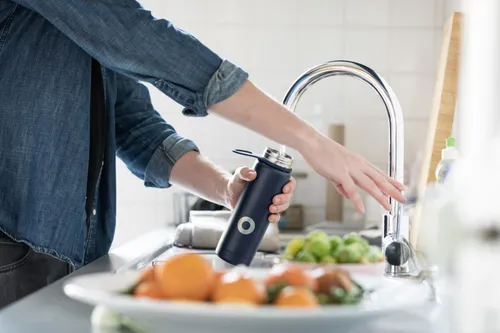
Taplin Soft Water
St Paul, MN
Taplin Soft Water is a family-owned water purification company serving St Paul, MN, and the broader Twin Cities area. Since 1988, they have provided water softener installation and comprehensive water treatment solutions, including whole-house filtration and reverse osmosis systems. Their certified technicians assess water quality to recommend personalized systems tailored to each home or business. Taplin Soft Water has extensive local knowledge of water challenges and focuses on delivering cleaner, healthier water to customers.
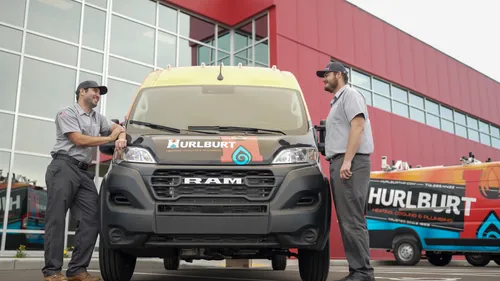
Hurlburt Heating & Plumbing
1000 County Rd E Suite 115, Shoreview, MN 55126
Hurlburt Heating & Plumbing is a family-owned home services provider serving St Paul, MN, and surrounding areas. Since 1959, they have offered plumbing, HVAC, and electrical services, including water heater repair, water softener installation, drain cleaning, and sewer line repair. Their experienced technicians use modern tools to address a wide range of home service needs. With a long history in the region, Hurlburt combines local knowledge with comprehensive capabilities to support homeowners year-round.
Good Guys Plumbing LLC
St Paul, MN
Good Guys Plumbing LLC is a family-owned plumbing company serving St Paul, MN, and nearby areas including Oakdale and Woodbury. They provide a wide range of residential plumbing services such as water heater repair and installation, sump pump repair, leak detection, gas line installation, and water softener installation. The company specializes in working with PEX, copper, and galvanized water systems and offers backflow prevention and water treatment solutions. With over a decade of experience, Good Guys Plumbing focuses on residential plumbing needs and maintaining home plumbing systems.
The McKays Company
780 19th St, Newport, MN 55055
The McKays Company is a family-owned business based in Minneapolis, MN, specializing in water softener installation and plumbing services. With over 90 years of experience, they provide tailored water treatment solutions that address the unique water conditions found throughout Minnesota. Their services include water testing, installation, and ongoing maintenance to ensure effective water treatment for homes.
Understanding St. Paul's Water Profile
The first step in choosing a water treatment system is understanding what's in your water. The quality can vary significantly even within the Twin Cities metro area.
Moderate Hardness in the City The City of St. Paul's municipal water is treated and is considered moderately hard, averaging between 5 and 6 grains per gallon (gpg). While not extremely hard, this level can still lead to gradual scale buildup in pipes, water heaters, and appliances over time, reducing their efficiency and lifespan.
Very Hard Water in Surrounding Communities If you live in areas like North St. Paul or other nearby suburbs, your water hardness can be much higher, often measuring between 15 and 23 gpg. At this level, water is considered very hard. You might see more pronounced issues like persistent soap scum, difficulty lathering, and significant scaling on fixtures and inside appliances, making a water softener a near-essential appliance for home maintenance.
Beyond Hardness: Taste and Contaminants Hardness minerals (calcium and magnesium) are only part of the story. Minnesota water often contains chlorine, which is used for disinfection but can affect taste and odor. Other common concerns include iron, which can cause reddish staining, and sediment like rust or dirt, especially in older home plumbing systems. These issues are typically addressed with filtration systems, either standalone or in combination with a softener.
Types of Water Treatment Systems for St. Paul Homes
Different problems require different solutions. Here's a breakdown of the most common and effective water treatment technologies used by local professionals.
Water Softeners (Ion Exchange Systems)
This is the primary defense against hard water. A traditional salt-based water softener works through an ion exchange process, where resin beads inside the tank swap sodium ions for the calcium and magnesium ions that cause hardness 1.
- How They Work: Hard water flows through a tank of resin. The hardness minerals stick to the resin, and softened water exits the system. Once the resin is saturated, the system regenerates by flushing it with a salty brine solution, washing the minerals down the drain and recharging the resin with sodium.
- Modern Features: Today's units are often digital and metered. They track your water usage and only regenerate when necessary, saving on salt and water compared to older timer-based models.
- Key Benefit: By eliminating scale, softeners protect your plumbing, water heater, dishwasher, and washing machine, while also making soap more effective and skin and hair feel less dry.
Pre-Filtration: Carbon and Sediment Filters
These systems are frequently installed as the first line of defense, either as point-of-entry (whole-house) or point-of-use (under-sink) systems.
- Carbon Filters: Excellent for improving taste and odor by removing chlorine, volatile organic compounds (VOCs), and some chemicals. They are often installed before a water softener, as chlorine can degrade the softener's resin over time.
- Sediment Filters: These are physical barriers, usually made of pleated polyester or string, that trap particles like rust, sand, and dirt. A whole-house sediment filter protects all your home's plumbing and appliances, including your water softener, from particulate matter.
Reverse Osmosis (RO) Drinking Water Systems
For the highest purity drinking and cooking water, a point-of-use reverse osmosis system is a popular choice. RO systems use a semi-permeable membrane to remove a very wide range of contaminants, including dissolved solids, lead, arsenic, and more 2 3. They are typically installed under the kitchen sink and include a dedicated faucet. It's important to note that RO is not typically used for whole-house treatment due to water waste and flow rate considerations, but it provides exceptional water quality at a specific tap.
The Professional Installation and Maintenance Process
Installing a water treatment system is not a typical DIY project. It involves plumbing connections, drainage, and often electrical work for digital controls. Here's what a professional service typically involves:
- Professional Water Testing: The process should always begin with a water test. A qualified technician can perform tests to determine your exact hardness level, check for iron, assess pH, and identify other specific concerns. This data is crucial for properly sizing and specifying equipment.
- System Design and Sizing: Based on the test results and your household size and water usage, the professional will recommend a custom solution. This often involves a combination of systems, such as a sediment pre-filter followed by a carbon filter, feeding into a correctly sized water softener 4.
- Professional Installation: Technicians will install the system, which includes tapping into your main water line, installing bypass valves (so you can bypass the system for maintenance or if you're on vacation), setting up drainage for the softener's brine tank, and ensuring everything is to code 5 6.
- Ongoing Maintenance and Service: All systems require upkeep. For softeners, this means adding salt to the brine tank regularly. For filters, it means replacing cartridges on a schedule (e.g., every 6-12 months for sediment/carbon, every 2-5 years for an RO membrane). Many local service companies offer maintenance plans to handle this for you.
Find the perfect water treatment installation companies for your needs
Get personalized recommendations and expert advice
Cost Considerations for Water Treatment
Investing in water quality involves upfront equipment and installation costs, plus ongoing operational expenses. Prices can vary based on system complexity, brand, and your home's specific plumbing setup.
- Equipment Costs: Basic filtration systems can start around a few hundred dollars, while a high-capacity, premium whole-home water softening and filtration system can cost several thousand dollars for the equipment alone.
- Installation Costs: Professional installation for a comprehensive whole-house system typically ranges from $1,000 to $3,000 or more, depending on the complexity of the job.
- Annual Operating Costs: Plan for ongoing expenses. For a salt-based softener, salt costs can range from $100 to $300 per year, depending on hardness and usage 7. Filter replacements for pre-filters and carbon systems may add another $150 to $300 annually, while maintenance visits or service plans are an additional consideration 7.
Key Takeaway: For most homes in the St. Paul and greater Twin Cities area, a combination approach is common. Pairing pre-filtration (to handle sediment and chlorine) with a properly sized water softener (to combat hardness) effectively addresses the most frequent local water quality issues, providing comprehensive protection for your home and better water for daily use 8 9 10.
Frequently asked questions
Sources
Footnotes
-
Home Water Softening - Minnesota Department of Health - https://www.health.state.mn.us/communities/environment/water/docs/factsheet/softening.pdf ↩
-
Water Softener Installation Near Minneapolis & St. Paul - https://www.metroheating.net/plumbing/water-quality/ ↩
-
Residential Drinking Water Filtration Systems in St. Paul, MN - https://www.merleswater.com/residential/drinking-water-filtration/ ↩
-
Residential Water Treatment - Bergerson Caswell Incorporated - https://www.bergersoncaswell.com/residential-water/residential-water-treatment/ ↩
-
Water Softener Installation Cottage Grove, MN - https://aquariushomeservices.com/water-softener-installation-cottage-grove-mn/ ↩
-
Water Filtration Systems for Homes and Businesses - https://www.ezplumbingmn.com/Water-Filtration-Systems ↩
-
Water Softener Installation Cost Breakdown Jan, 2026 - https://www.softprowatersystems.com/pages/cost-breakdown-water-softener-installation ↩ ↩2
-
Water Softener Installation Services | Twin Cities MN - https://www.petersonsalt.com/services/water-softener-installation/ ↩
-
Water Softener Installation North St. Paul, MN - https://aquariushomeservices.com/water-softener-installation-north-st-paul-mn/ ↩
-
Local Water Information for The City of St. Paul - Merle's Water Conditioning - https://www.merleswater.com/water-guide/local-water-info/st-paul-water-quality-report/ ↩