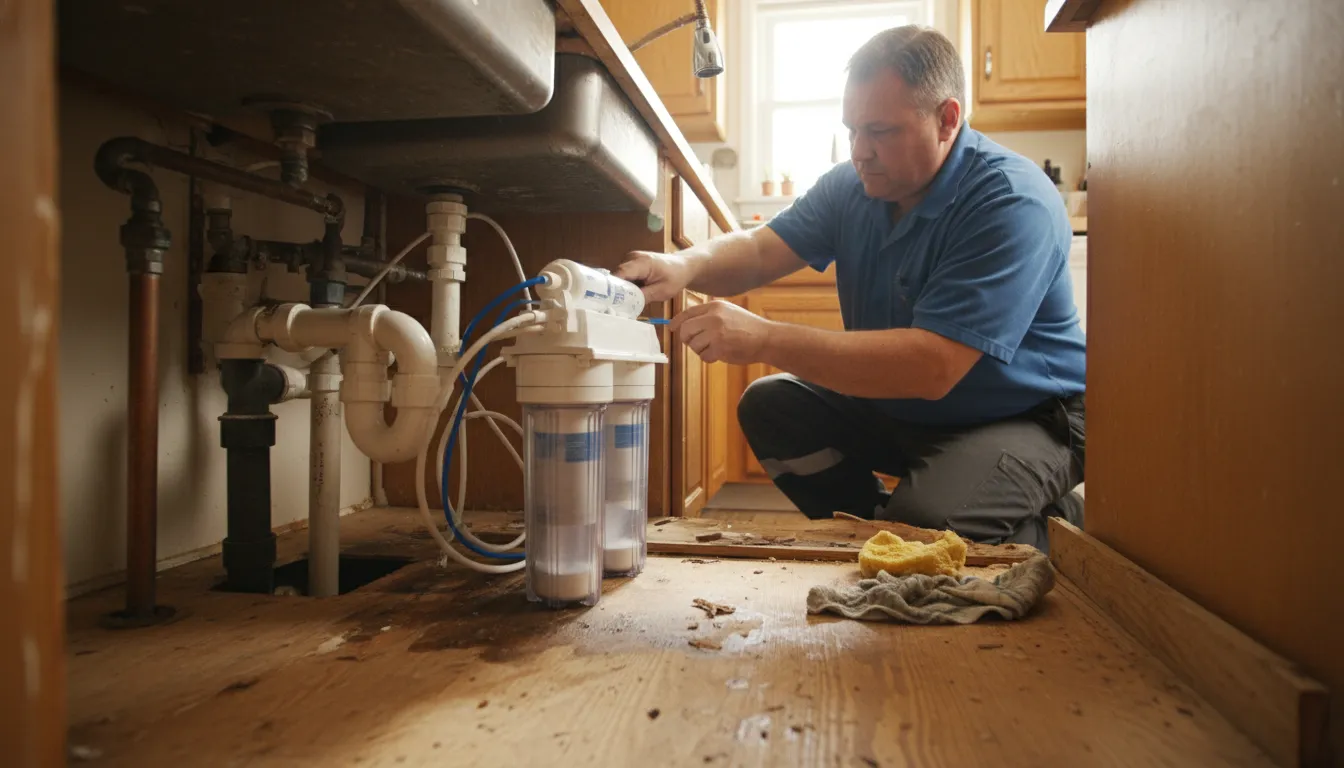
Find the Best Water Treatment Installation Companies for Your Business
No obligation • Fast responses • Nationwide coverage

Why you can trust Search a Plumber
Search a Plumber is a leading United States resource for finding and evaluating professional plumbing services. Our team researches licensing, experience, and customer feedback to create unbiased, fact-driven overviews. Companies cannot pay to change ratings or placement, ensuring homeowners get trustworthy information.
Search providers near you
Top Water Treatment Installation Companies in St Louis Park, Minnesota Ranked
Living in St. Louis Park means dealing with some of the hardest water in the Twin Cities area. This mineral-rich water can wreak havoc on your plumbing, appliances, and even your skin and hair. A properly designed water treatment system is not a luxury here; it's a practical necessity for protecting your home's infrastructure and improving your daily water quality. This guide will help you understand your local water challenges and the types of water conditioning and filtration solutions that are most effective for St. Louis Park homes, empowering you to make an informed decision for your household.
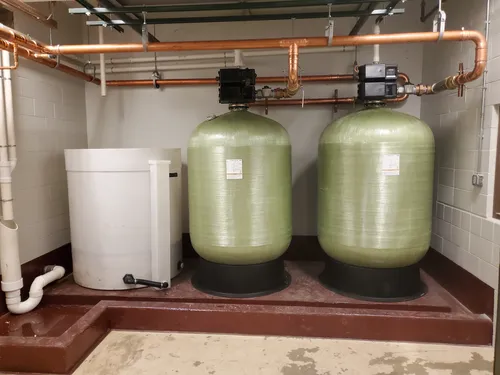
Merle's Water Conditioning
2200 MN-36, St Paul, MN 55109
Merle's Water Conditioning is a water treatment company serving Minneapolis, MN, and surrounding areas. They provide residential and commercial water softener installation, whole house filtration, iron removal, and drinking water systems. With over 64 years of experience as an independent, non-franchised business, they focus on offering innovative and efficient water treatment solutions. Their services include commercial water system repairs and maintenance, ensuring reliable operation for business customers.
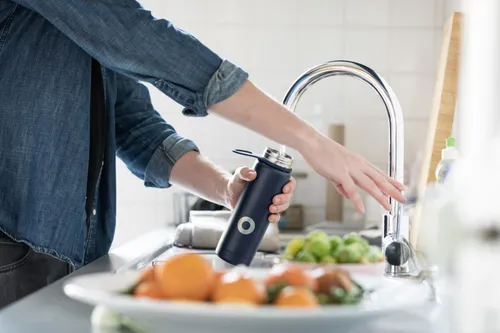
Taplin Soft Water
St Paul, MN
Taplin Soft Water is a family-owned water purification company serving St Paul, MN, and the broader Twin Cities area. Since 1988, they have provided water softener installation and comprehensive water treatment solutions, including whole-house filtration and reverse osmosis systems. Their certified technicians assess water quality to recommend personalized systems tailored to each home or business. Taplin Soft Water has extensive local knowledge of water challenges and focuses on delivering cleaner, healthier water to customers.
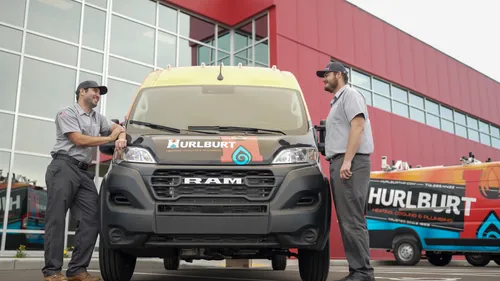
Hurlburt Heating & Plumbing
1000 County Rd E Suite 115, Shoreview, MN 55126
Hurlburt Heating & Plumbing is a family-owned home services provider serving St Paul, MN, and surrounding areas. Since 1959, they have offered plumbing, HVAC, and electrical services, including water heater repair, water softener installation, drain cleaning, and sewer line repair. Their experienced technicians use modern tools to address a wide range of home service needs. With a long history in the region, Hurlburt combines local knowledge with comprehensive capabilities to support homeowners year-round.
Good Guys Plumbing LLC
St Paul, MN
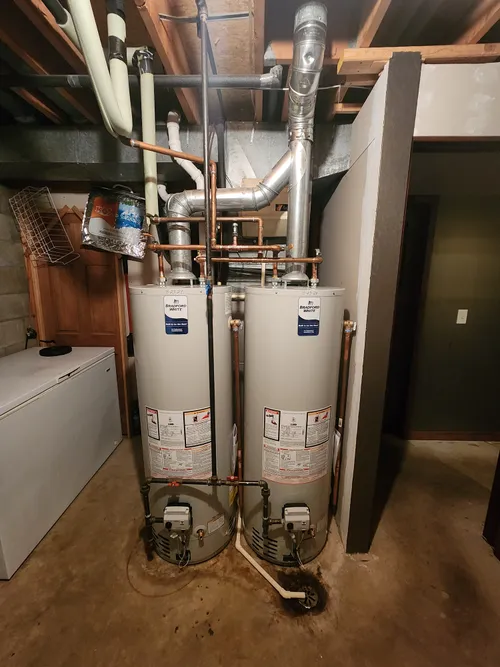
Good Guys Plumbing LLC is a family-owned plumbing company serving St Paul, MN, and nearby areas including Oakdale and Woodbury. They provide a wide range of residential plumbing services such as water heater repair and installation, sump pump repair, leak detection, gas line installation, and water softener installation. The company specializes in working with PEX, copper, and galvanized water systems and offers backflow prevention and water treatment solutions. With over a decade of experience, Good Guys Plumbing focuses on residential plumbing needs and maintaining home plumbing systems.
The McKays Company
780 19th St, Newport, MN 55055
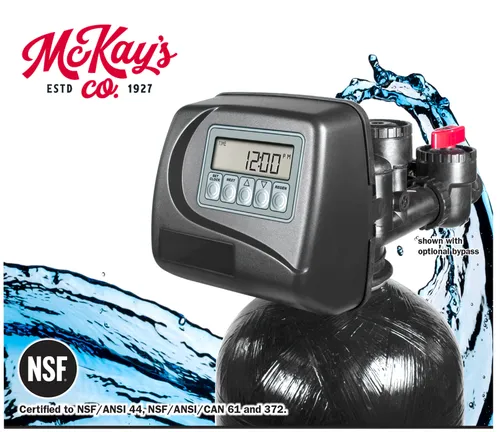
The McKays Company is a family-owned business based in Minneapolis, MN, specializing in water softener installation and plumbing services. With over 90 years of experience, they provide tailored water treatment solutions that address the unique water conditions found throughout Minnesota. Their services include water testing, installation, and ongoing maintenance to ensure effective water treatment for homes.
Understanding St. Louis Park's Water Quality
The first step in solving a water quality issue is understanding what's in your water. St. Louis Park draws its water from deep underground aquifers, a source that is reliable but naturally high in dissolved minerals1.
- Extreme Hardness: The water in St. Louis Park is classified as "very hard," measuring around 18 grains per gallon (gpg). To put that in perspective, the national average for "hard" water is often considered to be around 5-7 gpg. This high concentration of calcium and magnesium is what causes the stubborn scale buildup on faucets, inside water heaters, and on glass shower doors.
- Iron Content: In addition to hardness, many homes in the area contend with naturally occurring iron. When this iron oxidizes (often due to chlorine in the municipal supply), it can cause rusty, reddish-brown staining on sinks, tubs, and laundry. It can also give your water a metallic taste.
This combination of extreme hardness and iron presents a unique two-part challenge that typically requires a two-part solution: a system to soften the water and a separate system to filter out the iron.
Essential Water Treatment Systems for St. Louis Park Homes
Given the local water profile, a one-size-fits-all approach doesn't work. The most effective whole-house water treatment strategy often involves a combination of technologies.
1. The Water Softener: Your First Line of Defense
A water softener is essential for any St. Louis Park home. It works through a process called ion exchange, swapping the hardness minerals (calcium and magnesium) for sodium or potassium ions.
- High-Efficiency & Twin-Tank Models: For a home with very hard water, a high-efficiency softener is highly recommended. Twin-tank (or alternating) systems are particularly advantageous because they provide a continuous supply of soft water. While one tank is in service, the other is on standby or regenerating, so you never have to wait for soft water during the regeneration cycle. These models also tend to use less salt and water over their lifetime, offering long-term savings.
- What a Softener Does: It prevents scale buildup in pipes and appliances, extends the life of your water heater, makes soaps and detergents lather more effectively, and leaves skin and hair feeling less dry.
2. Iron Filtration: Tackling Stains and Discoloration
It's a common misconception that a water softener removes iron. While some softeners can handle very low levels, the iron content in St. Louis Park's water often requires a dedicated iron filtration system. These systems, typically installed before the softener, use various media to oxidize and filter out iron particles, preventing those unsightly rust stains on your fixtures and laundry.
3. Drinking Water Filtration (Point-of-Use)
For the highest quality water for drinking and cooking, many homeowners opt for an additional point-of-use system. A Reverse Osmosis (RO) system installed under your kitchen sink is a popular choice 2. RO systems use a semi-permeable membrane to remove a wide array of contaminants, including many that a softener and iron filter do not, resulting in exceptionally clean and great-tasting water.
Find the perfect water treatment installation companies for your needs
Get personalized recommendations and expert advice
The Professional Installation Process
Installing a whole-house water treatment system is a significant plumbing project that should be handled by a licensed professional. Here's what a typical installation involves:
- Comprehensive Water Assessment: A reputable professional will begin by testing your home's water. This is crucial for tailoring the system's capacity and settings to your specific hardness and iron levels3.
- System Selection & Sizing: Based on the test results and your household's water usage, the technician will recommend the appropriately sized softener, iron filter, and any ancillary components.
- Plumbing Installation: The systems are installed on the main water line entering your home, usually near the water heater or in the utility area. This involves cutting into the main line, installing bypass valves (which allow you to service the system without shutting off your home's water), and connecting drain lines for the regeneration process4 5.
- Electrical Connection: Most modern electronic control valves require a standard electrical outlet.
- Programming & Demonstration: The installer will program the control valve based on your water test and show you how to operate the system, add salt, and understand its maintenance alerts.
Investment and Ongoing Maintenance
Investing in a water treatment system involves upfront equipment and installation costs, followed by predictable ongoing maintenance.
- Equipment Costs: For a quality, high-efficiency water softener suitable for St. Louis Park's hard water, equipment can range from $1,500 to $4,000 or more. Adding a whole-house iron filter or an under-sink RO system will increase this initial investment.
- Installation Costs: Professional installation can vary widely based on plumbing complexity, but typically ranges from $500 to $1,500+ 6.
- Ongoing Maintenance: The primary ongoing cost is for salt (or potassium chloride) pellets to regenerate the softener. For an efficient system, this typically runs $20 to $40 per month7 8. Annual maintenance, such as using a resin cleaner or having a professional service check, is also recommended to keep the system operating at peak efficiency.
The key takeaway is that your primary needs are combating extreme hardness with a softener and addressing iron with a dedicated filter. Investing in high-efficiency models, while having a higher upfront cost, can save significant money on salt and water over many years of use. Always start with a professional water test to get precise, customized recommendations for your home.
Frequently asked questions
Sources
Footnotes
-
St. Louis Park Water Supply Remains Reliable Despite Challenges - https://www.health.state.mn.us/communities/environment/water/waterline/featurestories/stlouispark.html ↩
-
How To Choose The Best Water Treatment System For Your Twin ... - https://twincityheatingandair.com/minneapolis-mn-heating-and-air-conditioning-blog/how-to-choose-the-best-water-treatment-system-for-your-twin-cities-home ↩
-
Water Softening Systems | Pure Honest Water - https://purehonestwater.com/water-treatment-systems/water-softening/ ↩
-
Water Treatment Systems in St. Charles, MO - https://www.performanceplumbinginc.com/water-treatment-systems ↩
-
North Star - Jensen Sales & Marketing, Inc. 2025 - https://jsaminc.com/north-star/ ↩
-
Water Softener Installation Expenses: Cost Guide 🇺🇸 Nov, 2025 - https://qualitywatertreatment.com/pages/water-softener-installation-expenses-analysis ↩
-
St Louis Park Water Softener and Drinking Water Guide - https://www.premierwatermn.com/water-quality/city-water/st-louis-park/ ↩
-
Residential softening | Water Resources Center - https://wrc.umn.edu/residentialsoftening ↩