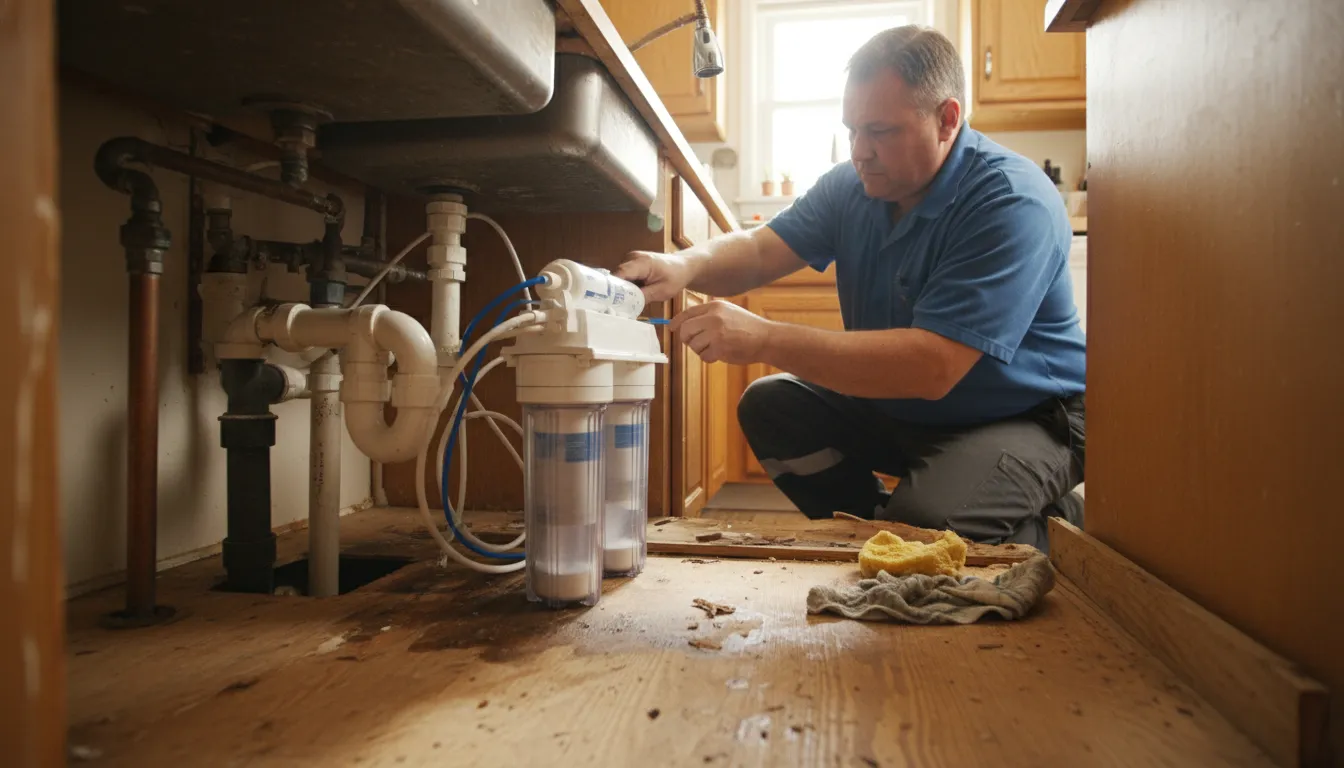
Find the Best Water Treatment Installation Companies for Your Business
No obligation • Fast responses • Nationwide coverage

Why you can trust Search a Plumber
Search a Plumber is a leading United States resource for finding and evaluating professional plumbing services. Our team researches licensing, experience, and customer feedback to create unbiased, fact-driven overviews. Companies cannot pay to change ratings or placement, ensuring homeowners get trustworthy information.
Search providers near you
Top Water Treatment Installation Companies in Minnetonka, Minnesota Ranked
Living in Minnetonka means enjoying beautiful lakes and a vibrant community, but it also means dealing with some of the hardest water in the Twin Cities area. The groundwater supplying your home is rich in minerals like calcium and magnesium, which can lead to frustrating and costly problems throughout your household. A properly designed water treatment system is not just a luxury; it's a practical investment in your home's plumbing, appliances, and your family's comfort. This guide will help you understand your local water quality, the types of systems available, and how to find the right local expertise to solve your specific water concerns.
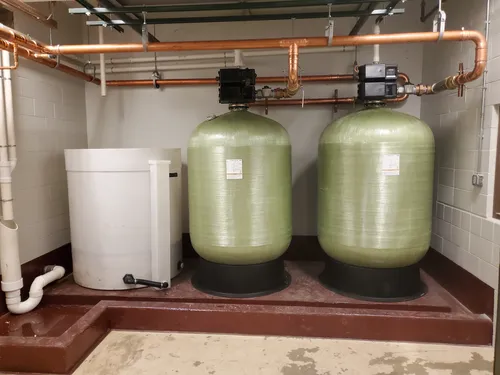
Merle's Water Conditioning
2200 MN-36, St Paul, MN 55109
Merle's Water Conditioning is a water treatment company serving Minneapolis, MN, and surrounding areas. They provide residential and commercial water softener installation, whole house filtration, iron removal, and drinking water systems. With over 64 years of experience as an independent, non-franchised business, they focus on offering innovative and efficient water treatment solutions. Their services include commercial water system repairs and maintenance, ensuring reliable operation for business customers.
Taplin Soft Water
St Paul, MN
Taplin Soft Water is a family-owned water purification company serving St Paul, MN, and the broader Twin Cities area. Since 1988, they have provided water softener installation and comprehensive water treatment solutions, including whole-house filtration and reverse osmosis systems. Their certified technicians assess water quality to recommend personalized systems tailored to each home or business. Taplin Soft Water has extensive local knowledge of water challenges and focuses on delivering cleaner, healthier water to customers.
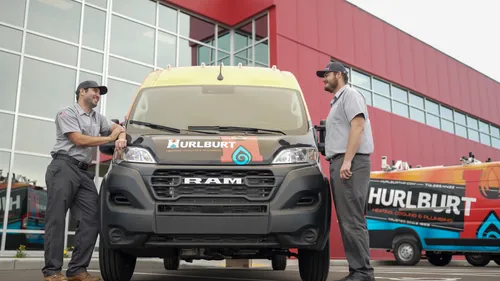
Hurlburt Heating & Plumbing
1000 County Rd E Suite 115, Shoreview, MN 55126
Hurlburt Heating & Plumbing is a family-owned home services provider serving St Paul, MN, and surrounding areas. Since 1959, they have offered plumbing, HVAC, and electrical services, including water heater repair, water softener installation, drain cleaning, and sewer line repair. Their experienced technicians use modern tools to address a wide range of home service needs. With a long history in the region, Hurlburt combines local knowledge with comprehensive capabilities to support homeowners year-round.
Good Guys Plumbing LLC
St Paul, MN
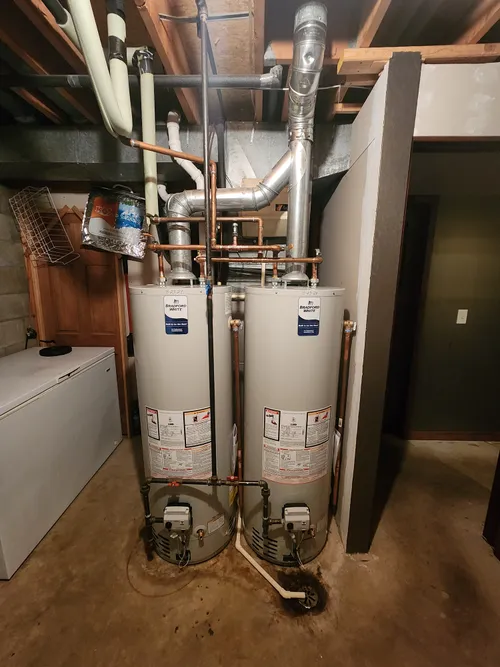
Good Guys Plumbing LLC is a family-owned plumbing company serving St Paul, MN, and nearby areas including Oakdale and Woodbury. They provide a wide range of residential plumbing services such as water heater repair and installation, sump pump repair, leak detection, gas line installation, and water softener installation. The company specializes in working with PEX, copper, and galvanized water systems and offers backflow prevention and water treatment solutions. With over a decade of experience, Good Guys Plumbing focuses on residential plumbing needs and maintaining home plumbing systems.
The McKays Company
780 19th St, Newport, MN 55055
The McKays Company is a family-owned business based in Minneapolis, MN, specializing in water softener installation and plumbing services. With over 90 years of experience, they provide tailored water treatment solutions that address the unique water conditions found throughout Minnesota. Their services include water testing, installation, and ongoing maintenance to ensure effective water treatment for homes.
Understanding Minnetonka's Water Hardness
The core issue for most Minnetonka homeowners is water hardness. The city's water supply is drawn from deep bedrock aquifers, and this groundwater is classified as very hard, measuring around 18 grains per gallon (gpg) 1. For context, water over 10.5 gpg is considered extremely hard. This high mineral content is a natural characteristic of the local geology, but it has several direct impacts on your daily life.
When hard water is heated or evaporates, it leaves behind scale-a chalky, crusty buildup of minerals. You'll notice this as white spots on dishes and shower doors, but the real damage occurs out of sight. Scale accumulates inside pipes, water heaters, dishwashers, and coffee makers, reducing their efficiency and lifespan. Appliances have to work harder, using more energy, and are more prone to premature failure. Furthermore, the minerals in hard water react with soap, preventing it from lathering effectively. This leads to soap scum on shower walls, stiff laundry, and the feeling that you can't quite rinse soap off your skin or hair 2.
Common Contaminants and Concerns Beyond Hardness
While hardness is the primary challenge, Minnetonka's water quality reports and local conditions point to other considerations for a comprehensive water treatment plan. The municipal water is treated and meets all federal safety standards, but some residents may wish to address secondary issues for taste, odor, or specific health preferences.
Chlorine is used in the treatment process to ensure water safety as it travels through pipes. While necessary, it can impart a chemical taste or odor to drinking water and may dry out skin and hair during showers. Some older plumbing infrastructure in certain areas can also contribute to concerns about sediment or, in rare cases, trace metals 3. A metallic taste or reddish staining on fixtures can sometimes occur. Identifying these specific issues through testing is the first step toward a tailored solution.
Types of Water Treatment Systems for Your Home
Choosing the right system depends on your goals: Do you want to treat water for the entire house, or just at specific taps? The most common and effective solutions for Minnetonka homes involve a combination of technologies.
Ion-Exchange Water Softeners: This is the essential workhorse for combating Minnetonka's hard water. These whole-house systems use a tank filled with resin beads that attract and hold the calcium and magnesium ions. In exchange, they release sodium or potassium ions into the water-a process called ion exchange 4. The result is soft water flowing to every faucet, appliance, and shower in your home. When the resin beads become saturated with hardness minerals, the system automatically regenerates by flushing them with a salty brine solution, readying it for another cycle.
Reverse Osmosis (RO) Systems: For crystal-clear, great-tasting drinking water, many homeowners pair a whole-house softener with a point-of-use reverse osmosis system. Typically installed under the kitchen sink, an RO unit forces water through a semi-permeable membrane that filters out up to 99% of dissolved solids, including the sodium added by the softener, along with many other potential contaminants. This provides premium water for drinking, cooking, and making ice.
Whole-Home Filtration Systems: These units are installed at the point where water enters your home. They are designed to address specific issues like sediment, chlorine, or unpleasant odors. A carbon-based whole-house filter, for example, can remove chlorine taste and smell from all the water in your home, benefiting your skin and laundry as well as your drinking water 5. Often, a filtration system is installed in series with a water softener for complete treatment.
Find the perfect water treatment installation companies for your needs
Get personalized recommendations and expert advice
The Professional Installation Process
Installing a water conditioning system is a job for a licensed plumbing professional. Proper installation is critical for performance, efficiency, and to avoid leaks or damage. The process typically follows these steps:
- Professional Water Analysis: While DIY test strips can give a basic idea, a local expert will perform a more comprehensive test. Many Minnetonka-area companies offer free in-home water tests that accurately measure hardness, iron, pH, and other factors.
- Assessment and Sizing: Your technician will assess your home's plumbing layout, the number of bathrooms, and your family's daily water usage. Sizing the softener correctly is vital-a unit that's too small won't keep up with demand, while one that's too large wastes water and salt during regeneration 6.
- Choosing the Location: The ideal location is usually near where the main water line enters the home, close to the water heater and a drain. The installer will need access to electricity (for electronic control heads) and a floor drain for the regeneration cycle.
- Plumbing Connections: The professional will cut into the main water line and install the system with proper bypass valves. This allows you to temporarily bypass the softener for maintenance or if you need uninterrupted water flow. They will also connect the drain line and, for a softener, set up the brine tank for salt 7.
Costs: Investment and Ongoing Maintenance
The total cost for improving your home's water involves the equipment, professional installation, and ongoing maintenance.
- Equipment Costs: A high-quality ion-exchange water softener for a typical Minnetonka home can range from $1,500 to $3,000 or more, depending on capacity, brand, and features like demand-initiated regeneration or smart monitoring. An under-sink reverse osmosis system typically costs between $300 and $800. Whole-house filtration systems vary widely based on their technology.
- Installation Costs: Professional installation by a qualified plumber can add $300 to $800+ to the total, depending on the complexity of your plumbing and the location chosen for the equipment 8 9.
- Ongoing Maintenance: Water softeners require salt to regenerate. A typical household in Minnetonka can expect to spend $20 to $50 per month on salt, depending on hardness and water usage 10 11. Filter-based systems (like RO units and whole-house filters) require periodic cartridge changes, which may cost $100 to $300 annually 12 13.
Finding Local Expertise in Minnetonka
Given the specific challenges of local water, working with a company familiar with Minnetonka's 18 gpg hardness is a significant advantage. Established local providers such as Culligan of Minnetonka, Haferman Water, and Premier Water have extensive experience testing, recommending, and installing systems designed for our area's conditions. They can provide reliable service, maintenance, and support for the life of your equipment.
Frequently asked questions
Sources
Footnotes
-
Centralized water softening study update - Maple Grove - https://www.maplegrovemn.gov/AgendaCenter/ViewFile/Agenda/_03042024-564?packet=true ↩
-
Water | City of Minnetonka, MN - https://www.minnetonkamn.gov/services/utilities/water ↩
-
MIBCO site - Minnesota Groundwater Contamination Atlas - https://webapp.pca.state.mn.us/cleanup/search/superfund?text=MIBCO%20SITE&siteId=191646-AREA0000000002 ↩
-
Water Softener Systems & How They Work - https://www.enercare.ca/blog/plumbing/water-softener-systems-and-how-they-work ↩
-
Minnetonka 2022 Drinking Water Report - Shorewood, MN - https://ci.shorewood.mn.us/DocumentCenter/View/382/2022-Minnetonka-Water-Quality-Report-PDF ↩
-
Home Water Softening - Minnesota Department of Health - https://www.health.state.mn.us/communities/environment/water/docs/factsheet/softening.pdf ↩
-
Purchasing and Maintaining A Water Softener | Department of Energy - https://www.energy.gov/energysaver/purchasing-and-maintaining-water-softener ↩
-
Water Treatment Systems Installation & Repair Minneapolis - https://www.airmechanical.com/plumbing/water-treatment-systems/ ↩
-
Residential softening | Water Resources Center - https://wrc.umn.edu/residentialsoftening ↩
-
Minnetonka Water Softener and Drinking Water Guide - https://www.premierwatermn.com/water-quality/city-water/minnetonka/ ↩
-
Minnetonka, Minnesota Water Softener and Filtration Solutions - https://www.culliganminneapolis.com/locations/minnetonka-mn/989 ↩
-
Experience soft, worry free water in Minnetonka with Kinetico - https://www.hafermanwater.com/service-area/hennepin-county-water-softeners-and-water-filtration/minnetonka/ ↩
-
Drinking Water Systems Minnetonka | Specialty Water Filters - https://www.hafermanwater.com/drinking-water-systems-minnetonka/ ↩