Find the Best Toilet Repair & Replacement Contractors for Your Business
No obligation • Fast responses • Nationwide coverage

Why you can trust Search a Plumber
Search a Plumber is a leading United States resource for finding and evaluating professional plumbing services. Our team researches licensing, experience, and customer feedback to create unbiased, fact-driven overviews. Companies cannot pay to change ratings or placement, ensuring homeowners get trustworthy information.
Search providers near you
Top Toilet Repair & Replacement Contractors in Pittsburgh, Pennsylvania Ranked
Dealing with a malfunctioning toilet is more than just an inconvenience; it can lead to water waste, higher utility bills, and potential water damage to your home. Whether you're facing a persistent clog, a constant running sound, or a leak at the base, understanding your options for toilet repair or a full fixture replacement is key to restoring function and peace of mind. This guide is designed to help Pittsburgh homeowners navigate common toilet troubles, understand the typical solutions and costs involved, and connect with skilled local professionals who can diagnose and resolve the issue efficiently.
DR Plumbing and Drain Cleaning LLC - Sewer Line & Plumbing Repair
Pittsburgh, PA
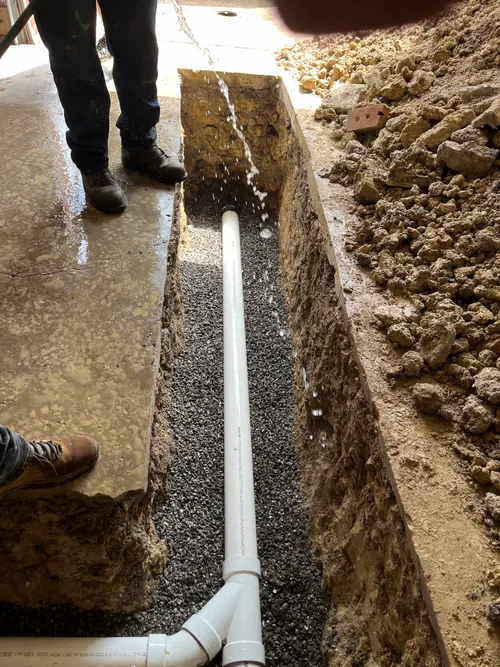
DR Plumbing and Drain Cleaning LLC - Sewer Line & Plumbing Repair provides a wide range of plumbing and drain cleaning services in Pittsburgh, PA, including Wilkinsburg and Brentwood. The business specializes in sewer line repair, installation, and inspection, offering hydro jetting services to address sewer line issues effectively. With 20 years of experience, they also handle water heater installation, gas line services, faucet and toilet repairs and installations, drain cleaning, and garbage disposal repairs. The owner emphasizes personalized solutions and is available 24/7 for emergency plumbing repairs, serving residential clients throughout the Pittsburgh area and nearby boroughs.
Mr. Rooter Plumbing of Westmoreland
13380 US-30, North Huntingdon, PA 15642
Mr. Rooter Plumbing of Westmoreland provides commercial and residential plumbing services in Pittsburgh, PA. They offer a range of solutions including drain cleaning, leak detection, water heater installation and repair, sewer line services, and gas line installation. The company uses advanced equipment such as sewer camera inspections and hydro jetting to address complex plumbing issues. Their commercial plumbers are trained to manage large-scale systems in businesses, ensuring compliance with local codes and minimizing disruptions. Based in North Huntingdon, they serve the greater Pittsburgh area with expertise in both routine maintenance and emergency plumbing needs.
WJ McNabb Plumbing
11 Tunl Wy, McKees Rocks, PA 15136
WJ McNabb Plumbing is a family-owned plumbing company serving Pittsburgh, PA, with over 40 years of experience. They provide a range of plumbing services including sewer camera inspections, water heater repair and installation, water softener installation, drain cleaning, leak detection, and toilet repair. The company is NASSCO certified and offers thorough visual inspections and repair options to ensure lasting solutions rather than temporary fixes. Their licensed plumbers focus on clear communication and respect for customers' homes. WJ McNabb Plumbing serves both residential and commercial clients in the Pittsburgh area.
Sewer Flow - Pittsburgh Sewer & Drain Specialists And Plumbing
962 Brookline Blvd, Pittsburgh, PA 15226
Sewer Flow - Pittsburgh Sewer & Drain Specialists And Plumbing provides plumbing and sewer services in Pittsburgh, PA. They offer sewer camera inspections, drain cleaning, sewer line repairs, gas line installations, and toilet repairs. The company is known for same-day service and skilled professional plumbers who serve Allegheny County and surrounding areas. One notable capability is their use of sewer camera inspections to diagnose and address sewer line issues efficiently. Sewer Flow emphasizes clear communication and thorough explanations to help customers understand their plumbing needs.
Revelation Plumbing
120 Seville Ave, Pittsburgh, PA 15214
Revelation Plumbing is a family-owned and licensed plumbing company serving Pittsburgh, PA, and surrounding counties including Allegheny, Beaver, and Washington. They provide a wide range of residential plumbing services such as sewer line repair, drain cleaning, water heater installation and repair-including tankless systems-leak detection, sump pump repair, and gas line installation. The company is known for its expertise in trenchless sewer repair and uses advanced technologies like sewer camera inspections and smoke testing to diagnose and resolve plumbing issues efficiently. Revelation Plumbing offers same-day emergency plumbing services, ensuring prompt assistance for urgent problems like leaks, clogs, and gas line repairs.
Common Toilet Problems in Pittsburgh Homes
Toilets are robust fixtures, but their internal components are subject to wear and tear. In Pittsburgh, several recurring issues prompt calls for professional toilet service. Identifying the symptom is the first step toward a solution.
- A Running Toilet: This is often the most common and wasteful problem. The sound of water continuously filling the tank usually points to a faulty internal mechanism. The culprit is frequently a worn-out flapper that no longer seals the tank drain, a malfunctioning fill valve that doesn't shut off, or a misadjusted overflow tube. Left unrepaired, a running toilet can waste hundreds of gallons of water per day.
- A Clogged Toilet: While a plunger can handle minor blockages, recurrent or severe clogs indicate a deeper issue. These can be caused by non-flushable items, mineral buildup in the pipes, or problems with the drain line itself. For tough clogs beyond a plunger's reach, professionals use specialized tools like closet augers or hydro-jetting equipment.
- A Leaking Toilet: Leaks can be sneaky, causing damage to subfloors and ceilings before they're even noticed. Leaks typically originate from three areas: around the base (indicating a failed wax ring seal), at the connection between the tank and the bowl (from a degraded gasket or loose bolts), or from the water supply line or fill valve assembly.
Professional Repair Solutions and Materials
When a toilet acts up, a professional plumber will diagnose the specific failure and use quality parts to ensure a lasting fix. Repairs generally focus on the toilet's internal assembly and sealing components.
Standard Repair Kits and Parts: Most repairs involve replacing plastic and rubber components inside the tank or at the base seal. Common repair materials include:
- Rubber Flappers and Tank Balls: These create the watertight seal at the bottom of the tank.
- Plastic Fill Valves and Floats: These control the refill of water after a flush.
- Tank-to-Bowl Gaskets and Bolts: These seal and secure the connection between the upper tank and the lower bowl.
- Wax Rings and Wax-Free Seals: This critical seal sits between the base of the toilet and the floor drain (closet flange), preventing sewer gases and water from leaking. Various types are available for different flange heights 1.
- Plumber's Putty: Used for sealing around the base of certain fixtures after installation.
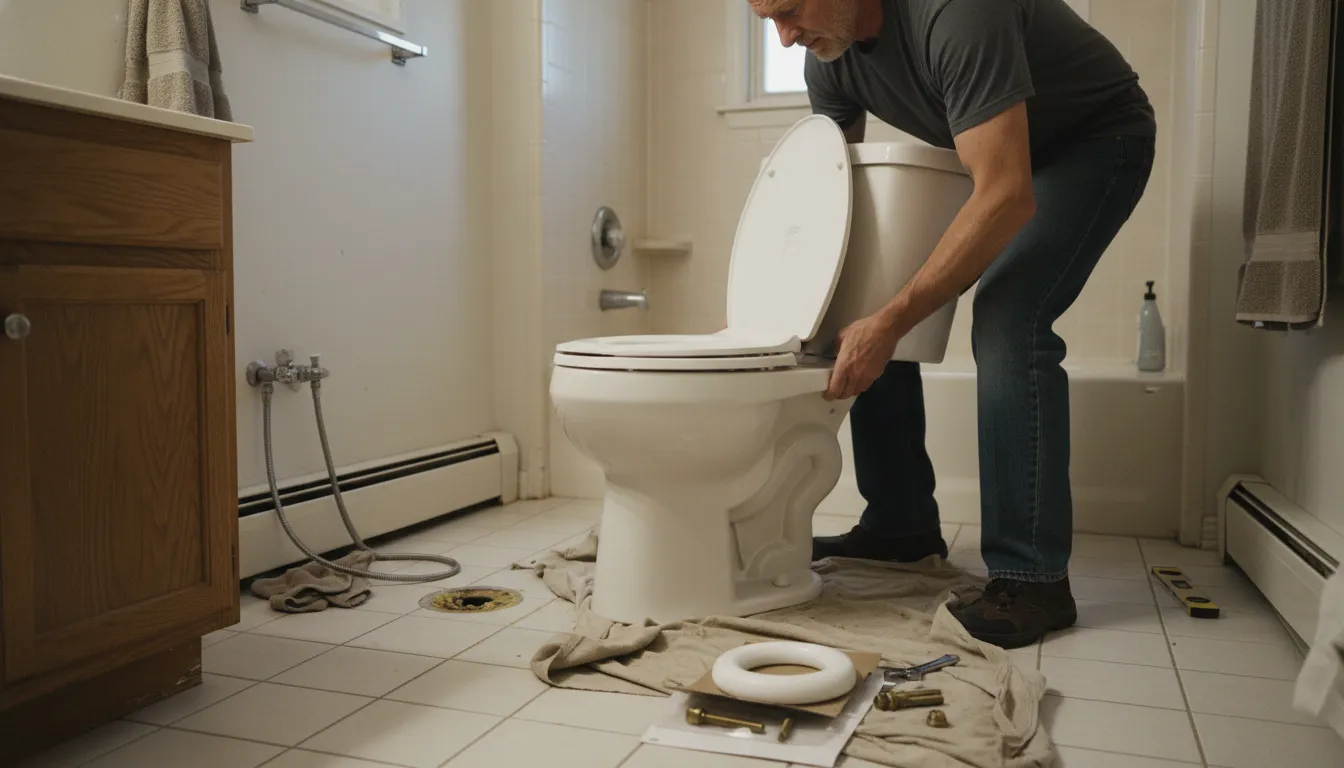
For a running toilet, the repair often involves a straightforward swap of the flapper or fill valve assembly. A leak at the base, however, is a more involved job requiring the toilet to be lifted, the old wax ring scraped away, and a new seal installed-a process where professional expertise prevents cracks in the porcelain or an improper seal.
When to Consider a Full Toilet Replacement
Sometimes, repair is not the most economical or practical long-term solution. Homeowners in Pittsburgh might opt for a full toilet installation for several reasons.
Signs You Need a New Toilet:
- Persistent Problems: Frequent clogs or leaks that recur shortly after repairs can signal underlying issues with the fixture itself or the drain line.
- Age and Inefficiency: Older toilets (typically those installed before 1994) use significantly more water per flush (3.5-7 gallons) compared to modern, WaterSense-labeled models that use just 1.28 gallons. Upgrading can lead to substantial water savings.
- Cracks in Porcelain: Any visible crack in the ceramic bowl or tank is a failure point that will leak and cannot be reliably repaired.
- Aesthetic or Comfort Upgrade: Replacing a dated, worn, or uncomfortably low toilet with a new comfort-height, elongated-bowl, or one-piece model can improve both your bathroom's look and functionality.
The Replacement Process and Materials: A full toilet replacement is a more complex project than a simple repair. It involves removing the old unit, preparing the drain flange, and securely installing the new one. Key materials for a new installation include:
- The New Toilet: Ceramic one-piece or two-piece models, with choices in height, bowl shape, and flushing technology.
- PVC or ABS Drain Pipe: The existing pipe must be in good condition; sometimes, a section of the closet flange or drain needs repair or replacement.
- A New Wax Ring or Gasket Seal: A fresh, pliable seal is non-negotiable for a leak-free installation.
- New Supply Line: The flexible hose connecting the water shut-off valve to the toilet tank is often replaced to ensure reliability.
Find the perfect toilet repair & replacement contractors for your needs
Get personalized recommendations and expert advice
Understanding Costs for Toilet Services in Pittsburgh
The cost for toilet work in Pittsburgh depends heavily on the job's complexity, the parts required, and whether it's a standard service call or an emergency. Labor rates for skilled plumbers in the area provide a baseline for estimates.
Labor and Service Call Rates: Plumbers in Pittsburgh typically charge an hourly rate for their labor, which generally falls between $70 and $120 per hour, plus the cost of any parts used2. Many companies also have a minimum service charge or trip fee that covers the first hour of labor. Rates for emergency calls (after hours, on weekends, or holidays) can be significantly higher.
Typical Repair and Replacement Costs:
- Simple Internal Repair: Replacing a flapper, fill valve, or adjusting internal components typically ranges from $100 to $200 for parts and labor.
- Moderate Repair (Wax Ring/Clog): Resolving a leak at the base by replacing the wax ring or clearing a stubborn clog with an auger often costs between $150 and $300.
- Toilet Installation (Labor Only): If you purchase the toilet yourself, the labor to remove the old unit and install the new one averages approximately $130 to $150 3.
- Full Toilet Replacement (Unit + Labor): The total project cost, including a new toilet and professional installation, typically starts around $250 and can exceed $500 or more, depending on the price of the toilet fixture you select (which can range from $50 for a basic model to $400+ for high-efficiency or designer units)4 5 6.
DIY vs. Professional Service
Some minor toilet issues, like a worn flapper, are within the capability of a handy homeowner with basic tools. A DIY repair can save on labor costs for these simple part swaps. However, more complex tasks carry risks.
Attempting a toilet replacement or a wax ring repair without experience can lead to improper sealing, resulting in leaks that cause hidden water damage, or even cracking the expensive porcelain of the new toilet during handling. Furthermore, an incorrect installation can violate local plumbing codes. For jobs involving lifting the heavy fixture, ensuring a perfect seal on the drain, and making secure water connections, the expertise of a professional plumber is a valuable investment in getting the job done correctly the first time.
Maintaining Your Toilet
Preventive care can extend the life of your toilet and help you avoid common problems.
- Avoid Flushing Non-Flushables: Only human waste and toilet paper should go down. Even "flushable" wipes can cause major clogs.
- Check for Silent Leaks: Periodically add a few drops of food coloring to the tank. If color appears in the bowl without flushing after 20-30 minutes, you have a leaky flapper.
- Clean Gently: Avoid abrasive cleaners or scrubbers inside the bowl that can damage the glaze and porcelain, and never use chemical drain cleaners in a toilet, as they can damage the seals and pipes.