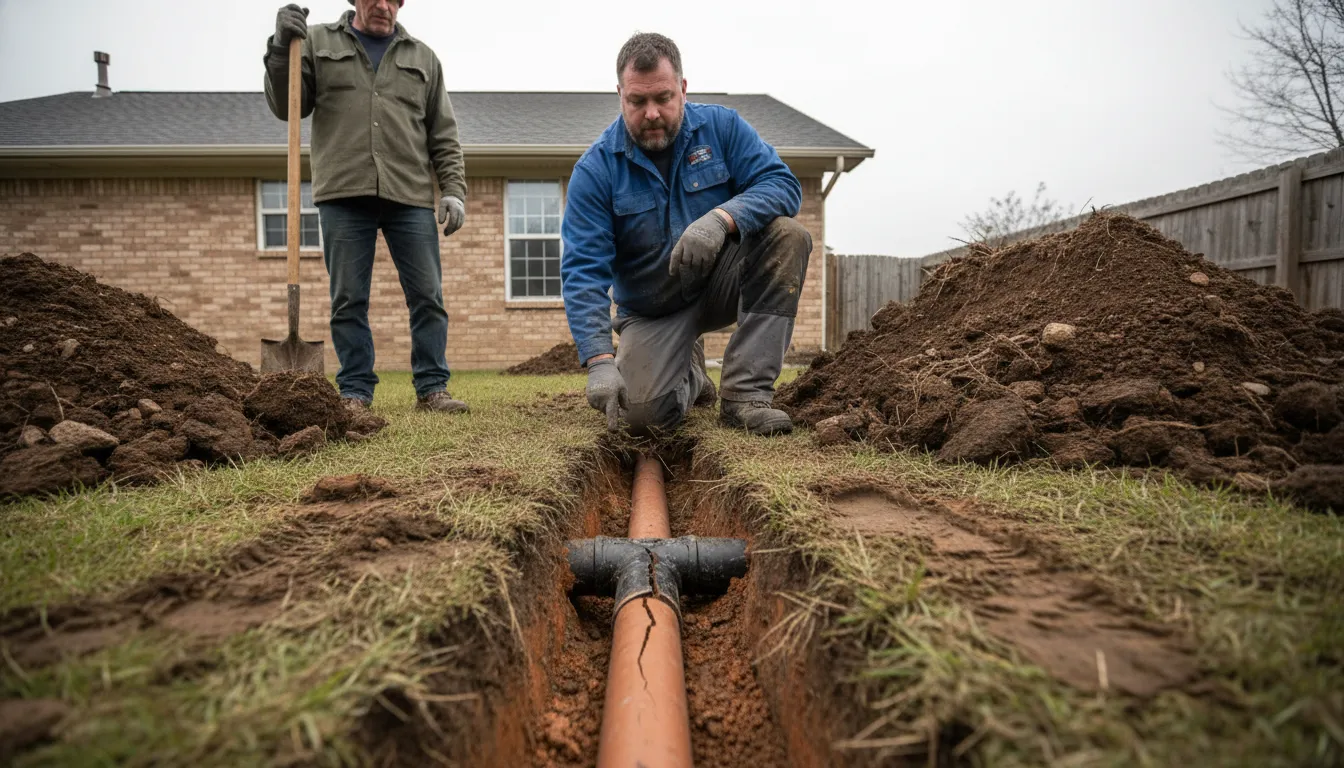
Find the Best Sewer Line Repair Companies for Your Business
No obligation • Fast responses • Nationwide coverage

Why you can trust Search a Plumber
Search a Plumber is a leading United States resource for finding and evaluating professional plumbing services. Our team researches licensing, experience, and customer feedback to create unbiased, fact-driven overviews. Companies cannot pay to change ratings or placement, ensuring homeowners get trustworthy information.
Search providers near you
Top Sewer Line Repair Companies in Memphis, Tennessee Ranked
Dealing with a sewer line problem can be a stressful and disruptive experience for any Memphis homeowner. This critical underground pipe carries all your home's wastewater away, and when it fails, it can lead to foul odors, slow drains, sewage backups, and even property damage. Understanding your options for sewer repair or replacement is the first step toward a solution. This guide will help you navigate the common causes of sewer line issues in Memphis, explain the modern repair methods available, and provide the information you need to connect with qualified local professionals who can assess your specific situation.

Smith's Plumbing, Heating & Air
10545 US-64, Arlington, TN 38002
Smith's Plumbing, Heating & Air is a family-owned plumbing company serving Memphis, TN, and the surrounding area. Founded in 2010, they offer a wide range of plumbing services including water heater repair and installation, tankless water heater services, drain cleaning, sewer line repair, leak detection, and repiping. The company is known for its upfront pricing and 24/7 emergency availability, ensuring customers have access to help whenever needed. They also specialize in trenchless sewer repair, providing less invasive solutions for sewer line issues. With over 14 years of combined industry experience, Smith's Plumbing, Heating & Air brings professional expertise and community-focused service to their customers.

Smith's Plumbing, Heating & Air
6843 Summer Ave, Memphis, TN 38134
Smith's Plumbing, Heating & Air serves the Memphis, TN area with a wide range of plumbing, heating, and air conditioning services. Their offerings include water heater repair and installation, tankless water heater services, drain cleaning, sewer line repair, trenchless sewer repair, and leak detection. Founded in 2010, the company has grown to a team of over 50 professionals dedicated to providing dependable solutions that prioritize clear communication and customer care. They are available 24/7 for emergency plumbing, heating, and air conditioning needs, ensuring prompt assistance whenever required.
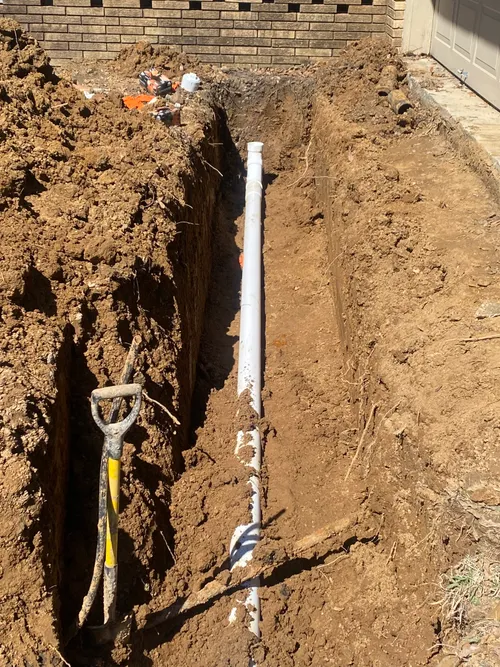
Memphis Sewer and Water, LLC
6770 Whitten Pl, Memphis, TN 38133
Memphis Sewer and Water, LLC is a family-owned plumbing company serving Memphis, TN, specializing in sewer and water line inspection, repair, and replacement. They use advanced camera inspection technology to accurately diagnose issues such as leaks, blockages, and pipe damage. With over 10 years of experience, the team provides commercial and residential services, focusing on minimizing property disruption during repairs and replacements. Their approach includes thorough consultations, detailed assessments, and transparent communication to help customers make informed decisions.
Roto-Rooter Plumbing & Water Cleanup
108 Miller Ave, Jackson, TN 38305
Roto-Rooter Plumbing & Water Cleanup is a family-owned and locally operated plumbing service based in Memphis, TN. They provide a wide range of plumbing services including sewer camera inspections, water heater repair and installation, drain cleaning, and sewer line repairs. As part of a nationally recognized brand with over 90 years of experience, they offer same-day and 24/7 emergency services to address plumbing needs in Memphis and surrounding areas. Their licensed professionals use advanced diagnostic tools such as video camera inspections to ensure accurate and efficient solutions.
Avanzi Plumbing
Memphis, TN
Avanzi Plumbing is a plumbing service provider located in Memphis, TN. They offer a wide range of services including sewer camera inspections, water heater repair and installation, drain cleaning, sewer line repair, leak detection, repiping, gas line installation, toilet repairs, and garbage disposal repair. The company is known for handling emergency repairs and providing thorough leak detection and pipe installation services. Avanzi Plumbing is a family-owned business led by Daniel Avanzi, who brings extensive experience and a hands-on approach to each project. They also provide after-hours and weekend service to accommodate urgent plumbing needs.
Understanding Your Sewer Line in Memphis
Your main sewer line is the private pipe that runs from your home's foundation, underneath your yard, driveway, or sidewalk, and connects to the public city sewer main or your septic tank. In Memphis, these lines are typically buried several feet underground and are out of sight-until a problem arises. Recognizing the signs of a failing sewer lateral is crucial. Key indicators include multiple slow drains throughout the house, gurgling sounds from toilets or drains, sewage odors in your yard or basement, and patches of unusually lush or soggy grass in your lawn.
Common Causes of Sewer Line Failure
Several factors contribute to the need for sewer line repair in the Memphis area. The age and material of your pipes play a significant role, as many older homes have clay or cast iron pipes that are more susceptible to failure.
- Tree Root Intrusion: This is one of the most frequent culprits in Memphis. Roots from large trees are naturally drawn to the moisture and nutrients in sewer pipes. They can enter through tiny cracks or loose joints, eventually growing and creating a complete blockage or causing the pipe to crack under pressure.
- Pipe Corrosion and Deterioration: Older metal pipes, like cast iron, can rust and corrode over decades, leading to leaks and collapses. Similarly, vintage clay or Orangeburg pipes can crack, crumble, or become misaligned.
- Ground Shifting and Soil Conditions: The soil in our region can shift due to freeze-thaw cycles, erosion, or general settling. This movement puts stress on underground pipes, leading to breaks, bellies (sags where waste collects), or separated joints 1.
- Grease and Debris Blockages: While not always a structural repair issue, the buildup of grease, non-flushable items, or general debris can cause persistent clogs that damage pipes or indicate deeper problems.
Modern Sewer Repair Methods: Trenchless vs. Traditional
Today, homeowners have more choices than ever when it comes to fixing a broken sewer pipe. The right method depends on the extent of the damage, the location of the pipe, and your budget.
Traditional Excavation (Open-Trench Repair)
This is the conventional method, involving digging a large trench along the entire length of the damaged pipe to expose it for repair or replacement.
- How it Works: Heavy machinery excavates the yard, driveway, or other surface to access the pipe. The old pipe is removed and a new one is laid in its place before the trench is backfilled.
- Pros: It's a straightforward solution that can handle any type of damage, including completely collapsed pipes. The cost per foot for materials and labor can be lower than trenchless options 2.
- Cons: The process is highly disruptive, destroying landscaping, patios, driveways, and sidewalks. It requires significant restoration work afterward, which adds to the overall project time and can substantially increase the final cost 3 4.
Trenchless Sewer Repair
Trenchless technology has revolutionized the industry by offering less invasive solutions. These methods require only one or two small access holes, minimizing damage to your property.
- Pipe Lining (Cured-in-Place Pipe - CIPP): A flexible, resin-saturated liner is inserted into the old pipe and inflated. The resin cures in place, forming a hard, seamless "pipe within a pipe" that seals cracks and holes 5.
- Pipe Bursting: A conical bursting head is pulled through the old, damaged pipe, fracturing it outward while simultaneously pulling a new, high-density polyethylene (HDPE) pipe into place behind it 6.
- Pros: The biggest advantage is minimal disruption. Your lawn, driveway, and landscaping remain largely intact. The process is often faster than excavation and can be more durable, with some new liners rated for 50 years or more.
- Cons: The upfront cost per foot is typically higher than traditional digging. It may not be suitable for pipes that have completely collapsed, have severe misalignment, or are in locations with many service laterals.
Find the perfect sewer line repair companies for your needs
Get personalized recommendations and expert advice
What Influences the Cost of Sewer Repair in Memphis?
The price for fixing a sewer line can vary widely based on several key factors. Understanding these can help you interpret estimates from local professionals.
- Extent and Type of Damage: A simple clog or small leak is far less expensive to address than a fully collapsed pipe or one with multiple breaks.
- Repair Method Chosen: As noted, traditional excavation often has a lower cost per foot for the repair itself but includes high restoration costs. Trenchless repair (like lining or bursting) has a higher per-foot cost for the procedure but little to no restoration expense, often making it cost-competitive or even cheaper overall for suitable jobs 7.
- Length and Depth of the Pipe: Longer lines require more materials and labor. Pipes buried deeper underground require more complex and safety-intensive excavation (like shoring), which increases the price.
- Pipe Material and Location: The condition and type of the existing pipe affect the repair approach. Furthermore, a line running under a concrete driveway or mature landscaping is more complex and costly to access via traditional means than one running under a flat lawn.
- Permits and Inspections: The city of Memphis may require permits for sewer work, and your project will need to pass an inspection, both of which factor into the total cost.
General Cost Ranges in Memphis:
- Minor Repair/Clearing: $100 - $500 for addressing a clog or small leak 8.
- Section Repair (Traditional): $1,000 - $4,000+ for excavating and replacing a damaged section, depending on depth and length 9.
- Trenchless Repair: Typically $55 - $250 per foot. For example, a 20-foot section could range from $1,100 to $5,000 10 11.
- Full Line Replacement (Traditional): For a complete excavation and replacement, costs can range from $12,000 to $25,000 or more, especially when significant restoration of hardscapes or landscaping is needed 12.
Choosing the Right Professional for the Job
Selecting a qualified contractor is the most important step. Look for a licensed, insured plumber or sewer specialist with specific experience in both trenchless and traditional methods. They should conduct a thorough video camera inspection of your line to accurately diagnose the problem before recommending a solution. Be wary of quotes given over the phone without an inspection. A reputable professional will provide a detailed, written estimate that breaks down the costs for labor, materials, permits, and any necessary restoration.
Frequently asked questions
Sources
Footnotes
-
Three Common Sewer Line Problems | Memphis Plumbers - https://www.smithsplumbingservice.com/blog/2019/february/the-three-most-common-sewer-line-problems/ ↩
-
Trenchless vs. Traditional Sewer Repair - https://sewerlinesonly.com/trenchless-vs-traditional-sewer-repair-which-is-more-cost-effective-for-lakewood-homeowners/ ↩
-
Trenchless Sewer Repair: Lower Cost, Lower Impact Sewer Repair - https://www.sewerflowllc.com/2025/03/06/trenchless-sewer-repair-lower-cost-lower-impact-sewer-repair/ ↩
-
Sewer Repair Options: Trenchless vs. Traditional Methods | TYCO - https://tycoplumbingco.com/sewer-repair-options-trenchless-vs-traditional-methods/ ↩
-
Trenchless Sewer Repair vs. Traditional Excavation - AQUALIS - https://aqualisco.com/trenchless-sewer-repair-vs-traditional/ ↩
-
Handling Drain Line Repairs: Pipe Bursting vs. Sleeving vs. Tunneling - https://anchorfoundationrepair.net/blog/pipe-bursting-sleeving-tunneling/ ↩
-
Sewer Repair Cost: Trenchless Vs Traditional Methods - https://www.superbrothers.com/sewer-repair-cost-trenchless-vs-traditional-methods/ ↩
-
Cost To Repair Sewer Line: 2023 Options & Affordable Services - https://www.superbrothers.com/cost-to-repair-sewer-line-2023-options-affordable-services/ ↩
-
Sewer Repair In Memphis, TN - Stewart Plumbing - https://stewartplumbing.com/sewer-repairs/ ↩
-
Cost Comparison: Trenchless vs. Traditional Sewer Line Repair - https://www.advancedtrenchlesssolutions.com/blog/cost-comparison-trenchless-vs-traditional-sewer-line-repair ↩
-
Decoding Trenchless Sewer Repair Costs - Pipeliner Pros - https://pipelinerpros.com/trenchless-sewer-repair-cost/ ↩
-
The Cost of Sewer Line Replacement: What to Expect - https://dirtcheapsewer.com/the-cost-of-sewer-line-replacement/ ↩