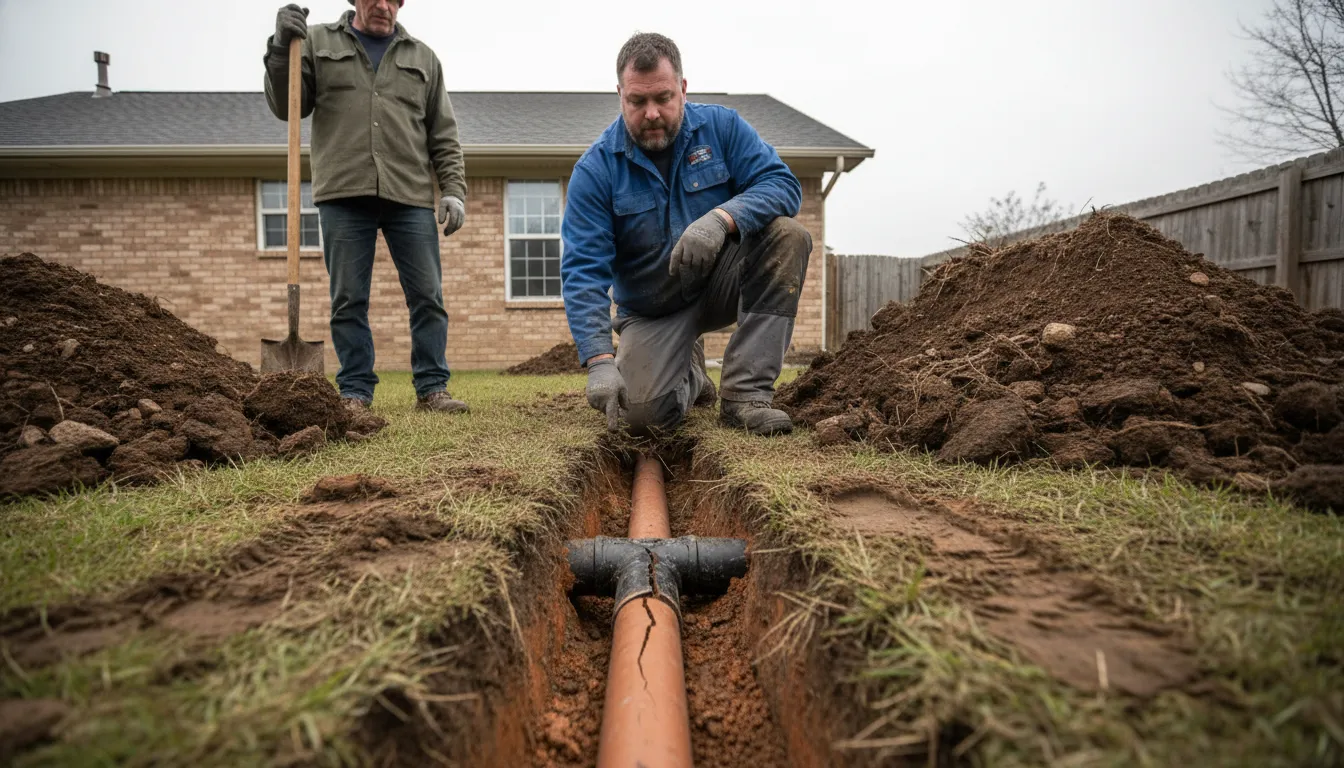
Find the Best Sewer Line Repair Companies for Your Business
No obligation • Fast responses • Nationwide coverage

Why you can trust Search a Plumber
Search a Plumber is a leading United States resource for finding and evaluating professional plumbing services. Our team researches licensing, experience, and customer feedback to create unbiased, fact-driven overviews. Companies cannot pay to change ratings or placement, ensuring homeowners get trustworthy information.
Search providers near you
Best Sewer Line Repair Companies in Tennessee Ranked
A failing sewer line is a serious issue that can disrupt your home, create health hazards, and lead to costly property damage. Sewer line repair involves diagnosing problems like blockages, cracks, or collapses in the underground pipe that carries waste from your home to the municipal sewer main. In Tennessee, this process requires understanding local soil conditions, material types, and permitting rules. This guide provides clear, practical information to help you understand the repair process, make informed decisions, and connect with qualified local professionals who can assess and fix your sewer line correctly.

Smith's Plumbing, Heating & Air
10545 US-64, Arlington, TN 38002
Smith's Plumbing, Heating & Air is a family-owned plumbing company serving Memphis, TN, and the surrounding area. Founded in 2010, they offer a wide range of plumbing services including water heater repair and installation, tankless water heater services, drain cleaning, sewer line repair, leak detection, and repiping. The company is known for its upfront pricing and 24/7 emergency availability, ensuring customers have access to help whenever needed. They also specialize in trenchless sewer repair, providing less invasive solutions for sewer line issues. With over 14 years of combined industry experience, Smith's Plumbing, Heating & Air brings professional expertise and community-focused service to their customers.
100 Percent Plumbing
3200 West End Ave #500, Nashville, TN 37203
100 Percent Plumbing is a plumbing company serving residents in Nashville, TN, and surrounding areas including Green Hills, Brentwood, and Mount Juliet. They offer a wide range of services such as sewer camera inspections, water heater repair and installation, tankless water heater services, drain cleaning, leak detection, repiping, gas line installation, and toilet repair. The company provides complete sewer line repair and replacement, along with free video camera inspections to identify piping issues. With 20 years of experience, 100 Percent Plumbing employs master plumbers skilled in handling various plumbing problems for both residential and commercial clients. They also offer after-hours emergency services to address urgent plumbing needs promptly.
Creekside Plumbing and Drain Cleaning, LLC
Nashville, TN
Creekside Plumbing and Drain Cleaning, LLC is a veteran and family-owned plumbing company based in Nashville, TN. They provide a wide range of residential plumbing services across middle Tennessee, including water heater installation and repair, sewer and drain cleaning, leak detection, and repiping. Their capabilities include sewer camera inspections and handling various types of water heaters such as natural gas, propane, electric, and tankless models. With over 12 years of experience, they focus on delivering quality service and customer satisfaction.
Mr. Rooter Plumbing of Middle Tennessee
Nashville, TN
Mr. Rooter Plumbing of Middle Tennessee provides a wide range of plumbing services in Nashville, TN, including drain cleaning, water heater repair and installation, sewer line replacement using trenchless technology, leak detection, and gas line services. They serve both residential and commercial clients with licensed and insured professionals who use advanced equipment to address plumbing needs efficiently. The company offers 24/7 emergency plumbing services to handle urgent issues at any time. Mr. Rooter Plumbing also backs their work with a workmanship promise and transparent flat-rate pricing to keep customers informed and confident in their service.
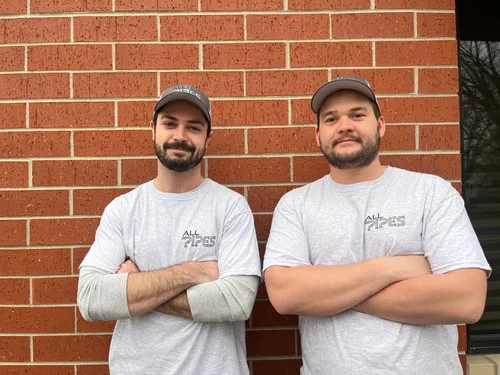
All Pipes, LLC
325 S 14th St, Nashville, TN 37206
All Pipes, LLC is a plumbing company based in Nashville, TN, offering a wide range of services including water heater repair, tankless water heater plumbing, water softener installation, drain cleaning, sewer line repair, leak detection, repiping, toilet repair, and garbage disposal repair. They serve residential and commercial customers throughout Nashville with expertise in handling plumbing challenges common to older homes as well as modern systems. The company is known for its skilled team and quality workmanship, emphasizing safety and customer communication. Founded by local plumbers Robert Smith and Jay Santangelo, All Pipes has built a reputation for reliable and knowledgeable service in the Nashville area.
Understanding Your Sewer Lateral
The sewer lateral, or sewer line, is your home's private pipeline connecting your plumbing system to the public sewer main, usually located under the street or in an easement. You are responsible for maintaining and repairing this line from your house to the connection point. Common signs of trouble include multiple slow drains, gurgling toilets, sewage backups in lower-level fixtures like basement showers, and foul odors in your yard, especially near the line's path. In Tennessee, the age and material of your home's original pipe play a significant role in its longevity and failure mode.
Common Pipe Materials in Tennessee Homes
Knowing what your pipe is made of helps predict problems and choose the best repair method.
- Older Materials: Many Tennessee homes, especially those built before the 1970s, have sewer lines made of clay tile or cast iron. Clay pipes are brittle and prone to cracking from ground movement; their porous joints are infamous for inviting tree root intrusion. Cast iron pipes, while durable initially, corrode and rust from the inside out over decades, eventually leading to leaks and collapses.
- Modern Materials: Today, repairs and replacements almost exclusively use durable plastics. PVC (Polyvinyl Chloride) is the standard for its strength, corrosion resistance, and smooth interior that resists root growth. HDPE (High-Density Polyethylene) is a flexible, jointless option often used in trenchless repairs, making it highly resistant to leaks and root penetration.
The Diagnostic Process: Finding the Problem
Before any repair can be planned, a professional must accurately diagnose the issue. This almost always involves a sewer camera inspection. A specialized, waterproof camera is fed through a cleanout (an access point on the line) or a toilet drain to travel the length of the pipe. The technician watches a live feed, identifying the exact location, nature, and severity of problems like offsets, cracks, belly (sags), root masses, or complete collapses. This inspection provides a definitive diagnosis and a visual record that is crucial for planning the repair and may be required for permits.
Depth, Access, and Cleanouts
Sewer line depth in Tennessee varies. They are typically buried at a depth of 18 to 30 inches to be below the frost line and protect from surface pressure. However, lines running under driveways, additions, or in colder regions of the state can be 4 to 6 feet deep 1 2. Accessibility is key. A cleanout is a vertical pipe with a removable cap that provides direct access to the sewer line for inspections and augering. If your older home lacks a cleanout, a professional may need to install one as part of the repair process, which is highly recommended for future maintenance 1.
Legal and Safety Preparations: Permits and Locates
Sewer line repair is not a simple DIY project; it involves critical legal and safety steps.
- Call 811 for Utility Locates: This is a free, legally required service. At least a few business days before any digging, you or your contractor must call 811. Utility companies will send locators to mark the approximate locations of public underground lines (gas, water, electric, communications) with paint or flags. This prevents dangerous and expensive utility strikes during excavation.
- Obtain Local Permits: Most Tennessee municipalities require a permit for sewer line repair or replacement. Your contractor typically handles this, but it's your responsibility to ensure it's done. The permit process ensures the work meets local building and plumbing codes, protecting your home's value and safety. Permits are obtained from your city or county's building department.
Sewer Line Repair Methods
Once diagnosed and planned, professionals will recommend the most effective repair strategy. The two primary categories are traditional excavation and trenchless technology.
Traditional Excavation Repair
This method involves digging an open trench along the path of the sewer line to fully expose the damaged pipe. The old pipe is removed, and a new section or an entire new line is installed. While this is a reliable and often necessary method for severely collapsed pipes or complex situations, it is highly disruptive. It requires extensive digging through yards, driveways, or landscaping, leading to significant restoration work afterward.
Trenchless Sewer Repair
Trenchless methods have revolutionized sewer repair by minimizing excavation. They are often faster and preserve your property.
- Pipe Lining (Cured-in-Place Pipe or CIPP): A flexible, resin-saturated liner is inserted through an existing cleanout and inflated inside the old pipe. The resin cures, forming a hard, seamless "pipe within a pipe." This method seals cracks and joints against roots but slightly reduces the pipe's internal diameter.
- Pipe Bursting: This is used for full replacement without a trench. A conical bursting head is pulled through the old, damaged pipe, fracturing it outward while simultaneously pulling a new HDPE pipe into place behind it. It replaces the line with a new, often larger-diameter pipe but requires small access pits at the beginning and end of the run 3.
Find the perfect sewer line repair companies for your needs
Get personalized recommendations and expert advice
Cost Factors for Sewer Repair in Tennessee
Sewer line repair is a significant investment. Costs in Tennessee are influenced by multiple variables, making it essential to get detailed, location-specific estimates. General ranges for a full main line replacement are typically $3,000 to $7,000 or more, with per-linear-foot costs often cited between $50 and $250 4 5 6.
Key factors affecting your final price include:
- Length and Depth of the Line: Longer, deeper lines require more labor, materials, and excavation.
- Accessibility: Easy access with existing cleanouts reduces cost. Difficult access under structures, pools, or mature landscaping increases it.
- Repair Method: Trenchless methods (like CIPP or pipe bursting) can have higher material costs but lower restoration costs compared to traditional excavation.
- Pipe Material: The cost of new PVC or HDPE pipe and required fittings.
- Extent of Damage: A simple spot repair for a small crack costs far less than a full-line replacement for a collapsed pipe.
- Local Labor Rates & Permits: Costs vary between urban areas like Nashville or Memphis and more rural counties.
- Restoration: The expense to repair your lawn, driveway, sidewalk, or landscaping after the job is complete.
The Repair Process: Step-by-Step
Understanding the workflow can help you know what to expect and ensure your project runs smoothly.
- Inspection & Diagnosis: A sewer camera inspection confirms the problem and maps the line's path.
- Proposal & Planning: The contractor provides a detailed estimate, discusses repair options (trenchless vs. traditional), and outlines the project timeline.
- Preparations: The contractor obtains necessary permits and calls 811 for utility locates. You may need to clear the work area 7.
- Execution:
- For trenchless repairs, small access pits are dug, and the lining or bursting equipment is deployed 8.
- For traditional repair, an excavation machine digs a trench to expose the old pipe, which is then removed and replaced with new pipe 9.
- Connection & Testing: The new pipe is connected to the house stack and the city main. The entire line is tested with water and a final camera inspection to ensure proper flow and integrity 10.
- Backfill & Restoration: The trench or pits are backfilled with soil. Final restoration-grading, sodding, or repairing concrete surfaces-is completed to return your property to its original condition.
Choosing a licensed, insured, and experienced local professional is the most critical step in navigating this complex process successfully. They will guide you through each phase, handle the technical and regulatory challenges, and ensure a durable repair that protects your Tennessee home for years to come.
Frequently asked questions
Sources
Footnotes
-
Complete Guide to Residential Sewer Line Maintenance & Repair - https://sswaterworks.com/complete-guide-to-residential-sewer-line/ ↩ ↩2
-
How Deep Are Sewer Lines Buried? Complete Guide for 2025 - https://steadyflowdrainco.com/blog/how-deep-are-sewer-lines-buried/ ↩
-
Is It Time for a Main Sewer Line Replacement? - https://www.tnstandard.com/does-your-main-sewer-line-need-to-be-replaced/ ↩
-
Understanding Sewer Line Replacement: What to Expect - https://flomaxxinc.net/blogs/understanding-sewer-line-replacement-guide-cost-process/ ↩
-
Everything You Need to Know About Sewer Line Replacement - https://www.splashplumbing.com/everything-you-need-to-know-about-sewer-line-replacement-a-comprehensive-guide-for-homeowners-in-2025/ ↩
-
Is It Time for a Main Sewer Line Replacement? - https://www.tnstandard.com/does-your-main-sewer-line-need-to-be-replaced/ ↩
-
The Essential Guide to Sewer Laterals - Mister Greenway Nashville - https://trustgreenway.com/nashville/plumbing-services/sewer-camera-inspection/sewer-laterals/ ↩
-
What to Expect During a Sewer Line Replacement in TN? - https://www.tnplumbingsolutions.com/nashville-plumber/what-to-expect-during-a-sewer-line-replacement-in-tn/ ↩
-
Steps to Ensure Reliable Sewer Line Replacement - https://myplumbertn.com/sewer-line-replacement/ ↩
-
Knoxville Residential Sewer Replacement - https://www.tnstandard.com/residential/drain-repair-knoxville-tn/sewer-line-replacement/ ↩