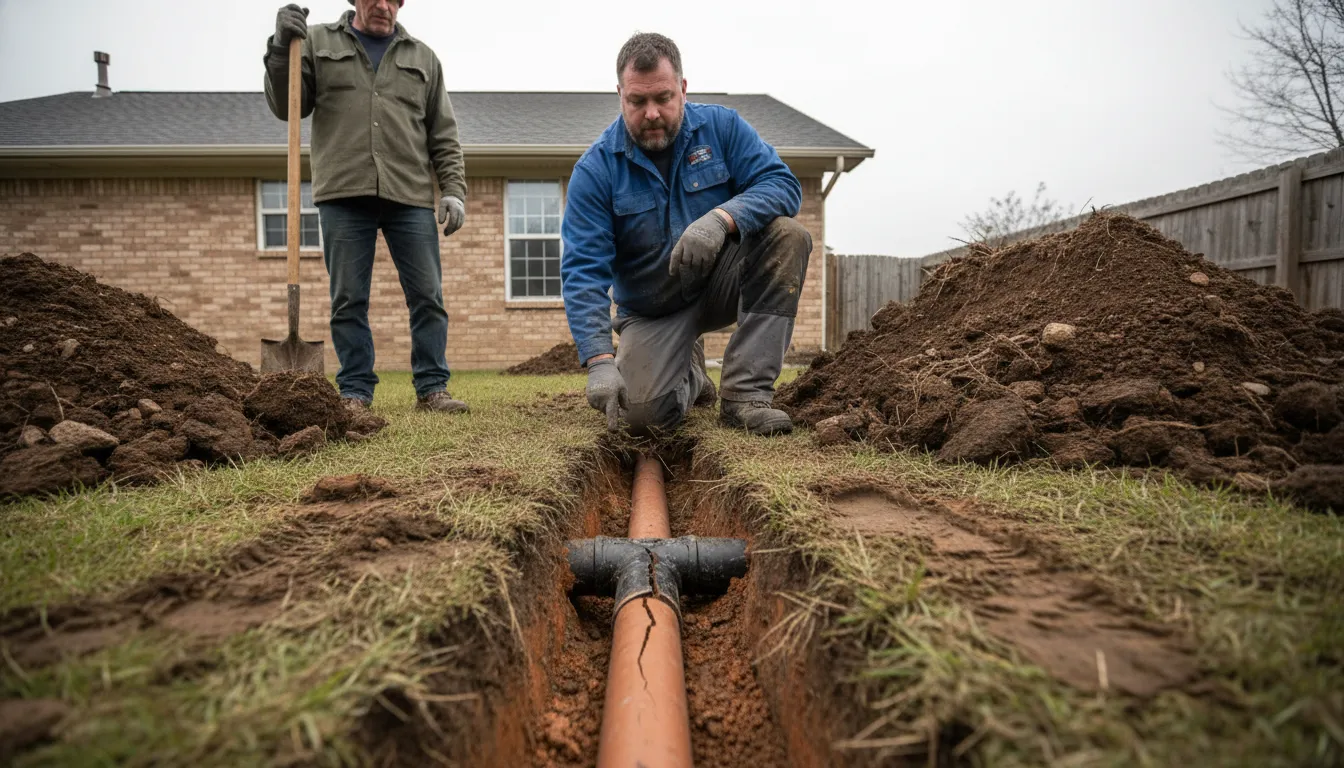
Find the Best Sewer Line Repair Companies for Your Business
No obligation • Fast responses • Nationwide coverage

Why you can trust Search a Plumber
Search a Plumber is a leading United States resource for finding and evaluating professional plumbing services. Our team researches licensing, experience, and customer feedback to create unbiased, fact-driven overviews. Companies cannot pay to change ratings or placement, ensuring homeowners get trustworthy information.
Search providers near you
Top Sewer Line Repair Companies in Pittsburgh, Pennsylvania Ranked
A failing sewer line is a serious issue that can disrupt your home, threaten your property, and lead to costly damage. Sewer line repair involves diagnosing and fixing the underground pipe that carries all your home's wastewater to the city main. In Pittsburgh, with its historic homes, mature trees, and varied terrain, these problems are common. This guide explains the causes, repair methods, and what to expect, helping you connect with qualified local professionals who can assess your specific situation and recommend the best solution.
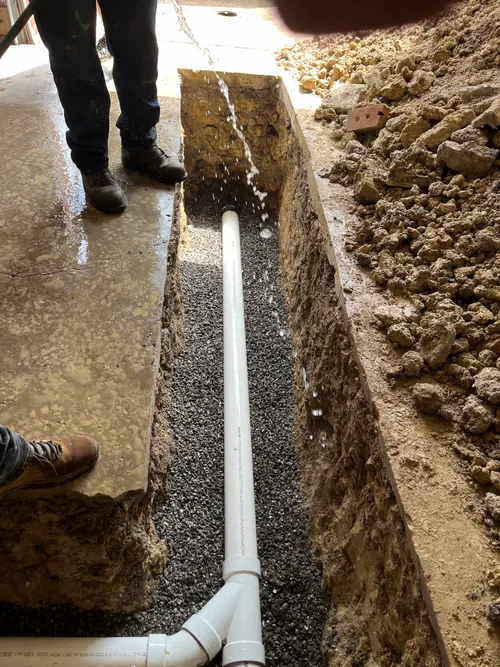
DR Plumbing and Drain Cleaning LLC - Sewer Line & Plumbing Repair
Pittsburgh, PA
DR Plumbing and Drain Cleaning LLC - Sewer Line & Plumbing Repair provides a wide range of plumbing and drain cleaning services in Pittsburgh, PA, including Wilkinsburg and Brentwood. The business specializes in sewer line repair, installation, and inspection, offering hydro jetting services to address sewer line issues effectively. With 20 years of experience, they also handle water heater installation, gas line services, faucet and toilet repairs and installations, drain cleaning, and garbage disposal repairs. The owner emphasizes personalized solutions and is available 24/7 for emergency plumbing repairs, serving residential clients throughout the Pittsburgh area and nearby boroughs.
Patrick David Plumbing
Pittsburgh, PA
Patrick David Plumbing provides residential and commercial plumbing services in Pittsburgh, PA, and surrounding areas. Their expertise includes water heater installation and repair, sewer line repair using trenchless methods, drain cleaning with hydro jetting, leak detection, and water softener installation. They utilize advanced tools such as sewer camera inspections to diagnose issues accurately. With over 12 years of experience, this owner-operated company emphasizes upfront pricing and offers 24/7 emergency plumbing services to address urgent needs promptly.
Armstrong Comfort Solutions
4693 Peoples Rd, Pittsburgh, PA 15237
Armstrong Comfort Solutions is a plumbing and HVAC company serving Pittsburgh, PA. They offer services including drain cleaning, sewer line repair, and trenchless sewer repair. The company provides free estimates for new HVAC installations, plumbing equipment installs, excavation repairs, and plumbing remodels or upgrades. Their capabilities include trenchless main sewer relining, which helps address clogged sewer lines without extensive digging. Armstrong Comfort Solutions also offers a Peace of Mind Club for ongoing maintenance and priority scheduling.
Benjamin Franklin Plumbing of Pittsburgh
451 Rochester Rd, Pittsburgh, PA 15237
Benjamin Franklin Plumbing of Pittsburgh provides plumbing services in Pittsburgh, PA, specializing in water heater repair, tankless water heater installation, drain cleaning, sewer line repair, leak detection, and repiping. They offer 24/7 emergency plumbing service to address urgent issues at any time. The company also advises on routine maintenance for water heaters and plumbing upgrades to improve water efficiency. Their expertise includes diagnosing common plumbing problems in older homes and preparing plumbing systems for seasonal changes.
Sewer Flow - Pittsburgh Sewer & Drain Specialists And Plumbing
962 Brookline Blvd, Pittsburgh, PA 15226
Sewer Flow - Pittsburgh Sewer & Drain Specialists And Plumbing provides plumbing and sewer services in Pittsburgh, PA. They offer sewer camera inspections, drain cleaning, sewer line repairs, gas line installations, and toilet repairs. The company is known for same-day service and skilled professional plumbers who serve Allegheny County and surrounding areas. One notable capability is their use of sewer camera inspections to diagnose and address sewer line issues efficiently. Sewer Flow emphasizes clear communication and thorough explanations to help customers understand their plumbing needs.
Understanding Your Sewer Line and Common Problems
Your main sewer line, or sewer lateral, is a critical but out-of-sight component of your home's plumbing system. It runs from the foundation of your house, under your yard, driveway, or sidewalk, and connects to the municipal sewer main in the street. When this line is compromised, wastewater can back up into your home or seep into the surrounding soil, creating health hazards and structural issues.
In Pittsburgh, several factors contribute to sewer line failures:
- Tree Root Intrusion: Roots from mature trees are naturally drawn to the moisture and nutrients in sewer pipes. They can infiltrate through tiny cracks or pipe joints, eventually causing blockages or breaking the pipe apart.
- Aging Pipe Materials: Many older Pittsburgh homes have sewer lines made of clay tile or cast iron. Clay pipes are brittle and can crack from ground pressure, while cast iron is susceptible to corrosion and rust over decades, leading to leaks and eventual collapse.
- Ground Shifting and "Bellies": Pittsburgh's soil can shift due to freeze-thaw cycles, erosion, or construction activity. This movement can cause sections of the pipe to sag, creating a low spot called a "belly" where waste and debris collect and cause chronic blockages 1.
- General Wear and Collapse: Over time, any pipe material can deteriorate. A complete collapse is the most severe failure, requiring immediate and extensive repair.
Diagnosing a Sewer Line Issue
Before any repair can be planned, an accurate diagnosis is essential. Professionals typically use a specialized sewer camera inspection. A waterproof camera is fed through the line, providing a real-time video feed that reveals the exact location, nature, and severity of the problem-whether it's a root mass, a crack, a belly, or a collapsed section. This inspection is crucial for determining whether a trenchless repair is possible or if traditional excavation is necessary.
Repair Methodologies: Trenchless vs. Traditional Excavation
Once the problem is identified, your plumbing professional will discuss the most effective repair strategy. The two primary approaches are trenchless sewer repair and traditional excavation, each with its own applications, advantages, and limitations.
Trenchless Sewer Repair
Trenchless technology has revolutionized sewer line repair by minimizing disruption to your property. These methods are often preferred when the existing pipe is structurally sound enough to serve as a host for the new lining or can be fragmented.
-
Cured-In-Place Pipe (CIPP) Lining: This is a common trenchless method for repairing cracks, leaks, and root-damaged pipes. A flexible, resin-saturated tube is inverted or pulled into the damaged pipe. It is then inflated and cured using hot water or UV light, forming a seamless, jointless "pipe within a pipe." The result is a new, structurally sound lining that restores full flow 2.
- Pros: Extremely minimal digging (only at access points), preserves landscaping and hardscapes, can be completed in a day, and creates a durable, corrosion-resistant pipe.
- Cons: Not suitable for pipes that have fully collapsed, have severe misalignment, or sharp bends. The existing pipe must be cleaned and prepared beforehand.
-
Pipe Bursting: This method is used for replacing a severely damaged but still intact pipe. A conical bursting head is pulled through the old pipe, simultaneously fracturing it outward while pulling a new, high-density polyethylene (HDPE) pipe into place behind it.
- Pros: Allows for a complete pipe replacement with a newer, larger-diameter pipe if needed, with only small access pits at each end. Still far less disruptive than full excavation.
- Cons: Requires more force and space than lining. May not be feasible under certain structures without additional planning.
Find the perfect sewer line repair companies for your needs
Get personalized recommendations and expert advice
Traditional Excavation (Open-Trench Repair)
Sometimes referred to as "dig and replace," this is the conventional method where a trench is dug along the entire length of the sewer line to expose it. The old pipe is removed and new pipe sections are laid in the trench before it is backfilled.
- Pros: It is the most direct solution for any problem, including total pipe collapses, severe sags, or situations where the existing pipe is too degraded for trenchless methods. It allows for a complete visual inspection of the surrounding area 3.
- Cons: Highly invasive and disruptive. It requires digging through lawns, gardens, driveways, or sidewalks, leading to significant restoration work and costs afterward. The process is also more time-consuming and weather-dependent 4.
Cost Considerations for Sewer Repair in Pittsburgh
The cost of sewer line repair or replacement in Pittsburgh varies widely based on the method, extent of damage, pipe material, length of the run, and the restoration required. Here is a general breakdown based on local data:
- Minor Spot Repair: For a small, isolated crack or joint leak that can be fixed with a minimal patch, costs might range from $100 to $500+.
- Trenchless Repair (Lining or Bursting): For lining a section or the entire line, homeowners can expect costs between $1,100 and $5,000+, often calculated at $55 to $250 per linear foot 5 6. The final price depends on the pipe's diameter, length, and condition.
- Full Excavation Replacement: This is typically the most expensive option due to labor and restoration. Average costs in Pittsburgh often fall in the range of $3,000 to $10,000+, with a common average between $3,000 and $6,000 7 8 9 10. Costs can escalate significantly if the line runs under a concrete driveway, patio, or mature landscaping that requires expensive reinstatement.
It's important to get detailed, written estimates from licensed professionals that clearly separate the repair costs from any necessary landscape or hardscape restoration.
Choosing the Right Professional for the Job
Sewer line repair is a significant investment. When evaluating local providers, look for licensed, insured plumbers who specialize in sewer and drain services. They should offer a thorough camera inspection upfront and be able to clearly explain all viable options, including the pros, cons, and costs of both trenchless and traditional methods. A reputable professional will help you navigate permits if required and ensure the work is completed to code, protecting your home's value and function for years to come.
Frequently asked questions
Sources
Footnotes
-
Trenchless Sewer Repair: Lower Cost, Lower Impact Sewer Repair - https://www.sewerflowllc.com/2025/03/06/trenchless-sewer-repair-lower-cost-lower-impact-sewer-repair/ ↩
-
Trenchless Sewer Repair in Pittsburgh - Krupp Whitney Plumbing - https://kruppwhitneyplumbing.com/services/trenchless-sewer-repair/ ↩
-
Advanced Sewer Line Repair and Replacement in Pittsburgh ... - https://www.stahlplumbinganddrain.com/plumbing-services/sewer-line-repair-replacement/ ↩
-
Trenchless Sewer Repair vs. Traditional Excavation: Which is Better? - https://alphaenvironmental.net/blog/trenchless-sewer-repair-vs-traditional-excavation-which-is-better/ ↩
-
Decoding Trenchless Sewer Repair Costs - Pipeliner Pros - https://pipelinerpros.com/trenchless-sewer-repair-cost/ ↩
-
Sewer Line Replacement in Pittsburgh, PA - Costs 12 / 2025 - https://www.homeyou.com/pa/sewer-line-replacement-pittsburgh-costs ↩
-
Trenchless vs. Traditional Sewer Repair - https://sewerlinesonly.com/trenchless-vs-traditional-sewer-repair-which-is-more-cost-effective-for-lakewood-homeowners/ ↩
-
How Much Does It Cost to Replace Your Sewer in Pittsburgh? - https://www.revelation-plumbing.com/post/how-much-does-it-cost-to-replace-your-sewer-in-pittsburgh ↩
-
Cost To Repair Sewer Line: 2023 Options & Affordable Services - https://www.superbrothers.com/cost-to-repair-sewer-line-2023-options-affordable-services/ ↩
-
How Much Does Sewer Line Replacement Cost? [2026 Data] | Angi - https://www.angi.com/articles/how-much-does-sewer-line-replacement-or-repair-cost.htm ↩