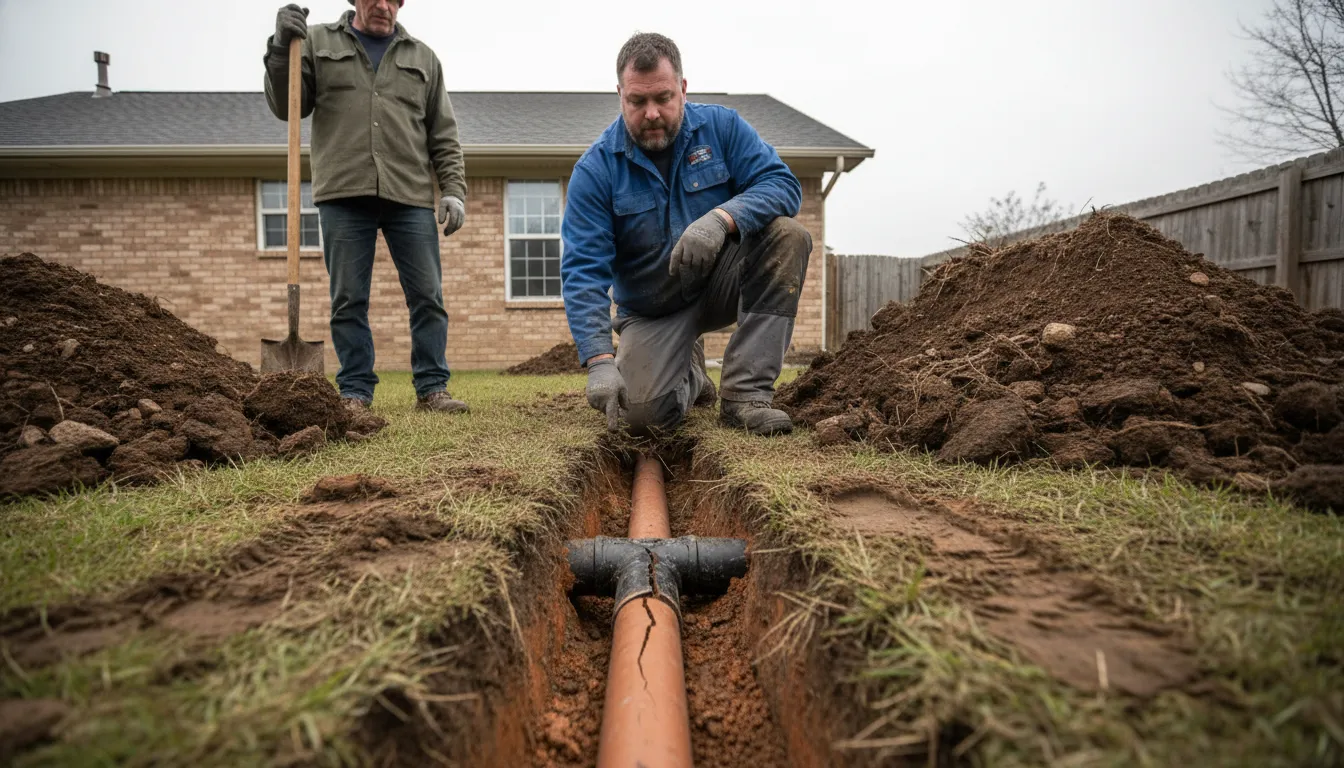
Find the Best Sewer Line Repair Companies for Your Business
No obligation • Fast responses • Nationwide coverage

Why you can trust Search a Plumber
Search a Plumber is a leading United States resource for finding and evaluating professional plumbing services. Our team researches licensing, experience, and customer feedback to create unbiased, fact-driven overviews. Companies cannot pay to change ratings or placement, ensuring homeowners get trustworthy information.
Search providers near you
Top Sewer Line Repair Companies in Stonecrest, Georgia Ranked
A damaged sewer line is a serious issue that can disrupt your home's sanitation and lead to costly property damage if left unaddressed. Sewer line repair involves fixing the underground pipe that carries all your home's wastewater to the city main or a septic tank. Finding the right local professional for this critical job is essential, as the best repair method depends on your specific situation. This guide will help you understand your options, what to expect, and how to connect with qualified specialists in the Stonecrest area.
TE Certified, Electrical, Plumbing, Heating & Cooling
98 Patterson Rd SW, Lawrenceville, GA 30044
TE Certified, Electrical, Plumbing, Heating & Cooling provides comprehensive electrical, plumbing, and HVAC services in Atlanta, GA. Their licensed technicians handle water softener installation, drain cleaning, sewer line repair, leak detection, and garbage disposal repair, among other services. The company is known for installing and repairing electrical systems, air conditioning units, and plumbing infrastructure, with capabilities including slab leak detection and sewer line repairs. Serving the greater Atlanta area, TE Certified has built a reputation supported by thousands of positive reviews and holds multiple licenses and certifications. They offer same-day service and provide a lifetime warranty on products and services.
1-Tom-Plumber
629 Airport Rd Suite A, Lawrenceville, GA 30046
1-Tom-Plumber is a plumbing company serving Atlanta, GA, and surrounding communities in Gwinnett County. They provide a range of services including drain cleaning, sewer line repair, water damage restoration, and excavation. Their team uses advanced technology to clear drains and offers expertise in handling plumbing issues that may cause water damage. The company has roots in the water damage restoration industry, which supports their plumbing services with added urgency and experience. They emphasize emergency plumbing support and are licensed and insured.
True Plumbing
2650 Pleasantdale Rd, Doraville, GA 30340
True Plumbing is a plumbing service provider based in Atlanta, GA, offering a wide range of services including sewer camera inspections, water heater repair and installation, drain cleaning, sewer line repair, trenchless sewer repair, leak detection, repiping, gas line installation, and toilet repair. They use advanced tools for leak detection and provide trenchless methods for sewer repairs, helping maintain efficient plumbing systems. Established in 2014, True Plumbing focuses on building lasting customer relationships by educating clients and ensuring peace of mind with their work.
Blue Skies Atlanta Plumbing
5520 Lilburn Stone Mountain Rd Ste B, Stone Mountain, GA 30087
Blue Skies Atlanta Plumbing offers residential and commercial plumbing services in Atlanta, GA, including DeKalb and Gwinnett counties. Their licensed plumbers handle water heater installation and repair, drain cleaning, sewer line repair, and toilet repairs. The company provides solutions for both small repairs and major plumbing projects, serving homes and businesses throughout the area.
Roto-Rooter Plumbing & Water Cleanup
3606 McCall Pl, Doraville, GA 30340
Roto-Rooter Plumbing & Water Cleanup provides a wide range of plumbing services in Atlanta, GA, including sewer camera inspections, water heater repairs and installations, drain cleaning, hydro jetting, sewer line repair, trenchless sewer repair, leak detection, and water softener installation. They offer 24/7 emergency plumbing services with same-day response to address urgent plumbing issues. Their capabilities include video camera inspections for sewer lines and the use of trenchless repair methods to minimize disruption during sewer line repairs. Serving the Atlanta area, Roto-Rooter also installs and services various water softener and filtration systems to improve water quality. The company is fully licensed and insured, offering continuous availability throughout the year.
Understanding Your Home's Sewer System
The main sewer line, or sewer lateral, is a crucial but out-of-sight component of your plumbing. It runs underground from your home's foundation to the municipal sewer connection at the street or to a private septic tank. This path often takes it beneath driveways, landscaping, patios, and other structures, which is why repairs can become complex and invasive. In Stonecrest, many homes have sewer lines that are decades old, making them susceptible to a range of common failures.
Common Causes of Sewer Line Failure
Knowing what typically goes wrong can help you identify problems early. The most frequent culprits for sewer line issues in our area include:
- Tree Root Intrusion: This is a leading cause. Roots seek out moisture and can infiltrate tiny cracks or loose joints in pipes, eventually growing and causing blockages or complete breaks.
- Pipe Corrosion and Aging: Older homes may have cast iron or clay pipes that corrode, crack, or collapse over time due to ground pressure and chemical wear.
- Grease and Debris Blockages: Pouring fats and non-flushable items down drains can create stubborn clogs that solidify within the pipe.
- Shifting Soil and Ground Settlement: Georgia's clay soil can expand and contract with moisture, putting stress on pipes and causing them to shift, crack, or separate at the joints.
- Improper Installation or Bellied Pipes: A sagging section of pipe (a "belly") can collect waste and cause repeated blockages.
Diagnosing the Problem: The Critical First Step
Before any repair can be planned, an accurate diagnosis is non-negotiable. The most effective tool for this is a professional sewer camera inspection. A skilled technician will feed a high-resolution, waterproof camera into your cleanout access point. This allows them to see the exact condition, location, and nature of the problem inside the pipe in real-time.
A proper inspection will identify whether you're dealing with a simple clog, a cracked pipe, root intrusion, a complete collapse, or a misaligned section. This information is vital for determining the most effective and cost-efficient repair strategy for your Stonecrest home. Skipping this step can lead to unnecessary or incomplete repairs.
Repair Method 1: Trenchless Sewer Repair
Trenchless technology has revolutionized sewer line repair by offering solutions that minimize disruption to your yard, driveway, and landscaping. These methods typically require only one or two small access pits, avoiding the need for a long, deep trench.
Pipe Lining (Cured-in-Place Pipe - CIPP)
This method involves inserting a flexible, resin-saturated liner into the damaged pipe. The liner is then inflated, pressing against the host pipe's walls, and cured with heat or UV light to form a hard, seamless "pipe within a pipe." It's excellent for sealing cracks, holes, and stopping root intrusion without removing the old pipe 1.
Best for: Pipes that are structurally sound but leaking or cracked. It can navigate bends and is a permanent repair.
Pipe Bursting
When a pipe is too damaged to be lined, pipe bursting is a trenchless replacement method. A conical bursting head is pulled through the old pipe, fracturing it outward while simultaneously pulling a new, high-density polyethylene (HDPE) pipe into place behind it 2.
Best for: Severely collapsed, bellied, or misaligned pipes that need complete replacement. It results in a brand-new pipe of equal or larger diameter.
Find the perfect sewer line repair companies for your needs
Get personalized recommendations and expert advice
Repair Method 2: Traditional Excavation Repair
Also known as "dig and replace," this is the conventional method where a trench is dug along the entire length of the damaged pipe section to expose it for direct repair or replacement. While it is highly disruptive, it is sometimes the only viable option.
When is Excavation Necessary?
- Complete Pipe Collapse: If the pipe is fully crushed, a liner cannot pass through.
- Severe Misalignment or Offsets: Sections of pipe that have shifted dramatically may require physical realignment.
- Extensive Corrosion: When the host pipe is too degraded to support a liner.
- Access Limitations: In some cases, the geometry or location of the problem makes trenchless methods impractical.
The major drawback is the significant restoration required afterward. You'll need to budget for repairing your lawn, repaving driveways, reinstalling landscaping, and possibly repairing fences or other structures affected by the dig.
Comparing Costs: Trenchless vs. Traditional in Stonecrest
Cost is a major factor for any homeowner. It's important to understand that pricing is highly variable and depends on your specific circumstances. However, general ranges can provide a framework for planning.
- Minor Repairs/Spot Repairs: Addressing a specific clog or small leak might range from $100 to over $500.
- Trenchless Repair (Lining or Bursting): Costs are often calculated per linear foot. Trenchless sewer line repair can range from $60 to $250 or more per foot. Pipe lining is often on the lower end of this scale, while bursting may be higher due to the equipment and process involved 3.
- Traditional Excavation Repair: The digging itself may cost $50 to $450 per foot4 5. However, the true total cost is often much higher when you add the necessary restoration work-repaving, sodding, landscaping-which can easily add thousands of dollars to the final bill 4 6 7.
Key Factors That Influence Your Final Cost
- Length and Depth of Pipe: More pipe and deeper excavation increase labor and material costs.
- Severity and Type of Damage: A simple crack is cheaper to fix than a collapsed section.
- Access Difficulty: Pipes under concrete slabs, pools, or dense tree roots are more challenging.
- Local Labor Rates and Permits: Costs vary by region, and your city may require a permit for sewer work.
- Restoration Needs (for excavation): This is often the largest and most unpredictable additional cost with traditional methods.
While the per-foot cost of trenchless methods can sometimes be higher, the total project cost is frequently comparable or even lower than excavation when you factor in the avoided restoration expenses. It also saves you the time and hassle of rebuilding your yard.
Choosing the Right Solution for Your Home
The "best" method isn't universal; it's the one that correctly addresses your problem in a durable and cost-effective way. Here's a simple guide:
- Consider Trenchless First: If a camera inspection reveals your pipe is a candidate, trenchless repair offers a faster, less disruptive solution with a strong, long-lasting result and often a better overall value 8 9.
- Traditional May Be Unavoidable: For severe structural failures, major offsets, or specific pipe conditions, full excavation remains the necessary and most reliable choice 10 11.
The single most important step is to get detailed assessments from reputable local professionals who offer both trenchless and traditional services. They can review the camera footage with you and explain the pros, cons, and accurate costs of each viable option for your property.
Frequently asked questions
Sources
Footnotes
-
What Trenchless Sewer Repair Costs & What Impacts the Price - https://www.sunsethc.com/what-trenchless-sewer-repair-really-costs-and-what-impacts-the-price/ ↩
-
Trenchless Pipe Repair in Central Georgia | SteadyFlo Plumbing - https://www.steadyfloplumbing.com/trenchless-pipe-repair/ ↩
-
Empower Your Decision: Decoding Trenchless Sewer Repair Costs - Pipeliner Pros - https://pipelinerpros.com/trenchless-sewer-repair-cost/ ↩
-
Cost To Repair Sewer Line: 2023 Options & Affordable Services - https://www.superbrothers.com/cost-to-repair-sewer-line-2023-options-affordable-services/ ↩ ↩2
-
Cost Comparison: Trenchless vs. Traditional Sewer Line Repair - https://www.advancedtrenchlesssolutions.com/blog/cost-comparison-trenchless-vs-traditional-sewer-line-repair ↩
-
Trenchless vs. Traditional Sewer Repair - https://sewerlinesonly.com/trenchless-vs-traditional-sewer-repair-which-is-more-cost-effective-for-lakewood-homeowners/ ↩
-
Is Trenchless Sewer Line Repair Cheaper? - AP Plumbing - https://applumbing.com/blog/is-trenchless-sewer-line-repair-cheaper/ ↩
-
Trenchless Sewer Repair: Lower Cost, Lower Impact Sewer ... - https://www.sewerflowllc.com/2025/03/06/trenchless-sewer-repair-lower-cost-lower-impact-sewer-repair/ ↩
-
Trenchless Sewer Repair vs. Traditional Excavation: Which is Better? - https://alphaenvironmental.net/blog/trenchless-sewer-repair-vs-traditional-excavation-which-is-better/ ↩
-
Sewer Pipe Lining vs Residential Excavation - 128 Plumbing - https://www.128plumbing.com/sewer-pipe-lining-vs-residential-excavation/ ↩
-
The Cost of Sewer Line Replacement: What to Expect - https://dirtcheapsewer.com/the-cost-of-sewer-line-replacement/ ↩