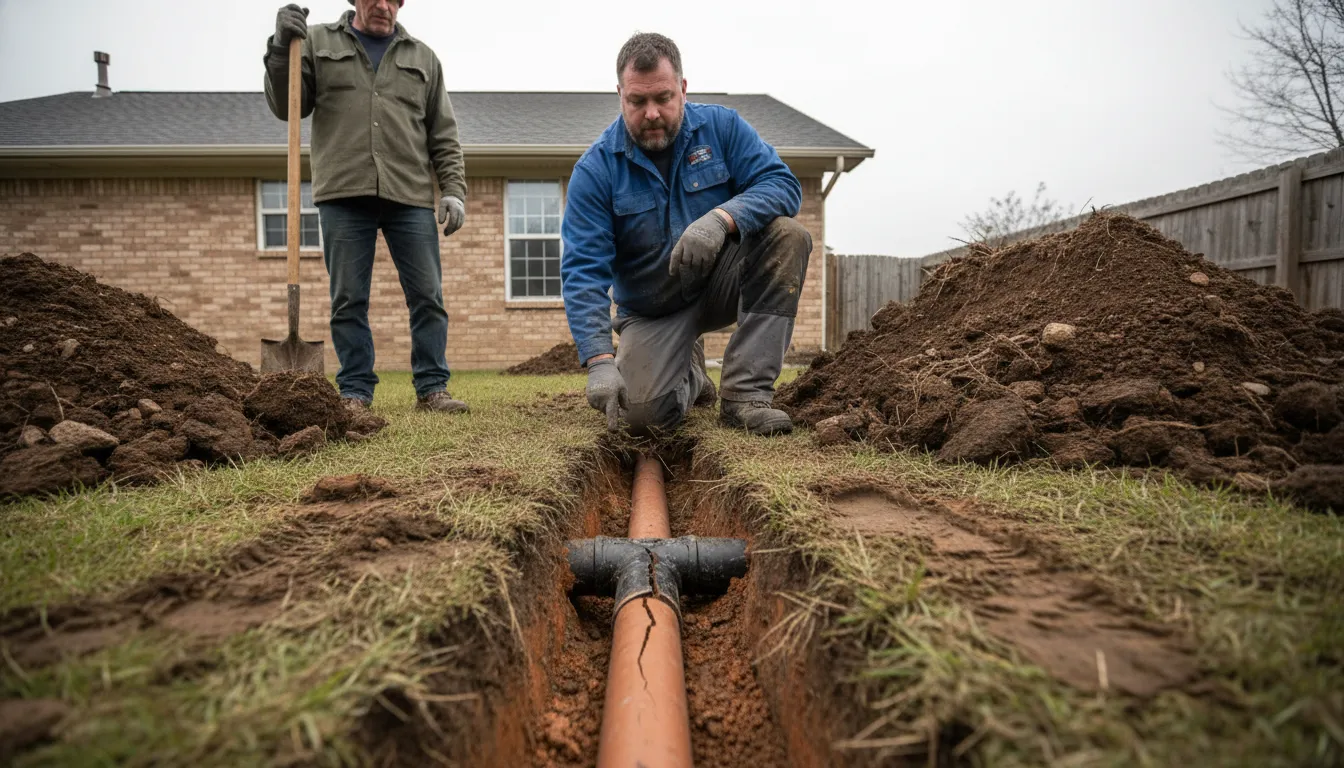
Find the Best Sewer Line Repair Companies for Your Business
No obligation • Fast responses • Nationwide coverage

Why you can trust Search a Plumber
Search a Plumber is a leading United States resource for finding and evaluating professional plumbing services. Our team researches licensing, experience, and customer feedback to create unbiased, fact-driven overviews. Companies cannot pay to change ratings or placement, ensuring homeowners get trustworthy information.
Search providers near you
Top Sewer Line Repair Companies in Atlanta, Georgia Ranked
A damaged sewer line is a serious issue that can lead to messy backups, property damage, and significant disruption to your home. In Atlanta, where aging infrastructure and tree roots are common culprits, understanding your repair options is crucial. This guide explains what sewer line repair entails, why it matters for your property's health, and how you can find qualified local specialists to assess your situation and provide a lasting solution.
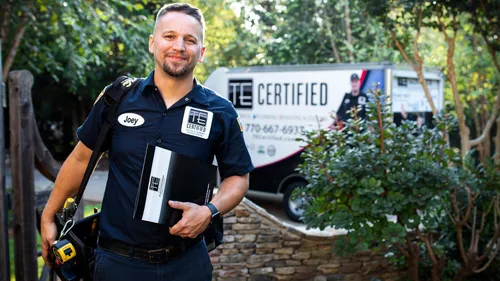
TE Certified, Electrical, Plumbing, Heating & Cooling
98 Patterson Rd SW, Lawrenceville, GA 30044
TE Certified, Electrical, Plumbing, Heating & Cooling provides comprehensive electrical, plumbing, and HVAC services in Atlanta, GA. Their licensed technicians handle water softener installation, drain cleaning, sewer line repair, leak detection, and garbage disposal repair, among other services. The company is known for installing and repairing electrical systems, air conditioning units, and plumbing infrastructure, with capabilities including slab leak detection and sewer line repairs. Serving the greater Atlanta area, TE Certified has built a reputation supported by thousands of positive reviews and holds multiple licenses and certifications. They offer same-day service and provide a lifetime warranty on products and services.
1-Tom-Plumber
629 Airport Rd Suite A, Lawrenceville, GA 30046
1-Tom-Plumber is a plumbing company serving Atlanta, GA, and surrounding communities in Gwinnett County. They provide a range of services including drain cleaning, sewer line repair, water damage restoration, and excavation. Their team uses advanced technology to clear drains and offers expertise in handling plumbing issues that may cause water damage. The company has roots in the water damage restoration industry, which supports their plumbing services with added urgency and experience. They emphasize emergency plumbing support and are licensed and insured.
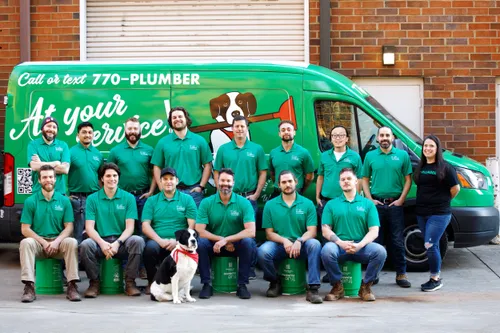
True Plumbing
2650 Pleasantdale Rd, Doraville, GA 30340
True Plumbing is a plumbing service provider based in Atlanta, GA, offering a wide range of services including sewer camera inspections, water heater repair and installation, drain cleaning, sewer line repair, trenchless sewer repair, leak detection, repiping, gas line installation, and toilet repair. They use advanced tools for leak detection and provide trenchless methods for sewer repairs, helping maintain efficient plumbing systems. Established in 2014, True Plumbing focuses on building lasting customer relationships by educating clients and ensuring peace of mind with their work.
Blue Skies Atlanta Plumbing
5520 Lilburn Stone Mountain Rd Ste B, Stone Mountain, GA 30087
Blue Skies Atlanta Plumbing offers residential and commercial plumbing services in Atlanta, GA, including DeKalb and Gwinnett counties. Their licensed plumbers handle water heater installation and repair, drain cleaning, sewer line repair, and toilet repairs. The company provides solutions for both small repairs and major plumbing projects, serving homes and businesses throughout the area.
Roto-Rooter Plumbing & Water Cleanup
3606 McCall Pl, Doraville, GA 30340
Roto-Rooter Plumbing & Water Cleanup provides a wide range of plumbing services in Atlanta, GA, including sewer camera inspections, water heater repairs and installations, drain cleaning, hydro jetting, sewer line repair, trenchless sewer repair, leak detection, and water softener installation. They offer 24/7 emergency plumbing services with same-day response to address urgent plumbing issues. Their capabilities include video camera inspections for sewer lines and the use of trenchless repair methods to minimize disruption during sewer line repairs. Serving the Atlanta area, Roto-Rooter also installs and services various water softener and filtration systems to improve water quality. The company is fully licensed and insured, offering continuous availability throughout the year.
Understanding Your Home's Sewer System
Your home's main sewer line is a critical underground pipe that carries all wastewater from your toilets, sinks, showers, and appliances out to the municipal sewer main, typically located under the street. In Atlanta, these lines run from your home's foundation, often under a slab or crawlspace, and extend across your property to the city connection point. When this line fails, the waste has nowhere to go, leading to the unpleasant and unsanitary backups that signal a major plumbing emergency.
Common Causes of Sewer Line Failure in Atlanta
Several factors specific to the Atlanta area contribute to sewer line problems. Identifying the root cause is the first step toward an effective repair.
- Tree Root Intrusion: This is a primary cause of damage in older Atlanta neighborhoods with mature trees. Roots are naturally drawn to the moisture and nutrients in sewer pipes, and they can infiltrate even small cracks or loose joints, eventually growing to block or break the pipe entirely.
- Pipe Corrosion and Age: Many homes in Atlanta, especially those built before the 1980s, have sewer lines made of clay tile or cast iron. Over decades, these materials can corrode, crack, and collapse due to ground pressure and chemical wear.
- Ground Shifting and Settling: The clay-heavy soil common in Georgia is prone to expansion and contraction with moisture changes. This movement can cause pipes to shift, settle unevenly, and develop cracks or separated joints 1.
- Persistent Clogs and Blockages: While a simple clog can often be cleared, recurrent blockages from grease, "flushable" wipes, and other debris are often a symptom of a deeper problem, like a partially collapsed pipe or severe root intrusion that traps material.
Modern Repair Methods: Trenchless vs. Traditional Excavation
Today, homeowners have more choices than ever for fixing a broken sewer line. The two main approaches are traditional excavation and modern trenchless technology.
Traditional Excavation (Dig-and-Replace)
This is the conventional method that has been used for decades.
- The Process: A large trench is dug along the entire length of the damaged pipe. The old pipe is removed, a new one is installed, and the trench is backfilled.
- Pros: It is a straightforward solution that can address any type of damage, no matter how severe. It is sometimes the only viable option if the pipe has completely collapsed or is inaccessible for other methods.
- Cons: The disruption is significant. This method destroys lawns, landscaping, driveways, sidewalks, and patios. The cost of restoring your yard and hardscapes after the repair can be substantial and is often a separate, large expense 2.
Trenchless Sewer Repair
Trenchless methods are designed to fix or replace the pipe with minimal digging, preserving your property.
- The Process: Technicians create one or two small access holes at the beginning and end of the damaged section. There are two primary trenchless techniques:
- Pipe Lining (Cured-in-Place Pipe or CIPP): A flexible, resin-saturated liner is inserted into the old pipe and inflated. The resin cures, forming a hard, seamless "pipe within a pipe" that seals cracks and blocks roots.
- Pipe Bursting: A conical bursting head is pulled through the old pipe, fracturing it outward while simultaneously pulling a new, durable pipe (like HDPE) into place behind it.
- Pros: These methods cause minimal disruption to your property, often completing the job in one to two days. They eliminate the need for costly landscape and hardscape restoration. The new pipe lining or pipe is typically very durable and resistant to future root intrusion 3 4.
- Cons: Trenchless repair is not suitable for every situation. If the pipe has severe offsets, collapses, or is made of certain materials, it may not be feasible. The specialized equipment and materials can sometimes mean a higher initial quote, though this is often offset by the savings on restoration 5.
Find the perfect sewer line repair companies for your needs
Get personalized recommendations and expert advice
What to Expect: Costs and Considerations in Atlanta
The cost of sewer line repair or replacement in Atlanta varies widely based on the extent of damage, the chosen method, and site-specific challenges. It's essential to get a detailed, camera-based inspection and written quotes for comparison.
- Minor Repairs: Addressing a localized crack or a small section of root intrusion may cost between $300 and $1,000+ 6 7.
- Full Sewer Line Replacement:
- Traditional Excavation: Costs can range from several thousand dollars for a short, accessible line to $10,000 - $25,000 or more for longer lines, deeper pipes, or projects requiring extensive restoration of driveways, sidewalks, or landscaping 8.
- Trenchless Replacement: Often quoted on a per-foot basis, trenchless repair can range from $55 to $250 per foot. For a 20-foot section, this could mean $1,100 to $5,000+ 9 10. While the initial quote may sometimes be higher than excavation, the total project cost is frequently competitive or lower because it avoids thousands of dollars in restoration work 11 12.
Key Factors Influencing Cost: The final price depends on the depth and length of the pipe, the pipe material, the location (under a house slab vs. the middle of the yard), necessary permits for crossing under sidewalks or driveways, and the specific company you hire.
The Critical First Step: Professional Camera Inspection
Before any repair decision can be made, a professional video camera inspection is non-negotiable. A skilled technician will feed a high-resolution camera through your sewer line, providing a real-time view of the interior. This inspection will pinpoint the exact location, nature, and severity of the problem-whether it's a root mass, a belly (sagging section), a crack, or a collapsed pipe 13. This diagnostic step is the foundation for an accurate repair plan and a fair, comparable quote. It allows a professional to advise whether trenchless methods are a viable, cost-effective solution for your specific situation or if traditional excavation is necessary 14.
Navigating Permits and Choosing a Provider in Atlanta
Sewer line repairs, especially those that extend to the city main under the street or a sidewalk, almost always require permits from the City of Atlanta or your local municipality. A reputable, licensed plumbing contractor will handle this permitting process for you. When choosing a provider, look for a company with specific experience in sewer line repair and replacement. Ask if they offer both trenchless and traditional methods, ensuring they can provide an unbiased recommendation based on what's best for your property, not just the services they have on hand. Check for proper licensing, insurance, and read reviews from local customers about their experience with similar large-scale sewer projects.
Frequently asked questions
Sources
Footnotes
-
Fort Worth Sewer Line Repair - https://www.molbergplumbing.com/sewer-drains/sewer-line-repair/ ↩
-
Trenchless Sewer Repair vs. Traditional Excavation - https://tdtplumbing.com/trenchless-sewer-repair/difference-to-traditional-repair/ ↩
-
Trenchless Sewer Repair: Lower Cost, Lower Impact Sewer Repair - https://www.sewerflowllc.com/2025/03/06/trenchless-sewer-repair-lower-cost-lower-impact-sewer-repair/ ↩
-
Atlanta Trenchless Sewer Line Replacement & No-Dig Repair - https://www.plumbworksinc.com/trenchless-sewer-line-replacement ↩
-
Sewer Repair Cost: Trenchless Vs Traditional Methods - https://www.superbrothers.com/sewer-repair-cost-trenchless-vs-traditional-methods/ ↩
-
How Much Does Sewer Line Replacement Cost? - https://www.fixandflow.co/blog/how-much-does-sewer-line-replacement-cost/ ↩
-
Pricing Guide For Plumbing Services In Atlanta - https://www.fixandflow.co/blog/pricing-guide-for-plumbing-services/ ↩
-
How Much Does Sewer Line Replacement Cost in Atlanta, GA? | Angi - https://www.angi.com/articles/how-much-does-sewer-line-replacement-or-repair-cost/ga/atlanta ↩
-
Decoding Trenchless Sewer Repair Costs - Pipeliner Pros - https://pipelinerpros.com/trenchless-sewer-repair-cost/ ↩
-
Sewer Line Repair | Atlanta, GA - Reliable Heating & Air - https://reliableair.com/plumbing/sewer-line-repair ↩
-
Trenchless vs. Traditional Sewer Repair - https://sewerlinesonly.com/trenchless-vs-traditional-sewer-repair-which-is-more-cost-effective-for-lakewood-homeowners/ ↩
-
Cost Comparison: Trenchless vs. Traditional Sewer Line Repair - https://www.advancedtrenchlesssolutions.com/blog/cost-comparison-trenchless-vs-traditional-sewer-line-repair ↩
-
Trenchless Sewer Line Replacement near Atlanta - TE Certified - https://www.tecertifiedelectricians.com/drains-sewer/trenchless-sewer-line-replacement/ ↩
-
Sewer Line Replacement Midtown Atlanta | Is Trenchless Better? - https://morningsideplumbing.com/blog/sewer-line-replacement-midtown-atlanta/ ↩