Find the Best Repiping Contractors for Your Business
No obligation • Fast responses • Nationwide coverage

Why you can trust Search a Plumber
Search a Plumber is a leading United States resource for finding and evaluating professional plumbing services. Our team researches licensing, experience, and customer feedback to create unbiased, fact-driven overviews. Companies cannot pay to change ratings or placement, ensuring homeowners get trustworthy information.
Search providers near you
Top Repiping Contractors in Killeen, Texas Ranked
A whole-house repiping project is a significant investment in your home's long-term health and functionality. It involves replacing all the water supply pipes within your walls and ceilings, moving from outdated, problematic materials to modern, reliable systems. For Killeen homeowners, this process is often the definitive solution to persistent leaks, rusty water, and frustratingly low water pressure. This guide will help you understand what a full plumbing replacement entails, from the materials and process to the costs and benefits, so you can make an informed decision for your property.

GTX Plumbing
107 Halmar Cove #141, Georgetown, TX 78628
GTX Plumbing is a plumbing service provider based in Austin, TX. They offer a range of services including sewer camera inspections, water heater repair and installation, water softener installation, hydro jetting, leak detection, repiping, and gas line installation. Their capabilities include video inspection and hydrostatic testing, supporting both residential and commercial projects such as remodels and build outs.

Plumb ATX
Austin, TX
Plumb ATX provides plumbing services in Austin, TX, specializing in water heater repair, installation of traditional and tankless systems, water softener installation, and repiping. They work with both homeowners and contractors on remodels and new construction projects, offering solutions that focus on comfort and long-term performance. Their capabilities include diagnosing and repairing water heater issues, replacing damaged pipes, and installing smart water shut-off valves to help protect homes from water damage.
Why Killeen Homeowners Consider a Full Plumbing Replacement
Over time, the plumbing system in any home begins to show its age. In many Killeen homes, the original pipes may be made of galvanized steel or even older copper systems that have reached the end of their service life. Galvanized pipes are particularly prone to internal corrosion, which slowly chokes the pipe diameter, reducing water pressure and contaminating your water with rust. Copper, while durable, can fall victim to pinhole leaks from corrosion or issues with the original installation.
A comprehensive pipe replacement project addresses these core issues. It's not just about fixing one leak; it's about proactively replacing the entire network to prevent future failures, ensure consistent water pressure at every fixture, and guarantee clean water from every tap. This upgrade eliminates the recurring expense and hassle of patching individual leaks and provides peace of mind for years to come.
The Repiping Process: A Step-by-Step Overview
A professional plumbing overhaul is a multi-stage operation that requires careful planning and execution. Understanding the steps can help you know what to expect during the project.
1. Inspection and Detailed Planning The process begins with a thorough assessment. A licensed plumber will evaluate your current system, identify all pipe routes running through walls, ceilings, and crawlspaces, and locate your main shut-off valve. This stage is crucial for creating a strategic plan that minimizes disruption to your home. The plumber will determine the best access points and map out the most efficient path for the new piping network.
2. Water Shut-Off and Creating Access Once the plan is set, the main water supply to the house is completely shut off. To reach the old pipes, technicians will need to create strategic access points. This involves cutting small, precise holes in drywall at key locations, such as where pipes branch off to fixtures. Professionals aim to keep these openings as small and few as possible to simplify the later restoration phase.
3. Removal of the Old Plumbing System With access established, the old pipes are drained of any remaining water. The existing galvanized steel or copper lines are then carefully disconnected from fixtures and the water heater and removed from the walls. This step clears the way for the new, modern plumbing infrastructure 1.
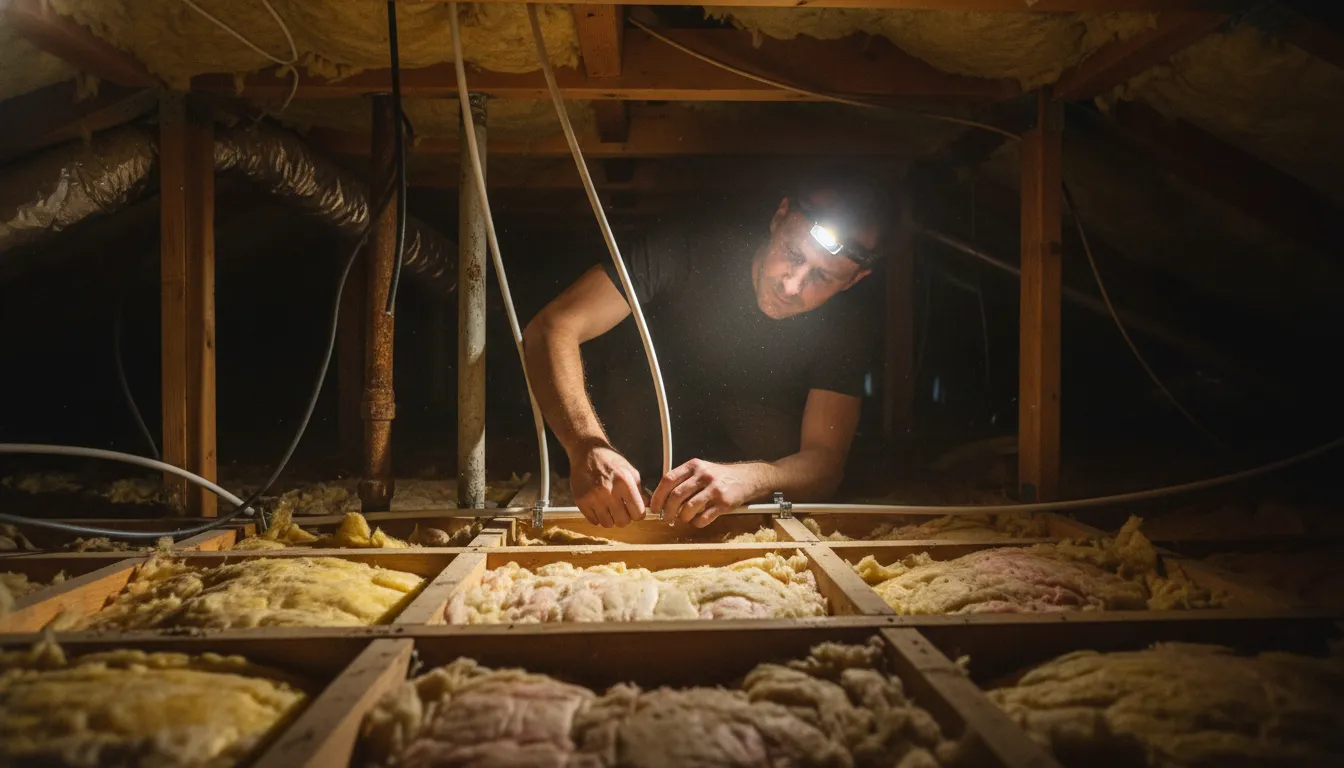
4. Installation of New Pipes This is the core of the project. The new piping material-most commonly PEX or copper-is run through the open walls and ceilings. The plumber will connect the new lines to every sink, toilet, shower, appliance, and the water heater, ensuring a secure and leak-free fit. This stage requires precision to maintain proper slope and support for the new pipes 2.
5. Critical Pressure Testing Before any walls are closed up, the new system must be rigorously tested. The plumber will pressurize the entire network with water and air to check for any leaks or weaknesses. This essential quality control step ensures the integrity of the installation before proceeding 3.
6. Restoration and Cleanup After the system passes inspection, the project moves to restoration. The access holes in your walls and ceilings are patched, textured, and primed for painting. Any flooring that was moved is replaced, and the work area is thoroughly cleaned up, leaving your home functional and tidy 4.
Find the perfect repiping contractors for your needs
Get personalized recommendations and expert advice
Choosing Your New Piping Material
The choice of material is a key decision in any repiping project, affecting cost, longevity, and performance. Today, homeowners in Killeen typically choose between two primary options.
PEX (Cross-Linked Polyethylene) PEX has become the most popular choice for whole-house repiping projects 5. This flexible, durable plastic tubing is corrosion-resistant, scales minimally, and can handle freezing temperatures better than rigid pipes. Its flexibility allows it to be snaked through walls with fewer fittings, which reduces potential leak points and can lower installation time and cost. For most homes, PEX offers an excellent balance of performance, longevity, and value 6.
Copper Copper is the traditional, premium option for water supply lines. It is extremely durable, resistant to bacteria, and can last for decades. Many homeowners appreciate its established reputation. However, copper is significantly more expensive than PEX, both in material cost and installation labor, as it requires soldering each connection 7 8. It remains a superb choice for those prioritizing a long-standing, high-end material.
Galvanized Steel It's important to note that galvanized steel is not a material used in new installations. If your home has it, the goal of the repiping project is to remove and replace it entirely with PEX or copper due to its well-known corrosion and water quality issues.
Project Timeline and What to Expect
A whole-house repipe is not an overnight job. The timeline can vary based on your home's size, the complexity of the plumbing layout, and the size of the crew. Typically, homeowners in Killeen can expect the process to take between 2 to 7 days 9 10.
A smaller, single-story home with good access may be on the shorter end of that range. Larger, multi-story homes or those with complex layouts and limited access in walls may require more time. Your chosen plumbing professional should provide a clear estimated timeline after the initial inspection. During this period, you will be without running water, so planning for alternative arrangements for drinking water and bathroom use is necessary.
Understanding the Investment: Cost Factors
The cost of a full plumbing system replacement is a significant consideration. It's typically priced per square foot of living space, with a starting point often around $4.50 per square foot and up, though this can vary widely. Several key factors influence the final price:
- Home Size and Layout: The total square footage is a primary driver. A two-story home will generally cost more than a one-story ranch of the same square footage due to increased labor complexity.
- Pipe Material: As discussed, copper material costs ($3-$8 per foot) are substantially higher than PEX ($0.40-$0.50 per foot), making a copper repipe a more expensive project overall.
- Labor and Accessibility: Labor constitutes a large portion of the total cost, often around 70% 11. Homes with easy access to plumbing chases or unfinished basements will be less labor-intensive than those where pipes are buried in hard-to-reach concrete slabs or finished walls.
- Scope of Work: The price includes not just the new pipes but also the pressure testing, permit fees, and the crucial drywall repair and repainting needed to restore your walls.
While the upfront investment is considerable, it should be weighed against the long-term benefits of a leak-free home, improved water quality, higher water pressure, and increased property value 12.
Frequently asked questions
Sources
Footnotes
-
Understand the Cost of Repiping a House: Essential Guide - https://1dayallprorepipes.com/understand-the-cost-of-repiping-a-house-essential-guide/ ↩
-
Whole-House Repiping: Step-by-Step Guide - https://www.veteranplumbing.us/whole-house-repiping-step-by-step-guide/ ↩
-
What Is Involved in Repiping a House? - Apollo HVAC & Plumbing - https://gotoapollo.com/2024/03/06/what-is-involved-in-repiping-a-house/ ↩
-
Whole House Repiping in Richardson, TX - https://inhouseplumbingcompany.com/service-areas/richardson-tx/whole-house-repiping-richardson-tx/ ↩
-
What Is PEX and Why Is It Popular in Modern Plumbing? - YouTube - https://www.youtube.com/watch?v=s0MTMlETWLU ↩
-
The Pros and Cons of Different Types of Plumbing Pipes - https://www.mrrooter.com/greater-syracuse/about-us/blog/2019/july/the-pros-and-cons-of-different-types-of-plumbing/ ↩
-
Repipe Cost Calculator | How Much to Repipe a House in Texas - https://www.repipesolutionsinc.com/repipe-calculator/ ↩
-
Tucson Whole House Plumbing Repipe Service - https://plumberoftucson.com/plumbing-services/whole-house-repipe-tucson-az/ ↩
-
How Much to Repipe a House: A Comprehensive Cost Guide - https://www.benjaminfranklinplumbing.com/league-city/blog/2024/december/how-much-to-repipe-a-house-a-comprehensive-cost-guide/ ↩
-
What Is Repiping? A Comprehensive Guide | CPI Service - https://cpiservice.com/blog/what-is-repiping/ ↩
-
2025 Texas Repiping Costs: What Homeowners Need to ... - https://wedorepipes.com/repipe-houston/2025-texas-repiping-costs-what-homeowners-need-to-know-before-upgrading-their-plumbing/ ↩
-
Does Repiping A House Add Value? | All Aloha Plumbing - https://allalohaplumbing.com/does-repiping-a-house-add-value/ ↩