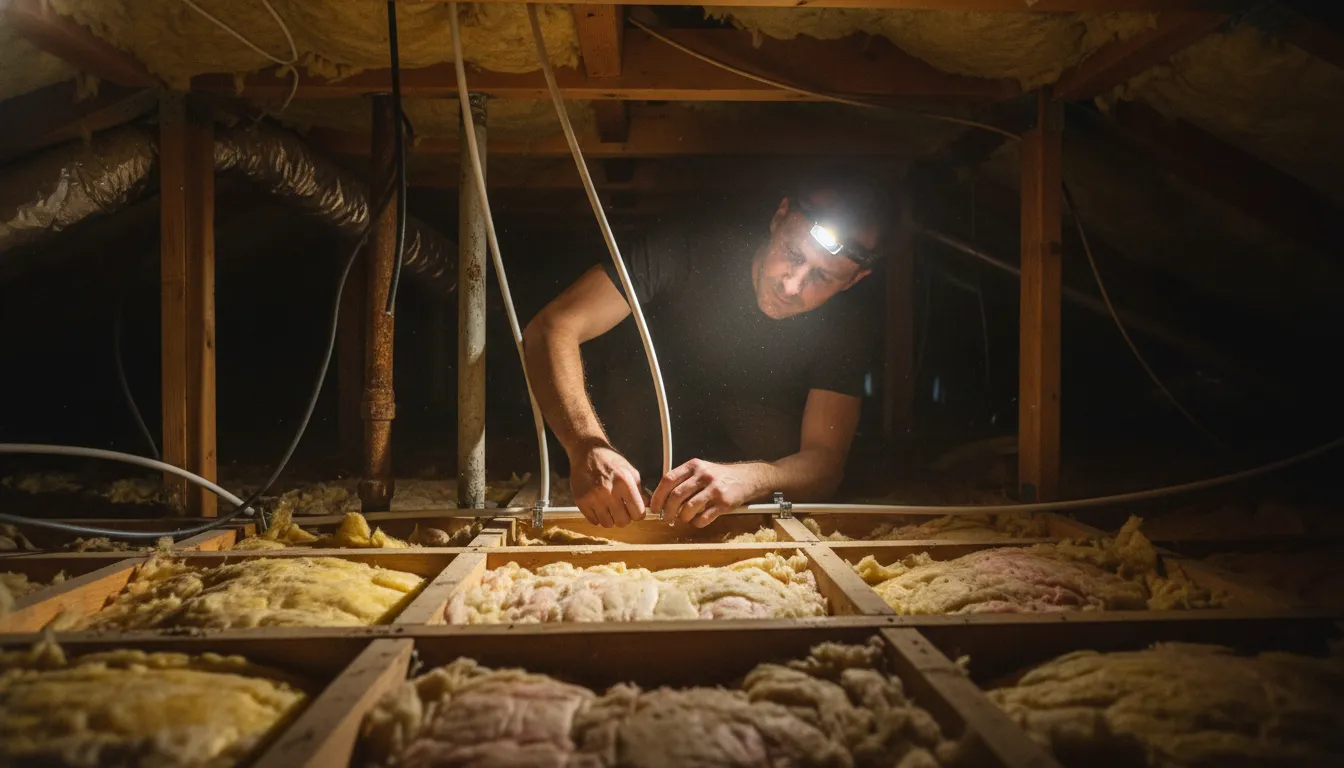
Find the Best Repiping Contractors for Your Business
No obligation • Fast responses • Nationwide coverage

Why you can trust Search a Plumber
Search a Plumber is a leading United States resource for finding and evaluating professional plumbing services. Our team researches licensing, experience, and customer feedback to create unbiased, fact-driven overviews. Companies cannot pay to change ratings or placement, ensuring homeowners get trustworthy information.
Search providers near you
Top Repiping Contractors in Cleveland Heights, Ohio Ranked
If you're a homeowner in Cleveland Heights, you may be facing the reality of aging pipes. Over time, water lines made from galvanized steel or even lead can corrode, leading to poor water pressure, discolored water, and the constant threat of leaks. A full home repiping project is a significant investment that replaces your entire network of supply pipes with modern, reliable materials. This guide explains what a whole-house pipe replacement entails, why it's often necessary for older homes, and how to navigate the process to find a qualified local professional for your plumbing overhaul.
Tom Schaefer Plumbing
4350 Glenbrook Rd, Willoughby, OH 44094
Tom Schaefer Plumbing provides plumbing, heating, and air conditioning services in Cleveland, OH. They offer a range of services including sewer camera inspections, drain cleaning, sewer line repairs, leak detection, and repiping. The company has been family-owned since 1929 and serves both residential and commercial clients. They also provide 24-hour emergency service to address urgent plumbing and HVAC issues promptly.
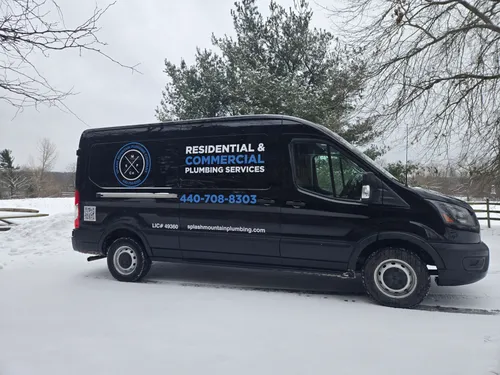
Splash Mountain Plumbing Company
10180 Queens Way Unit 1, Chagrin Falls, OH 44023
Splash Mountain Plumbing Company provides residential and commercial plumbing services in Cleveland, OH. They handle inspections, repairs, maintenance, and installations for a wide range of plumbing needs including water heater repair and installation, tankless water heaters, water softeners, sump pumps, drain cleaning, leak detection, repiping, and toilet repair. The company also offers well water testing, backflow testing, and services related to water treatment and filtration systems. Splash Mountain Plumbing Company serves multiple counties around Cleveland and emphasizes clear communication and upfront pricing before starting any work.
Roto-Rooter Plumbing & Water Cleanup
5851 Pearl Rd #205A, Parma Heights, OH 44130
Roto-Rooter Plumbing & Water Cleanup provides comprehensive plumbing services in Cleveland, OH, specializing in residential and commercial plumbing solutions. Their offerings include sewer and drain cleaning, water heater repair and installation, leak detection, garbage disposal repair, and trenchless sewer line repair. They use advanced equipment such as video inspection cameras and hydro-jetting technology to diagnose and resolve plumbing issues efficiently. Roto-Rooter also offers 24/7 emergency plumbing services to address urgent problems like burst pipes and sewer backups. Serving Cleveland and surrounding counties, Roto-Rooter is a licensed and insured provider dedicated to maintaining reliable plumbing systems.
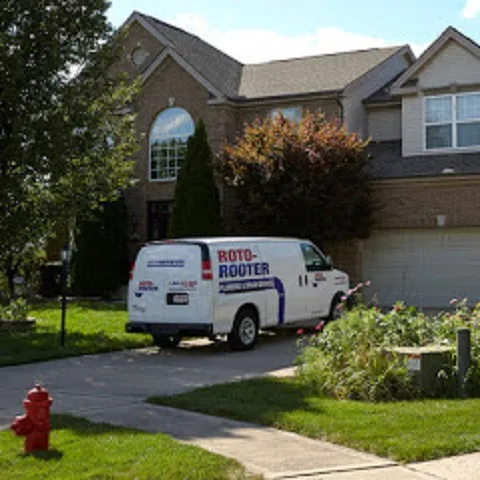
Roto-Rooter Plumbing & Water Cleanup
27575 Euclid Ave, Euclid, OH 44132
Roto-Rooter Plumbing & Water Cleanup offers a wide range of plumbing services in Cleveland, OH, including drain cleaning, sewer line repair, water heater installation and repair, leak detection, and gas line installation. They serve both residential and commercial clients, handling everything from minor repairs to complex sewer system maintenance. The company uses advanced equipment such as video camera sewer inspections and provides trenchless sewer repair options to minimize disruption. Roto-Rooter is available 24/7 for emergency plumbing services, ensuring support whenever urgent issues arise.
McHugh's Plumbing, Inc.
Cleveland, OH
McHugh's Plumbing, Inc. is a family-owned plumbing company serving Cleveland, OH, and the surrounding Tri-County area. Since 1999, they have provided a wide range of plumbing services including drain cleaning, hydro jetting, sewer line repair, gas line installation, water heater services, sump pump repair, and leak detection. The company is known for its expertise in both residential and commercial plumbing, with specialized capabilities in historical restoration and preservation of Cleveland-area Century homes. McHugh's Plumbing offers 24/7 emergency services and supports real estate professionals with thorough plumbing inspections to facilitate smooth transactions.
Understanding the Need for a Full Home Pipe Replacement
Many of Cleveland Heights' charming homes were built during eras when galvanized steel was the standard for plumbing. While durable initially, these pipes are prone to internal rust and mineral buildup over decades. This corrosion severely restricts water flow, resulting in weak shower pressure and slow-filling appliances. More critically, rust flakes can discolor your water, and in the oldest homes, there's a risk of lead service lines or lead-based solder in copper joints. A comprehensive repiping job eliminates these concerns by removing all the old supply lines-both hot and cold-and installing a new, code-compliant system. This isn't just a repair; it's a long-term upgrade that protects your home's value and your family's health by ensuring clean, strong water flow to every faucet, shower, and appliance.
The Repiping Process: A Step-by-Step Overview
A whole-house re-pipe is a structured project managed by licensed plumbers. Understanding the steps can help you prepare and set realistic expectations.
1. Initial Inspection and Planning A professional will conduct a thorough assessment of your current plumbing system. They'll identify the existing pipe materials, locate the main water shut-off, map the pipe runs, and diagnose specific issues like leaks or corrosion. This stage is crucial for creating an accurate plan and quote for the new pipe installation.
2. Securing Permits In Cleveland Heights and Cuyahoga County, a repiping project requires permits. Your plumbing contractor will typically handle pulling these permits, which ensures the work meets all local building and plumbing codes. A final inspection by the city or county is required upon completion to approve the work1.
3. Gaining Access and Demolition This is the most disruptive phase. To remove the old pipes and install new ones, plumbers need to create access points. This involves cutting strategic holes in drywall at points where pipes run through walls, ceilings, and floors. The goal is to minimize damage, but you should expect some demolition in areas like basements, utility rooms, and behind bathroom and kitchen fixtures.
4. Removal and New Installation The old galvanized, copper, or lead pipes are carefully disconnected and removed. Then, the new piping network is installed. Plumbers will run new supply lines along efficient paths, connecting them to the main water line and branching out to every sink, toilet, water heater, and appliance. The choice of new material (discussed below) dictates some of the installation techniques 2.
5. System Testing and Inspection Before any walls are closed up, the new system is rigorously tested. This involves a pressure test, where the system is pressurized to a level above normal operating pressure to check for any leaks at joints or fittings. Water flow is also checked at each fixture to ensure proper pressure3 4.
6. Restoration and Cleanup Once the system passes inspection, the restoration phase begins. The holes cut in your walls and ceilings are patched with new drywall, taped, mudded, and sanded. Basic texture matching and priming are often included, though full repainting is typically the homeowner's responsibility. The work area is thoroughly cleaned of all debris and dust 5.
Find the perfect repiping contractors for your needs
Get personalized recommendations and expert advice
Choosing Your New Piping Material
The two most common materials for modern residential repiping in Cleveland Heights are PEX and copper. Each has distinct advantages.
PEX (Cross-linked Polyethylene) PEX has become the go-to choice for most whole-house re-pipe projects. It's a flexible, plastic tubing that is highly resistant to scale and chlorine, and it won't corrode. Its flexibility allows it to be snaked through walls with far fewer fittings and joints than rigid pipe, which reduces potential leak points and speeds up installation. PEX is also more affordable than copper and performs well in our climate, as it can expand slightly if water freezes, reducing the chance of bursting6.
Copper Copper piping is a traditional, durable metal option known for its long lifespan. It remains a premium choice where budget is less of a concern. While extremely reliable, copper is more expensive both for the material and the labor, as it requires soldering at every joint. Over very long periods in certain water conditions, copper can be susceptible to a form of corrosion called pitting. It is also a rigid material, making installation in tight spaces more challenging 7.
CPVC (Chlorinated Polyvinyl Chloride) CPVC is a rigid plastic pipe sometimes used, particularly for drain lines or in specific applications. It is generally less expensive but is considered to have a shorter lifespan than PEX or copper and can become brittle over time. For whole-house supply line replacements, PEX is typically the preferred plastic option.
What to Expect: Project Timeline and Investment
How Long Does Repiping Take? The duration depends entirely on the size and complexity of your home. A smaller, single-story home with straightforward access might be completed in 2 to 3 days. A larger, multi-story Cleveland Heights colonial with more bathrooms and complex layouts could take up to a week or more8 9. The timeline includes the initial inspection, the active installation and testing, and the basic drywall repair.
Understanding the Costs A full home repipe is a major project with a significant cost range. For a typical Cleveland Heights home, you can expect a broad range, generally from $4,000 to $15,000 or more10 11. The final price is influenced by:
- Home Size & Number of Fixtures: More bathrooms, kitchens, and wet bars mean more pipe and labor.
- Chosen Material: A copper repipe will cost significantly more than a PEX system due to material and labor intensity12 13.
- Accessibility: Homes with easy basement and crawlspace access are less expensive to repipe than those where pipes are buried in concrete slabs or behind finished walls.
- Restoration Work: The quote should include basic drywall patching. Complex plaster repair or extensive repainting will add cost.
While the upfront investment is substantial, it should be weighed against the cost of repeated emergency leaks, water damage repairs, and the value of having reliable, clean water for decades to come.
Preparing Your Home for the Repipe Project
Proper preparation minimizes stress and helps the project run smoothly:
- Clear the Work Areas: Move furniture, rugs, and personal items away from walls in bathrooms, kitchens, and utility rooms. Provide clear access to the water heater, main shut-off, and basement/crawlspace areas.
- Plan for Water Outages: You will be without water for periods during the installation. Plan accordingly-fill containers for drinking water, and schedule your day around the outage.
- Discuss Logistics: Talk with your plumber about daily start/end times, where crews will enter, and where materials will be stored.
- Consider Your Household: The noise and disruption can be significant. If possible, plan for children and pets to be away from the home during the most active demolition and installation phases.
Frequently asked questions
Sources
Footnotes
-
Whole Home Repiping Ohio | Anderson Heating Cooling & Plumbing - https://www.myandersonhvac.com/plumbing/piping-repiping/ ↩
-
What Is Repiping? A Comprehensive Guide | CPI Service - https://cpiservice.com/blog/what-is-repiping/ ↩
-
Comprehensive Guide to Whole House Repiping - Absolute Airflow - https://www.absoluteairflow.com/comprehensive-guide-to-whole-house-repiping/ ↩
-
Whole-House Repiping: Step-by-Step Guide - https://www.veteranplumbing.us/whole-house-repiping-step-by-step-guide/ ↩
-
What the Residential Repiping Process Involves - https://www.trmillerheatingandcooling.com/what-the-residential-repiping-process-involves/ ↩
-
What to Expect During a Whole House Repipe: Cost, Timeline ... - https://go4apes.com/what-to-expect-during-a-whole-house-repipe-cost-timeline-and-installation-process/ ↩
-
What Is Involved in Repiping a House? - https://gotoapollo.com/2024/03/06/what-is-involved-in-repiping-a-house/ ↩
-
What Is Involved With Repiping A House? | HELP Plumbing - https://333help.com/blog/what-is-involved-with-repiping-a-house/ ↩
-
How Long Does It Take To Repipe A Home? - https://www.inandoutplumbing.com/how-long-does-it-take-to-repipe-a-home ↩
-
How Much Does It Cost to Repipe a House? - https://therepipecompany.com/faqs/how-much-does-it-cost-to-repipe-my-home/ ↩
-
Repiping a House: Essential Guide | American Mains & Drains - https://www.americanmainsanddrains.com/post/repiping-a-house-guide ↩
-
How to Prepare for a Whole-House Repiping - Ray The Plumber - https://raytheplumber.com/uncategorized/how-to-prepare-for-a-whole-house-repiping/ ↩
-
How Much to Repipe a House: A Comprehensive Cost Guide - https://www.benjaminfranklinplumbing.com/league-city/blog/2024/december/how-much-to-repipe-a-house-a-comprehensive-cost-guide/ ↩