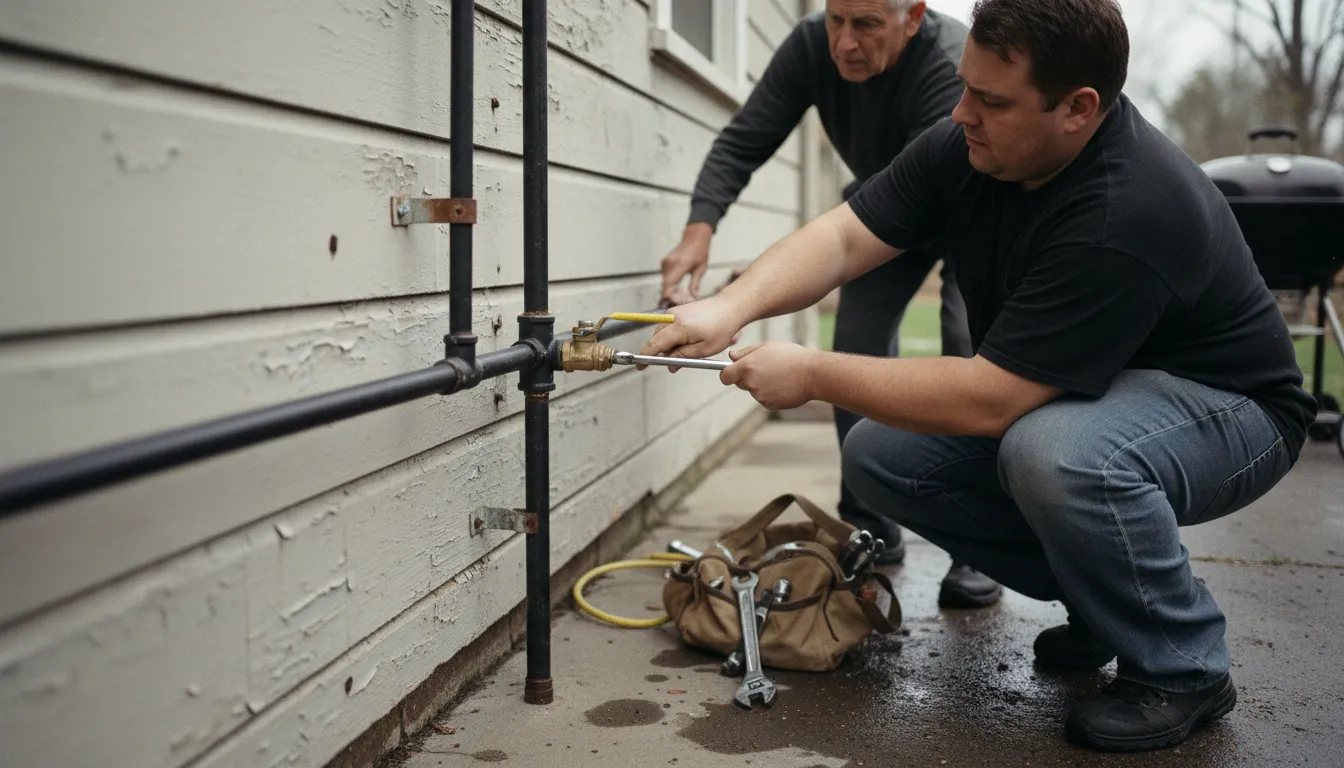
Find the Best Gas Line Plumbing Companies for Your Business
No obligation • Fast responses • Nationwide coverage

Why you can trust Search a Plumber
Search a Plumber is a leading United States resource for finding and evaluating professional plumbing services. Our team researches licensing, experience, and customer feedback to create unbiased, fact-driven overviews. Companies cannot pay to change ratings or placement, ensuring homeowners get trustworthy information.
Search providers near you
Top Gas Line Plumbing Companies in Leesburg, Virginia Ranked
Installing or repairing a gas line is a critical home improvement project that directly impacts the safety and functionality of your property. Natural gas powers essential appliances like furnaces, water heaters, stoves, and fireplaces, but working with gas piping requires specialized knowledge and strict adherence to safety codes. For homeowners and businesses in Leesburg, finding a qualified, licensed professional for gas line services is non-negotiable. This guide explains the process, local requirements, and key considerations to help you make informed decisions when planning your gas line project.
Astro Plumbing incorporated
Washington, DC
Astro Plumbing incorporated is a plumbing service provider based in Washington, DC. They offer a range of services including water heater repair and installation, sump pump repair and installation, drain cleaning, leak detection, gas line installation and repair, and toilet repair. Their capabilities include working with electric and gas water heaters, direct vent and power vent water heaters, sump pump backup systems, and gas valve replacements. Astro Plumbing focuses on understanding client issues thoroughly and managing projects from start to finish to ensure smooth completion.
Wags Plumbing
Washington, DC
Wags Plumbing is a plumbing service provider based in Washington, DC. They offer a wide range of residential plumbing services including water heater repair and installation, tankless water heater services, water softener installation, sump pump repair, drain cleaning, leak detection, gas line installation, toilet and garbage disposal repair. Their capabilities include handling gas and electric water heaters, tankless and hybrid electric models, as well as main water line leak detection and diagnostics. They also specialize in Aquasauna filtration system installation and provide residential gas services such as cleaning, repair, and inspections for stoves, dryers, and grills.
Service Force Plumbing
706B E Gude Dr #3, Rockville, MD 20850
Service Force Plumbing is a locally owned and family-operated plumbing company serving Washington, DC, and the Rockville, MD area. With over twenty years of experience, they provide a full range of plumbing services including sewer line repair with trenchless methods, water heater installation and repair, drain cleaning, gas line installation, leak detection, and whole-house repiping. Their team includes licensed plumbers who handle both residential and commercial plumbing needs, offering expert solutions such as hydro jetting and sewer camera inspections. Service Force Plumbing is known for its comprehensive capabilities and has earned hundreds of five-star reviews over its two decades of service.
Roto-Rooter Plumbing & Water Cleanup
2219 N Columbus St #204, Arlington, VA 22207
Roto-Rooter Plumbing & Water Cleanup provides comprehensive plumbing services in Washington, DC, with a focus on the Arlington metro area. They offer a wide range of residential and commercial plumbing solutions, including drain cleaning, sewer line repair and replacement using both traditional and trenchless methods, water heater repair and installation, and emergency plumbing services available 24/7. Their expertise includes hydro jetting for clearing drains and sewer lines, as well as floodwater cleanup and water damage restoration. Serving the Arlington community and surrounding neighborhoods, Roto-Rooter is equipped to handle plumbing challenges in both older and modern properties with tailored solutions.
PipeWorks Plumbing, Heating and Air
8652 Dakota Dr, Gaithersburg, MD 20877
PipeWorks Plumbing, Heating and Air provides a wide range of plumbing, heating, air conditioning, and electrical services in Washington, DC. Their offerings include water heater repair and installation, tankless water heater services, sump pump repair, drain cleaning, hydro jetting, sewer line repair, leak detection, gas line installation, and toilet repair. The company is equipped to handle both minor and major installations and repairs with licensed and insured technicians. With over 80 years of combined plumbing and HVAC expertise, PipeWorks emphasizes upfront pricing and efficient same-day service to meet customer needs.
Understanding Gas Piping Services
Gas line installation and repair encompass a range of services, from running a new line for a backyard grill to replacing aging pipes throughout a home. In Leesburg, this work is governed by the Virginia Uniform Statewide Building Code (USBC) and local amendments enforced by Loudoun County and the Town of Leesburg. Professionals handle the entire process: designing the system based on your appliance load (measured in BTUs), obtaining necessary permits, executing the physical installation or repair, and coordinating mandatory inspections.
Using the correct materials is paramount. For exposed indoor runs, traditional black iron pipe is common. For longer, buried runs to outdoor appliances or between buildings, professionals often use flexible Corrugated Stainless Steel Tubing (CSST), which requires specific fittings and bonding for safety. Every joint and valve must be installed to exact specifications to prevent the dangerous possibility of gas leaks.
The Critical Importance of Hiring a Licensed Professional
Gas work is not a suitable DIY project. The risks associated with incorrect natural gas line installation-including fire, explosion, and carbon monoxide poisoning-are severe. Licensed plumbers and gas fitters have the training to understand pressure requirements, proper venting, and local code nuances. They carry insurance that protects you in the rare event something goes wrong. Most importantly, they ensure the entire system is pressure-tested before being put into service, which is the definitive method for detecting leaks 1.
In Virginia, individuals performing gas fitting must hold appropriate licensure. Hiring a licensed pro guarantees that the person working on your system has proven their competency through testing and ongoing education. They are also your direct link to navigating the local permit and inspection process, which is a legal requirement for most gas line work in Leesburg.
Local Permits and Inspections in Leesburg
Before any digging or piping begins, a permit must typically be secured. The permitting authority depends on your location: for projects within the town limits, you contact the Town of Leesburg's Department of Planning & Zoning. For projects in the county surrounding Leesburg, you contact the Loudoun County Department of Building & Development. Your contractor will usually handle this, but it's good to be aware. Permit fees vary based on the project's scope and valuation, often ranging from $50 to over $300.
The inspection process is a crucial safety checkpoint. After installation but before the trench is backfilled or walls are closed up, a county or town inspector will visit to examine the workmanship, materials, and depth. They will witness a pressure test, where the system is pressurized with air or an inert gas and monitored for any drop that indicates a leak. Only after the inspector approves the work can the project proceed to completion. Skipping this step is illegal and incredibly dangerous.
Step-by-Step: The Gas Line Installation Process
A professional gas line installation follows a meticulous sequence to ensure safety and compliance.
- Planning and Design: The contractor assesses your needs, calculates the total BTU load of all connected appliances, and plans the pipe route. This step determines the required pipe diameter and materials.
- Call 811: This is the law. At least three business days before digging, you or your contractor must call Miss Utility of Virginia at 811. This free service has all public underground utility lines (electric, cable, water, sewer) marked on your property to prevent accidental strikes, which can be costly and deadly 2 3.
- Excavation: A trench is dug from the gas source (meter or existing line) to the appliance location. In Leesburg, gas lines must be buried to a specific depth (often 12-18 inches) to protect them from frost and surface activity.
- Pipe Installation: The gas pipe is laid in the trench. A critical and code-required step is installing a tracer wire alongside the pipe. This copper wire is left accessible at the ends so future technicians can use a locator to find the buried line without digging 4.
- Connection and Testing: The pipe is connected to the source and the appliance. The entire new section is then pressurized for a leak test, which must hold steady for a set period (often 15-30 minutes or more) under the inspector's observation 5.
- Inspection: The local building official performs the final inspection, verifying all work meets code.
- Backfill and Restoration: Once approved, the trench is carefully backfilled, and the landscape or flooring is restored as agreed.
Find the perfect gas line plumbing companies for your needs
Get personalized recommendations and expert advice
Common Gas Line Projects and Cost Considerations
Project costs in Leesburg depend on complexity, length, materials, and accessibility. Here's a general breakdown based on regional data:
- New Gas Line Installation: This is typically priced per linear foot. For a standard residential installation, you can expect a range of $15 to $25 or more per foot6 7. A common project, like running a line 50 feet from the meter to a new fireplace or kitchen, may total between $1,000 and $3,000+ when including labor, materials, permits, and restoration 8.
- Trenching: The excavation work itself is a significant part of the cost, often calculated at $10 to $20 per linear foot, or a flat rate of $200 to $500 for a standard job 9.
- Gas Line Repair: Repairing a leak or damaged section varies widely. Simple above-ground repairs might start around $150, while complex repairs involving excavation and replacement of buried segments can cost $500 to $800 or more 10.
- Permits and Inspections: As noted, budget approximately $50 to $300+ for the required local government fees 11 12.
Always get detailed, written estimates from multiple licensed contractors. The lowest bid isn't always the best value when safety is the primary concern.
Safety Protocols and Best Practices
Beyond hiring a pro, homeowners should be aware of key safety practices:
- Know the Signs of a Leak: The smell of rotten eggs (odorant added to gas), a hissing sound near a line, or dead vegetation in a line over a buried pipe are all red flags. If you suspect a leak, leave the area immediately and call 911 from a safe distance.
- Regular Inspections: Have your gas piping system inspected periodically, especially if your home is older. This is also a highly recommended step during the home-buying process 13.
- Clear Access: Ensure your gas meter and appliance shutoff valves are always easily accessible for emergency responders.
- Proper Appliance Hookups: Only use appliances approved for natural gas and ensure they are connected with a flexible gas appliance connector-never use makeshift solutions.
Investing in proper gas line installation and repair protects your family, your property, and your peace of mind. By understanding the process and partnering with a qualified Leesburg professional, you can ensure your gas-powered amenities are both convenient and safe.
Frequently asked questions
Sources
Footnotes
-
Essential Guide to Gas Line Installation: Tips and Safety Precautions - https://gaeberly.com/gas-line-installation/ ↩
-
Gas Line Installation in Northern Virginia - Liberty Plumbing - https://www.libertyplumbinginc.com/2025/07/30/gas-line-installation-in-northern-virginia-what-homeowners-need-to-know/ ↩
-
New Gas Line Installation Cost: Natural Gas Piping Supplies & ... - https://www.superbrothers.com/new-gas-line-installation-cost-natural-gas-piping-supplies-custom-piping/ ↩
-
How to Install Natural Gas Lines Safely and Correctly - https://bluegasexpress.com/how-to-install-natural-gas-lines/ ↩
-
Gas Line Repair | Potomac Plumbing & Gas - https://potomacpg.com/services/gas-line-services/ ↩
-
Cost of Natural Gas Line Installation in Alexandria, VA - https://alexandriagaslineservice.com/cost-of/natural-gas-line-installation ↩
-
Cost of Gas Pipe Installation in Sterling, VA - https://sterlinggaslineservice.com/cost-of/gas-pipe-installation ↩
-
Cost of Natural Gas Piping in Sterling, VA - https://sterlinggaslineservice.com/cost-of/natural-gas-piping ↩
-
Cost of Gas Line Plumbing in Sterling, VA - https://sterlinggaslineservice.com/cost-of/gas-line-plumbing ↩
-
Cost of Gas Line Replacement in Sterling, VA - https://sterlinggaslineservice.com/cost-of/gas-line-replacement ↩
-
Gas Line Repair and Replacement Costs [2026 Data] | Angi - https://www.angi.com/articles/average-gas-line-repair-and-installation-costs.htm ↩
-
Review & Inspection Fee Schedule | Town of Leesburg, Virginia - https://www.leesburgva.gov/departments/community-development/applications-and-checklists/fee-schedule ↩
-
Gas Line and Gas Piping Inspection in Northern Virginia - https://www.libertyplumbinginc.com/2025/12/04/why-you-should-have-a-gas-line-and-gas-piping-inspection-before-buying-a-home/ ↩