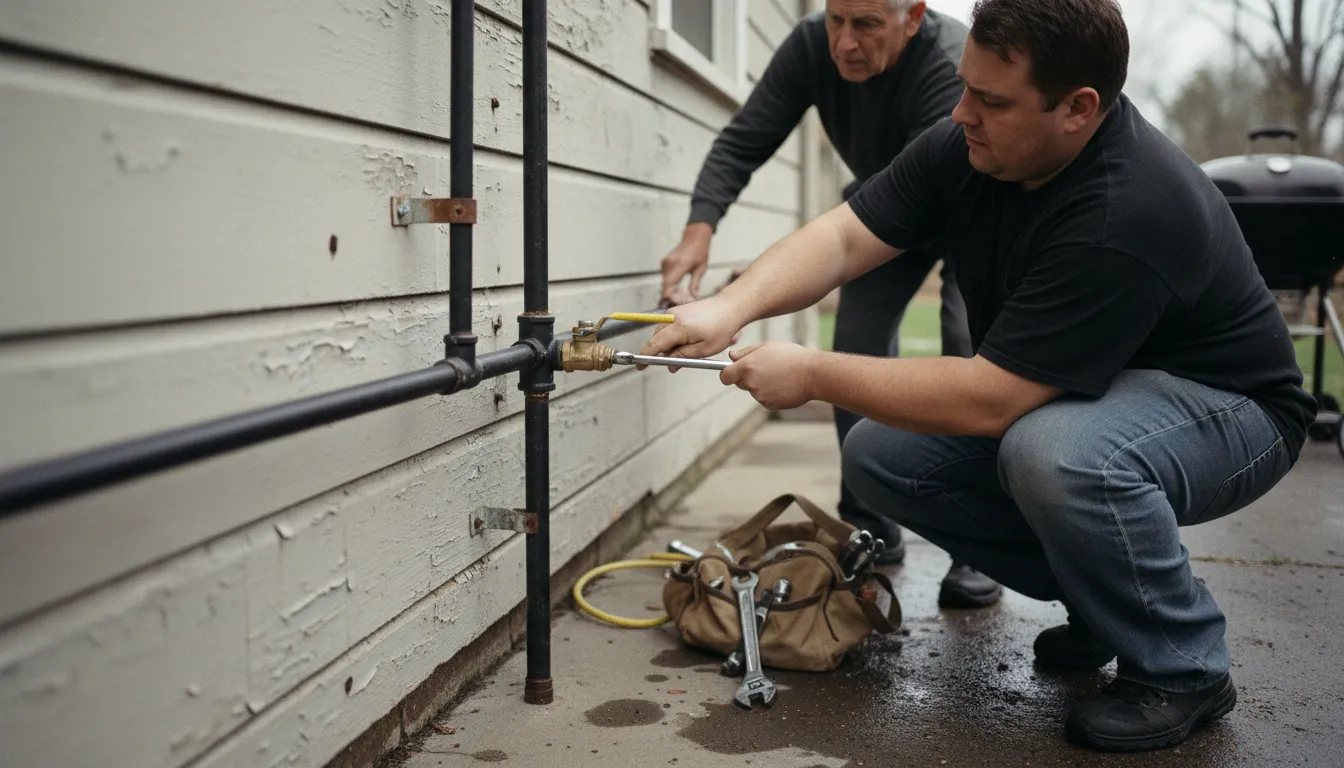
Find the Best Gas Line Plumbing Companies for Your Business
No obligation • Fast responses • Nationwide coverage

Why you can trust Search a Plumber
Search a Plumber is a leading United States resource for finding and evaluating professional plumbing services. Our team researches licensing, experience, and customer feedback to create unbiased, fact-driven overviews. Companies cannot pay to change ratings or placement, ensuring homeowners get trustworthy information.
Search providers near you
Top Gas Line Plumbing Companies in Chesapeake, Virginia Ranked
Ensuring your home or business has a safe, reliable gas supply is critical for powering appliances like water heaters, furnaces, stoves, and fireplaces. Gas line installation and repair is specialized work that demands expertise, proper permitting, and strict adherence to safety codes to prevent dangerous leaks. This guide explains the process, local requirements, and safety considerations for gas piping work in Chesapeake, helping you make informed decisions when you need to connect with qualified local professionals.
Sean Fixes Johns Plumbing
417 Hobart Ave, Virginia Beach, VA 23451
Sean Fixes Johns Plumbing is a locally owned plumbing company serving Virginia Beach, VA, as well as Norfolk and Chesapeake. The business offers a range of plumbing services including sewer camera inspections, water heater installation, sewer line repair, leak detection, and gas line installation. They use modern camera and detection equipment to diagnose and repair sewer line issues efficiently. With over 30 years of experience, Master Plumber Sean Yelton leads the team in providing plumbing solutions for both residential and commercial customers. The company also offers 24-hour emergency plumbing services to address urgent needs.
Richardson Plumbing Co
1469 Butts Station Rd, Chesapeake, VA 23320
Richardson Plumbing Co is a family owned and operated plumbing business serving Virginia Beach, VA, and the Tidewater area since 1988. They provide a wide range of residential and commercial plumbing services including water heater installation and repair, tankless water heater services, drain cleaning, sewer line repair, and gas line installation. The company is licensed and insured, with a Master Plumber and Master Gas Piper on staff, and offers backflow testing and plumbing inspections as part of their expertise.
RPG Plumbing Services
5305 Cleveland St STE 102, Virginia Beach, VA 23462
RPG Plumbing Services is a plumbing company serving Virginia Beach, VA, and the Hampton Roads area. Since 2015, they have provided a range of plumbing services including water heater repair and installation, drain cleaning, hydro jetting, sewer line repair, leak detection, repiping, gas line installation, and toilet repair. Their team holds Class A Contractor licenses, Master plumber and gas fitter certifications, and specialized training such as Navien certification, enabling them to handle both simple and complex plumbing issues. RPG Plumbing Services offers 24/7 emergency plumbing support to address urgent problems at any time.
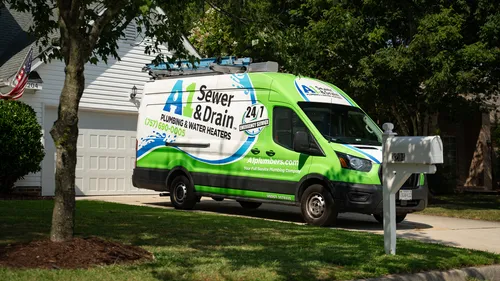
A1 Sewer & Drain Plumbing & Water Heaters
545 S Birdneck Rd Suite 202-E, Virginia Beach, VA 23451
A1 Sewer & Drain Plumbing & Water Heaters provides a wide range of plumbing, sewer, and gas line services in Virginia Beach, VA. Their offerings include sewer camera inspections, water heater installation and repair, drain cleaning, leak detection, repiping, and gas line installation. The company uses advanced diagnostic tools to accurately identify issues and delivers customized solutions for homes and businesses. With nearly four decades of experience since 1987, A1 Sewer & Drain is equipped to handle complex plumbing challenges and offers 24/7 emergency services to the local community.
Tony & Son Plumbing, LLC
3808 Highland Ct, Virginia Beach, VA 23456
Tony & Son Plumbing, LLC is a family-owned plumbing company serving Virginia Beach, VA, and the surrounding Hampton Roads community. They provide a wide range of plumbing services including water heater repair and installation, sump pump repair, drain cleaning, sewer line repair, leak detection, gas line installation, toilet repair, and garbage disposal repair. With a Certified Master Plumber on staff, they offer licensed and certified gas line services and handle both residential and commercial plumbing needs. Established in 1982, Tony & Son Plumbing has decades of experience and offers 24/7 emergency plumbing services to address urgent issues at any time.
Understanding Gas Line Services
Gas line services encompass a broad range of tasks necessary to bring natural gas or propane from the main supply to your appliances. This includes new gas line installation for home additions or appliance upgrades, gas pipe repair for aging or damaged systems, and gas line replacement for safety upgrades or remodels. Whether you're building a new outdoor kitchen, switching from electric to a gas range, or addressing a suspected leak, this work forms the hidden infrastructure that keeps essential home systems running safely and efficiently.
In Chesapeake, as in all of Virginia, this work is not a DIY project. It must be performed by a licensed professional-typically a licensed plumber or gas fitter-who is insured and familiar with the specific codes enforced by the City of Chesapeake's Department of Development and Permits. Their expertise ensures that every joint, valve, and section of pipe is installed correctly to protect your property and family.
Chesapeake's Permit and Inspection Process
Before any trench is dug or pipe is fitted, the proper legal groundwork must be laid. The City of Chesapeake requires a permit for nearly all gas line work, including installation, relocation, and repair.
- Applying for a Permit: Permits are applied for through the city's eBUILD online portal. Reputable professionals will usually handle this process on your behalf as part of their service.
- Understanding the Fees: Permit costs are not flat. There is typically a base fee plus additional charges per gas outlet (e.g., each appliance connection). For example, a common fee structure might include a base cost plus around $7 per outlet, along with state and technology fees. Skipping the permit is risky and can result in significant penalty fees, not to mention safety hazards and problems when you sell your home.
- The Role of Inspections: Once the work is completed, a city inspector must review the installation before the trench is backfilled and the system is put into active use 1. This inspection is a crucial safety checkpoint to verify that the work meets all Virginia Uniform Statewide Building Code (VUSBC) and local amendments. Your contractor will schedule this inspection.
The Step-by-Step Installation Process
A professional gas line installation follows a meticulous sequence to ensure safety and longevity. Here's what you can expect when you hire a qualified technician in Chesapeake:
- Utility Location: The first step is always to have all public and private underground utilities marked. This is typically done by calling 811, a free service that prevents damaging water, electrical, or communication lines during excavation.
- Trench Excavation: A trench is dug from the gas meter or source to the appliance location. In our region, gas lines are typically buried at a depth of 18 to 24 inches to protect them from surface activity and frost 2 3. The trench is cleared of sharp rocks or debris that could damage the pipe.
- Pipe Installation: Approved piping material-usually black iron (steel) or flexible Corrugated Stainless Steel Tubing (CSST)-is laid in the trench. The professional will use the correct fittings, supports, and protective coatings as required by code.
- Appliance Connections: The line is carefully connected to the gas supply source and then to the appliance(s), using proper shut-off valves at each connection point for safety and maintenance.
- Pressure Testing: This is a non-negotiable safety procedure. The sealed system is pressurized with air or an inert gas and monitored for any drop in pressure, which would indicate a leak. A professional pressure test is a specialized service.
- Final Backfill and Inspection: After the system passes the pressure test and the city inspection is completed, the trench is carefully backfilled and the landscape is restored as agreed upon with the homeowner.
Find the perfect gas line plumbing companies for your needs
Get personalized recommendations and expert advice
Critical Safety Considerations for Homeowners
Gas is safe when handled properly but can be extremely dangerous if systems are compromised. Awareness is your first line of defense.
- Recognize the Signs of a Leak: Know the warning signs. The most common is the smell of rotten eggs (an odorant added to natural gas). You may also hear a hissing or whistling sound near a gas line, see bubbles in standing water, notice dead vegetation in an otherwise healthy area above a buried line, or observe yellow or orange flames instead of blue on your gas burner.
- Emergency Protocol: If you suspect a gas leak, act immediately. Do not operate light switches, phones, or any electrical device. Evacuate everyone from the house and call 911 or your gas company's emergency line from a safe distance away 4.
- The Importance of Professional Licensing: The hazards of gas work-from explosion risk to carbon monoxide poisoning-are why licensing is mandatory. A licensed professional carries insurance, guarantees their work meets code, and knows the exact procedures for safe installation, testing, and repair 5. They are your assurance that the job is done right.
Factors Influencing Project Cost
The cost for gas line services in Chesapeake varies based on the project's scope and complexity. While we provide general ranges, a local professional can give you a precise estimate after assessing your property.
- Permit and Inspection Fees: As noted, budget for the city permit fees, which can be approximately $50 plus per-outlet charges and other fees. For a standard two-outlet job, the total permit cost might be around $70 or more 6 7.
- Labor and Materials: The bulk of the cost involves the labor for trenching and installation and the materials used. Longer pipe runs, difficult soil conditions (like rocky ground), and the need to navigate under driveways or sidewalks will increase costs. The choice between black iron and CSST tubing can also affect the price.
- Specialized Testing: A professional pressure test, a critical component of the job, typically costs between $75 and $150 8. This is a wise investment for peace of mind.
- Appliance Hookups: Connecting complex appliances like tankless water heaters or gas log sets may require additional labor and parts.
The key takeaway is to view this as an investment in long-term safety and functionality. Always get detailed, written estimates from multiple licensed professionals in Chesapeake, ensuring they include all costs for permits, materials, labor, and testing.
Maintaining Your Gas System
After installation, simple maintenance and vigilance keep your system safe. Have your gas appliances serviced annually by a qualified technician. Periodically check visible gas lines for signs of corrosion or damage. Be mindful of what you plant near your gas meter and the path of the buried line; deep-rooted plants can cause issues. Most importantly, ensure everyone in your household knows the smell of gas and the emergency evacuation plan.
Frequently asked questions
Sources
Footnotes
-
Plumbing Permits | Chesapeake, VA - https://www.cityofchesapeake.net/326/Plumbing-Permits ↩
-
Gas Line Repair and Replacement Costs [2026 Data] | Angi - https://www.angi.com/articles/average-gas-line-repair-and-installation-costs.htm ↩
-
How Deep Are Gas Lines Buried? - J.D. Power - https://www.jdpower.com/cars/shopping-guides/how-deep-are-gas-lines-buried ↩
-
Gas Line Installation and Repair Chesapeake VA - https://premierplumbing.net/gas-line-installation-and-repair-chesapeake-va/ ↩
-
Expert Gas Line Services in Chesapeake, VA | Safe & Reliable - https://americanmechanicalva.com/services/plumbing-chesapeake-va/gas-lines/ ↩
-
Gas Permits | Chesapeake, VA - https://www.cityofchesapeake.net/316/Gas-Permits ↩
-
Gas Permit Fees - Chesapeake, VA - https://www.cityofchesapeake.net/612/Gas-Permit-Fees ↩
-
Guide to Excavation - Northern Gas Networks - https://www.northerngasnetworks.co.uk/wp-content/uploads/2017/02/Excavation-Guidance.pdf ↩