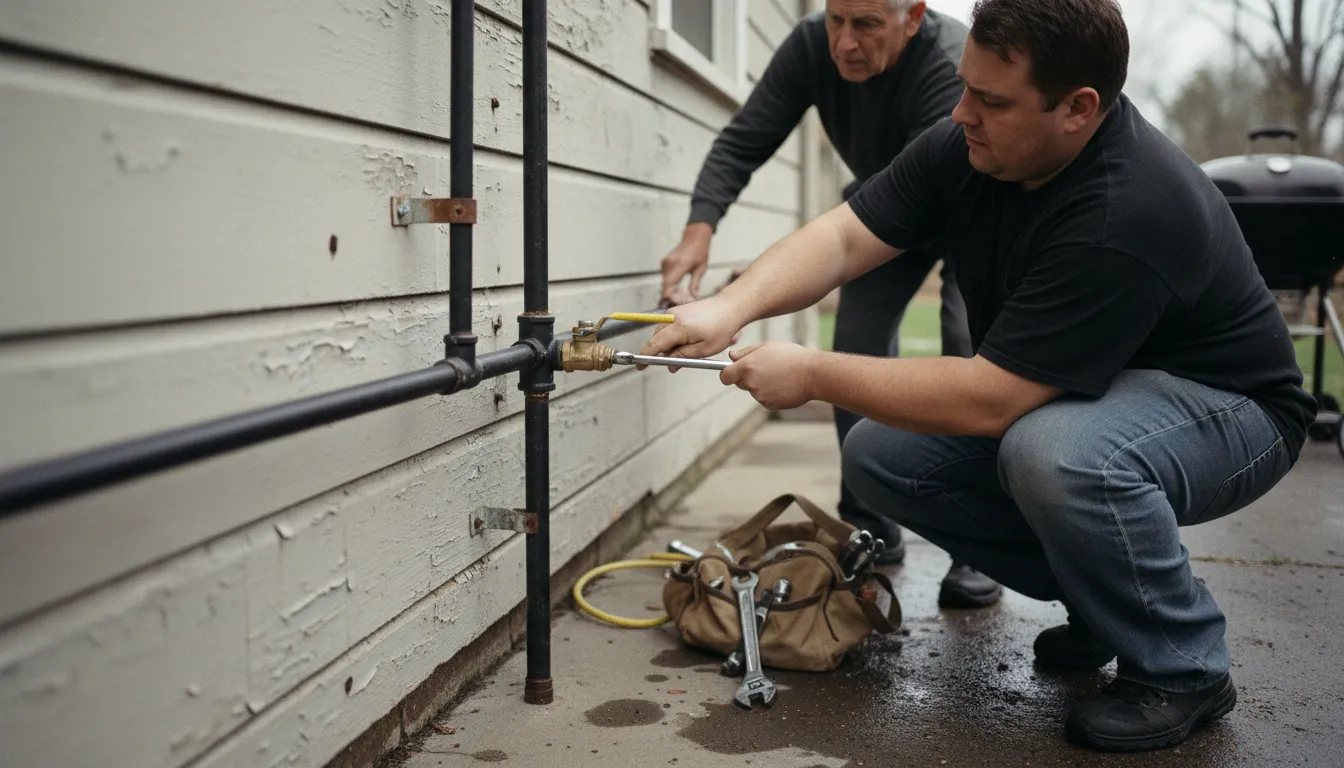
Find the Best Gas Line Plumbing Companies for Your Business
No obligation • Fast responses • Nationwide coverage

Why you can trust Search a Plumber
Search a Plumber is a leading United States resource for finding and evaluating professional plumbing services. Our team researches licensing, experience, and customer feedback to create unbiased, fact-driven overviews. Companies cannot pay to change ratings or placement, ensuring homeowners get trustworthy information.
Search providers near you
Top Gas Line Plumbing Companies in Hampton, Virginia Ranked
Installing or repairing a gas line is a critical project that directly impacts the safety and functionality of your home. Whether you're adding a gas fireplace, upgrading to a gas range, or fixing a leak, this work involves high-pressure fuel lines that require precision and strict adherence to safety codes. For homeowners in Hampton, navigating the process-from securing the right permits to passing city inspections-can be complex. This guide is designed to help you understand what professional gas line service entails, why using a licensed contractor is non-negotiable, and how to find qualified local experts to ensure your project is completed safely and to code.
Sean Fixes Johns Plumbing
417 Hobart Ave, Virginia Beach, VA 23451
Sean Fixes Johns Plumbing is a locally owned plumbing company serving Virginia Beach, VA, as well as Norfolk and Chesapeake. The business offers a range of plumbing services including sewer camera inspections, water heater installation, sewer line repair, leak detection, and gas line installation. They use modern camera and detection equipment to diagnose and repair sewer line issues efficiently. With over 30 years of experience, Master Plumber Sean Yelton leads the team in providing plumbing solutions for both residential and commercial customers. The company also offers 24-hour emergency plumbing services to address urgent needs.
Richardson Plumbing Co
1469 Butts Station Rd, Chesapeake, VA 23320
Richardson Plumbing Co is a family owned and operated plumbing business serving Virginia Beach, VA, and the Tidewater area since 1988. They provide a wide range of residential and commercial plumbing services including water heater installation and repair, tankless water heater services, drain cleaning, sewer line repair, and gas line installation. The company is licensed and insured, with a Master Plumber and Master Gas Piper on staff, and offers backflow testing and plumbing inspections as part of their expertise.
RPG Plumbing Services
5305 Cleveland St STE 102, Virginia Beach, VA 23462
RPG Plumbing Services is a plumbing company serving Virginia Beach, VA, and the Hampton Roads area. Since 2015, they have provided a range of plumbing services including water heater repair and installation, drain cleaning, hydro jetting, sewer line repair, leak detection, repiping, gas line installation, and toilet repair. Their team holds Class A Contractor licenses, Master plumber and gas fitter certifications, and specialized training such as Navien certification, enabling them to handle both simple and complex plumbing issues. RPG Plumbing Services offers 24/7 emergency plumbing support to address urgent problems at any time.
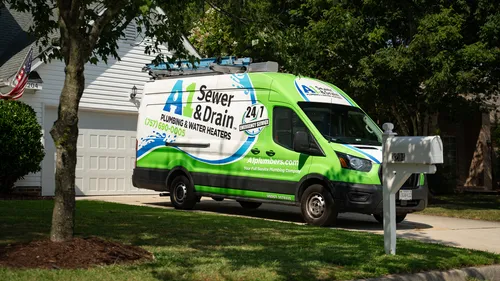
A1 Sewer & Drain Plumbing & Water Heaters
545 S Birdneck Rd Suite 202-E, Virginia Beach, VA 23451
A1 Sewer & Drain Plumbing & Water Heaters provides a wide range of plumbing, sewer, and gas line services in Virginia Beach, VA. Their offerings include sewer camera inspections, water heater installation and repair, drain cleaning, leak detection, repiping, and gas line installation. The company uses advanced diagnostic tools to accurately identify issues and delivers customized solutions for homes and businesses. With nearly four decades of experience since 1987, A1 Sewer & Drain is equipped to handle complex plumbing challenges and offers 24/7 emergency services to the local community.
Tony & Son Plumbing, LLC
3808 Highland Ct, Virginia Beach, VA 23456
Tony & Son Plumbing, LLC is a family-owned plumbing company serving Virginia Beach, VA, and the surrounding Hampton Roads community. They provide a wide range of plumbing services including water heater repair and installation, sump pump repair, drain cleaning, sewer line repair, leak detection, gas line installation, toilet repair, and garbage disposal repair. With a Certified Master Plumber on staff, they offer licensed and certified gas line services and handle both residential and commercial plumbing needs. Established in 1982, Tony & Son Plumbing has decades of experience and offers 24/7 emergency plumbing services to address urgent issues at any time.
Understanding Gas Line Services in Hampton
Gas line work encompasses a range of services, from installing new piping for an appliance to repairing leaks or replacing old, corroded lines. In Hampton, this work is governed by the Virginia Uniform Statewide Building Code (USBC), which sets the standards for materials, installation depth, pressure testing, and more 1. A licensed professional doesn't just connect pipes; they ensure the entire system is sized correctly for your home's demand, properly supported, and safely integrated. Given the risks of carbon monoxide poisoning or explosion, cutting corners is never an option. Professional gas fitters use specialized tools for leak detection and pressure testing, providing peace of mind that your new gas stove, dryer, or furnace will operate safely for years to come.
The Hampton Permit and Inspection Process
One of the first and most crucial steps in any gas line project is obtaining the proper permit from the City of Hampton's Building Inspections Division. Starting work without a permit can result in significant penalties and may require you to undo completed work.
Key Steps in the Process:
- Permit Application: Your licensed contractor will typically handle this, submitting plans and paying a fee based on the project's estimated value.
- Required Inspections: The city mandates several inspections at critical stages to ensure compliance:
- Slab Inspection: For any gas piping that will be embedded under a concrete slab.
- Rough-In Inspection: After the piping is installed but before it is concealed by walls or ceilings.
- Pressure Test Inspection: A mandatory test for residential systems where the inspector verifies the system holds pressure before drywall is installed 2 3.
- Final Approval: Only after all inspections are passed will the work receive final approval, allowing for the gas to be turned on and appliances connected.
This structured process is in place for your protection, ensuring every gas line installation in Hampton meets stringent state and local safety standards.
A Step-by-Step Look at Professional Installation
A professional gas line installation is a methodical process. Here's what you can expect when a licensed technician works on your property:
- Planning and Design: The contractor will map the route from the gas meter to the new appliance, calculating the correct pipe size (sizing) to ensure adequate gas flow and pressure for all connected devices 4.
- Call 811: Before any digging, your contractor is required by law to call Virginia 811 (Miss Utility). This free service marks the location of all public underground utilities to prevent dangerous and costly strikes 5.
- Excavation and Trenching: For underground lines, a trench is dug. Gas lines in Hampton are typically buried 18 to 24 inches deep to protect them from surface activity and frost 6. The trench base is leveled and cleared of sharp rocks 7.
- Piping Installation: The gas pipe is laid. Common materials include durable black iron pipe or more flexible Corrugated Stainless Steel Tubing (CSST). All connections are made using approved techniques.
- Pressure Testing: This is a critical safety step. The system is sealed and pressurized with air (not gas) to a specific level and monitored for any drop, which would indicate a leak 8.
- Backfill and Restoration: Once the pipe passes inspection, the trench is carefully backfilled, and the contractor will restore your landscaping as agreed.
- Final Connection: A licensed professional makes the final connections to your appliances, checking for leaks at each valve with a gas leak detector solution.
Find the perfect gas line plumbing companies for your needs
Get personalized recommendations and expert advice
Recognizing the Signs You Need Gas Line Repair
Gas line issues demand immediate attention. Be aware of these warning signs:
- The Smell of Rotten Eggs: Natural gas is odorless, but a distinctive sulfur-like odorant (mercaptan) is added so leaks can be easily detected.
- Hissing Sounds: An audible hissing or whistling noise near a gas line or appliance is a serious red flag.
- Dead Vegetation: Unexplained patches of dead grass or plants along the path of an underground gas line can indicate a leak.
- Higher Gas Bills: A sudden, unexplained increase in your gas bill may point to a leak in the system.
- Faulty Appliances: If your gas appliances are having trouble igniting or the flames are yellow instead of blue, it could signal a pressure problem or a small leak.
If you suspect a leak, evacuate the area immediately, avoid using any electrical switches or creating sparks, and call your gas company or 911 from a safe distance.
Cost Considerations for Gas Line Projects in Hampton
The cost of gas line work in Hampton varies significantly based on the project's scope and complexity. Simple above-ground repairs may be on the lower end, while installing a new line across your property can be a major undertaking.
General Cost Ranges:
- Pressure Testing: A standalone pressure test, often required for inspection, typically costs between $75 and $150 9.
- Small Repairs: Fixing a small section of accessible pipe might range from $120 to $250. Costs rise if the repair requires cutting into drywall or minor excavation.
- New Line Installation or Major Repair: This is where costs can escalate, generally ranging from $500 to over $2,000. Key factors include 10 11:
- Length of Run: More materials and labor are needed for longer distances.
- Excavation Difficulty: Digging through rocky soil, under driveways, or around complex landscaping adds time and cost.
- Access Challenges: Working in tight crawl spaces or having to route pipes through finished walls increases labor.
- Permit and Inspection Fees: These are additional costs based on the city's fee schedule.
Always get detailed, written estimates from multiple licensed contractors. The lowest bid isn't always the best value if it doesn't include all necessary permits, inspections, or proper safety protocols.
Why Licensing and Experience Are Non-Negotiable
Gas line installation and repair is not a DIY project. The risks are simply too high. Virginia law requires this work to be performed by a licensed professional-either a licensed plumber or a licensed gas fitter 12. These experts have the training to:
- Correctly interpret and apply the Virginia Construction Code and local Hampton amendments.
- Properly size the gas piping system to ensure all appliances receive sufficient fuel.
- Safely handle high-pressure lines and use professional-grade leak detection equipment.
- Secure the necessary permits and coordinate with city inspectors.
- Carry insurance that protects you and your property in the event of an accident.
Hiring an unlicensed individual may seem cheaper upfront but can lead to failed inspections, unsafe conditions, and costly rework, not to mention potential liability issues.
Frequently asked questions
Sources
Footnotes
-
2018 Virginia Construction Code - https://www.dhcd.virginia.gov/sites/default/files/Docx/building-codes-regulations/archive-codes/2018/2018-virginia-construction-code.pdf ↩
-
BUILDING PERMIT INSPECTION CHECKLIST - Hampton.gov - https://www.hampton.gov/4344/Inspection-Requirements-Checklist-PDF ↩
-
City of Hampton, Virginia - https://mcclibraryfunctions.azurewebsites.us/api/ordinanceDownload/14532/448505/pdf?forceDownload=true ↩
-
Use Codes, Regulations and Standards to Size Gas Piping ... - https://opentextbc.ca/plumbing3e/part/size-gas-piping-systems/ ↩
-
A Complete Guide to Gas Line Installation: Tips and Safety Precautions - https://gaeberly.com/gas-line-installation/ ↩
-
How Deep Are Gas Lines Buried? - J.D. Power - https://www.jdpower.com/cars/shopping-guides/how-deep-are-gas-lines-buried ↩
-
Guide to Excavation - Northern Gas Networks - https://www.northerngasnetworks.co.uk/wp-content/uploads/2017/02/Excavation-Guidance.pdf ↩
-
How to Install Natural Gas Lines Safely and Correctly - https://bluegasexpress.com/how-to-install-natural-gas-lines/ ↩
-
Gas Line Installation Cost: Calculator - https://developmentandengineering.com/gas-line-installation-cost-calculator/ ↩
-
Gas Line Repair and Replacement Costs [2026 Data] | Angi - https://www.angi.com/articles/average-gas-line-repair-and-installation-costs.htm ↩
-
Gas Line Installation & Replacement: Costs and Guide - https://www.haltongas.com/post/gas-line-installation-replacement-key-costs-and-what-to-know ↩
-
Mechanical & Gas | Hampton, VA - Official Website - https://www.hampton.gov/1141/Mechanical-Gas ↩