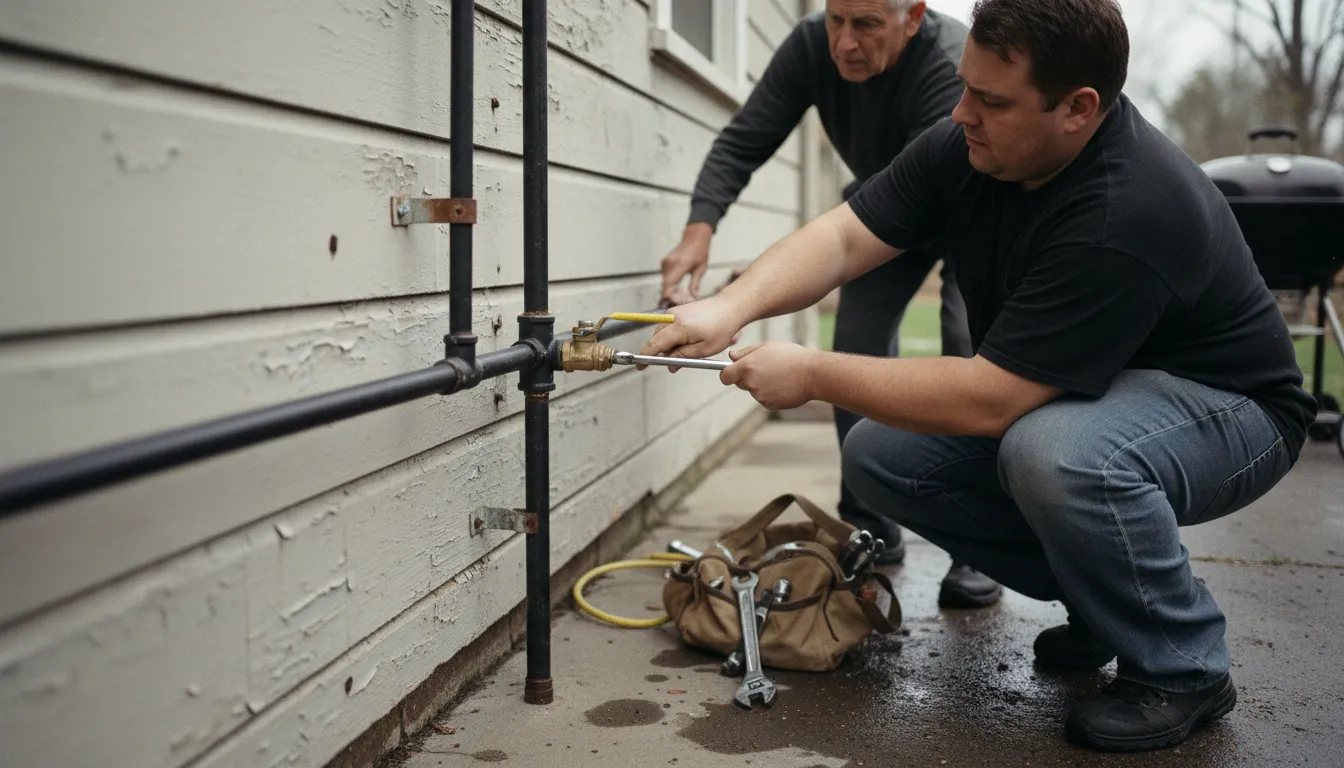
Find the Best Gas Line Plumbing Companies for Your Business
No obligation • Fast responses • Nationwide coverage

Why you can trust Search a Plumber
Search a Plumber is a leading United States resource for finding and evaluating professional plumbing services. Our team researches licensing, experience, and customer feedback to create unbiased, fact-driven overviews. Companies cannot pay to change ratings or placement, ensuring homeowners get trustworthy information.
Search providers near you
Top Gas Line Plumbing Companies in Tulsa, Oklahoma Ranked
Installing or repairing a gas line is a critical home project that directly impacts your safety and comfort. Whether you're adding a gas fireplace, a new range, or connecting an outdoor kitchen, proper gas piping ensures your appliances run efficiently and safely. In Tulsa, this work is governed by strict local and state codes, requiring licensed professionals to handle everything from planning and permitting to final inspection. This guide will help you understand the process, key requirements, and what to look for when finding a qualified specialist for your gas line needs.
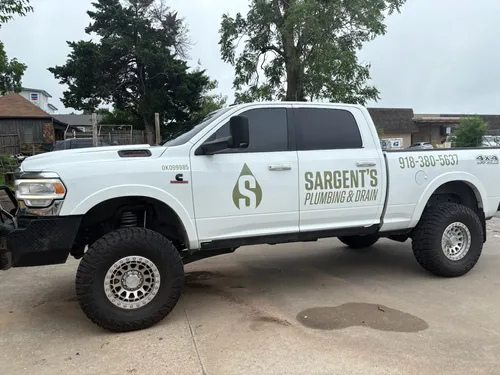
Sargent's Plumbing & Drain
605 W Oakland Pl, Broken Arrow, OK 74012
Sargent's Plumbing & Drain is a licensed plumbing company serving Tulsa, OK, and the surrounding areas. With over 25 years of combined experience, they offer a wide range of plumbing services including water heater repair and installation, drain cleaning, sewer line repair, leak detection, repiping, gas line installation, toilet repair, and garbage disposal repair. The company provides 24/7 emergency plumbing support without additional fees and backs their repiping work with a 25-year warranty. They focus on honest communication and reliable workmanship, aiming to complete jobs correctly the first time.
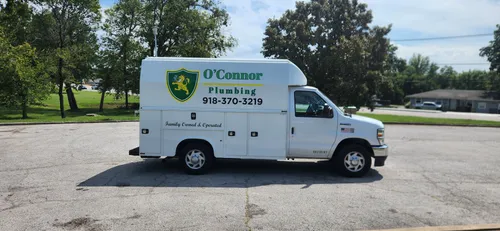
O'Connor Plumbing
Tulsa, OK
O'Connor Plumbing is a family-owned plumbing company serving Tulsa, OK, with over 30 years of experience. They provide a wide range of residential and commercial plumbing services, including water heater repair and installation, drain and sewer cleaning, leak detection, repiping, gas line installation, and garbage disposal repair. The company is equipped to handle complex plumbing issues and offers same-day emergency services for urgent problems like burst pipes and severe leaks. Their team uses advanced equipment and stands behind their work with strong warranties, often providing personalized service directly from the owners.
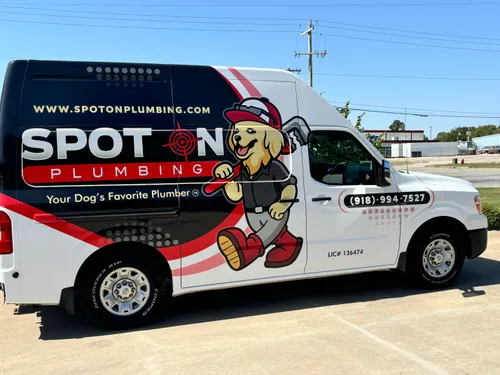
Spot On Plumbing of Tulsa Plumbers
1911 W Reno St, Broken Arrow, OK 74012
Spot On Plumbing of Tulsa Plumbers provides a range of plumbing services in Tulsa, OK, including water heater repair, drain cleaning, leak detection, repiping, and gas line installation. They serve Tulsa and surrounding areas such as Broken Arrow, Catoosa, Sapulpa, Owasso, Sand Springs, Bixby, and Glenpool. The company offers emergency plumbing services and specializes in slab leak repairs. Spot On Plumbing is veteran owned and operated, and they back their work with a two-year parts and labor warranty as well as a two-week backup guarantee on drain cleaning.
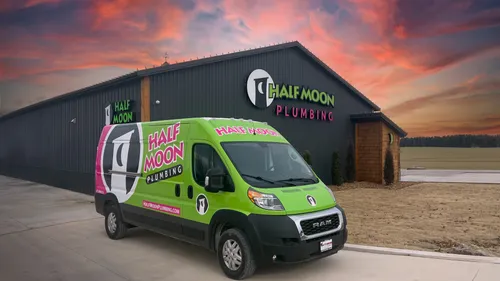
Half Moon Plumbing & Electric | Tulsa
7633 E 63rd Pl suite 300-68, Tulsa, OK 74133
Half Moon Plumbing & Electric | Tulsa provides a wide range of plumbing services in Tulsa, OK, including water heater repair and installation, drain cleaning, hydro jetting, sewer line repair, leak detection, gas line installation, and garbage disposal repair. They serve the greater Tulsa area and focus on delivering lasting solutions with clear and upfront pricing. With over 17 years of experience, their licensed plumbers use advanced tools and eco-friendly methods to handle everything from routine maintenance to emergency plumbing needs. The company offers 24/7 availability for urgent plumbing issues.
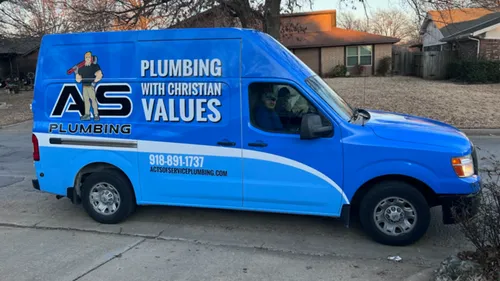
Acts Of Service Plumbing Tulsa
5152 S 94th E Ave, Tulsa, OK 74145
Acts Of Service Plumbing Tulsa is a locally owned plumbing company serving Tulsa, OK, and nearby areas including Owasso, Broken Arrow, Bixby, and Jenks. With over 30 years of experience, they offer a range of plumbing services such as water heater repair and installation, tankless water heater services, drain cleaning, leak detection, repiping, gas line installation, and toilet repair. The company emphasizes trustworthy service rooted in Christian values and maintains a team of certified plumbers dedicated to clear communication and careful work. Acts Of Service Plumbing provides 24/7 emergency plumbing services to address urgent needs promptly.
Understanding Gas Line Services
Gas line work encompasses more than just running a pipe. It involves a complete system for safely delivering natural gas or propane from the main supply to your appliances. Common projects in Tulsa include new gas line installation for additions like tankless water heaters or fire pits, gas line repair for leaks or corrosion, and gas line replacement for older, unsafe piping. The complexity of these projects means they are never DIY endeavors; they require the expertise of a licensed plumber or HVAC technician who understands the properties of gas and the specific building codes in Oklahoma.
The Critical Role of Licensing and Permits
In Tulsa, all gas piping work must be performed by a licensed professional. This isn't just a recommendation-it's a legal requirement designed to protect you, your home, and your neighborhood. Licensed contractors carry the necessary insurance and have proven their knowledge of the International Fuel Gas Code (IFGC) and local amendments.
Before any digging or pipe fitting begins, a permit must be obtained from the City of Tulsa or Tulsa County, depending on your location. The permit process ensures your project plan is reviewed for code compliance, covering critical details like approved materials, required burial depths, and proper clearances from ignition sources. Skipping this step can result in unsafe installations, hefty fines, and problems when you try to sell your home. Your contractor will typically handle the permit application and schedule the required inspections.
Step-by-Step: The Gas Line Installation Process
A professional gas line installation follows a meticulous sequence to ensure safety and longevity.
- Planning and Design: The first step is a detailed assessment. Your contractor will determine the gas demand (measured in BTUs) of all appliances on the line, plan the most efficient and code-compliant route from the meter to each appliance, and select the appropriate materials.
- Permitting: As mentioned, the approved plans are submitted to the local authority to pull the necessary permit before work commences.
- Excavation and Trenching: For underground lines, careful excavation is required. In Tulsa, contractors must follow strict trench safety protocols, including shoring for deep trenches, to protect workers. The trench must be dug to the specific depth required by code for the chosen pipe material.
- Piping Installation: Approved pipe, such as yellow polyethylene (PE) for underground or copper for certain indoor applications, is laid in the trench or routed through walls and ceilings. All joints and fittings are meticulously assembled.
- Connection: The new line is connected to the main gas supply. For a new service line to your home, this involves coordination with Oklahoma Natural Gas (ONG), which owns the meter and the service line up to it.
- Pressure Testing and Inspection: This is the most critical safety step. The entire system is pressurized (often to 10 psi for 15 minutes for underground lines) and monitored for any drop, which indicates a leak. A city or county inspector must witness and approve this test before the line is buried or enclosed.
Find the perfect gas line plumbing companies for your needs
Get personalized recommendations and expert advice
Key Safety Codes and Requirements in Tulsa
Adherence to local codes is non-negotiable for gas work. Key requirements for Tulsa installations include:
- Material Specifications: Only code-listed materials can be used. Steel pipe must be at least Schedule 40 and protected from corrosion. Plastic pipe (PE) must be marked for gas service and installed with tracer wire for location.
- Burial Depth: Piping must be buried deep enough to protect it from damage. For example, steel pipe generally requires a minimum cover of 18 inches 1.
- Meter and Regulator Placement: The gas meter must be located outdoors, typically at the front corner of the house, with specific clearances from electrical meters, windows, and dryer vents to prevent a potential gas accumulation from entering the home 2.
- Leak Detection: Every installation concludes with a thorough leak check using approved methods (like soap solution or electronic detectors) at all fittings and connections before appliances are turned on 3 4.
Factors Influencing Gas Line Installation Cost
The cost for gas line fitting or gas piping installation in Tulsa varies based on several project-specific factors. Understanding these can help you interpret estimates from contractors.
- Length and Path of the Run: The single biggest cost driver is the linear footage of pipe needed. A simple, short run to an appliance on an exterior wall costs far less than a long run across a basement or under a concrete slab 5.
- Materials: The type of pipe (copper, CSST, PE), the number of fittings, valves, and risers all contribute to the material cost.
- Labor and Complexity: Difficult excavations (rocky soil, tree roots), needing to tunnel under driveways or sidewalks, and working in tight crawl spaces increase labor time and cost 6.
- Permit and Inspection Fees: These are fixed costs added to the project by the local jurisdiction.
While prices can vary, a general benchmark for a new underground gas line installation in Tulsa ranges from $15 to $25 or more per linear foot, plus permit fees and the cost of connecting individual appliances 7 8 9. Always get detailed, written estimates that break down these components.
Choosing a Qualified Professional in Tulsa
Your safety depends on the contractor you choose. Look for a licensed plumber with specific, proven experience in gas line services. They should be willing to pull permits, explain the code requirements relevant to your job, and provide references for similar projects. Verify their insurance coverage and ask about their post-installation testing procedure. A reputable professional will never suggest bypassing permits or inspections, as this is a major red flag.
Frequently asked questions
Sources
Footnotes
-
Essential Guide to Gas Line Installation: Tips and Safety ... - https://gaeberly.com/gas-line-installation/ ↩
-
New Service Line Installation Guide - Oklahoma Natural Gas - https://www.oklahomanaturalgas.com/media/ong/constructionservices/new%20service%20line%20installation%20slicks_ok.pdf ↩
-
Gas Line Installation & Repair - Karney Plumbing Tulsa - https://www.karneyplumbing.com/gas-line-installation-repair ↩
-
Frequently Asked Questions - CivicPlus.CMS.FAQ - https://www.rpvca.gov/faq.aspx?TID=40 ↩
-
How to Install Natural Gas Lines Safely and Correctly - https://bluegasexpress.com/how-to-install-natural-gas-lines/ ↩
-
Utility Contractor Tulsa | Trench Safety Techniques - https://www.gei-usa.com/articles/utility-contractor-tulsa-get-more-for-your-money/ ↩
-
Gas Piping in Tulsa, OK - Air Comfort Solutions - https://aircomfortsolutions.net/tulsa/plumbing/piping/ ↩
-
Gas Line Installation in Tulsa, OK | Airco Service - https://www.aircoservice.com/tulsa/services/plumbing/gas-line-installation/ ↩
-
Gas Line Services in Tulsa, OK : Mullin Plumbing - https://mullininc.com/plumbing/gas-lines/ ↩