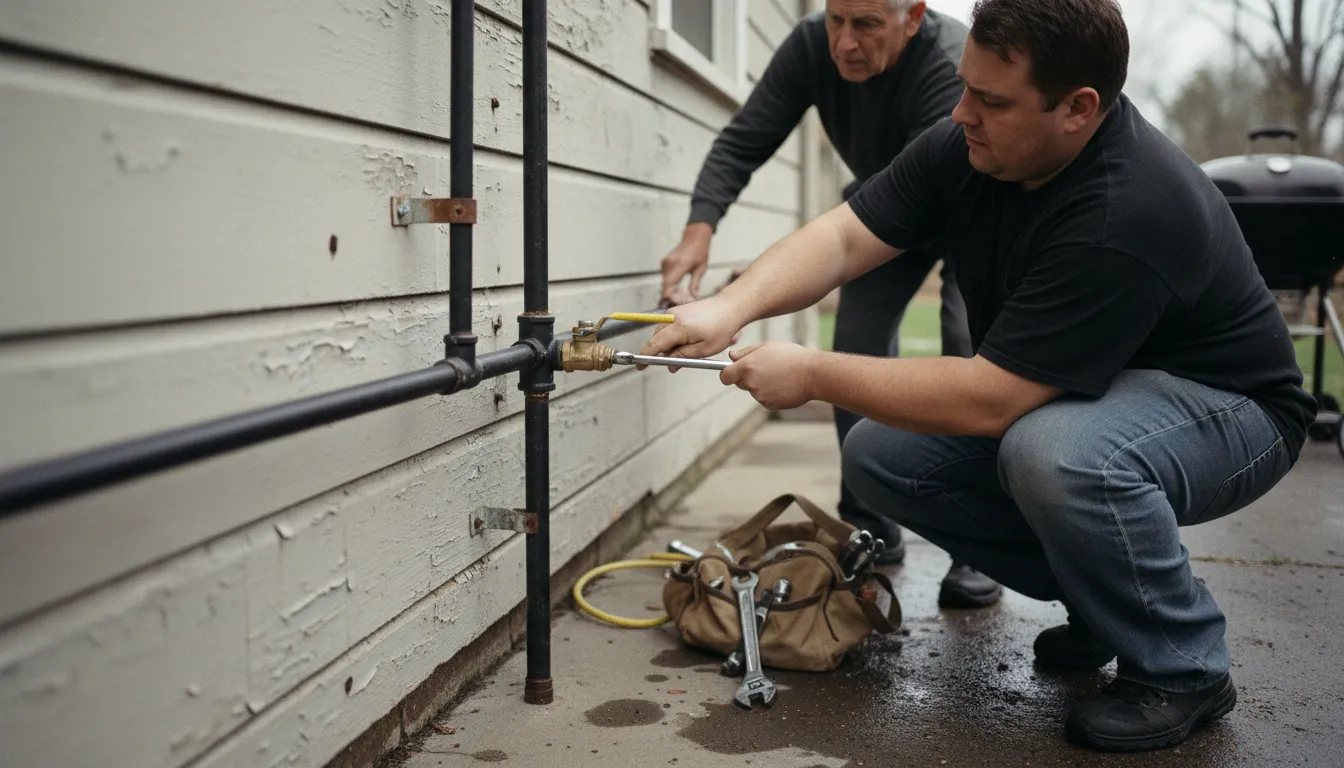
Find the Best Gas Line Plumbing Companies for Your Business
No obligation • Fast responses • Nationwide coverage

Why you can trust Search a Plumber
Search a Plumber is a leading United States resource for finding and evaluating professional plumbing services. Our team researches licensing, experience, and customer feedback to create unbiased, fact-driven overviews. Companies cannot pay to change ratings or placement, ensuring homeowners get trustworthy information.
Search providers near you
Best Gas Line Plumbing Companies in Oklahoma Ranked
Installing or repairing a gas line is a critical home improvement project that directly impacts the safety and functionality of your property. In Oklahoma, this work involves strict adherence to state and local codes, mandatory permits, and professional oversight to ensure safe operation for natural gas or propane appliances. This guide explains the essential regulations, processes, and safety protocols for gas line projects in Oklahoma, helping you understand what to expect and how to connect with qualified local professionals who can manage the job from planning to final inspection.
Gilded Plumbing
1324 N Wentz St Unit G, Guthrie, OK 73044
Gilded Plumbing is a locally owned plumbing company serving Oklahoma City, OK, and the surrounding areas including Guthrie and Edmond. They offer a wide range of plumbing services such as water heater installation and repair, tankless water heater services, drain cleaning, hydro jetting, sewer line repair, leak detection, repiping, gas line installation, and garbage disposal repair. The team uses advanced technology for leak detection and slab leak repairs, and provides emergency and same-day services to address urgent plumbing needs. With decades of combined experience, Gilded Plumbing combines traditional craftsmanship with modern techniques to serve both residential and commercial clients.
A+ Plumbing & Gas
4308 NW 59th St, Oklahoma City, OK 73112
A+ Plumbing & Gas is a locally owned plumbing company serving Oklahoma City, OK. They provide a range of services including water heater repair, drain cleaning, leak detection, and gas line installation. The team understands the impact of seasonal weather on plumbing systems and offers solutions to maintain efficient performance year-round. Their licensed plumbers handle both residential and commercial needs, from minor repairs to full system replacements. The company offers 24/7 emergency service to address urgent plumbing issues promptly.
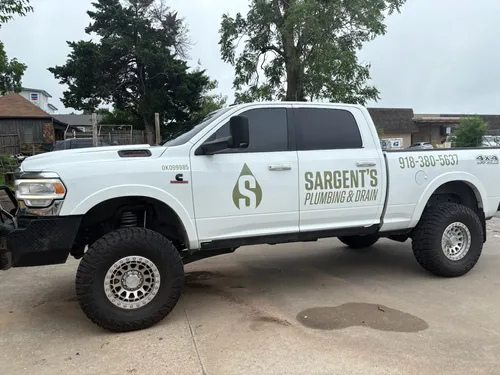
Sargent's Plumbing & Drain
605 W Oakland Pl, Broken Arrow, OK 74012
Sargent's Plumbing & Drain is a licensed plumbing company serving Tulsa, OK, and the surrounding areas. With over 25 years of combined experience, they offer a wide range of plumbing services including water heater repair and installation, drain cleaning, sewer line repair, leak detection, repiping, gas line installation, toilet repair, and garbage disposal repair. The company provides 24/7 emergency plumbing support without additional fees and backs their repiping work with a 25-year warranty. They focus on honest communication and reliable workmanship, aiming to complete jobs correctly the first time.
O'Connor Plumbing
Tulsa, OK
O'Connor Plumbing is a family-owned plumbing company serving Tulsa, OK, with over 30 years of experience. They provide a wide range of residential and commercial plumbing services, including water heater repair and installation, drain and sewer cleaning, leak detection, repiping, gas line installation, and garbage disposal repair. The company is equipped to handle complex plumbing issues and offers same-day emergency services for urgent problems like burst pipes and severe leaks. Their team uses advanced equipment and stands behind their work with strong warranties, often providing personalized service directly from the owners.
Spot On Plumbing of Tulsa Plumbers
1911 W Reno St, Broken Arrow, OK 74012
Spot On Plumbing of Tulsa Plumbers provides a range of plumbing services in Tulsa, OK, including water heater repair, drain cleaning, leak detection, repiping, and gas line installation. They serve Tulsa and surrounding areas such as Broken Arrow, Catoosa, Sapulpa, Owasso, Sand Springs, Bixby, and Glenpool. The company offers emergency plumbing services and specializes in slab leak repairs. Spot On Plumbing is veteran owned and operated, and they back their work with a two-year parts and labor warranty as well as a two-week backup guarantee on drain cleaning.
Understanding Oklahoma's Gas Line Regulations
Gas piping work in Oklahoma is not a do-it-yourself project. State law and local municipal codes require that all installation and repair be performed by licensed professionals to protect public safety. The work is governed by the Oklahoma Fuel Gas Code, which is based on the National Fire Protection Association (NFPA) standards 54 and 58. These regulations cover everything from the type of pipe used to the required clearances around equipment.
A cornerstone of the regulatory framework is licensing. Only licensed mechanical or plumbing contractors, or journeymen working under their supervision, are legally permitted to install or repair gas lines. This ensures the individual performing the work has the necessary training and testing to understand the complexities and hazards involved. Before hiring any professional, verifying their current state license is a crucial first step.
The Permit and Inspection Process
Virtually all new gas piping systems, and most significant repairs, require a permit from your local city or county building department. For example, Oklahoma City has explicit ordinances mandating permits for this work. The permitting process officially notifies the local jurisdiction of your project, ensuring it will be reviewed for code compliance.
An inspection is a mandatory follow-up to the permit and must be completed before gas service is turned on to the new or modified lines. A municipal inspector will examine the installation to verify proper materials, secure fittings, adequate support, correct appliance connections, and required labeling. For extensions to existing systems or work on manufactured homes, this inspection is a non-negotiable safety checkpoint. Your licensed contractor will typically coordinate the scheduling of this inspection.
Key Code Requirements for Oklahoma Homes
When a professional installs your gas lines, they must follow specific code mandates. One visible requirement is the labeling of exposed gas piping. The code states that exposed piping must be identified by a yellow label marked "Gas" placed at regular intervals. This helps firefighters and other responders quickly identify utility lines in an emergency.
Other code provisions address technical details like:
- Pipe Material: Approved materials include black iron pipe and Corrugated Stainless Steel Tubing (CSST), each with specific installation requirements.
- Regulator Clearances: Gas pressure regulators must be installed with specific clearances from building openings, ignition sources, and mechanical ventilation air intakes to prevent hazard.
- Sizing: Pipes must be correctly sized (a calculation based on length, number of appliances, and BTU demand) to ensure adequate gas flow and pressure to all appliances 1.
Step-by-Step: The Professional Installation Process
A proper gas line installation follows a structured sequence to ensure safety and compliance.
- Planning and Design: The contractor will assess your gas load-the total energy demand of all appliances (furnace, water heater, stove, etc.)-to design a system with correctly sized piping. This stage also involves securing the necessary permits.
- Utility Locate: Before any digging, you or your contractor must call 811. This free service prompts utility companies to mark the location of underground public service lines to prevent accidental strikes 2.
- Installation: The licensed professional will run the new gas lines according to the planned route, using approved materials and techniques. This may involve trenching for exterior lines or careful routing within walls and crawlspaces for interior work 3.
- Pressure Testing: Once the pipes are run but before they are connected to the gas meter or appliances, the system is sealed and pressurized with air. The contractor monitors the pressure gauge for any drop, which would indicate a leak that must be repaired 4.
- Final Inspection: The local building inspector examines the entire installation against the permitted plans and code requirements 5.
- Purging and Connection: After passing inspection, a qualified professional (often from the gas utility for natural gas) will purge air from the lines and carefully introduce gas. They will then light appliance pilots and check for proper operation 6.
Find the perfect gas line plumbing companies for your needs
Get personalized recommendations and expert advice
Critical Safety Practices You Must Follow
Gas line safety is paramount. Adhering to these practices can prevent dangerous situations.
- Absolutely No Ignition Sources: During any gas line work, there must be NO smoking, open flames, sparks, or welding in the vicinity. Gas is highly flammable, and even a small spark can cause an explosion 7.
- Ensure Proper Ventilation: During installation and especially during any purging or leak checking, ensure the work area is well-ventilated to prevent the buildup of gas fumes 8.
- Leak Detection: Know the signs of a leak: the distinctive rotten egg smell (odorant added to gas), a hissing sound near a pipe, or dead vegetation along an underground line path. A simple test involves applying a soapy water solution to fittings; forming bubbles indicates a leak. If you suspect a leak, leave the area immediately and call your gas company or 911 from a safe distance.
- Use Licensed Professionals Only: The single most important safety decision is hiring a licensed contractor. They have the training to install systems correctly and the knowledge to navigate Oklahoma's specific codes and inspection requirements 9.
Factors Influencing Project Cost
The cost for gas line installation or repair in Oklahoma varies based on several project-specific factors. Understanding these can help you interpret estimates from professionals.
- Permit Fees: Municipalities charge for permits, often starting around $150 or more, depending on the scope and location of the work 10 11.
- Materials: The type and amount of pipe (black iron vs. CSST), fittings, valves, and protective coatings contribute to material costs.
- Labor: This is typically the largest portion of the cost, billed at the hourly rate of the licensed plumber or mechanical contractor. Complex projects requiring more time will cost more.
- Project Complexity: Key factors include the total length of pipe run, the difficulty of the path (e.g., tunneling under a driveway vs. a simple basement run), the number of appliance connections being made, and whether extensive trenching or excavation is required 12.
Frequently asked questions
Sources
Footnotes
-
Chapter 4 Gas Piping Installations: Oklahoma Fuel Gas Code 2015 | UpCodes - https://up.codes/viewer/oklahoma/ifgc-2015/chapter/4/gas-piping-installations ↩
-
New Service Line Installation Guide - Oklahoma Natural Gas - https://www.oklahomanaturalgas.com/media/ong/constructionservices/new%20service%20line%20installation%20slicks_ok.pdf ↩
-
Professional Gas Line Installation to Avoid Hazards - https://www.royalserviceut.com/blog/gas-line-installation-to-avoid-hazards ↩
-
How to Install Natural Gas Lines Safely and Correctly - https://bluegasexpress.com/how-to-install-natural-gas-lines/ ↩
-
10-174. INSPECTION BEFORE TURNING ON GAS - https://codelibrary.amlegal.com/codes/alvaok/latest/alva_ok/0-0-0-1665 ↩
-
THE GAS MAIN AND SERVICE INSTALLATION PROCESS - PGW - https://www.pgworks.com/uploads/media/GasMainServiceInstallation-Steps.pdf ↩
-
Gas Line Installations: Safety Tips for Residents | Southport Home - https://southportheating.com/gas-line-installations-safety-tips-for-residents/ ↩
-
A Guide to Successful Installation of LP Gas Appliances ... - https://oklahoma.gov/content/dam/ok/en/lpgas/documents/RED%20BOOK%20NEW%20VERSION%20MAY%202024.pdf ↩
-
Oklahoma Statutes §59-1850.10 (2024) - Application of act - https://law.justia.com/codes/oklahoma/title-59/section-59-1850-10/ ↩
-
ARTICLE III. - PERMITS AND FEES | Oklahoma City, OK - https://library.municode.com/ok/oklahoma_city/codes/code_of_ordinances/406402?nodeId=OKMUCO2020_CH29MECO_ARTIIIPEFE_DIVIPE_S29-44RE ↩
-
Class 10 Permit Application - Oklahoma LP Gas - https://oklahoma.gov/content/dam/ok/en/lpgas/documents/new-applications/Class%2010%20-%20New%20Application.pdf ↩
-
Essential Guide to Gas Line Installation: Tips and Safety ... - https://gaeberly.com/gas-line-installation/ ↩