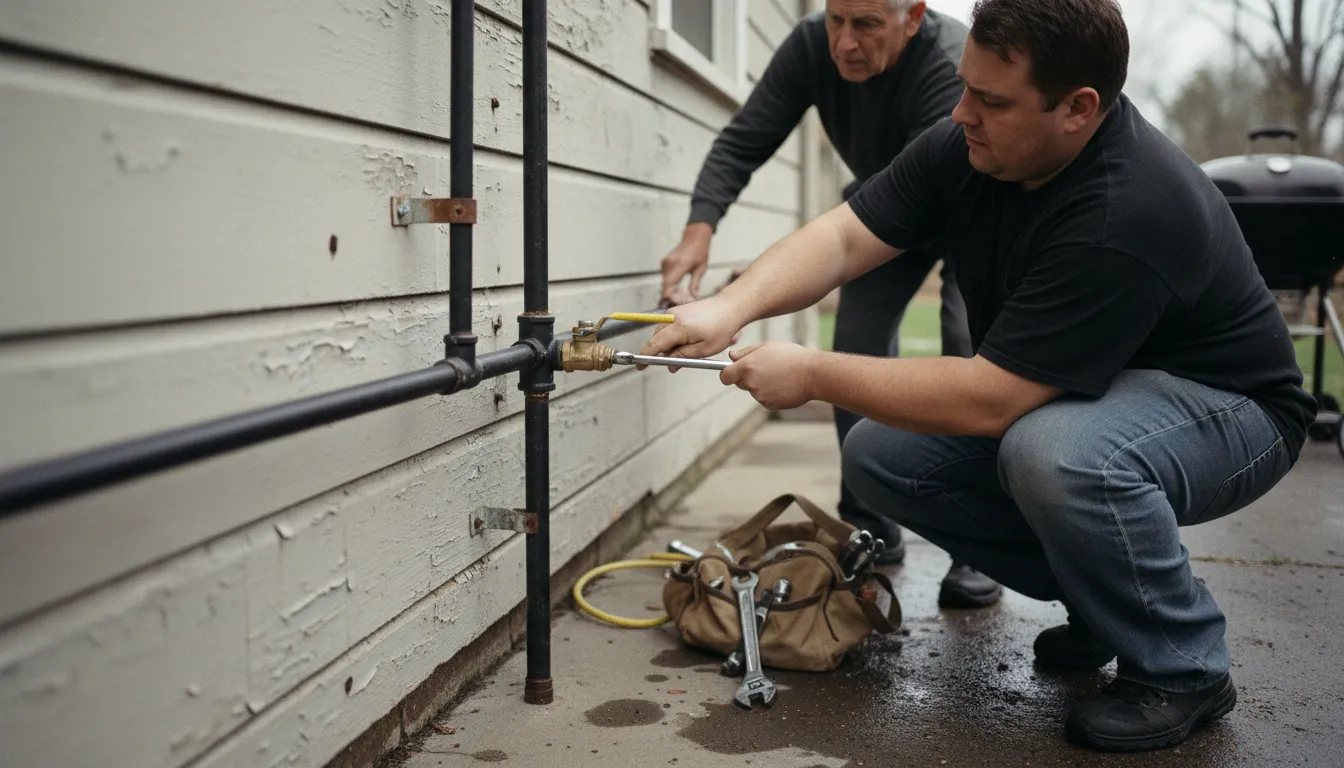
Find the Best Gas Line Plumbing Companies for Your Business
No obligation • Fast responses • Nationwide coverage

Why you can trust Search a Plumber
Search a Plumber is a leading United States resource for finding and evaluating professional plumbing services. Our team researches licensing, experience, and customer feedback to create unbiased, fact-driven overviews. Companies cannot pay to change ratings or placement, ensuring homeowners get trustworthy information.
Search providers near you
Top Gas Line Plumbing Companies in White Plains, New York Ranked
Whether you're installing a new gas stove, adding a gas fireplace, or dealing with a leak, gas line work is a critical home project that demands expertise and strict adherence to safety codes. In White Plains, this process involves navigating specific city permits, mandatory inspections, and coordination with utility providers. This guide explains the essential steps, local requirements, and safety protocols for gas piping projects, helping you understand what to expect and how to connect with qualified local professionals who can ensure the job is done safely and to code.
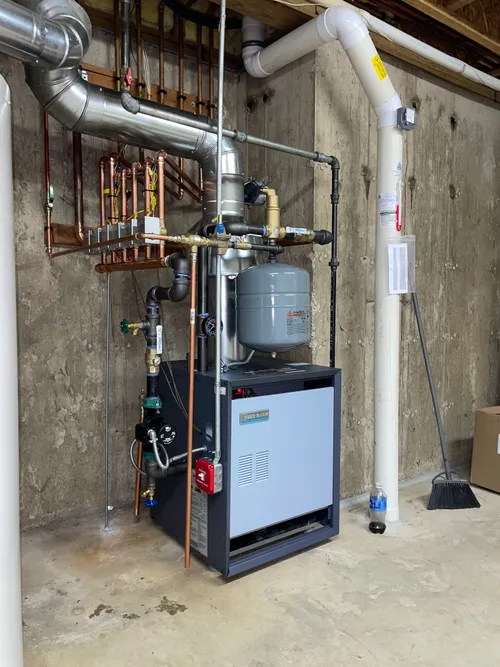
Angler Plumbing, Heating & Drain Cleaning LLC
598 Hickory Ave, Saddle Brook, NJ 07663
Angler Plumbing, Heating & Drain Cleaning LLC is a family- and veteran-owned business serving New York, NY, and Bergen County, NJ. They provide a wide range of plumbing, heating, and drain services including water heater installation and repair, sump pump maintenance, gas line installation, and drain cleaning. Their licensed master plumber offers a one-year warranty on parts, labor, and materials, and the company is known for its safety-first approach and fully stocked trucks. With over 22 years of experience, Angler Plumbing also offers emergency services with weekend and evening appointments available upon request.
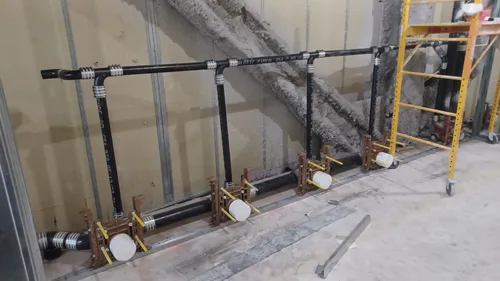
Affordable Plumbing and Leak Repair
New York, NY
Affordable Plumbing and Leak Repair provides a wide range of plumbing services in New York, NY, including water heater repair and installation, drain cleaning, leak detection, repiping, and gas line installation. They serve Staten Island and surrounding areas such as Queens, The Bronx, Brooklyn, and Jersey City. The company offers emergency plumbing services to address urgent issues like burst pipes and clogged drains. Their team is equipped to handle various plumbing needs, including dryer and washer hookups, with a focus on preventing future problems through quality repairs and installations.
Superior Plumbing, Heating, & Mechanical, LLC
New York, NY
Superior Plumbing, Heating, & Mechanical, LLC is a family-owned business serving New York, NY, and surrounding areas including the five boroughs, Long Island, and Westchester County. Since 2003, they have provided commercial plumbing, heating, and mechanical services to building owners, managers, and engineers. Their licensed team offers a range of services such as drain cleaning, leak detection, gas line installation, toilet repair, backflow prevention, and water leak detection. They are certified for gas piping and backflow testing and provide 24/7 emergency and scheduled maintenance services to ensure building systems operate efficiently and comply with local codes.
A&E NYC Plumbing
40 Fulton St, New York, NY 10038
A&E NYC Plumbing offers a wide range of plumbing services in New York, NY, including water heater repair and installation, drain cleaning, sewer line repair, leak detection, and gas line installation. They also handle faucet and toilet repairs, garbage disposal maintenance, and repiping projects. The company is licensed and insured, providing both residential and commercial plumbing solutions with a focus on safety and technical expertise. Their team is experienced in managing complex plumbing systems and offers free onsite estimates for more involved jobs.
Poseidon Plumbing
795 Susquehanna Ave, Franklin Lakes, NJ 07417
Poseidon Plumbing is a full-service plumbing company based in New Jersey with branches in Franklin Lakes and Mountain Lakes. They offer a wide range of plumbing services including water heater repair and installation, water softener installation, drain cleaning, hydro jetting, repiping, gas line installation, and toilet repair. Serving Northern New Jersey, including Essex, Morris, and Bergen counties, they provide solutions for both residential repairs and new construction projects. Their capabilities include advanced hydro jetting for effective drain cleaning. Poseidon Plumbing is available 24/7 for emergency plumbing services.
Understanding Local Regulations and Permits
Before any trench is dug or pipe is fitted, securing the proper approvals is the first and most crucial step. In White Plains, all new gas line installations and major repairs require a permit from the City's Building Department. This isn't just bureaucratic red tape; it's a vital safety measure. The permit process ensures your project plan complies with the New York State Uniform Fire Prevention and Building Code and local amendments, which are designed to prevent fires, explosions, and carbon monoxide poisoning.
The scope of your project dictates the specific application. You or your licensed contractor will need to submit detailed plans showing the proposed gas line route, the appliances it will serve, and the materials to be used. There are associated fees, which typically range from $100 to $500 or more, depending on the project's complexity and valuation. Skipping this step can result in failed inspections, fines, and even having to tear out completed work, making it far more costly in the long run.
The Inspection Process: Multiple Checkpoints
Once a permit is issued and work begins, the city mandates a series of inspections that must be completed before the work is concealed. These are non-negotiable safety checkpoints.
- Rough-In Inspection: After the gas piping is installed but before it is covered by drywall, buried, or otherwise concealed, a mechanical or plumbing inspection must be requested. The inspector will verify the pipe material, sizing, support, and proper joint connections.
- Trench/Footing Inspection: If your project involves digging to run a new gas line from the street or within your property, an inspection of the trench may be required before the pipe is laid and the trench is backfilled 1.
- Final Inspection: A final inspection is typically required after all gas appliances are connected and the system is operational, ensuring everything is installed correctly and safely.
Coordination with Con Edison
For most gas line work in White Plains, you must also coordinate with Con Edison, the local gas utility. They are responsible for the gas meter and the service line up to it. If you are installing a new service or making changes near the meter, a Con Edison inspection is mandatory 2. They will check for leaks, corrosion, and proper installation of the exposed piping on their side of the meter. It's critical to schedule this inspection, as failure to allow access can result in fees or even a service interruption 3 4.
The Step-by-Step Installation Process
A professional gas line installation follows a meticulous sequence. Here's what a typical project entails:
- Planning and Design: A qualified technician will assess your needs, map the most efficient and code-compliant route for the new gas piping, and determine the correct pipe size to ensure adequate gas flow to your appliances.
- Utility Location: Before any digging, you or your contractor must call 811 to have all underground utilities (like electric, water, and communication lines) marked. This free service is crucial for safety and preventing costly damages.
- Trenching and Path Creation: For exterior lines, a trench is dug to the required depth (usually at least 18 inches deep to protect from frost and damage). Inside, holes are drilled through framing to create a path for the pipe.
- Pipe Installation: Approved piping material-such as black iron, copper, or Corrugated Stainless Steel Tubing (CSST)-is cut, threaded, and fitted together using the correct fittings and sealants. The pipe must be properly supported along its entire run.
- Pressure Testing: Once the line is installed and capped, it is pressurized with air or an inert gas and monitored with a gauge for a set period. This test confirms the integrity of all joints and connections before gas is introduced.
- Appliance Connection and Startup: After passing all inspections, the line is connected to the gas meter (if new) and the appliances. Each appliance is then checked for proper ignition, ventilation, and safe operation.
Critical Safety Considerations for Gas Piping
Gas line work is inherently dangerous and should only be performed by trained professionals. Key safety principles include:
- Professional Leak Detection: Even a tiny leak can lead to a dangerous gas buildup. Professionals use specialized leak detection solutions and electronic detectors during installation and testing. If you ever smell gas (a rotten egg odor) after work is complete, leave the area immediately and call your gas company and fire department from a safe distance.
- Material Compatibility: The pipe material must be compatible with the type of gas (natural gas or propane) and approved for use by local code. Using the wrong material can lead to corrosion and failure.
- Adequate Ventilation: Every gas-burning appliance, from a furnace to a water heater, requires proper venting to expel combustion byproducts like carbon monoxide outside the home. This is a separate but equally critical part of the system.
- Shut-Off Valves: Easy-to-access shut-off valves must be installed at the meter and at each appliance, allowing you to quickly stop the gas flow in an emergency or for maintenance.
Find the perfect gas line plumbing companies for your needs
Get personalized recommendations and expert advice
Cost Factors for Gas Line Projects in White Plains
The cost of gas line work varies significantly based on the project's scope, complexity, and materials. Below is a general breakdown to help you budget, but always obtain multiple detailed quotes from licensed local contractors.
- Small Repairs or Appliance Hookups: Connecting a new gas range or dryer to an existing line is relatively straightforward. Expect costs in the range of $200 to $800+, depending on the distance and complexity of the connection.
- New Gas Line or Major Extension: Running a new line from the meter to a fireplace, generator, or pool heater involves more labor, materials, and often trenching. For these projects, costs typically start at $1,000 and can easily reach $3,000 or more for longer runs that require extensive digging.
- Permits and Fees: As mentioned, budget for city permit fees ($100 - $500+) and any potential charges from Con Edison for meter-related work or inspections 5.
- Material Choice: Black iron pipe is durable and cost-effective but labor-intensive to install. Flexible CSST is easier and faster to run through walls but is more expensive per foot.
The most significant factor in cost and safety is hiring the right professional. Always verify that a contractor holds a valid New York State plumbing license, carries adequate insurance, and has strong familiarity with White Plains' specific codes and inspection processes.
Choosing the Right Pipe Material
Professionals in White Plains typically use one of three primary materials for gas lines, each with its own advantages:
- Black Iron Pipe: The traditional choice, known for its durability and strength. It's made of steel and connected with threaded fittings. It's highly resistant to physical damage but requires more labor to cut, thread, and install, especially in retrofit situations.
- Copper Tubing: In some jurisdictions, certain types of copper tubing are approved for natural gas. It is corrosion-resistant and easy to bend for tricky runs. However, its use is strictly regulated by code, and it is not compatible with all gas types or soil conditions.
- Corrugated Stainless Steel Tubing (CSST): This flexible, yellow-jacketed tubing has become very popular for residential gas line installation. It can be snaked through walls and joists with far fewer fittings than rigid pipe, reducing potential leak points and installation time. It must be properly bonded and grounded to prevent electrical arcing damage.
Your licensed professional will recommend the best material for your specific application, local code requirements, and budget.
Frequently asked questions
Sources
Footnotes
-
Inspection Information | White Plains, NY - Official Website - https://www.cityofwhiteplains.com/123/Inspection-Information ↩
-
Gas Service Line Inspections - Con Edison - https://www.coned.com/en/safety/energy-safety/gas-safety/gas-service-line-inspections ↩
-
Interior Gas Piping Safety Inspections and Connections - https://www.gti.energy/training-events/natural-gas-distribution-training/interior-gas-piping-safety-inspections-and-connections/ ↩
-
Untitled - https://www.cnyc.com/pdf/Con-Edison-Gas-Service-Line-Inspections.pdf ↩
-
How to Install Natural Gas Lines Safely and Correctly - https://bluegasexpress.com/how-to-install-natural-gas-lines/ ↩