Find the Best Gas Line Plumbing Companies for Your Business
No obligation • Fast responses • Nationwide coverage

Why you can trust Search a Plumber
Search a Plumber is a leading United States resource for finding and evaluating professional plumbing services. Our team researches licensing, experience, and customer feedback to create unbiased, fact-driven overviews. Companies cannot pay to change ratings or placement, ensuring homeowners get trustworthy information.
Search providers near you
Top Gas Line Plumbing Companies in Pueblo, Colorado Ranked
Installing or repairing a gas line is a critical home improvement project that directly impacts the safety and functionality of your property. Proper gas piping work ensures your appliances-like furnaces, water heaters, stoves, and fireplaces-receive a reliable fuel supply. In Pueblo, this work is governed by strict state and local codes to prevent fire, explosion, and carbon monoxide hazards. This guide explains the process, regulations, and key considerations for finding qualified local professionals to handle your gas line project safely and in compliance with the law.
Understanding Gas Piping Systems and Local Requirements
A gas piping system is a network of pipes that delivers natural gas or propane from the utility meter to various appliances in your home. In Pueblo, all work on these fuel gas lines, whether it's a new installation for an outdoor kitchen or a repair to an existing line, requires careful planning and adherence to specific codes. The primary regulations are the International Fuel Gas Code (IFGC), International Plumbing Code (IPC), and International Residential Code (IRC). These codes cover everything from pipe material and sizing to proper support and leak testing.
Most importantly, a permit and subsequent inspection are mandatory for all gas piping work in Colorado1 2. This process is managed by the State Plumbing Board or your local authority having jurisdiction. You or your contractor must apply for the permit before work begins. After the installation is complete but before the gas is turned on, a state inspector will check the work to ensure it meets all safety standards. Inspections can typically be scheduled within three days of the work being ready via the state's online system 1 3. Skipping this step is illegal and dangerously bypasses a vital safety check.
The Step-by-Step Process for Gas Line Installation
A professional gas line installation follows a meticulous sequence to ensure safety and longevity.
1. Planning and Design The first step is a detailed plan. A technician will calculate the total British Thermal Unit (BTU) demand of all appliances the new line will serve to determine the correct pipe diameter. They will also map the route from the gas meter to each appliance, considering the most direct and feasible path while avoiding major obstacles 4.
2. Calling 811 and Excavation Before any digging begins, you must call 811 or make an online request. This free service notifies utility companies, who will come to your property to mark the location of underground lines (like water, electricity, and communications). This prevents damaging other utilities and is a critical safety and legal step 5. Once lines are marked, excavation can proceed. Trenches for underground gas lines must be at least 18 inches deep to protect the pipe from surface activity and frost 6. The process involves navigating around patios, tree roots, and other underground structures.
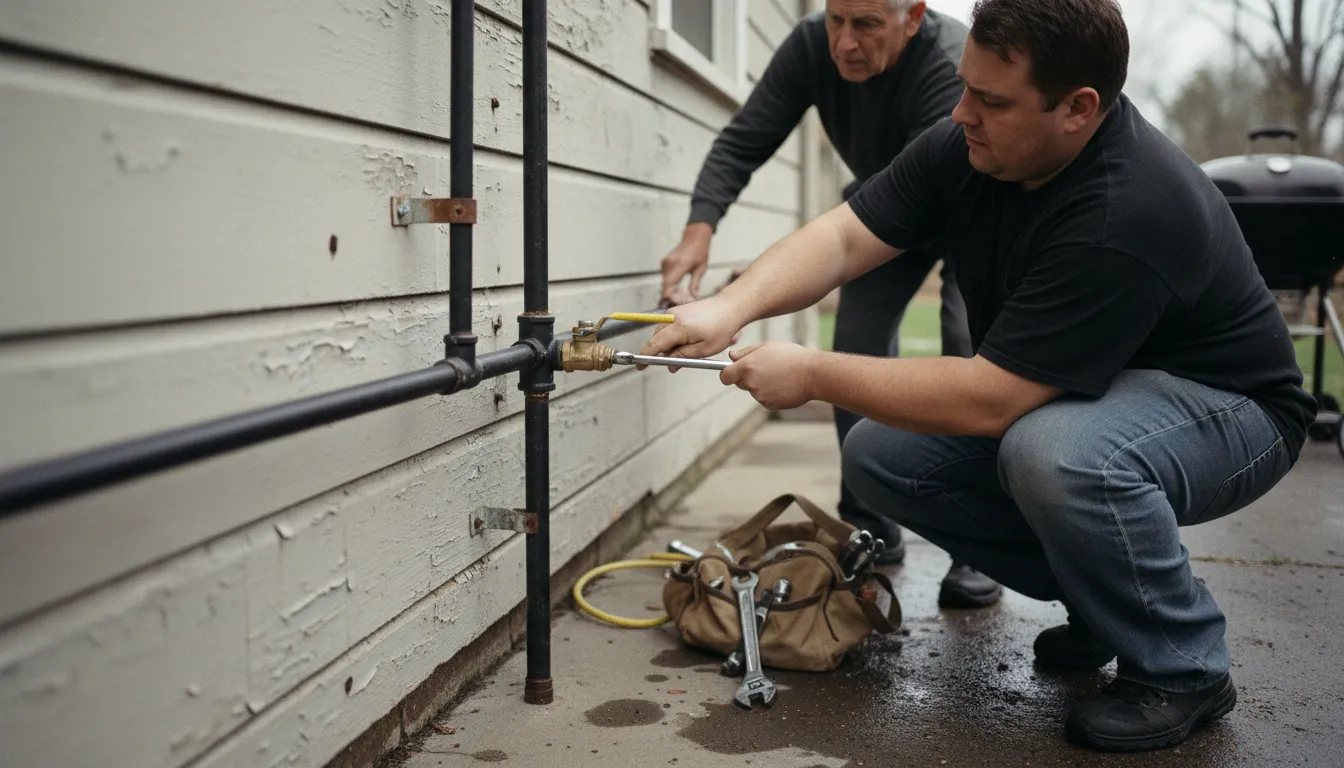
3. Pipe Installation and Material Selection The choice of pipe material depends on the application. For interior runs, black iron pipe is common due to its durability. For underground sections, corrugated stainless steel tubing (CSST) or specially rated polyethylene (PE) pipe is often used. Pipes must be properly supported-for example, black iron pipe generally requires support every 6 feet. As the pipe is laid in the trench, a colored warning tape is buried above it to alert future excavators. Risers, or "stub-outs," are installed where the line will connect to above-ground appliances 7.
4. Pressure Testing and Final Connections Once the pipe network is installed, a mandatory pressure test is performed before the gas service is connected or re-activated 8. This test involves pressurizing the system with air and monitoring it for any drop, which would indicate a leak. Only after this test is passed and the system is inspected can the final connections to the meter and appliances be made by a qualified professional.
Find the perfect gas line plumbing companies for your needs
Get personalized recommendations and expert advice
Safety, Maintenance, and the Importance of Professional Repair
Gas line work is not a DIY project. The risks of improper installation-including gas leaks, fire, explosion, and carbon monoxide poisoning-are far too high. Licensed plumbers or gas fitters have the training to interpret codes, properly size pipes, and execute safe installations and repairs 9.
Signs You May Need a Gas Line Repair:
- The smell of rotten eggs (odorant added to natural gas)
- Hissing sounds near a gas line
- Dead or discolored vegetation in an otherwise healthy lawn above a buried line
- Higher-than-normal gas bills without increased usage
- Physical damage to exposed piping
If you suspect a leak, leave the area immediately and call your gas company from a safe distance.
Ongoing Maintenance and Safety Devices: For safety, carbon monoxide (CO) detectors are required in homes with new or modified gas systems and should be placed near sleeping areas 10. While buried lines are designed to last, it's wise to have your entire gas system, including above-ground pipes and appliance connectors, inspected periodically by a professional. Some sources recommend a check every five years 11. For underground lines, be aware of any signs of corrosion or damage, especially if you notice soil shifting or erosion near the pipe path.
Understanding Costs and Key Considerations
The cost for gas line services in Pueblo varies significantly based on the project's scope. A primary cost driver is the linear footage of pipe needed. While prices can range, you might see estimates starting around $15 to $25 or more per linear foot for the installation itself 12. However, this is just one component.
Factors Influencing Total Cost:
- Length and Complexity: A simple, short run is more affordable than a long line that requires tunneling under a driveway or navigating a complex landscape.
- Materials: The type and diameter of pipe, along with the number of fittings, valves, and risers, affect material costs.
- Labor and Excavation: Difficult digging conditions, like rocky soil or extensive root systems, increase labor time and cost.
- Permits and Inspections: Remember to factor in the required permit and inspection fees, which can add several hundred dollars to the project total.
- Appliance Hookups: The final connection of appliances may involve additional labor and parts.
Always get detailed, written estimates from multiple licensed professionals. The lowest bid is not always the best choice; prioritize contractors with strong local references, proper insurance, and a clear understanding of Pueblo and Colorado state regulations.
Frequently asked questions
Sources
Footnotes
-
State Plumbing Board: Permit and Inspection Information | Divisions of Professions and Occupations - https://dpo.colorado.gov/Plumbing/PermitInspectionInfo ↩ ↩2
-
3 CCR 720-1.6 - PERMITS AND INSPECTIONS | State Regulations - https://www.law.cornell.edu/regulations/colorado/3-CCR-720-1.6 ↩
-
Residential Plumber - Code of Colorado Regulations - https://www.sos.state.co.us/CCR/GenerateRulePdf.do?ruleVersionId=8778&fileName=3+CCR+720-1 ↩
-
Gas Piping Code Compliance and Permit Requirements in Colorado ... - https://accurateaircontrolcolorado.com/gas-piping-code-compliance-and-permit-requirements-in-colorado-springs/ ↩
-
NATURAL GAS SAFETY - https://coloradonaturalgas.com/Documents/ColoradoNaturalGasSafetyBrochure.pdf ↩
-
Gas Line Trenching Requirements - https://thegasconnection.com/gas-line-trenching-requirements/ ↩
-
Xcel Energy - 2017Service Guide - https://www.xcelenergy.com/staticfiles/xe-responsive/Working%20With%20Us/CO-PSCO-2017-BCL-Bulders-Guide.pdf ↩
-
Frequently Asked Questions - https://www.prbd.com/faq.php ↩
-
Underground Gas Line Installation: What You Need to Know About ... - https://accurateaircontrolcolorado.com/underground-gas-line-installation/ ↩
-
Essential Guide to Gas Line Installation: Tips and Safety ... - https://gaeberly.com/gas-line-installation/ ↩
-
CustomerOwnedPiping - Colorado Natural Gas - https://www.coloradonaturalgas.com/CustomerOwnedPiping ↩
-
How to Install Natural Gas Lines Safely and Correctly - https://bluegasexpress.com/how-to-install-natural-gas-lines/ ↩