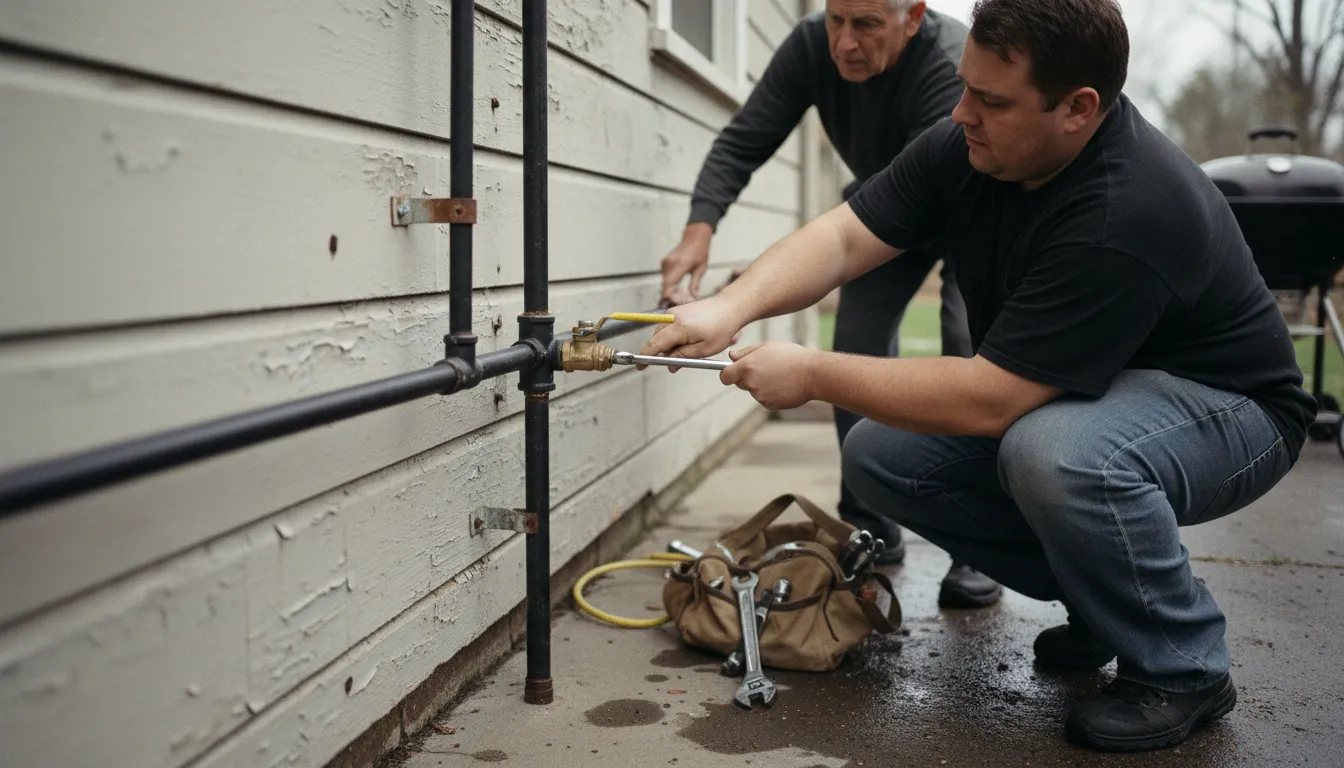
Find the Best Gas Line Plumbing Companies for Your Business
No obligation • Fast responses • Nationwide coverage

Why you can trust Search a Plumber
Search a Plumber is a leading United States resource for finding and evaluating professional plumbing services. Our team researches licensing, experience, and customer feedback to create unbiased, fact-driven overviews. Companies cannot pay to change ratings or placement, ensuring homeowners get trustworthy information.
Search providers near you
Best Gas Line Plumbing Companies in Colorado Ranked
Installing or repairing a gas line is a critical home project that demands expertise and strict adherence to safety codes. In Colorado, this work is governed by specific state and local regulations designed to protect your home and family from the dangers of gas leaks and potential explosions. This guide explains the essential requirements, processes, and considerations for gas line projects in Colorado, helping you understand what's involved so you can make informed decisions and connect with qualified local professionals.
High 5 Plumbing, Heating, Cooling & Electric
15710 W Colfax Ave, Golden, CO 80401
High 5 Plumbing, Heating, Cooling & Electric is a full-service plumbing company serving Denver, CO. They provide a wide range of plumbing services including water heater installation and repair, drain cleaning, sewer line repair, leak detection, and gas line installation. The company uses advanced video technology for sewer camera inspections and offers trenchless sewer repair to minimize excavation. They also specialize in hydro jetting to clear blocked drains efficiently. High 5 Plumbing is licensed for gas plumbing and installs energy-efficient tankless water heaters. The company has received recognition such as the Angi Super Service Award and a BBB Torch Award for Ethics. They provide 24/7 emergency response for urgent plumbing needs.
Big Apple Plumbing LLC - Broomfield, CO
1022 Depot Hill Rd Unit 10, Broomfield, CO 80020
Big Apple Plumbing LLC - Broomfield, CO provides a wide range of plumbing services in Denver, CO, including drain cleaning, sewer line repair, water heater installation and repair (tank and tankless), leak detection, gas line installation, sump pump repair, and repiping. The company serves both residential and commercial clients, handling routine maintenance, emergency repairs, and new installations with licensed plumbers. They specialize in sewer line services and offer 24/7 emergency plumbing solutions to address urgent issues like burst pipes and leaks. Big Apple Plumbing is locally owned and operated, with a focus on safety and code compliance. Their team is experienced in gas line installations and water heater replacements, ensuring efficient and reliable service. The company is known for upfront pricing, timely arrivals, and clear communication, serving Broomfield and surrounding areas including Anthem, The Broadlands, and Interlocken/FlatIron Crossing.
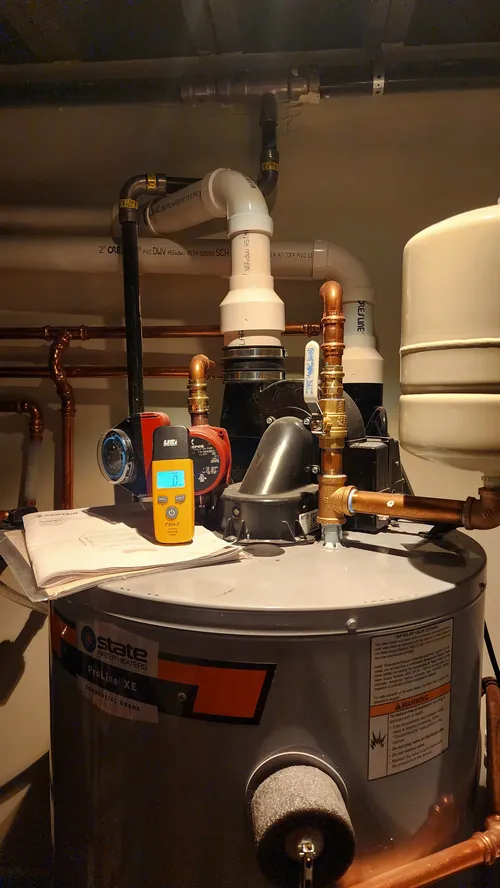
Midwest Plumbing Co. LLC
8360 Auburn Ln, Westminster, CO 80031
Midwest Plumbing Co. LLC is a plumbing service provider based in Denver, CO, offering a wide range of plumbing solutions. Their services include water heater repair and installation, sump pump repair, sewer line repair with trenchless technology, leak detection, repiping, gas line installation, toilet and garbage disposal repair, and more. The company uses advanced equipment and techniques to address both simple and complex plumbing issues, aiming to provide long-term solutions. They serve residential customers and emphasize careful, tailored service for each home. Midwest Plumbing Co. LLC offers 24/7 emergency plumbing services to assist customers whenever needed.
Speed plumbing
225 S Harrison St a412, Denver, CO 80209
Speed Plumbing is a plumbing service provider based in Denver, CO, offering a range of services including water heater repair and installation, drain cleaning, hydro jetting, and gas line installation. They serve both residential and commercial clients, with capabilities such as small hydro jetting to clear grease, sand, and soft clogs. With 20 years of experience, Speed Plumbing provides 24/7 emergency service to address urgent plumbing needs promptly.
Cap Hill Plumbing
1770 E Colfax Ave unit A, Denver, CO 80218
Cap Hill Plumbing is a licensed and insured plumbing service based in Denver, CO. They specialize in a wide range of plumbing services including sewer camera inspections, water heater repair and installation (both tank and tankless), drain cleaning, leak detection, sump pump repair, gas line installation, and sewer line repair. Serving Denver and the surrounding metro area, they are familiar with the unique plumbing challenges of older homes and local conditions. Their team uses camera inspections to diagnose sewer issues accurately and offers same-day repairs for many services. Cap Hill Plumbing provides upfront pricing and stands behind their work with warranties.
Understanding Colorado's Gas Line Regulations
All gas piping work in Colorado must comply with the state-adopted Fuel Gas Code, which is based on the International Fuel Gas Code (IFGC) and International Residential Code (IRC) 1. These codes are not mere suggestions; they are legal requirements enforced by local building departments. The primary goal is to ensure systems are designed, installed, and tested to operate safely for the life of your home.
A cornerstone of these regulations is the permit and inspection process. This system provides a crucial check, ensuring work is performed correctly before gas is introduced into the lines. Attempting to bypass this process is illegal, dangerous, and can lead to severe penalties, voided home insurance, and complications when selling your property.
When Do You Need a Permit in Colorado?
Knowing when a permit is required is your first step. The rules are clear: if you are altering the gas system in a significant way, you almost certainly need a permit. Here are common scenarios that require one 2:
- Installing a new gas line from the meter to a new appliance.
- Extending or rerouting existing gas piping.
- Relocating your gas meter.
- Adding a new gas appliance, such as a furnace, water heater, fireplace, fire pit, stove, or dryer.
- Converting an appliance from another fuel source (like electric) to natural gas or propane.
There are limited exceptions. Some jurisdictions may not require a permit for a simple appliance replacement using an existing, code-compliant shut-off valve and an approved flexible connector (like a quick-disconnect line for a gas range). However, you should always verify with your local building department before assuming no permit is needed 3.
The Step-by-Step Process for a Gas Line Project
A successful gas line installation or major repair follows a structured path from planning to final approval.
1. Design and Load Calculation
Before any pipe is laid, a proper design is essential. A qualified professional will map the route from the gas source to the new appliance(s). More importantly, they will perform a gas load calculation. This ensures the entire system-including the meter, main line, and branch lines-is sized to deliver adequate gas volume (measured in BTU/hour) to all appliances when they are running simultaneously.
2. Permit Application
With plans and load calculations in hand, your contractor will submit a permit application to your city or county building department. This typically includes a site plan, the load calculation, and details on the materials to be used. Permit fees vary but generally range from $50 to $150 or more.
3. Installation with Approved Materials
Installation must use approved materials. Indoors and for underground lines, black iron (steel) pipe is common. Corrugated Stainless Steel Tubing (CSST) is a flexible, approved alternative for indoor use. For underground sections, specially rated polyethylene (plastic) pipe may be used, but it must be installed with a yellow tracer wire so it can be located in the future 4. Burial depth is critical: steel pipe generally must be at least 18 inches deep, while plastic pipe may have different depth requirements based on local code 5.
4. Pressure Testing (The Critical Safety Check)
This is the most important step before inspection. The entire new section of piping is sealed and pressurized with air or an inert gas (like nitrogen) to a test pressure-commonly 10 pounds per square inch (psi) for 15 minutes 6 7. The inspector will check for any pressure drop, which indicates a leak. This test is performed before the line is connected to the gas meter, ensuring safety. Professional pressure testing can cost between $150 and $400 8.
5. Inspection
Once the pressure test is passed, a final inspection is scheduled. The inspector will verify the installation matches the permitted plans, check for proper support, clearances, and labeling, and confirm the pressure test was successful. All pipe and fittings must be accessible and visible for this inspection.
6. Final Connection and Backfill
Only after the inspection is passed can the new line be connected to the gas meter or existing system by a qualified technician. For underground lines, the trench can then be safely backfilled.
Find the perfect gas line plumbing companies for your needs
Get personalized recommendations and expert advice
Key Safety and Quality Considerations
Beyond the basic steps, several factors separate a safe, lasting installation from a problematic one.
- Hire a Licensed Professional: Always use a licensed plumbing or gas-fitting contractor. They carry the required insurance, know the local codes intimately, and will pull the necessary permits. Be wary of anyone who suggests skipping the permit to "save time or money" 9.
- Leak Checking: Even after a pressure test, a final "soap test" is a best practice. Applying a soapy water solution to every joint and fitting will reveal any leak as forming bubbles 10.
- Soil and Environment: In Colorado, soil type matters. Clay soils can shift and stress pipes, and rocky soil requires careful trenching to avoid damaging the pipe coating. Proper bedding material (like sand) may be needed 11.
- Appliance Specifics: Ensure the gas line is terminated with the correct shut-off valve and connector for the specific appliance. The valve must be within reach and clearly labeled.
Understanding Costs in Colorado
The total cost of a gas line project in Colorado is influenced by complexity, length of pipe run, materials, and local permit fees. While prices can vary widely, here is a general framework:
- Permit Fees: Typically $50 - $150+.
- Pressure Testing: Professional testing services range from $150 - $400.
- Total Project Cost: A simple appliance addition (like running a line for a gas stove 10 feet from an existing line) might cost a few hundred dollars. More complex projects, like installing a line to a new fire pit across the yard or adding a tankless water heater, can easily run into the thousands when factoring in trenching, materials, labor, and all inspections.
Investing in professional installation from the start avoids the far greater costs of fixing leaks, failed inspections, or-worst of all-property damage or personal injury from a gas-related incident.
Frequently asked questions
Sources
Disclaimer: This guide provides general information based on Colorado state codes and common practices. Local city and county amendments may impose additional requirements. Always check with your local building department for the specific rules that apply to your project.
Footnotes
-
State Plumbing Board: Permit and Inspection Information | Divisions of Professions and Occupations ↩
-
Gas Line Installation & Repair in Greeley, CO | Licensed Gas Piping Experts - Golden Rule Plumbing ↩
-
Residential Remodel - Adding or Replacing Gas Appliance - permit ... ↩
-
Chapter 4 Gas Piping Installations: Gas Piping Installations, Colorado State Plumbing Board Fuel Gas Code 2018 | UpCodes ↩
-
Gas Lines & Your Home: Keeping Things Safe (and Cozy!) in ... ↩
-
Gas Piping for New Construction: Planning and Installation ... ↩
-
Underground Gas Line Installation: What You Need to Know About ... ↩