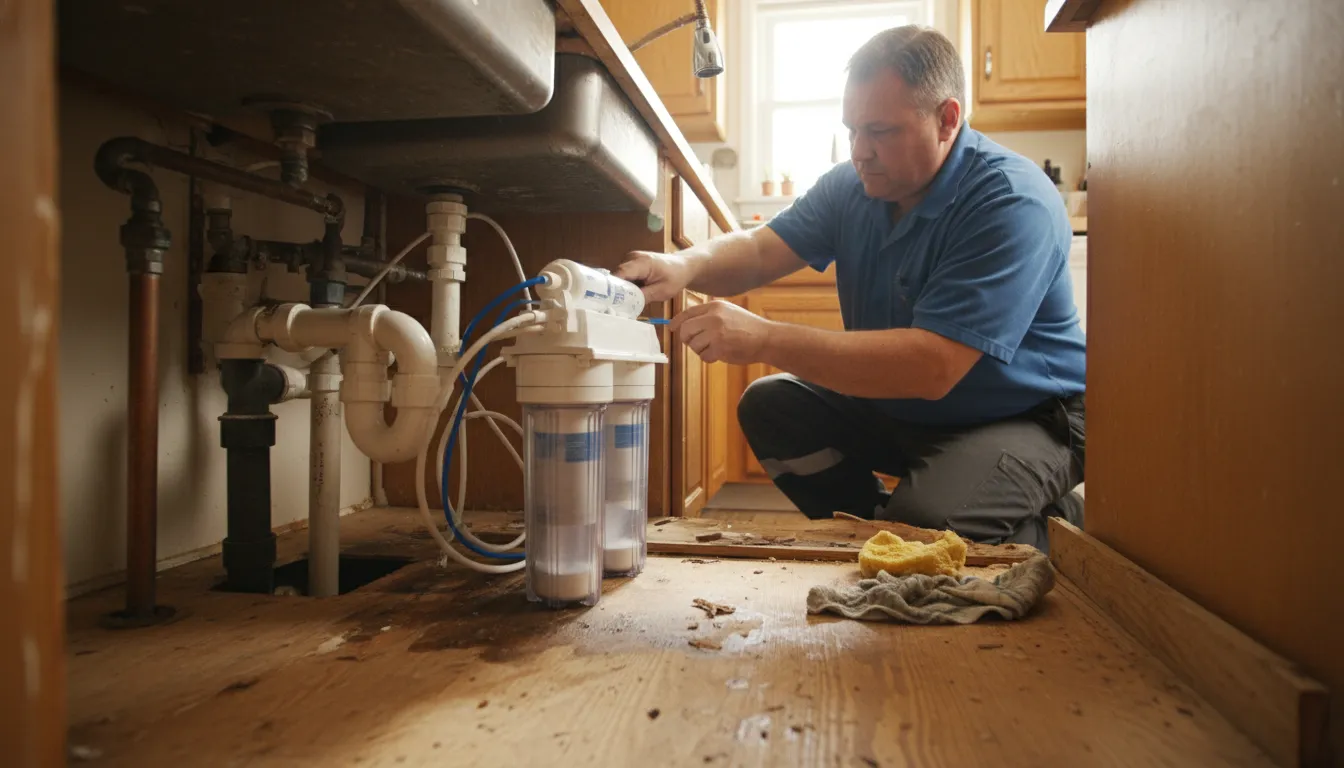
Find the Best Water Treatment Installation Companies for Your Business
No obligation • Fast responses • Nationwide coverage

Why you can trust Search a Plumber
Search a Plumber is a leading United States resource for finding and evaluating professional plumbing services. Our team researches licensing, experience, and customer feedback to create unbiased, fact-driven overviews. Companies cannot pay to change ratings or placement, ensuring homeowners get trustworthy information.
Search providers near you
Top Water Treatment Installation Companies in St Louis, Missouri Ranked
If you live in St. Louis, you're likely familiar with the telltale signs of hard water: stubborn soap scum on shower doors, spotty glassware, and dry, itchy skin after a shower. This is because the city's water supply, drawn from sources that flow through limestone bedrock, is rich in calcium and magnesium minerals. A water softener or filtration system is not just a luxury; it's a practical solution to protect your home's plumbing, improve your water's taste and feel, and extend the life of your appliances. This guide will help you understand your options for water conditioning and purification, from whole-house softeners to under-sink reverse osmosis units, so you can find the right local professional to assess your needs and install a system that works for your home.
Roto-Rooter Plumbing & Water Cleanup
300 Biltmore Dr Ste 348, Fenton, MO 63026
Roto-Rooter Plumbing & Water Cleanup provides a wide range of plumbing services in St Louis, MO, including sewer camera inspections, water heater repairs and installations, drain cleaning, hydro jetting, and sewer line repairs using both conventional excavation and trenchless methods. They also install water softeners and filtration systems to address hard water issues common in the area. The company offers 24/7 emergency plumbing services to address urgent problems promptly. Their technicians use video camera inspections to accurately diagnose sewer line issues and provide effective solutions.
CLEANSTREAM LLC
Monterey Dr, O'Fallon, IL 62269
CLEANSTREAM LLC is a plumbing and HVAC service provider located in St Louis, MO. They offer a wide range of services including drain cleaning, sewer camera inspections, hydro jetting, water heater repair and installation, leak detection, toilet repair, and water softener installation. Their capabilities include detailed video camera inspections and sewer and drain hydro-jetting to clear blockages effectively. CLEANSTREAM LLC also provides heating and cooling services such as air conditioner and furnace repair and replacement. The company offers 24/7 professional service and serves multiple nearby communities including O'Fallon, Belleville, and Collinsville.
Tony LaMartina Plumbing Co. Inc
5705 Dale Ave, St. Louis, MO 63110
Tony LaMartina Plumbing Co. Inc is a family-owned plumbing company serving St Louis, MO. They offer a wide range of plumbing services including water heater repair and installation, tankless water heater services, drain cleaning, hydro jetting, sewer line repair, trenchless sewer repair, leak detection, and repiping. The company has over 40 years of experience and a legacy of plumbing expertise in the St. Louis area dating back over 100 years. They emphasize thorough preparation and clean work practices to ensure quality results.
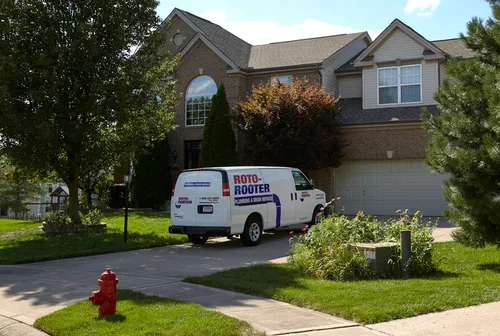
Roto-Rooter Plumbing & Water Cleanup
2671 Washington Ave, St. Louis, MO 63103
Roto-Rooter Plumbing & Water Cleanup provides a wide range of plumbing services in St. Louis, MO, including commercial plumbing, water heater repair and installation, sewer line repair, and water softener installation. They offer specialized services such as hydro jetting, video camera sewer inspections, and trenchless sewer repair methods to minimize disruption. The company serves various commercial clients and residential customers, addressing issues like hard water and sewer line problems with durable solutions. Their expertise includes servicing all types of water heaters, from conventional to tankless and solar models, and installing multiple water filtration systems to improve water quality.
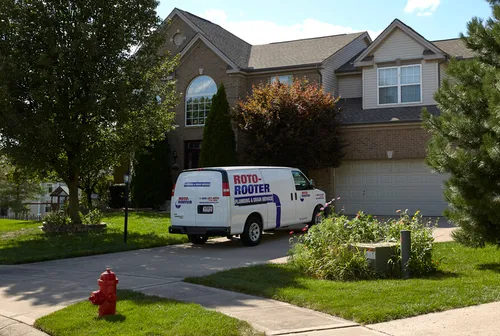
Roto-Rooter Plumbing & Water Cleanup
4806 Trade Access Blvd Ste 900, Hazelwood, MO 63042
Roto-Rooter Plumbing & Water Cleanup provides a wide range of plumbing services in St Louis, MO, including sewer camera inspections, water heater repairs and installations, drain cleaning, hydro jetting, sewer line repair, trenchless sewer repair, leak detection, and toilet repair. They serve the Hazelwood metro area and surrounding communities, addressing issues such as clogged drains, sewer backups, and water heater problems. Their capabilities include video camera inspections for sewer lines and trenchless sewer repair methods that minimize disruption. Roto-Rooter offers 24/7 emergency service to handle urgent plumbing and water-related problems at any time.
Understanding St. Louis's Water Quality
The first step in solving any water issue is understanding what's in your tap water. For most St. Louis residents, hardness is the primary concern. Water hardness is measured in grains per gallon (GPG), and St. Louis water consistently tests at levels considered hard to very hard. This mineral content is a natural result of water passing through the region's abundant limestone.
Beyond hardness, municipal water treatment introduces chlorine for disinfection, which can affect taste and odor. While the public water supply is regulated and safe, older homes may have lead service lines or plumbing fixtures that can leach trace amounts of lead into the water. Emerging concerns also include PFAS (per- and polyfluoroalkyl substances), often called "forever chemicals," which some filtration systems are designed to address. A professional water test is the only way to know exactly what you're dealing with and is the critical first step before selecting any treatment system.
The Impact of Hard Water in Your Home
The effects of untreated hard water are both visible and costly:
- Scale Buildup: Minerals form a hard, cement-like scale inside pipes, water heaters, and appliances like dishwashers and coffee makers. This reduces water flow, decreases heating efficiency, and leads to premature appliance failure.
- Soap Inefficiency: Hard water prevents soap from lathering properly, leading to more detergent use for laundry and dishes, and leaving a filmy residue on skin, hair, and surfaces.
- Aesthetic Issues: You'll notice spots on dishes and shower doors, dingy-looking laundry, and dry skin and hair.
Types of Water Treatment Systems for St. Louis Homes
Choosing the right system depends on your specific water test results and your household's priorities. Often, a combination of systems provides the most comprehensive solution.
Water Softeners (Ion Exchange Systems)
This is the go-to solution for combating St. Louis's hard water. A traditional salt-based water softener uses an ion exchange process to swap calcium and magnesium ions for sodium or potassium ions, effectively "softening" the water throughout your entire home.
- How it Works: Resin beads inside a mineral tank attract and hold hardness minerals. Periodically, the system regenerates by flushing the beads with a salty brine solution, washing the minerals down the drain.
- Best For: Any home looking to eliminate scale, improve appliance efficiency, and enjoy the benefits of soft water for bathing and cleaning.
Whole-House Water Filtration Systems
Also known as point-of-entry (POE) systems, these are installed where water enters your home. They address a broader range of contaminants than a softener alone.
- How it Works: Multi-stage filters can include sediment filters to remove rust and dirt, carbon filters to reduce chlorine, taste, and odor, and sometimes specialized media for specific contaminants like iron or low levels of hydrogen sulfide.
- Best For: Homes wanting to improve overall water quality for every tap, addressing chlorine taste/odor and particulate matter.
Reverse Osmosis (RO) Systems
For the purest drinking and cooking water, an under-sink reverse osmosis system is highly effective. It is often installed in addition to a whole-house softener or filter.
- How it Works: Water is forced through a semi-permeable membrane that filters out up to 99% of contaminants, including dissolved solids, lead, nitrates, and more. It typically includes pre-filters and a post-filter for polishing 1.
- Best For: Families seeking the highest quality water specifically for drinking and cooking from a dedicated faucet.
Other Specialized Systems
- UV Purification: Uses ultraviolet light to disinfect water, killing bacteria and viruses. This is crucial for homes with private wells or specific microbial concerns.
- Acid Neutralizers: If your water is also acidic (corrosive), a neutralizer can protect pipes from corrosion and prevent leaching of metals like copper and lead2.
Find the perfect water treatment installation companies for your needs
Get personalized recommendations and expert advice
The Professional Installation Process
While DIY kits exist, professional installation is strongly recommended for whole-house systems. Proper sizing, placement, and integration with your home's plumbing are key to performance and longevity.
- Comprehensive Water Testing: A qualified technician will test your water on-site for hardness, pH, iron, and other factors. For a more complete analysis, a sample may be sent to a lab 3.
- Consultation & System Sizing: Based on the test results, your water usage, and the number of bathrooms in your home, the professional will recommend a correctly sized system. An undersized softener will not keep up with demand, while an oversized one is inefficient.
- Professional Installation: The installer will identify the best location (often near the main water shut-off), bypass any outdoor faucets if desired, and plumb the system into your main water line. For an RO system, they will install the unit under the sink and add a dedicated faucet.
- Setup & Demonstration: Once installed, the system will be programmed, tested, and you'll be shown how to operate it, add salt to the brine tank (for softeners), and understand maintenance schedules.
Investment and Ongoing Costs
The cost of a water treatment system is an investment in your home's infrastructure and your family's comfort. Prices vary significantly based on system type, capacity, and technology.
- Water Softener: Equipment costs typically range from $500 to $2,500, with professional installation adding $200 to $500.
- Whole-House Filtration System: These systems are more complex, with equipment costs ranging from $1,000 to $6,000 or more, plus installation.
- Under-Sink Reverse Osmosis System: An RO unit costs between $150 and $1,500, with installation often between $100 and $3004 5.
Ongoing maintenance is a required part of ownership:
- Salt: For softeners, you'll need to add pellets to the brine tank regularly. Consumption depends on your water hardness and household size.
- Filter Changes: Whole-house filters and RO pre/post-filters must be replaced annually or bi-annually to remain effective.
- System Sanitization: Periodic professional servicing may be recommended to clean tanks and ensure optimal performance.
The Tangible Benefits of Treated Water
Installing a water treatment system delivers immediate and long-term returns:
- Protects Appliances & Plumbing: By preventing scale buildup, you can double the lifespan of your water heater, dishwasher, and washing machine, and avoid costly pipe repairs6 7.
- Increases Efficiency: Scale acts as an insulator in water heaters, forcing them to use more energy. Softened water can improve heater efficiency by up to 29%8 9.
- Saves on Cleaning Supplies: You'll use up to 50% less soap, shampoo, laundry detergent, and dish soap, as they lather more freely in soft water10.
- Improves Quality of Life: Enjoy softer skin and hair, brighter and longer-lasting clothes, and spot-free dishes and shower doors.
- Provides Peace of Mind: A filtration system delivers cleaner, better-tasting drinking water and reduces exposure to specific contaminants 11.
Frequently asked questions
Sources
Footnotes
-
Water Softener Installation St Louis - Schedule Water Conditioning Service - https://www.hoffmannbros.com/plumbing/water-treatments/softeners-conditioning ↩
-
Choosing A Home Water Treatment System | Lorenz - https://lorenzphac.com/blog/home-water-treatment-system/ ↩
-
Water Quality Testing & Treatment | Blue Springs, MO & Overland Park, KS - https://www.dragonflymech.com/plumbing/water-quality/ ↩
-
Home Water Treatment Systems: Types, Features, Benefits & More - https://modernize.com/water-treatment ↩
-
How Much to Install a Water Softener: Key Factors to Consider - https://www.benjaminfranklinplumbing.com/league-city/blog/2025/february/how-much-to-install-a-water-softener-key-factors-to-consider/ ↩
-
Water Softening Systems | Pure Honest Water - https://purehonestwater.com/water-treatment-systems/water-softening/ ↩
-
Water Solutions for St. Louis, MO - Leaf Home - https://www.leafhome.com/locations/missouri/st-louis/water-solutions ↩
-
Custom Water Filtration & Water Softening - Lowe's - https://www.lowes.com/l/install/water-treatment ↩
-
2026 Water Softener Costs by Capacity, Size, Type & More - https://modernize.com/water-treatment/types/water-softener-installation-cost ↩
-
Water filtration solutions in St. Louis, MO - https://www.culligan.com/locations/mo/fenton/water-filtration ↩
-
Home Water Filtration System St. Louis MO - https://www.rainsoft.com/home-waterfiltration-system-stlouis/ ↩