Find the Best Water Treatment Installation Companies for Your Business
No obligation • Fast responses • Nationwide coverage

Why you can trust Search a Plumber
Search a Plumber is a leading United States resource for finding and evaluating professional plumbing services. Our team researches licensing, experience, and customer feedback to create unbiased, fact-driven overviews. Companies cannot pay to change ratings or placement, ensuring homeowners get trustworthy information.
Search providers near you
Top Water Treatment Installation Companies in Louisville, Kentucky Ranked
If you live in Louisville, the quality of the water flowing from your tap directly impacts your home, your appliances, and your family's health. While Louisville Water Company provides a reliable supply, many residents seek additional treatment to address specific concerns like hardness, chlorine taste, or overall purity. Understanding your local water profile and the available treatment options is the first step toward cleaner, better-tasting water. This guide will help you navigate the world of water conditioning and filtration systems, explaining why they matter and how you can find the right local expertise for your needs.
Tom Drexler Plumbing, Air & Electric
3718 Bardstown Rd, Louisville, KY 40218
Tom Drexler Plumbing, Air & Electric has been serving Louisville, KY, and Southern Indiana since 1982. The company provides a wide range of home services including plumbing, HVAC, electrical work, and bathroom remodeling. Their plumbing services cover water heater repair and installation, water softener installation, sump pump repair, drain cleaning, hydro jetting, sewer line repair including trenchless methods, leak detection, repiping, and gas line installation. They also offer 24/7 emergency service availability to address urgent home system issues. With over 40 years of experience, Tom Drexler Plumbing, Air & Electric combines skilled technicians and advanced tools to maintain and repair essential home systems. Their capabilities include comprehensive drain and sewer services such as hydro jetting and trenchless sewer repair, ensuring effective and less invasive solutions for homeowners.
Bryant Heating, Cooling, Plumbing, & Electric
4531 Bishop Ln, Louisville, KY 40218
Bryant Heating, Cooling, Plumbing, & Electric is a family-owned business serving Louisville, KY, and surrounding areas with HVAC, plumbing, and electrical services. Established in 1940, they provide a wide range of plumbing solutions including sewer camera inspections, water softener installations, and sewer line repairs. Their team is available 24/7, offering prompt support any day of the year. With decades of experience, Bryant Heating, Cooling, Plumbing, & Electric covers Kentucky, Indiana, and Ohio, focusing on comprehensive home comfort and system reliability.
Greenwell Plumbing Heating & Air
1840 Scott Rd, New Albany, IN 47150
Greenwell Plumbing Heating & Air provides plumbing, heating, and air conditioning services in Louisville, KY, and Southern Indiana. With over 30 years of experience, they serve both residential and commercial customers, offering services such as water softener installation and gas line installation. The company is known for its 30-minute call-ahead guarantee and a membership plan that includes annual system inspections to help maintain plumbing and HVAC equipment.

United Plumbing
Louisville, KY
United Plumbing offers a range of plumbing services including water heater repair and installation, water softener installation, drain cleaning, leak detection, and toilet repair in Louisville, KY. Serving Louisville and surrounding areas, they combine local expertise with the support of a national brand to provide reliable solutions for home plumbing needs. Established in 1984, United Plumbing has decades of experience and operates with licensed, bonded, and ACE-certified professionals. They provide 24-hour availability to address urgent plumbing issues at any time.
Queens Plumbing
704 N English Station Rd, Louisville, KY 40223
Queens Plumbing is a licensed and insured plumbing service provider based in Louisville, KY. They offer a wide range of plumbing solutions including water heater installation, leak detection, drain cleaning, sump pump repair, sewer line services, and repiping. Queens Plumbing emphasizes the use of quality materials and certified professionals to ensure durable and reliable repairs and installations. The business is led by a master plumber with years of experience, serving both residential and commercial clients in the Louisville area.
Understanding Louisville's Water Profile
To choose the right treatment system, you first need to know what's in your water. Louisville's municipal water, known as Pure Tap®, is sourced from the Ohio River and undergoes extensive treatment. The result is water that meets all federal safety standards, but it has specific characteristics that influence the need for in-home treatment.
The primary consideration for most Louisville homeowners is water hardness. The water here is considered moderately hard, with a hardness level around 9 grains per gallon (gpg) or 159 milligrams per liter (mg/L) of calcium carbonate. This level of hardness is high enough to cause noticeable scale buildup on fixtures, inside appliances like water heaters and dishwashers, and can reduce the effectiveness of soaps and detergents.
Other key attributes of Louisville's tap water include:
- pH Level: The water is slightly alkaline, with a pH around 8.7 1.
- Total Dissolved Solids (TDS): TDS levels are relatively low, averaging around 228 parts per million (ppm), which is a good sign of overall water purity.
- Chlorine: As with most municipal supplies, chlorine is used as a disinfectant, which can affect taste and odor.
- Lead: The mineral content in the water provides a protective coating inside pipes, which helps mitigate corrosion and lead leaching from older plumbing. However, filtering is still a recommended precaution for homes with aging infrastructure 2.
Why Consider a Water Treatment System?
Moderately hard water and the presence of disinfectants like chlorine are more than just minor annoyances. They can have tangible effects on your daily life and your home's infrastructure.
- Scale Buildup: Hard water minerals precipitate out and form limescale. This crusty deposit can clog showerheads, reduce water flow in pipes, and form an insulating layer inside your water heater, forcing it to work harder and use more energy.
- Appliance Lifespan: Appliances that use water-including washing machines, dishwashers, ice makers, and water heaters-are vulnerable to scale accumulation. This can lead to more frequent repairs and significantly shorten their operational life.
- Skin and Hair: Hard water can make it difficult to rinse soap completely, leaving a film on skin and hair that may contribute to dryness, irritation, and dull-looking hair.
- Cleaning Challenges: Soap doesn't lather as well in hard water, often requiring you to use more detergent, shampoo, or dish soap. It can also leave spots and streaks on glassware, dishes, and freshly washed cars.
- Taste and Odor: While safe, some people are sensitive to the taste or smell of chlorine in drinking water. A filtration system can remove these elements for crisper, better-tasting water straight from the tap.
Types of Water Treatment Systems for Louisville Homes
There is no one-size-fits-all solution. The best system for your home depends on your primary concerns-whether it's combating hardness, improving taste, or removing specific contaminants. Here are the most common types of systems installed by Louisville professionals.
Water Softeners (Ion Exchange Systems)
This is the go-to solution for tackling hard water. A water softener uses a process called ion exchange, where resin beads inside a tank swap sodium or potassium ions for the calcium and magnesium ions that cause hardness.
- How it works: As hard water flows through the resin tank, the hardness minerals stick to the beads. Periodically, the system regenerates by flushing a brine (saltwater) solution through the tank, washing the minerals away and recharging the beads.
- Best for: Homes experiencing scale buildup, seeking to protect appliances, and wanting to use less soap and enjoy softer skin and laundry.
- Considerations: These systems require a supply of salt (or potassium chloride) for regeneration and add a small amount of sodium to the water, which may be a concern for those on strict sodium-restricted diets.
Whole-House Filtration Systems
Also known as point-of-entry (POE) systems, these are installed where the main water line enters your home, treating all the water used throughout the house.
- How it works: They typically use a series of filters, often starting with a sediment filter to remove particles, followed by a large activated carbon filter to adsorb chlorine, chemicals, and improve taste and odor.
- Best for: Homeowners who want to remove chlorine taste and smell from all taps, including showers and baths, and provide basic particulate filtration for every faucet and appliance.
- Considerations: While excellent for taste and chlorine, a standard whole-house filter does not soften water. Many homeowners pair a whole-house filter with a softener for comprehensive treatment.
Reverse Osmosis (RO) Systems
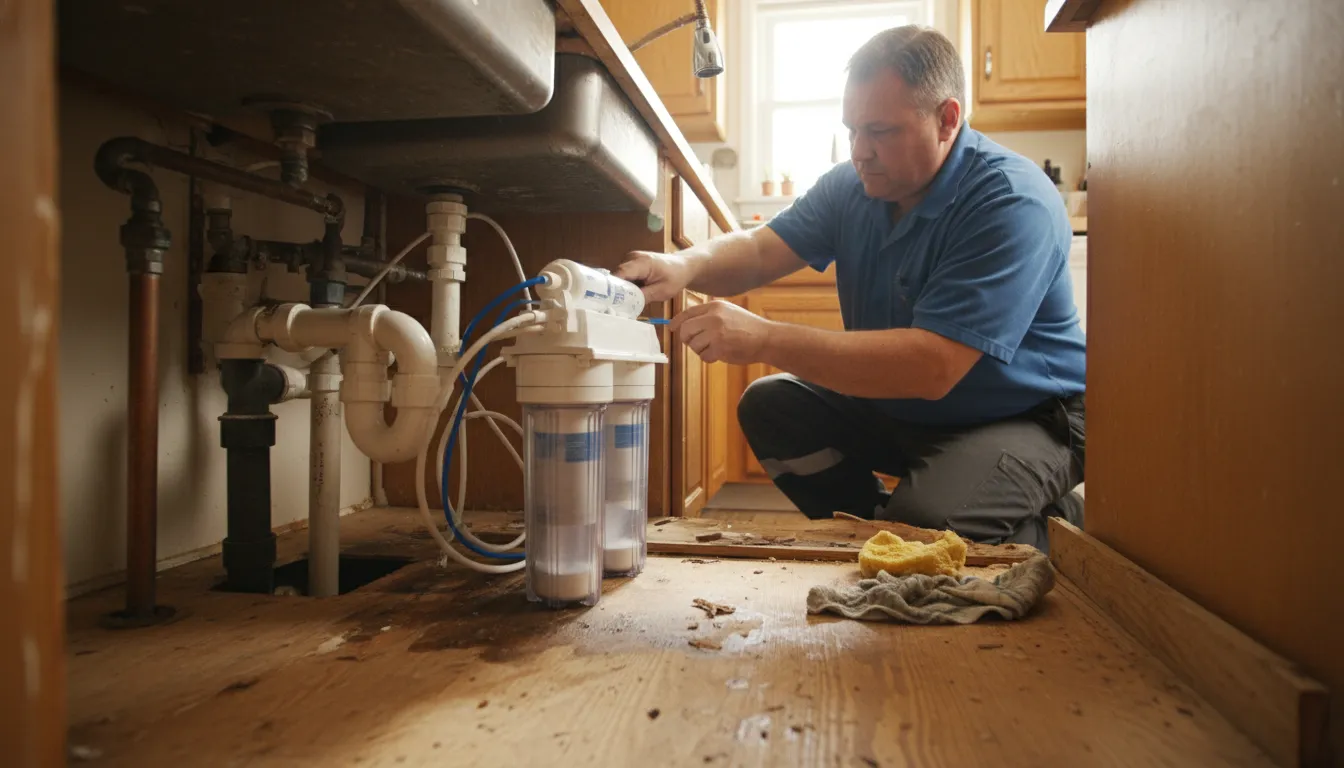
These are point-of-use (POU) systems, typically installed under a kitchen sink, and provide the highest level of purification for drinking and cooking water.
- How it works: RO systems force water through a semi-permeable membrane that filters out an extremely high percentage of dissolved solids, including heavy metals, fluoride, nitrates, and more. They usually include pre-filters (sediment and carbon) and a post-filter for final polish.
- Best for: Families seeking the purest possible drinking water. It's ideal for removing a wide array of contaminants that other filters may not catch.
- Considerations: The process is slower and produces wastewater. It also removes healthy minerals, so some systems include a remineralization stage. RO does not soften water for the entire home.
Combination and Specialty Systems
For complete water treatment, many Louisville providers recommend integrated solutions.
- Softener + RO Combo: A whole-house water softener handles hardness for the entire home, while an under-sink RO system delivers ultra-pure water for drinking and cooking 3. This is a very popular and effective setup.
- Conditioning Systems: Some salt-free systems use template-assisted crystallization (TAC) or other methods to alter the structure of hardness minerals so they don't stick to surfaces. These are often marketed as an alternative to traditional softeners, though they don't technically "remove" hardness.
Find the perfect water treatment installation companies for your needs
Get personalized recommendations and expert advice
Cost Breakdown for Water Treatment in Louisville
Investing in a water treatment system involves both upfront equipment and installation costs, as well as ongoing maintenance expenses. Prices can vary based on system capacity, complexity, and the specifics of your home's plumbing.
Upfront Installation Costs
- Water Softener: The unit itself typically ranges from $500 to over $2,500, depending on capacity, brand, and features (like dual tanks or demand-initiated regeneration). Professional installation in Louisville generally adds another $200 to $500+ to the total project cost 4 5.
- Whole-House Filtration System: These systems are more complex and can range from $1,000 to $4,000 or more for the unit and professional installation combined.
- Under-Sink Reverse Osmosis System: An RO unit can cost between $150 and $1,500. Installation by a professional typically adds $100 to $300.
- Total Project Cost: For a common combination like a quality water softener paired with a whole-house filter or an RO system, Louisville homeowners can expect total project costs to fall between $1,000 and $4,000+ 6.
Ongoing Maintenance & Operating Costs
A system is only as good as its upkeep. Budget for these recurring expenses:
- Salt for Softeners: For salt-based ion exchange softeners, you'll need to replenish salt pellets or blocks. Annual costs typically run between $100 and $300, depending on water usage and hardness 7 8.
- Filter Replacements: All filtration systems require periodic filter changes. For whole-house filters and RO pre/post-filters, annual replacement costs can range from $150 to $900, depending on the type and number of filters 9 10.
- RO Membrane: The RO membrane itself lasts longer, usually 2-5 years, and replacement can cost $100-$300.
- Utilities: Water softeners use small amounts of water and electricity for regeneration cycles, which will cause a minor increase in your utility bills.
Finding the Right Local Water Treatment Professional
Choosing a system is one part of the equation; having it properly installed is another. A qualified local plumber or water treatment specialist can assess your home's specific needs, water usage, and plumbing configuration to recommend the right system size and type. They can ensure the installation is up to code, properly configured, and that you understand how to maintain it. Look for professionals who offer water testing, provide clear quotes, and stand behind their work with warranties on both parts and labor. Many reputable Louisville-area companies specialize in these systems and can guide you from consultation through to ongoing service 11.
Frequently asked questions
Sources
Footnotes
-
Pure Tap, Pure Quality | LouisvilleKY.gov - https://louisvilleky.gov/news/pure-tap-pure-quality ↩
-
Get the Facts About Louisville, KY Water Quality Data - HomeWater - https://www.homewater.com/blog/get-the-facts-about-louisville-ky-water-quality-data ↩
-
What Does a Home Water Filtration System Cost? - https://nexgenairandplumbing.com/blog/what-does-a-home-water-filtration-system-cost/ ↩
-
Water Softener System Cost in 2025: Types, Installation & ... - https://anchorplumbingservices.com/water-softener-system-cost/ ↩
-
Cost to install water softener in Louisville, KY - Handoff AI Estimating - https://www.handoff.ai/construction-costs/install-water-softener/louisville-ky ↩
-
Home Water Treatment Systems: Types, Features, Benefits & More - https://modernize.com/water-treatment ↩
-
Water Softener Installation Cost Breakdown Jan, 2026 - https://www.softprowatersystems.com/pages/cost-breakdown-water-softener-installation ↩
-
Hidden Dual Tank Water Softener Installation Cost 🇺🇸 Nov, 2025 - https://qualitywatertreatment.com/pages/hidden-dual-tank-water-softener-installation-cost ↩
-
Custom Water Filtration & Water Softening - Lowe's - https://www.lowes.com/l/install/water-treatment ↩
-
How Much Does It Cost to Install a Water Filtration System In 2026? - https://modernize.com/water-treatment/types/water-filtration-system-cost ↩
-
Whole House Water Filtration Systems Louisville KY | Softener ... - https://wellnesswaterfiltrationsystems.com/louisville-ky/ ↩