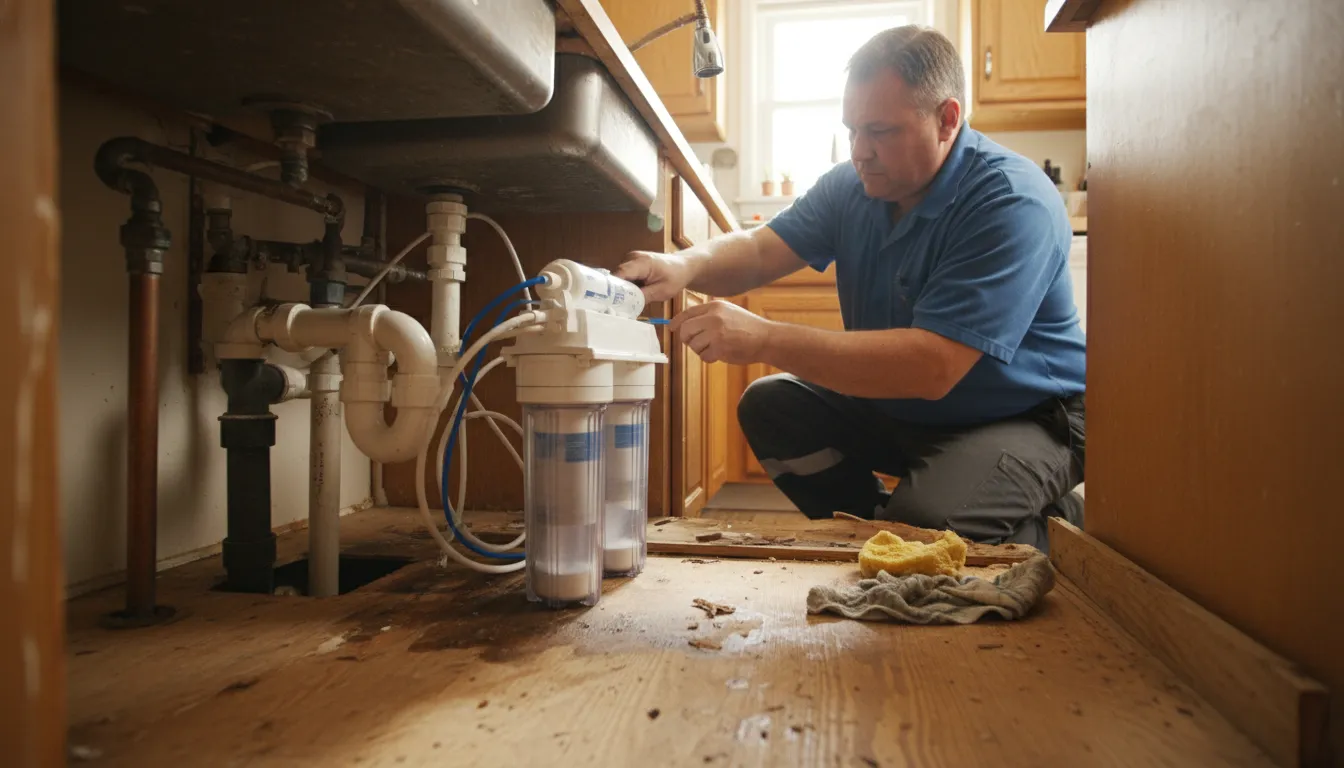
Find the Best Water Treatment Installation Companies for Your Business
No obligation • Fast responses • Nationwide coverage

Why you can trust Search a Plumber
Search a Plumber is a leading United States resource for finding and evaluating professional plumbing services. Our team researches licensing, experience, and customer feedback to create unbiased, fact-driven overviews. Companies cannot pay to change ratings or placement, ensuring homeowners get trustworthy information.
Search providers near you
Top Water Treatment Installation Companies in Indianapolis, Indiana Ranked
Living in Indianapolis means dealing with some of the hardest water in the nation, which can wreak havoc on your home's plumbing, appliances, and even your skin and hair. A comprehensive water treatment system is not just a luxury; it's a practical investment in protecting your property and improving your daily water quality. This guide will help you understand the specific challenges of Indianapolis water, explore effective treatment solutions like softeners and filters, and connect you with experienced local professionals who can assess your needs and provide a tailored installation.
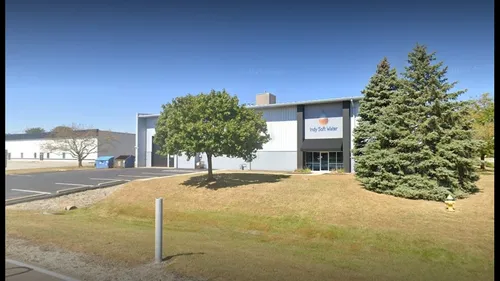
Indy Soft Water
4148 W 99th St, Carmel, IN 46032
Indy Soft Water is a water treatment company based in Carmel, serving Indianapolis, IN, and surrounding areas. With over 26 years of experience, they provide water softener installation and plumbing services for both residential and commercial clients. Their WQA-certified technicians offer expert advice, free site reviews, and water testing to ensure tailored water treatment solutions. They specialize in advanced reverse osmosis systems and commercial softeners, helping businesses maintain clean and reliable water. Indy Soft Water also offers 24/7 emergency service for urgent water equipment issues.
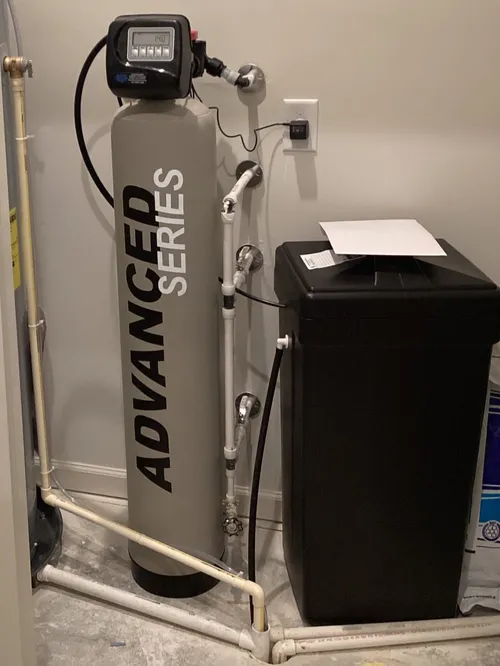
Cooper's Water
9635 E Park Davis Dr, Indianapolis, IN 46235
Cooper's Water is a water treatment provider based in Indianapolis, IN, specializing in water softener installation and plumbing services. They offer American-made products designed to remove hard water, iron, chlorine, odors, bad taste, and contaminants from drinking water. Their services include installing and repairing water softeners, reverse osmosis drinking systems, and iron filtration systems, with a focus on durable, high-quality equipment. Cooper's Water serves a wide area around Indianapolis, including Carmel, Fishers, Noblesville, and several other nearby communities.
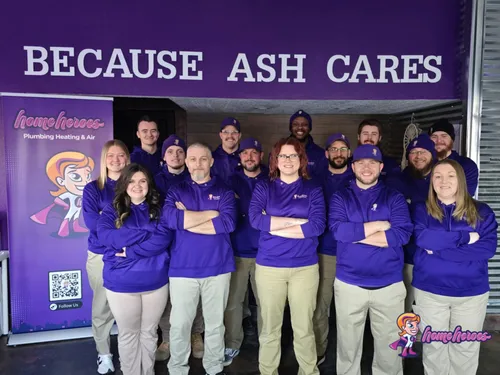
Home Heroes Plumbing Heating & Air
7768 Kane Ct, Fishers, IN 46038
Home Heroes Plumbing Heating & Air is a locally owned plumbing, heating, and air conditioning service provider based in Fishers, Indiana. Serving Indianapolis, IN, and surrounding areas, they offer a range of services including water heater repair and installation, tankless water heater services, water softener installation, sump pump repair, drain cleaning, leak detection, gas line installation, and toilet repair. The company specializes in handling plumbing emergencies during business hours and provides expert solutions such as Rheem water heater installations, including tankless models. With over a decade of experience, Home Heroes Plumbing Heating & Air is committed to delivering reliable service tailored to customer needs.
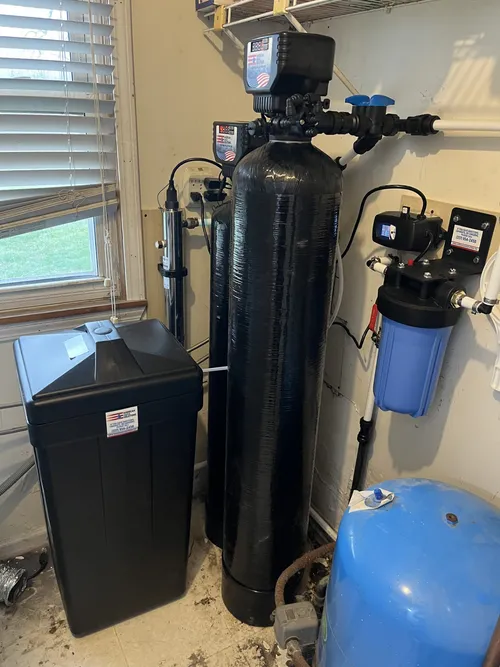
American Aqua Solutions | An Alta Water Company
1206 Indy Pl, Indianapolis, IN 46214
American Aqua Solutions | An Alta Water Company is a family-owned business based in Indianapolis, IN, specializing in water softener installation and plumbing services. They provide water and air purification solutions for residential and commercial properties, using advanced filtration technologies including their patented Disinfecting Filtration System (DFS), which captures 99.99% of particles down to .0007 micron. With decades of industry experience, they focus on delivering certified, sustainable water treatment systems that improve water quality and indoor air purity. The company also supports community efforts through partnerships with organizations like Lifewater.
Plumber Near Me LLC
Indianapolis, IN
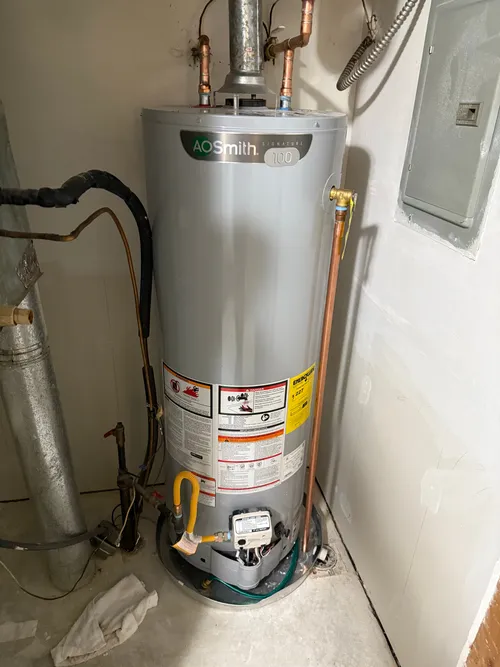
Plumber Near Me LLC is a family-owned plumbing company serving Indianapolis, IN, and nearby communities. They offer a wide range of plumbing services including water heater repair and installation, water softener installation, sump pump repair, drain cleaning, sewer line repair, leak detection, and garbage disposal repair. With over 40 years of combined experience, they provide solutions for both new installations and repairs, including emergency plumbing services for urgent issues like leaks and sewer backups. Their expertise includes professional water service repair and main shutoff valve installation to protect homes from water damage.
Understanding Indianapolis's Hard Water Problem
The water supplied to Indianapolis homes originates from underground aquifers that flow through limestone bedrock. This natural process infuses the water with high levels of calcium and magnesium carbonates, measured as water hardness. On the Grains Per Gallon (GPG) scale, Indianapolis water consistently tests between 12 and 20 GPG, which is classified as "very hard" 1.
This high mineral content leads to several common household issues:
- Limescale Buildup: You'll notice white, chalky deposits on faucets, showerheads, and inside appliances like your dishwasher and coffee maker.
- Appliance Wear: Scale accumulation inside water heaters, washing machines, and boilers reduces efficiency, increases energy bills, and shortens appliance lifespans.
- Plumbing Concerns: Over time, scale can restrict water flow inside pipes, leading to reduced pressure and potential clogs.
- Skin and Hair: Hard water can leave skin feeling dry and itchy and make hair dull and difficult to manage.
- Cleaning Challenges: Soap and detergents don't lather effectively, leading to more product use, spotty dishes, and stiff laundry.
Addressing these issues starts with a proper water analysis to understand not just hardness, but also any other potential contaminants that a filtration system may need to target 2.
Core Solutions: Softening vs. Filtration
It's important to distinguish between the two main components of home water treatment. They often work together to provide complete water quality improvement.
Water Softeners are specifically engineered to remove the minerals that cause hardness-calcium and magnesium. The most common and effective type for Indianapolis water is a salt-based ion exchange softener. Here's how it works:
- Hard water enters a tank filled with resin beads charged with sodium (salt) ions.
- As the water flows through, the calcium and magnesium ions swap places with the sodium ions, effectively removing the hardness.
- Periodically, the system regenerates by flushing a brine (saltwater) solution through the resin, recharging it with sodium ions and flushing the accumulated hardness minerals down the drain.
Water Filtration Systems target a broader range of contaminants. While a softener handles minerals, a filter can address issues like chlorine (used for municipal disinfection, which can affect taste and smell), sediment, volatile organic compounds (VOCs), and even heavy metals like lead 3. Filtration can be installed at the point-of-entry (treating all water entering the home) or at point-of-use (like under a sink for drinking water).
Designing a System for Your Indianapolis Home
A one-size-fits-all approach doesn't work for water treatment. The right system depends on your home's size, water usage, and specific water test results.
Types of Treatment Systems
- Salt-Based Water Softeners: The go-to solution for combating Indianapolis's hard water. They are highly effective at preventing scale and are considered the standard for residential treatment.
- Whole-House Filtration Systems: Often installed in tandem with a softener. These units, which may use activated carbon or other media, remove contaminants that the softener does not, providing clean water from every tap.
- Reverse Osmosis (RO) Systems: Typically installed as a point-of-use system under the kitchen sink. RO is a powerful filtration process that forces water through a semi-permeable membrane, removing up to 99% of dissolved solids, including salts, metals, and some microorganisms, providing exceptionally pure drinking and cooking water 4.
- Hybrid or Combination Systems: Many modern units integrate softening and filtration into a single, compact system, which can be ideal for homes with space constraints.
Key Installation Considerations
Professional installation is crucial for optimal performance and to comply with local plumbing codes. Key steps include 5 6:
- Sizing: The system must be sized correctly based on your household's daily water usage and the measured hardness of your water. An undersized unit will run out of capacity too quickly, while an oversized one is inefficient 7.
- Location: Installation occurs at the main water line's point of entry into your home, usually in a basement, utility room, or garage. Proper placement ensures all water is treated and allows for necessary drainage for the regeneration cycle.
- Configuration: A professional will plumb the unit with a bypass valve, connect it to a drain line, and program the control valve based on your water hardness. The regeneration cycle is typically set to occur automatically during low-water-usage hours, like the middle of the night.
Find the perfect water treatment installation companies for your needs
Get personalized recommendations and expert advice
Investment and Ongoing Maintenance
Installing a whole-home water treatment solution is an investment in your property. In Indianapolis, a professionally installed system that includes both a water softener and a whole-house filter can range from $4,000 to $6,000 or more, depending on capacity, technology, and the complexity of the installation 8 9. Adding a reverse osmosis system for drinking water would be an additional cost.
Beyond the initial installation, these systems require regular upkeep to function properly:
- Salt: Salt-based softeners need replenishment. For a typical family of four in Indianapolis, this means adding one to two 40-pound bags of salt per month, costing approximately $20 to $40 10.
- Filter Changes: Whole-house and reverse osmosis filters have cartridges that need replacing on a schedule (often every 6-12 months), with annual costs typically between $100 and $300 depending on the filter type 11.
- Resin Bed: The softening resin itself may need replacement every 10-15 years, depending on water quality and usage.
While there is an ongoing cost, it is minimal compared to the potential savings on soap, detergent, energy bills, and premature appliance replacement, not to mention the improved quality of life.
Finding Local Expertise in Indianapolis
Given the technical nature of water treatment, working with a reputable local provider is essential. Established Indianapolis-area companies like Aqua Systems, Hope Plumbing, Mr. Plumber, and Summers Plumbing have extensive experience with the region's specific water challenges 12 13. A qualified professional will start with a water test, discuss your goals and budget, recommend a properly sized system, handle the permitting and installation, and explain the simple maintenance required to keep your water clean and soft for years to come.
Frequently asked questions
Sources
Footnotes
-
Do You Need a Water Softener in Indiana? - https://www.kortedoesitall.com/blog/do-you-need-a-water-softener-in-indiana/ ↩
-
The 5 Things to Look For in a Home Water Treatment System - https://www.salisburyut.com/5-things-to-look-for-in-a-home-water-treatment-system/ ↩
-
How to Choose a Water Softener for Your Home | Step-by-Step Guide - https://homewater101.com/articles/find-water-softening-solution ↩
-
Choosing the Right Water Filtration System for Your Home - https://mrplumberindy.com/knowledge-center/water-filtration-system/ ↩
-
Understanding Water Softener Installation and Its Benefits - https://tridentcleanwater.com/blog/understanding-water-softener-installation-and-its-benefits/ ↩
-
Water Softener - 5 Recharge / Regeneration Stages - https://products.geappliances.com/appliance/gea-support-search-content?contentId=21020 ↩
-
How to Size a Water Softener | Angi - https://www.angi.com/articles/what-size-water-softener-do-i-need.htm ↩
-
Whole House Systems - Aqua Systems of Indianapolis, IN - https://www.aquasystems.com/indianapolis/products/whole-house-systems/ ↩
-
Home Water Filtration System Cost - https://www.puresoftwatertreatments.com/home-water-filtration-system-cost ↩
-
How Much Salt to Put in Your Water Softener? - Aquasure USA - https://aquasureusa.com/blogs/water-guide/salt-in-your-water-softner ↩
-
Best 5 Whole House Water Filter Systems: 2025 Expert Guide - https://www.waterdropfilter.com/blogs/buyers-guides/best-whole-house-water-filter-system ↩
-
The Impact of Indiana's Hard Water on Your Cooking - Hope Plumbing - https://www.hopeplumbing.com/the-impact-of-indianas-hard-water-on-your-cooking/ ↩
-
Choosing the Right Water Softener for Your Indiana Residence - https://summersphc.com/huntington/2025/04/choosing-the-right-water-softener-for-your-indiana-residence/ ↩