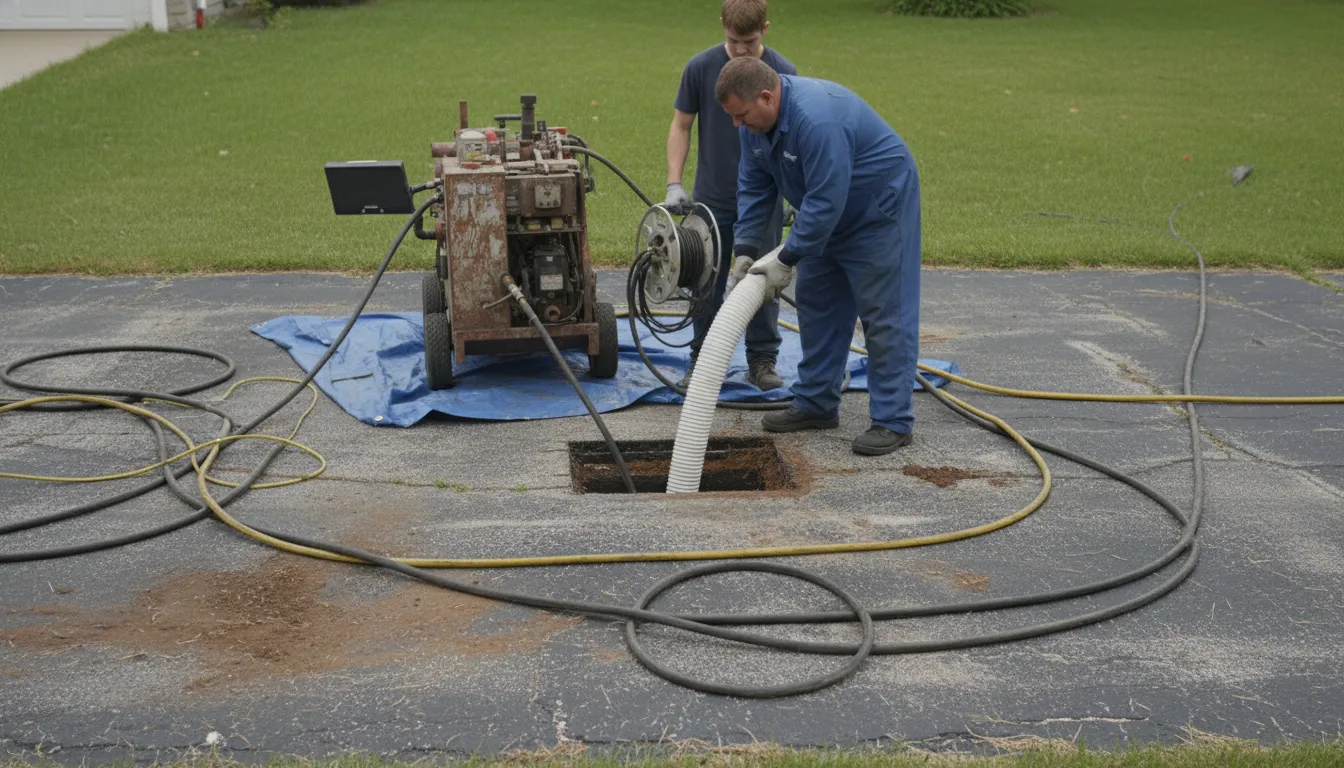
Find the Best Trenchless Sewer Repair Companies for Your Business
No obligation • Fast responses • Nationwide coverage

Why you can trust Search a Plumber
Search a Plumber is a leading United States resource for finding and evaluating professional plumbing services. Our team researches licensing, experience, and customer feedback to create unbiased, fact-driven overviews. Companies cannot pay to change ratings or placement, ensuring homeowners get trustworthy information.
Search providers near you
Top Trenchless Sewer Repair Companies in Des Plaines, Illinois Ranked
A damaged sewer line is a serious problem that can lead to backups, property damage, and costly repairs. For homeowners in Des Plaines, trenchless sewer repair offers a modern, less invasive solution to fix underground pipes without the need for extensive, disruptive digging. This method is crucial for preserving your landscaping, driveway, and hardscapes while restoring your home's essential plumbing function. The following guide explains how no-dig sewer repair works, when it's the right choice for your property, and what to expect from the process and local requirements.
The All Pipes INC.
255 Holly Ln, Elk Grove Village, IL 60007
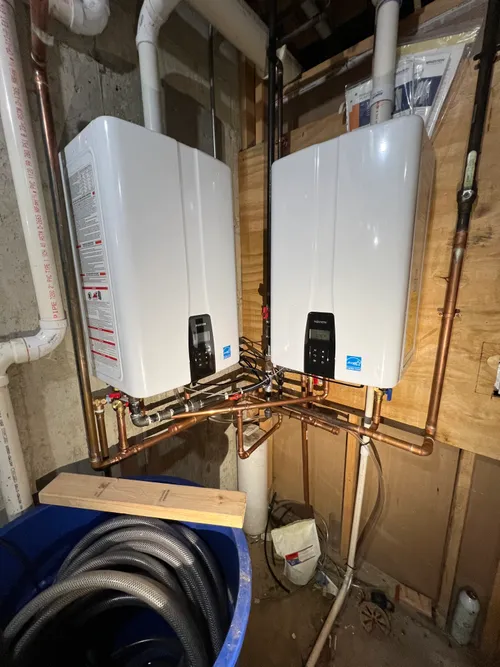
The All Pipes INC. is a licensed and insured plumbing company serving Chicago, IL. They provide a wide range of plumbing services including water heater repair and installation, trenchless sewer repair, sump pump installation, leak detection, and hydro jetting for drain cleaning. The company offers both residential and commercial plumbing solutions and specializes in tankless water heater installations to help reduce energy costs. Founded by Grigor Ganchev, who has built his career in plumbing over many years, The All Pipes INC. emphasizes integrity and clear communication with clients to maintain lasting relationships.
BMW Plumbing & Sewer
448 Lake Cook Rd Suite E, Deerfield, IL 60015
BMW Plumbing & Sewer is a family-owned plumbing and sewer service provider based near Chicago, IL, serving the northern suburbs since 1993. They offer a broad range of residential and commercial plumbing services including water heater repair, sump pump maintenance, drain cleaning, sewer line repair, trenchless sewer lining, leak detection, and toilet repair. BMW Plumbing & Sewer is equipped to handle sewer rodding and non-invasive sewer lining to address pipe cracks and root intrusions. The company operates 24/7, providing around-the-clock service to meet urgent plumbing needs.
VanDerBosch Plumbing Inc.
6928 N Greenview Ave, Chicago, IL 60626
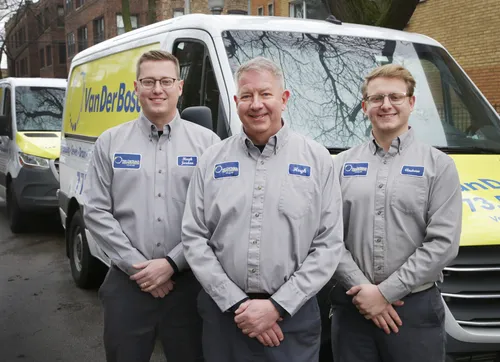
VanDerBosch Plumbing Inc. is a plumbing company serving Chicago, IL, with over 30 years of experience in residential and light commercial plumbing. They offer a wide range of services including sewer camera inspections, water heater repair and installation, water softener installation, sump pump repair, drain cleaning, trenchless sewer repair, leak detection, and toilet repair. The company provides 24/7 live answer and after-hours service, ensuring help is available whenever needed. They also specialize in trenchless pipe repair and sewer video inspection, using the latest technology to address plumbing issues efficiently.
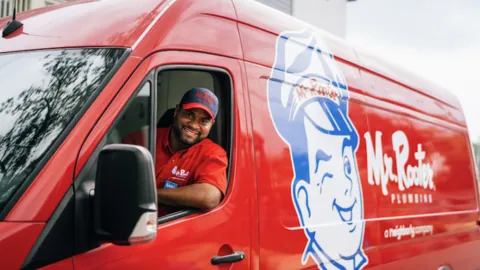
Mr. Rooter Plumbing of Lincoln Park
Chicago, IL
Mr. Rooter Plumbing of Lincoln Park provides residential and commercial plumbing services in Chicago, IL. They offer a wide range of solutions including drain cleaning, sewer line repair, water heater repair, leak detection, and trenchless sewer repair. The company uses advanced technology such as high-flexibility video cameras and the HydroScrub® jetting system to diagnose and resolve plumbing issues efficiently. Backed by over 50 years of experience from its national affiliation, Mr. Rooter Plumbing delivers services with proven techniques and specialized equipment. They also provide emergency plumbing services to address urgent needs promptly.
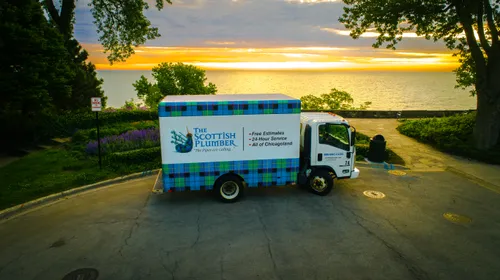
The Scottish Plumber
135 W Home Ave, Villa Park, IL 60181
The Scottish Plumber is a trenchless sewer repair contractor based in Chicago, IL. They specialize in trenchless sewer repair, flood control, and sewer gas elimination, using innovative methods such as non-toxic smoke testing to locate difficult issues. Established in 2006, the company focuses on providing quality plumbing services with an emphasis on affordability and minimal disruption.
Understanding Trenchless Sewer Line Solutions
Trenchless sewer repair, often called no-dig or pipe lining, is a method for repairing or replacing underground sewer pipes without excavating a long, deep trench. Instead, technicians use specialized equipment to access the pipe at two strategic points, typically at an existing cleanout and at the connection to the city main. Through these access points, they can rehabilitate the pipe from the inside, creating a new, durable pipe within the old one. This approach is a game-changer for residential sewer lateral repairs, especially in established neighborhoods with mature trees, paved driveways, and intricate landscaping that would be devastated by traditional excavation.
The core advantage of this technology is its minimal surface disruption. Traditional sewer repair can turn your yard into a construction zone, requiring the removal and subsequent restoration of sod, gardens, patios, and even sections of concrete. Trenchless methods avoid this, saving you significant time, money, and hassle on landscape restoration. While the initial cost for the repair itself can be higher than a simple excavation, the overall project cost is often comparable or lower when you factor in the avoided restoration expenses.
Is Trenchless Repair Right for Your Des Plaines Home?
Not every sewer problem is suited for a trenchless fix. A professional video camera inspection is the essential first step to diagnose the issue and determine the best course of action. Here's a breakdown of when trenchless pipe repair excels and when traditional excavation might be necessary.
Ideal Situations for No-Dig Repair
- Root Intrusion: This is a very common issue in Des Plaines, where many older homes have clay sewer laterals. Tree roots seek out moisture and can infiltrate pipe joints, causing blockages and damage. Trenchless lining creates a seamless, root-resistant barrier inside the old pipe.
- Cracks, Holes, or Corrosion: Pipes can develop cracks from ground shifting or corrode over time. Cured-in-place pipe (CIPP) lining effectively seals these breaches.
- Bellied or Misaligned Pipes: Sections of pipe that have sunk, creating a low spot where waste collects, can often be addressed.
- Aging Pipe Reinforcement: For pipes that are structurally sound but worn, lining adds decades of life by creating a new, smooth interior surface.
- Pipes Under Obstacles: The best candidate for trenchless technology is a damaged pipe running under a driveway, sidewalk, patio, garden, or mature tree where excavation would be highly destructive 1.
When Traditional Excavation May Be Required
- Complete Pipe Collapse: If a section of pipe has fully collapsed, there may not be a clear path for a liner or bursting head to travel through.
- Severe Offsets or Major Structural Failure: When pipe sections are severely misaligned or broken apart, the existing line may not provide a viable host for rehabilitation.
- Multiple, Widespread Failures: In some cases of extreme deterioration along the entire lateral, complete replacement via excavation might be the most practical long-term solution.
Find the perfect trenchless sewer repair companies for your needs
Get personalized recommendations and expert advice
The Trenchless Sewer Repair Process: Step-by-Step
Understanding the workflow can demystify the project and set clear expectations. A reputable contractor will follow a systematic process to ensure a successful, code-compliant repair.
- Video Camera Inspection: A flexible, waterproof camera is fed into the sewer line to pinpoint the exact location, nature, and extent of the damage. This inspection is critical to confirm that trenchless rehabilitation is feasible and to plan the repair.
- Access and Preparation: Technicians locate or create two small access pits: one at the beginning and one at the end of the damaged section. The existing pipe is then thoroughly cleaned using high-pressure water jetting or mechanical tools to remove debris, roots, and scale, ensuring a clean surface for the new liner to adhere to.
- Lining or Bursting: This is the core of the repair. Two primary methods are used:
- CIPP Lining (Cured-In-Place Pipe): A flexible, resin-saturated felt tube is inverted or pulled into the old pipe. Using air pressure or hot water, the liner is expanded to fit tightly against the host pipe's walls. The resin is then cured (hardened), forming a rigid, jointless "pipe-within-a-pipe" 2.
- Pipe Bursting: For pipes that need full replacement, a bursting head is pulled through the old pipe, fracturing it outward while simultaneously pulling a new high-density polyethylene (HDPE) pipe into place behind it 3.
- Curing and Final Connections: For CIPP, the curing process can take a few hours. Once hardened, the ends are trimmed, and all service connections (like toilet and sink lines) are reinstated through the new liner. A final camera inspection verifies the repair's integrity 4 5.
- Cleanup and Restoration: The small access pits are backfilled, and the work area is cleaned up. Because the disruption was minimal, restoration is typically quick and limited to the small access points.
Permits, Inspections, and Costs in Des Plaines
Any sewer repair work in Des Plaines requires coordination with local authorities. Homeowners and contractors must adhere to city codes to ensure the repair is safe and properly integrated with the public sewer system.
Local Permits and Inspections: The City of Des Plaines requires permits for sewer lateral work. Your contractor should typically handle pulling these permits, which involve the city's Public Works and Engineering Department. The work will also require inspections at various stages (e.g., after the repair is complete) to ensure it meets city standards. These steps are non-negotiable and factor into the project's timeline and overall cost 6. It's also wise to contact your homeowner's insurance provider to understand your coverage for sewer line repairs, as policies vary 6.
Understanding the Costs: Trenchless sewer repair costs are generally quoted per linear foot. In the Des Plaines area, you can expect a range of $100 to $250 or more per linear foot, depending on the method used, the diameter and length of the pipe, the severity of the damage, and labor costs 7 8.
- Factors Influencing Price: The primary cost drivers are the length of the damaged section and the chosen method (CIPP vs. pipe bursting). Depth of the pipe, ease of access, and any necessary bypass pumping can also affect the price.
- Additional Costs: Remember to budget for the initial diagnostic camera inspection (typically $175-$350) and the required city permits and fees 9 10.
- Cost Comparison: While the per-foot price for trenchless may be higher than digging up a pipe in an open yard, the total project cost often favors trenchless when you consider the thousands of dollars saved on restoring landscaping, concrete, asphalt, or other surface features 11 12.
Frequently asked questions
Sources
Footnotes
-
Trenchless Sewer Repair in Chicago | No Digging Needed - https://www.trenchlessinnovations.com/sewer-line-repair-methods/ ↩
-
Sewer Pipe Repair in Florida - https://piperestorationsolutions.com/service/pipe-repair-and-rehabilitation/ ↩
-
Trenchless Sewer Repair vs. Traditional Excavation - AQUALIS - https://aqualisco.com/trenchless-sewer-repair-vs-traditional/ ↩
-
Trenchless Sewer Repair vs Traditional - https://piperestorationsolutions.com/trenchless-sewer-repair-vs-traditional/ ↩
-
Trenchless Sewer Repair vs Traditional Method - CPI Service - https://cpiservice.com/blog/trenchless-pipe-repair-vs-traditional-method/ ↩
-
Sewer | Des Plaines, IL - https://www.desplainesil.gov/access-your-government/city-departments/public-works-and-engineering/sewer ↩ ↩2
-
Trenchless Sewer Repair | Des Plaines | The Scottish Plumber - https://www.scottishplumber.com/des-plaines-plumber-tip-26-residential-pipe-relining-services/ ↩
-
How much does it cost to repair a sewer using trenchless methods? - https://sewerpros.com/trenchless-sewer-repair-cost/ ↩
-
Empower Your Decision: Decoding Trenchless Sewer Repair Costs - Pipeliner Pros - https://pipelinerpros.com/trenchless-sewer-repair-cost/ ↩
-
How Much Does Trenchless Sewer Line Piping Cost? [2026 Data] - https://www.angi.com/articles/trenchless-sewer-line-replacement-cost.htm ↩
-
Trenchless Sewer Line Repair vs. Sewer Line Excavation - https://dandfplumbing.com/sewer-line-repair-vs-sewer-line-excavation/ ↩
-
What Are The Pros and Cons of Trenchless Sewer Repair? - https://www.southernairnow.com/blog/what-are-the-pros-and-cons-of-trenchless-sewer-repair/ ↩