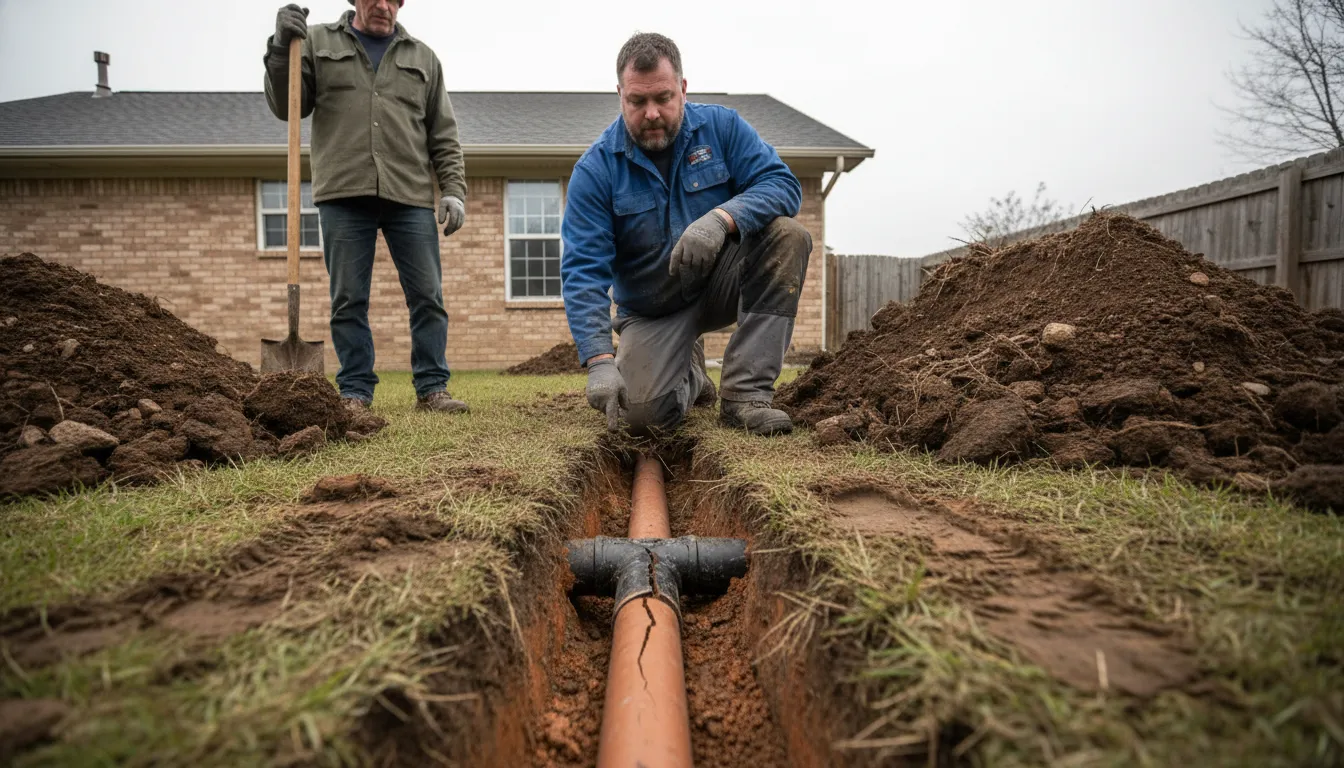
Find the Best Sewer Line Repair Companies for Your Business
No obligation • Fast responses • Nationwide coverage

Why you can trust Search a Plumber
Search a Plumber is a leading United States resource for finding and evaluating professional plumbing services. Our team researches licensing, experience, and customer feedback to create unbiased, fact-driven overviews. Companies cannot pay to change ratings or placement, ensuring homeowners get trustworthy information.
Search providers near you
Top Sewer Line Repair Companies in Chesapeake, Virginia Ranked
A damaged sewer line is a serious issue that can disrupt your home's entire plumbing system and lead to costly property damage. Sewer line repair and replacement are critical services that address blockages, breaks, and deterioration in the main pipe carrying waste from your home to the city's sewer main. For Chesapeake homeowners, understanding local factors like soil conditions, common causes of failure, and modern repair methods is key to making an informed decision. This guide provides the essential information you need to identify problems, evaluate solutions, and connect with qualified local professionals who specialize in this complex work.
Sean Fixes Johns Plumbing
417 Hobart Ave, Virginia Beach, VA 23451
Sean Fixes Johns Plumbing is a locally owned plumbing company serving Virginia Beach, VA, as well as Norfolk and Chesapeake. The business offers a range of plumbing services including sewer camera inspections, water heater installation, sewer line repair, leak detection, and gas line installation. They use modern camera and detection equipment to diagnose and repair sewer line issues efficiently. With over 30 years of experience, Master Plumber Sean Yelton leads the team in providing plumbing solutions for both residential and commercial customers. The company also offers 24-hour emergency plumbing services to address urgent needs.
Richardson Plumbing Co
1469 Butts Station Rd, Chesapeake, VA 23320
Richardson Plumbing Co is a family owned and operated plumbing business serving Virginia Beach, VA, and the Tidewater area since 1988. They provide a wide range of residential and commercial plumbing services including water heater installation and repair, tankless water heater services, drain cleaning, sewer line repair, and gas line installation. The company is licensed and insured, with a Master Plumber and Master Gas Piper on staff, and offers backflow testing and plumbing inspections as part of their expertise.
RPG Plumbing Services
5305 Cleveland St STE 102, Virginia Beach, VA 23462
RPG Plumbing Services is a plumbing company serving Virginia Beach, VA, and the Hampton Roads area. Since 2015, they have provided a range of plumbing services including water heater repair and installation, drain cleaning, hydro jetting, sewer line repair, leak detection, repiping, gas line installation, and toilet repair. Their team holds Class A Contractor licenses, Master plumber and gas fitter certifications, and specialized training such as Navien certification, enabling them to handle both simple and complex plumbing issues. RPG Plumbing Services offers 24/7 emergency plumbing support to address urgent problems at any time.
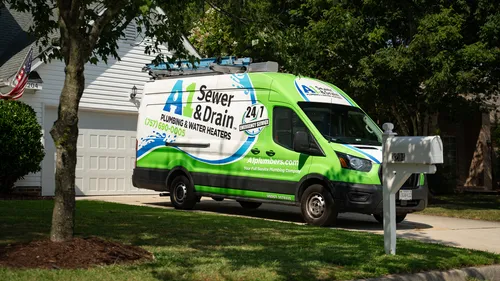
A1 Sewer & Drain Plumbing & Water Heaters
545 S Birdneck Rd Suite 202-E, Virginia Beach, VA 23451
A1 Sewer & Drain Plumbing & Water Heaters provides a wide range of plumbing, sewer, and gas line services in Virginia Beach, VA. Their offerings include sewer camera inspections, water heater installation and repair, drain cleaning, leak detection, repiping, and gas line installation. The company uses advanced diagnostic tools to accurately identify issues and delivers customized solutions for homes and businesses. With nearly four decades of experience since 1987, A1 Sewer & Drain is equipped to handle complex plumbing challenges and offers 24/7 emergency services to the local community.
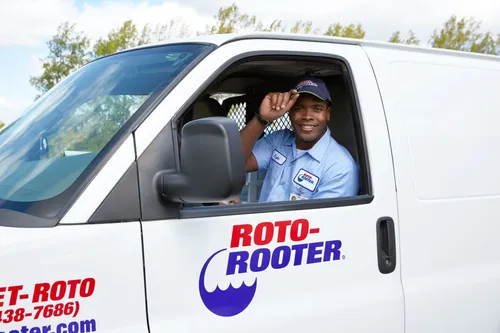
Roto-Rooter Plumbing & Water Cleanup
2428 Almeda Ave Ste 144, Norfolk, VA 23513
Roto-Rooter Plumbing & Water Cleanup provides a wide range of plumbing services in Virginia Beach, VA, including sewer camera inspections, water heater repairs and installations, drain cleaning, and sewer line repairs. They use advanced equipment such as hydro jetting and video camera inspections to diagnose and resolve plumbing issues efficiently. The company offers 24/7 emergency plumbing services to address urgent problems at any time. Their expertise also extends to water softener installation and water filtration systems to improve water quality. Roto-Rooter serves Norfolk and nearby areas with licensed and insured professionals.
Understanding Your Home's Sewer System in Chesapeake
The sewer lateral is the private pipe that runs from your home to the public sewer main, usually located under the street. In Chesapeake, this line typically exits the house at a "kickout" near the foundation and travels through your front yard. Key access points are called cleanouts, which are often white PVC pipes with caps located in flower beds or landscaping 1 2.
Residential sewer lines in our area are generally buried 12 to 24 inches deep, but depth can vary significantly. The pipe may need to be much deeper-sometimes 10 feet or more-depending on the property's grade and the distance to the city connection 3 4. A common challenge for Chesapeake properties, especially in older or densely built neighborhoods, is that the sewer line may run under driveways, sidewalks, or near the root systems of mature trees, complicating access for repairs 5.
Common Causes of Sewer Line Failure
Several factors specific to the Tidewater region can lead to the need for sewer line repair or replacement.
- Tree Root Intrusion: This is a primary culprit, particularly in Chesapeake's older, established neighborhoods. Tree roots are naturally drawn to the moisture and nutrients in sewer pipes, especially at joints. They can infiltrate through small cracks, eventually causing complete blockages or breaking the pipe apart 6.
- Aging Infrastructure: Many homes in Chesapeake still have original sewer lines made of cast iron or clay. Over decades, cast iron can corrode and rust through, while clay pipes are brittle and prone to cracking or collapsing under pressure 7 8.
- Ground Movement and High Water Table: The sandy, moist soil common in our area is prone to shifting and settling. This movement can cause pipes to sag, creating a "belly" where waste collects, or it can misalign joints, leading to leaks and infiltration 9. The high water table can also exacerbate these issues.
- Fat, Oil, and Grease (FOG) Blockages: Improper disposal of cooking fats and oils is a major cause of clogs. These substances solidify inside pipes, narrowing the passage and eventually causing a full blockage, particularly in older, narrower pipes 10.
Modern Sewer Line Repair Methods
Today, homeowners have more options than just digging up the entire yard. The right method depends on the damage's location, extent, and cause.
Trenchless Pipe Lining (Cured-in-Place Pipe or CIPP): This is a popular "no-dig" method. A flexible tube coated with resin is inserted into the damaged pipe through a cleanout. The tube is inflated, pressing the resin against the pipe's interior walls, where it hardens to form a seamless, new pipe within the old one. This method is excellent for fixing cracks, holes, and root intrusion without major excavation 11.
Pipe Bursting: Another trenchless technique used for full replacement. A bursting head is pulled through the old, damaged pipe, fracturing it outward while simultaneously pulling a new, high-density polyethylene (HDPE) pipe into place behind it. This is ideal for replacing severely damaged or undersized pipes without having to dig a long, open trench 12 13.
Traditional Excavation (Open-Trench Repair): This conventional method involves digging a trench along the entire length of the damaged sewer line to expose it for repair or replacement. While it is the most invasive option, it is sometimes necessary for pipes that have completely collapsed, have severe misalignment (bellies), or need to be resized. The major cost consideration with this method in Chesapeake is often the restoration of landscaping, driveways, and sidewalks afterward 14.
Find the perfect sewer line repair companies for your needs
Get personalized recommendations and expert advice
Cost Considerations for Sewer Repair in Chesapeake
Sewer line repair is a significant investment, and costs in Chesapeake can vary widely based on the repair method, the line's depth and length, and the required restoration. It's important to get a detailed, line-item estimate from any professional.
- Diagnostic Camera Inspection: The essential first step, typically costing between $175 and $350. This video inspection accurately identifies the problem's location and nature 15.
- Spot Repair (Trenchless): For a small, localized section of damage, a trenchless spot repair can range from $1,100 to $5,000 16.
- Trenchless Replacement (Lining or Bursting): These methods are usually priced per linear foot. In our area, costs generally range from $60 to $250 per foot, with total project costs often falling between $4,000 and $15,000 or more 17.
- Traditional Excavation (Full Replacement): This method can cost $50 to $450 per foot. When factoring in the high cost of restoring landscaping, concrete driveways, and patios common in Chesapeake, total project costs for a full traditional replacement frequently range from $12,000 to $25,000+ 18 19.
Why Trenchless is Often Preferred in Chesapeake: While the per-foot material cost for trenchless methods can be higher, they are often 30-40% more cost-effective overall when the significant expense of site restoration is factored in 20 21 22. Avoiding the destruction of mature landscaping, sprinkler systems, and paved surfaces makes trenchless repair a financially and aesthetically attractive option for many local homeowners.
Signs You May Need Sewer Line Attention
Don't ignore these warning signs of a potential main sewer line issue:
- Multiple drains in your home (toilets, showers, sinks) are backing up or draining slowly simultaneously.
- You hear gurgling sounds coming from drains or toilets when not in use.
- Sewage odors are present in your yard or coming from floor drains inside the home.
- You notice unusually lush, green patches of grass or sinkholes in your yard, particularly along the suspected path of the sewer line.
- An increase in rodents or insect activity indoors can sometimes indicate an accessible break in the sewer line.
Frequently asked questions
Sources
Footnotes
-
Water and Sewer Service Line Location Requirement - https://www.cityofchesapeake.net/DocumentCenter/View/14150 ↩
-
Fast Plumbing Answers: Find Your Main Sewer Line - Mother - https://www.callmother.com/blogs/fast-plumbing-answers-find-your-main-sewer-line ↩
-
How Deep Are Sewer Lines? - Eyman Plumbing Heating & Air - https://trusteyman.com/blog/how-deep-are-sewer-lines/ ↩
-
How to tell the depth of sewer line if the plumber cant get camera ... - https://www.reddit.com/r/Plumbing/comments/1bkiayg/how_to_tell_the_depth_of_sewer_line_if_the/ ↩
-
Tips for Repair or Replacement of Sewer Lines - Union Sanitary District - https://unionsanitary.ca.gov/wp-content/uploads/2016/04/2022_Homeowner_Brochure_update_9_21_22.pdf ↩
-
7 Common Reasons Sewer Lines Fail & Repair vs Replacement - https://allplumbing.com/7-common-reasons-sewer-lines-fail-and-when-repair-vs-replacement-is-needed/ ↩
-
Common Sewer Line Problems and How to Fix Them - https://chadswaterworks.com/common-sewer-line-problems-and-how-to-fix-them/ ↩
-
From Flush to Flow: The Journey of Sewage Pipes Explained - https://drainblasters.co.za/the-journey-of-sewage-pipes-explained/ ↩
-
Top Causes of Sewer Line Damage and Expert Fixes - https://advancedplumbingsf.com/top-causes-of-sewer-line-damage-and-expert-repairs/ ↩
-
How to Clear a Main Sewer Line Clog in Kirkland Homes? - https://greenhouseplumbing.com/how-to-clear-a-main-sewer-line-clog/ ↩
-
How To Choose The Best Sewer Line Replacement Method: A Comprehensive Guide - https://dirtcheapsewer.com/how-to-choose-the-best-sewer-line-replacement-method/ ↩
-
Trenchless Sewer Repair: Lower Cost, Lower Impact Sewer Repair - https://www.sewerflowllc.com/2025/03/06/trenchless-sewer-repair-lower-cost-lower-impact-sewer-repair/ ↩
-
Broken Sewer Pipe Under House: Causes and Effective Solutions - https://www.benjaminfranklinplumbing.com/league-city/blog/2024/december/broken-sewer-pipe-under-house-causes-and-effective-solutions/ ↩
-
Trenchless Sewer Line Repair vs. Sewer Line Excavation - https://dandfplumbing.com/sewer-line-repair-vs-sewer-line-excavation/ ↩
-
Is Trenchless Sewer Line Repair Cheaper? - https://applumbing.com/blog/is-trenchless-sewer-line-repair-cheaper/ ↩
-
Decoding Trenchless Sewer Repair Costs - Pipeliner Pros - https://pipelinerpros.com/trenchless-sewer-repair-cost/ ↩
-
How Much Does Trenchless Sewer Line Piping Cost? [2026 ... - https://www.angi.com/articles/trenchless-sewer-line-replacement-cost.htm ↩
-
Is Trenchless Sewer Line Repair Cheaper? - AP Plumbing - https://applumbing.com/blog/is-trenchless-sewer-line-repair-cheaper/ ↩
-
Cost to Fix a Sewer Backup in Los Angeles - https://sewerscopeprossfv.com/cost-to-fix-a-sewer-backup-in-los-angeles/ ↩
-
Trenchless vs. Traditional Sewer Repair - https://sewerlinesonly.com/trenchless-vs-traditional-sewer-repair-which-is-more-cost-effective-for-lakewood-homeowners/ ↩
-
Cost Comparison: Trenchless vs. Traditional Sewer Line Repair - https://www.advancedtrenchlesssolutions.com/blog/cost-comparison-trenchless-vs-traditional-sewer-line-repair ↩
-
Sewer Pipe Lining vs Residential Excavation - 128 Plumbing - https://www.128plumbing.com/sewer-pipe-lining-vs-residential-excavation/ ↩