Find the Best Sewer Line Repair Companies for Your Business
No obligation • Fast responses • Nationwide coverage

Why you can trust Search a Plumber
Search a Plumber is a leading United States resource for finding and evaluating professional plumbing services. Our team researches licensing, experience, and customer feedback to create unbiased, fact-driven overviews. Companies cannot pay to change ratings or placement, ensuring homeowners get trustworthy information.
Search providers near you
Top Sewer Line Repair Companies in Houston, Texas Ranked
A damaged sewer line is a serious problem that can disrupt your home, threaten your property, and create health hazards. In Houston, where unique soil conditions and sprawling root systems are common, understanding your repair options is crucial. This guide explains the causes of sewer line failure, details the modern and traditional repair methods available, and provides the information you need to connect with qualified local professionals who can assess your situation and restore proper function to your home's most critical drainage system.
Capital Care Plumbing
17939 Kieth Harrow Blvd, Houston, TX 77084
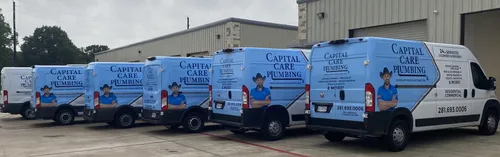
Capital Care Plumbing is a plumbing service provider based in Houston, TX, serving the greater Houston area including Katy, Cypress, and Richmond. They offer a range of plumbing services such as water heater repair and installation, drain cleaning, sewer line repair, and gas line installation. The company has over 20 years of experience since its founding in 2000 and provides 24/7 emergency plumbing services. Capital Care Plumbing emphasizes thorough assessments and efficient repairs to address plumbing issues for both residential and commercial properties.
Brazos Plumbing
1851 Gulf Fwy S #25, League City, TX 77573
Brazos Plumbing is a licensed plumbing service provider based in Houston, TX. They offer a wide range of plumbing solutions including water heater installation and repair, drain cleaning, leak detection, sewer line repair, and plumbing fixture installation. The company serves residential, commercial, retail, and multi-family properties in the Houston area. Brazos Plumbing uses advanced leak detection technology and provides expert sewer line repairs. Their team is experienced and committed to honest and transparent service.
Top Quality Plumbing Services
Houston, TX
Top Quality Plumbing Services is a licensed plumbing company serving Houston, TX. They provide a range of plumbing services including drain cleaning, sewer line repair, leak detection, repiping, and gas line installation for both residential and commercial properties. The company has many years of experience and offers 24-hour emergency service to address urgent plumbing issues at any time. Their team is trained to handle complex plumbing systems and is known for their licensed expertise in the Houston area.
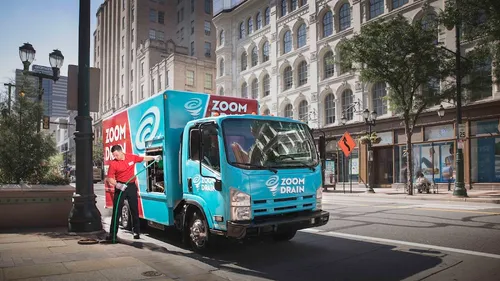
Zoom Drain
1304 Langham Creek Dr suite 466, Houston, TX 77084
Zoom Drain is a plumbing company in Houston, TX, specializing exclusively in drain and sewer services for residential and commercial customers. They offer a range of services including drain cleaning, sewer line repair, sump pump repair, and hydro jetting. Using advanced technology such as camera inspections, they diagnose and address issues efficiently while focusing on preventing future problems. Zoom Drain also provides tailored maintenance plans and specialized services for various sectors including food and hospitality. Their team is known for detailed work and clear communication, handling complex projects like repiping with care and professionalism.
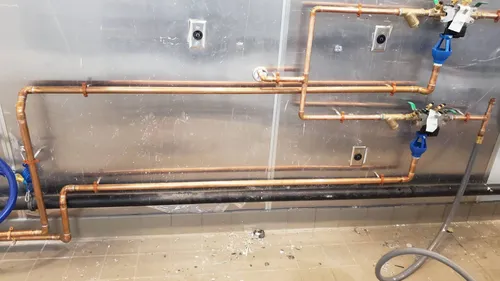
Flow Tech Plumbing
Houston, TX
Flow Tech Plumbing provides a wide range of plumbing services in Houston, TX, including water heater repair and installation, drain cleaning, sewer line repair, gas line installation, and toilet repair. Serving both residential and commercial clients, the company uses modern techniques and technology to diagnose and fix plumbing issues efficiently. Flow Tech Plumbing also offers sewer backup repairs and plumbing fixture installations. The business serves Houston and surrounding areas such as Humble, Katy, and The Woodlands.
Understanding Your Houston Sewer Line
Your main sewer line is the hidden workhorse of your plumbing, carrying all wastewater from your home's drains and toilets underground, across your property, to the city's main sewer connection at the street. When this line is compromised, the effects are immediate and unpleasant. In Houston, several local factors make sewer lines particularly vulnerable.
Common Causes of Sewer Line Damage in Houston:
- Expansive Clay Soil: Houston's famous "black gumbo" clay soil swells significantly when wet and contracts during dry spells. This constant movement puts immense stress on buried pipes, leading to cracks, misalignment, and breaks.
- Tree Root Infiltration: Roots from Houston's many large trees are drawn to the moisture and nutrients in sewer pipes. They can infiltrate through tiny cracks or pipe joints, causing severe blockages and eventually breaking the pipe apart as they grow.
- Aging and Corrosion: Many older Houston homes have original sewer lines made of cast iron or clay tile. Over decades, these materials can corrode, crack, or collapse from the inside out.
- Grease and Debris Buildup: Improper disposal of fats, oils, and grease (FOG) can create solid blockages inside pipes, while non-flushable items can cause immediate clogs that strain the system.
- Ground Shifting: Beyond normal soil expansion, construction activity, flooding, or general settling can cause the ground to shift, leading to pipes sagging or breaking completely.
Modern Repair Methods: Trenchless Technology
For many Houston homeowners, the best news in sewer repair is the advancement of trenchless technology. These methods fix or replace pipes with minimal excavation, preserving your lawn, driveway, and landscaping.
Cured-in-Place Pipe (CIPP) Lining
This is a form of trenchless sewer rehabilitation. A flexible, resin-saturated tube is inserted into the damaged pipe through a small access point. The tube is then inflated, pressing the resin against the interior walls of the old pipe. The resin cures in place, forming a hard, seamless, and corrosion-resistant "pipe within a pipe". This method is excellent for repairing cracks, leaks, and root-damaged sections without digging.
Pipe Bursting
When a pipe is too damaged to simply line, trenchless pipe replacement via bursting is an option. A specialized bursting head is pulled through the old, broken pipe. As it moves, it fractures the old pipe outward while simultaneously pulling a new, high-density polyethylene (HDPE) pipe into place behind it. This completely replaces the old line with a new one of equal or larger diameter, but only requires digging at the entry and exit points.
Advantages of Trenchless Sewer Repair:
- Minimal Disruption: Your yard, driveway, and garden remain largely intact.
- Faster Completion: Most projects can be completed in one to two days.
- Lower Restoration Costs: Since there's no massive trench to refill, you avoid significant costs for sod, concrete, and hardscape repair.
- Durable Result: The new liner or pipe is highly resistant to root intrusion and corrosion.
Limitations of Trenchless Methods: Trenchless solutions are not suitable for every situation. They typically require a navigable path through the old pipe, so a completely collapsed or severely misaligned section may prevent the equipment from passing.
Find the perfect sewer line repair companies for your needs
Get personalized recommendations and expert advice
Traditional Repair: Open-Trench Excavation
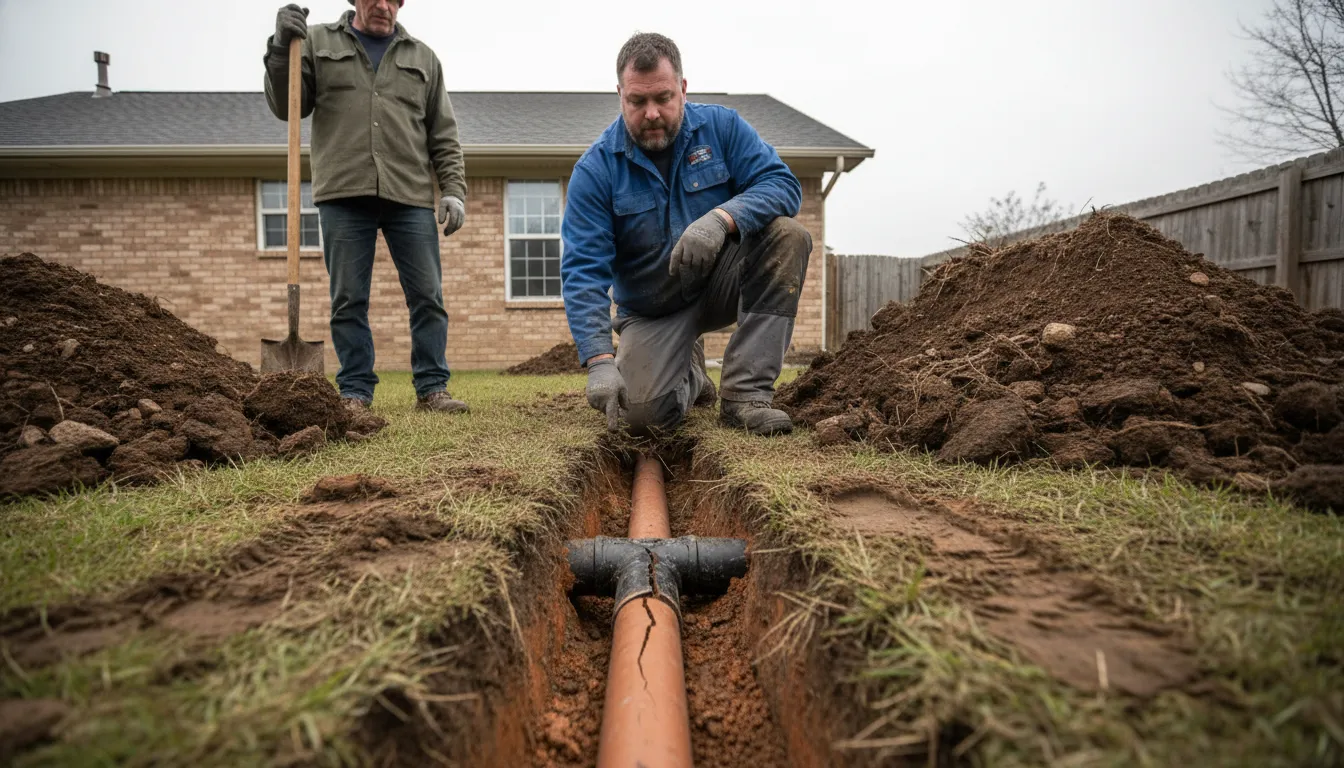
Traditional sewer line excavation remains a necessary and effective method, particularly for the most severe cases of damage. This process involves using heavy equipment to dig a trench along the path of the sewer line to fully expose the damaged section. The old pipe is removed, a new one is installed, and the trench is backfilled 1 2.
When Excavation is the Best Choice:
- Total Pipe Collapse: When the pipe has fully flattened or shattered.
- Severe Misalignment: When sections of pipe have shifted so much they cannot be lined or burst through.
- Complex Layouts or Multiple Failures: In situations with several separate damaged areas.
- Access Limitations: If the pipe's location makes trenchless access points impossible.
Considerations for Traditional Excavation:
- Major Property Disruption: The process creates a large, open trench across your property.
- Longer Project Timeline: Digging, repairing, backfilling, and restoring the landscape takes more time.
- Higher Overall Cost: While the pipe replacement cost per foot can be competitive, the added expense of restoring lawns, sidewalks, driveways, and irrigation systems can make the total project cost significantly higher.
Cost Factors for Sewer Line Repair in Houston
The cost of fixing your sewer line in Houston depends heavily on the chosen method, the extent of damage, and the length and depth of the pipe. Understanding the cost components can help you evaluate estimates.
Trenchless Repair Costs: Trenchless methods like CIPP lining or pipe bursting in Houston generally range from $1,800 to $15,000 or more, with a typical cost between $60 and $250 per linear foot 3. The per-foot cost is often higher than excavation, but the total project cost is frequently lower due to minimal restoration work.
Excavation Repair/Replacement Costs: Traditional dig-and-replace projects typically range from $3,000 to over $25,000, with costs between $50 and $450 per linear foot for the plumbing work itself 4 5 6. The wide range accounts for depth, soil conditions, and obstacles.
Critical Added Cost - Restoration: For excavation projects, you must budget for landscape and hardscape restoration, which can add $1,500 to $8,000 or more to the total bill. This covers sod, replanting, repairing concrete driveways or sidewalks, and fixing fences or sprinkler systems 7 8.
Key Cost Takeaway: When comparing quotes, always look at the total project cost, not just the per-foot plumbing rate. A higher per-foot quote for a trenchless repair that includes no restoration may be far more economical than a lower per-foot excavation quote that requires thousands in landscaping repairs 9 10.
Choosing the Right Solution for Your Home
The decision between trenchless and traditional methods isn't always straightforward. A reputable professional will perform a video camera inspection first to diagnose the exact problem, location, and condition of your pipe. This inspection is the most important step, as it provides the evidence needed to recommend the most effective and cost-efficient repair strategy 11 12.
For many Houston homes with root intrusion, cracks, or minor offsets in otherwise intact pipes, trenchless lining offers a revolutionary solution that saves time, money, and your yard. For severe, total failures, traditional excavation, while disruptive, provides a definitive and versatile fix. The unique geology of your property and the specific nature of the damage will dictate the best path forward.
Frequently asked questions
Sources
Footnotes
-
Expert Sewer Line Repair Services in Houston, TX - https://plumbing.johnmooreservices.com/sewer-line-repair-houston-tx/ ↩
-
Trenchless Sewer Repair vs. Traditional Excavation - AQUALIS - https://aqualisco.com/trenchless-sewer-repair-vs-traditional/ ↩
-
Trenchless Sewer Repair in Houston, TX - NIcks Plumbing - https://www.nicksplumbing.com/services/trenchless-sewer-repair-houston/ ↩
-
How Much Does Sewer Line Replacement Cost in Houston, TX? - https://www.angi.com/articles/how-much-does-sewer-line-replacement-or-repair-cost/tx/houston ↩
-
How Much Does Sewer Line Replacement Cost? [2026 Data] | Angi - https://www.angi.com/articles/how-much-does-sewer-line-replacement-or-repair-cost.htm ↩
-
Trenchless vs. Traditional Sewer Repair - https://sewerlinesonly.com/trenchless-vs-traditional-sewer-repair-which-is-more-cost-effective-for-lakewood-homeowners/ ↩
-
Ultimate Plumbing Cost Guide For Houston Homeowners | Nick's - https://www.nicksplumbing.com/houston-plumbing-cost-guide/ ↩
-
Trenchless Sewer Line: What It Is, How It Works & the Costs - https://www.nicksplumbing.com/what-is-a-trenchless-sewer-line/ ↩
-
Trenchless Sewer Repair vs. Traditional Excavation: Which is Better? - https://alphaenvironmental.net/blog/trenchless-sewer-repair-vs-traditional-excavation-which-is-better/ ↩
-
Cost Comparison: Trenchless vs. Traditional Sewer Line Repair - https://www.advancedtrenchlesssolutions.com/blog/cost-comparison-trenchless-vs-traditional-sewer-line-repair ↩
-
Trenchless Sewer Repair: Lower Cost, Lower Impact Sewer Repair - https://www.sewerflowllc.com/2025/03/06/trenchless-sewer-repair-lower-cost-lower-impact-sewer-repair/ ↩
-
Open Excavation versus Trenchless Repair - T3 Lining Supply - https://www.t3liningsupply.com/blog/open-excavation-versus-trenchless ↩