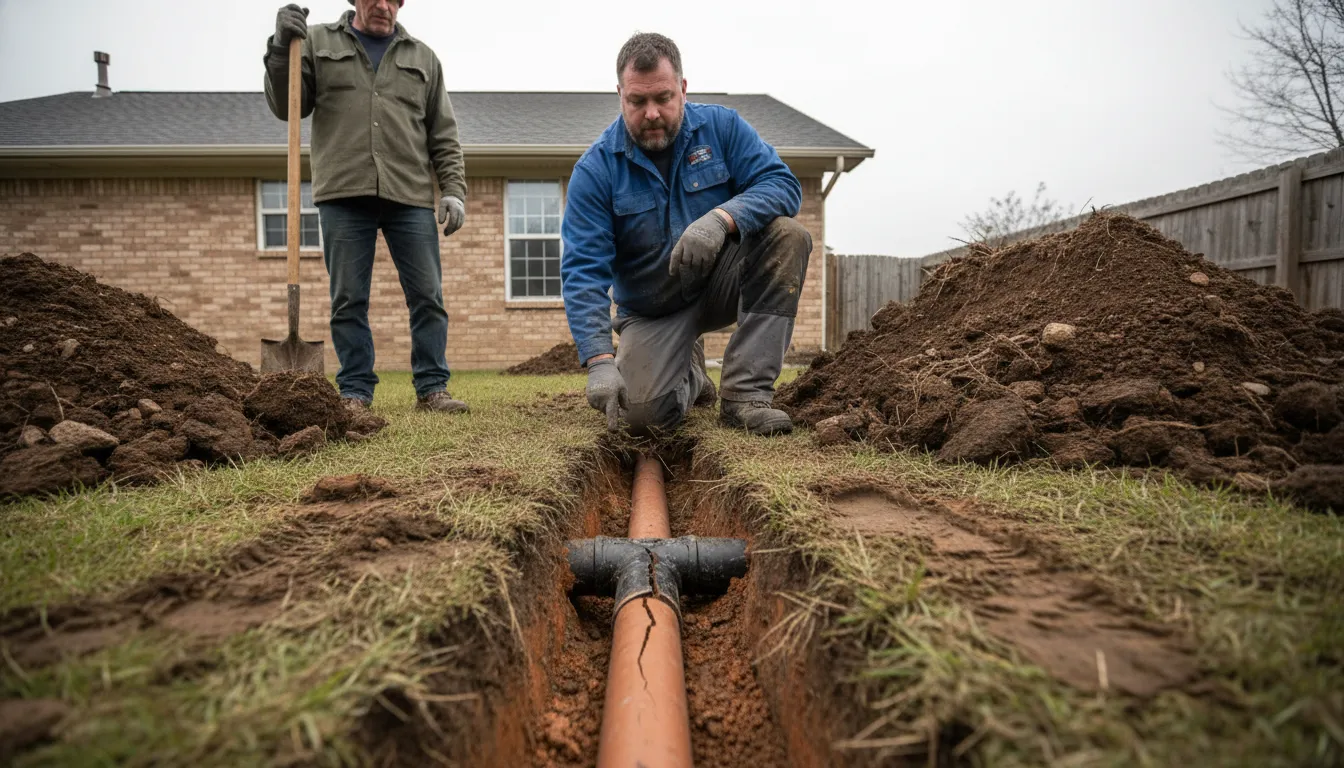
Find the Best Sewer Line Repair Companies for Your Business
No obligation • Fast responses • Nationwide coverage

Why you can trust Search a Plumber
Search a Plumber is a leading United States resource for finding and evaluating professional plumbing services. Our team researches licensing, experience, and customer feedback to create unbiased, fact-driven overviews. Companies cannot pay to change ratings or placement, ensuring homeowners get trustworthy information.
Search providers near you
Top Sewer Line Repair Companies in Coppell, Texas Ranked
A damaged sewer line is a serious issue that can disrupt your home, pose health risks, and lead to costly property damage if ignored. Sewer line repair involves diagnosing and fixing the underground pipe that carries all your home's wastewater away. In Coppell, where soil conditions and aging infrastructure can lead to specific problems, understanding your repair options is crucial. This guide explains the common causes of sewer line failure, the modern repair methods available, and how to find qualified local professionals to restore your system's function with minimal disruption to your property.
Augerpros Plumbing and Drain
206 W McDermott Dr #120, Allen, TX 75013
Augerpros Plumbing and Drain is a licensed and insured plumbing company serving Dallas, TX, and the greater North Dallas area. They provide a wide range of plumbing services including sewer camera inspections, water heater repair and installation, drain cleaning, sewer line repair, leak detection, gas line installation, toilet repair, and garbage disposal repair. The company uses advanced sewer and video equipment to diagnose and address plumbing issues thoroughly. Recognized nationally as a Best of the Best winner for three consecutive years, Augerpros Plumbing and Drain combines decades of technical training with customer-focused service.
Trident Plumbing
15222 King Rd Ste 301, Frisco, TX 75034
Trident Plumbing provides a range of plumbing services in Garland, TX, including water heater repair and installation, tankless water heater services, water softener installation, drain cleaning, sewer line repair, leak detection, and gas line installation. Their team includes Master Plumbers, licensed Journeymen, and Technicians who receive ongoing professional education. Trident Plumbing also offers specialized slab leak detection and repair, supporting both residential and commercial plumbing needs.
Bow Tie Plumbing
1285 N Main St Suite 306, Mansfield, TX 76063
Bow Tie Plumbing is a family-owned plumbing company serving Arlington, TX, and the broader DFW area. With over 50 years of combined experience, they offer a wide range of services including water heater installation and repair, drain cleaning, sewer line repair, leak detection, repiping, and toilet repair. The company uses advanced techniques such as hydrostatic and smoke testing to identify plumbing issues and provides specialized services like tunneling for foundation access. Bow Tie Plumbing is known for transparent pricing, free estimates within 24 hours, and a 1-year labor warranty on their work.
O'Bryan Plumbing Services
800 Fulgham Rd Suite 35, Plano, TX 75093
O'Bryan Plumbing Services is a plumbing company serving Dallas, TX, offering a wide range of plumbing solutions including water heater repair and installation, sewer and drain cleaning, leak detection, and gas line installation. They use advanced technology such as sewer camera inspections to accurately diagnose and address plumbing issues. Established in 1982, O'Bryan Plumbing Services brings decades of experience to their work, providing comprehensive plumbing maintenance and repair services to residential customers.
On Point Plumbing DFW
1145 Hidden Oaks Dr, Bedford, TX 76022
On Point Plumbing DFW provides a range of plumbing services in Dallas, TX, including sewer camera inspections, water heater installations, drain cleaning, sewer line repairs, and leak detection. Serving Bedford, Arlington, Dallas, Fort Worth, Weatherford, Aledo, and surrounding areas, they use advanced cameras and pressure gauges to diagnose plumbing issues accurately. The company combines over 50 years of experience with licensed and insured professionals to deliver code-compliant work. They also offer 24/7 emergency support for urgent plumbing needs.
Understanding Your Sewer Line in Coppell
Your home's main sewer line, or main drain line, is a critical underground pipe that connects your home's plumbing to the municipal sewer system or a private septic tank. In Coppell, the path of this pipe can vary, impacting the complexity and cost of any necessary repairs.
- Under Slab: The pipe runs from your home's foundation out toward the property line. Repairs here can be complex, as they may involve accessing the pipe beneath your home's concrete slab.
- Through the Yard: The most common path, where the pipe travels from the house to the street connection, often underneath lawns and landscaping.
- Under Hardscapes: If the line runs beneath driveways, patios, or sidewalks, repair work becomes more challenging and typically more expensive due to the need to excavate or tunnel under these structures.
Knowing the location and material of your existing pipe is the first step in diagnosing a problem.
Common Causes of Sewer Line Failure
Several factors can lead to a compromised main sewer line. In Coppell and the surrounding North Texas area, these are the most frequent culprits:
- Tree Root Intrusion: This is a leading cause of blockages and damage. Roots from trees and large shrubs are naturally drawn to the moisture and nutrients in sewer pipes. They can infiltrate through small cracks or pipe joints, eventually causing major clogs or breaking the pipe apart 1.
- Aging Pipe Materials: Many older homes in the region have sewer lines made from clay tile, cast iron, or Orangeburg (bituminous fiber conduit). These materials deteriorate over time. Clay can crack and collapse, cast iron corrodes and rusts through, and Orangeburg pipe can flatten and deform 2.
- Ground Movement and Shifting Soil: The expansive clay soil common in Texas is prone to swelling when wet and shrinking when dry. This constant movement can put stress on sewer pipes, leading to misalignment, cracks, or complete breaks.
- Poor Initial Installation or Slope: If the pipe was not installed with a consistent, proper slope (grade), wastewater and solids can collect and cause recurring clogs. Inferior pipe materials or improper joint sealing can also lead to premature failure.
Modern Repair Methods: Trenchless vs. Traditional
When a sewer line fails, you generally have two categories of repair: trenchless (minimally invasive) methods and traditional excavation. The best choice depends on the extent of damage, your pipe's location, and your budget.
Trenchless Sewer Repair
Trenchless technology has revolutionized sewer line fixes by minimizing digging and preserving your property.
- Pipe Lining (Cured-in-Place Pipe - CIPP): A flexible, resin-saturated tube is inserted into the damaged pipe and inflated. The resin cures in place, forming a hard, seamless "pipe within a pipe." This method seals cracks and holes, resists root intrusion, and can extend the pipe's life by 50 years or more.
- Pipe Bursting: This method is used to completely replace a severely damaged line. A bursting head is pulled through the old pipe, fracturing it outward while simultaneously pulling a new, high-density polyethylene (HDPE) pipe into place behind it. It replaces the line without digging a continuous trench 3 4.
Pros of Trenchless Repair:
- Minimal Disruption: Often requires only small access pits at the beginning and end of the line, leaving lawns, driveways, and landscaping largely intact.
- Faster Completion: Most projects can be completed in one to two days.
- Durable Result: The new liner or pipe is highly resistant to roots and corrosion.
- Often More Cost-Effective Overall: While the upfront per-foot cost can be higher, you save significantly on restoration costs like repaving driveways or rebuilding patios.
Cons of Trenchless Repair:
- Not for Every Scenario: It may not be feasible if the pipe has completely collapsed, has severe misalignment, or multiple sharp bends.
- Higher Upfront Material Cost: The specialized materials and equipment can make the initial quote higher than a simple spot dig.
Traditional Excavation (Dig-and-Replace)
This is the conventional method, involving digging a trench along the entire length of the damaged pipe to expose it for repair or replacement.
Pros of Traditional Repair:
- Direct Access: Allows plumbers to see the full extent of the damage and make precise repairs.
- Solution for Severe Damage: The only option for pipes that are fully collapsed or inaccessible to trenchless equipment.
- Lower Upfront Cost for Small Repairs: For a single, localized break that's easily accessible, a simple excavation can be less expensive.
Cons of Traditional Repair:
- Major Property Disruption: Requires digging a long, deep trench through your yard, potentially destroying landscaping, fences, and hardscapes.
- High Restoration Costs: After the pipe is fixed, you must pay to refill the trench, re-sod or re-seed the lawn, and repair concrete, asphalt, or pavers. These costs can add thousands to the project.
- More Labor and Time: The digging, repairing, backfilling, and restoring process is more labor-intensive and can take longer, especially if weather interferes.
Find the perfect sewer line repair companies for your needs
Get personalized recommendations and expert advice
What to Expect: Costs of Sewer Line Repair in Coppell
Sewer line repair is a significant investment, and costs in Coppell can vary widely based on the method, extent of damage, and pipe location. Always start with a professional video camera inspection (usually $250-$500) to get an accurate diagnosis and quote 5 6.
- Spot Repair (Traditional Dig-and-Replace): For a single, accessible break. $1,000 - $4,000+ 7.
- Trenchless Pipe Lining or Bursting: For rehabilitating or replacing a longer section. $3,000 - $12,000+, often calculated at $60 to $250 per linear foot 8.
- Full Traditional Line Replacement: Excavating and replacing the entire line. $4,000 - $15,000+, heavily dependent on length and depth 9.
- Restoration Costs: If traditional excavation is used, add $1,500 to $8,000 or more for repairing driveways, sidewalks, patios, and landscaping 10 11.
Key Takeaway: For many homeowners in Coppell, a trenchless method proves to be the more cost-effective choice in the long run when factoring in the avoided expense and hassle of major landscape and hardscape restoration 12. It's essential to get multiple detailed quotes that outline both the repair and any necessary restoration work.
Choosing a Professional for Your Sewer Repair
Selecting the right contractor is as important as choosing the repair method. Look for a licensed, insured plumbing company with specific experience in sewer line diagnostics and both trenchless and traditional repair. They should perform a video inspection before providing a firm quote and be willing to explain the pros and cons of each option for your specific situation. Check for local references, reviews, and memberships in professional associations.
Frequently asked questions
Sources
Footnotes
-
Trenchless Pipe Repair: Smart Fixes for Sewer Line Problems - https://hydromaxplumbing.com/blog/trenchless-pipe-repair-fixes-for-sewer-line-problems/ ↩
-
Sewer Line Repair Cost in San Antonio: Average Prices & Factors - https://anchorplumbingservices.com/sewer-line-repair-cost/ ↩
-
Dallas Sewer Services - Bacon Plumbing Heating Air Electric - https://www.everyonelovesbacon.com/plumbing-services/sewer-services/ ↩
-
Trenchless Sewer Line Repair vs Traditional: Which Is Better - https://cactusplumbingandair.com/trenchless-sewer-line-repair-vs-traditional/ ↩
-
No Dig Sewer Repair: What to Expect in Fort Worth - Mother - https://www.callmother.com/blogs/no-dig-sewer-repair-fort-worth ↩
-
Sewer Pipe Lining vs Residential Excavation - 128 Plumbing - https://www.128plumbing.com/sewer-pipe-lining-vs-residential-excavation/ ↩
-
Trenchless Sewer Line Replacement - Free Estimates - https://reliantplumbing.com/drains/sewer-system-repair/trenchless-pipe-repair/ ↩
-
Is Trenchless Sewer Line Repair Cheaper? - AP Plumbing - https://applumbing.com/blog/is-trenchless-sewer-line-repair-cheaper/ ↩
-
Dallas Sewer Repair + Replacement Cost Guide - Mother - https://www.callmother.com/blogs/main-sewage-line-replacement-best-texas-guide ↩
-
How Much Does Sewer Line Repair Cost in Dallas? - https://totalplumbing.net/how-much-does-sewer-line-repair-cost-in-dallas/ ↩
-
Trenchless vs. Traditional Sewer Repair - https://sewerlinesonly.com/trenchless-vs-traditional-sewer-repair-which-is-more-cost-effective-for-lakewood-homeowners/ ↩
-
Trenchless Sewer Repair vs. Traditional Excavation - https://tdtplumbing.com/trenchless-sewer-repair/difference-to-traditional-repair/ ↩