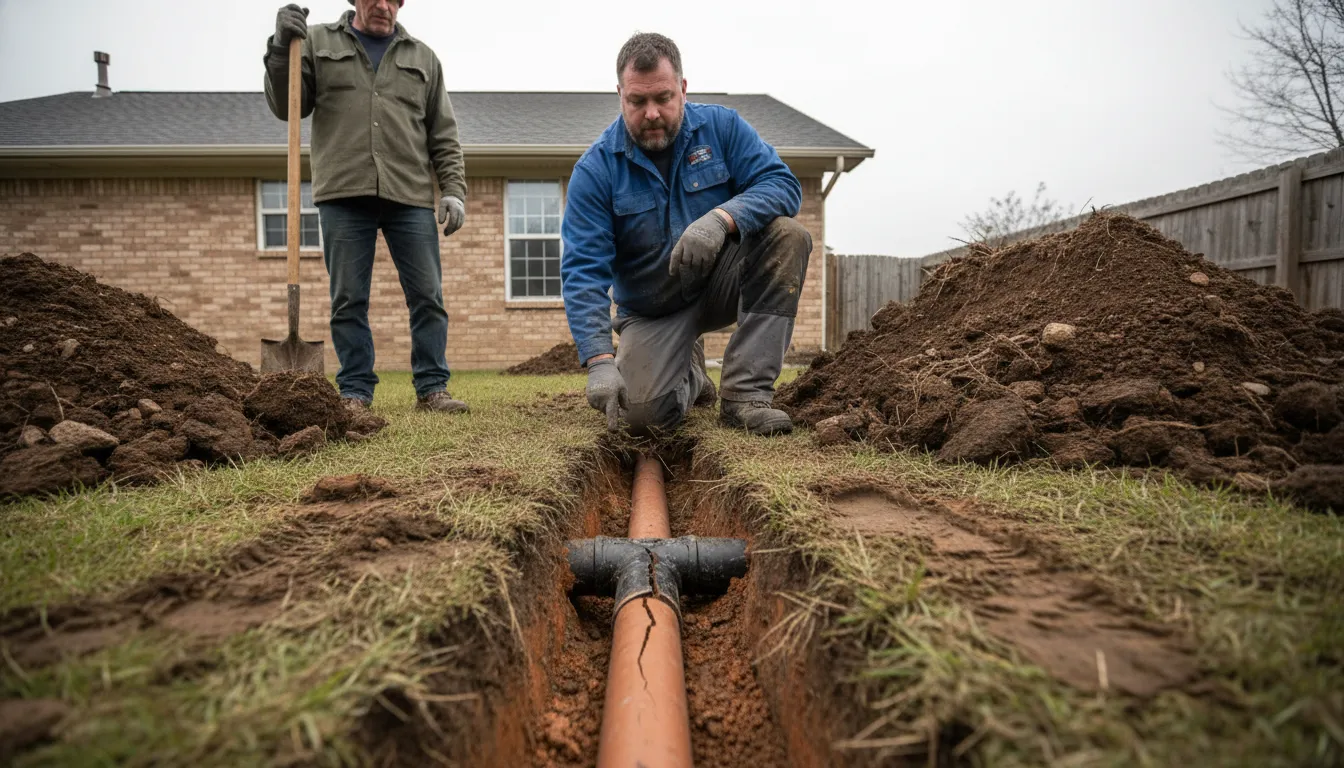
Find the Best Sewer Line Repair Companies for Your Business
No obligation • Fast responses • Nationwide coverage

Why you can trust Search a Plumber
Search a Plumber is a leading United States resource for finding and evaluating professional plumbing services. Our team researches licensing, experience, and customer feedback to create unbiased, fact-driven overviews. Companies cannot pay to change ratings or placement, ensuring homeowners get trustworthy information.
Search providers near you
Top Sewer Line Repair Companies in Parma, Ohio Ranked
A damaged sewer line is a serious issue that can disrupt your home and pose health risks. Sewer line repair involves fixing the underground pipe that carries wastewater from your home to the city's main sewer system. When this critical line fails, it's essential to find a reliable, local professional who can accurately diagnose the problem and recommend the best repair method for your Parma property. This guide will help you understand the common causes, repair options, and costs associated with sewer line issues in our area.
Adelio's Contracting
24971 Rockwell Dr, Euclid, OH 44117
Adelio's Contracting is a plumbing and waterproofing company based in Cleveland, OH, serving residential and commercial customers in Northeast Ohio. They specialize in sewer inspections, drain cleaning, sewer line repairs, basement waterproofing, and foundational repairs. The company has been in business since 1976, offering honest assessments and solutions without high-pressure sales tactics.
Ironclad Plumbing and Drain
Cleveland, OH
Ironclad Plumbing and Drain is a plumbing service provider based in Cleveland, OH. They specialize in sewer camera inspections, sewer line repairs, and gas line installations, along with comprehensive plumbing inspections and kitchen and bath plumbing services. Using advanced video camera technology, they can inspect deep within plumbing systems to identify and address issues with sewer and drainage lines. Their team handles a range of essential utility system projects to maintain the reliability of home infrastructure.
Roto-Rooter Plumbing & Water Cleanup
10574 Ravenna Rd Ste 2A, Twinsburg, OH 44087
Roto-Rooter Plumbing & Water Cleanup provides comprehensive residential and commercial plumbing services in Cleveland, OH. Their offerings include water heater repair and installation, drain cleaning, sewer line repair with trenchless options, leak detection, gas line installation, and garbage disposal repair. The company also specializes in emergency flood cleanup and mold remediation. They use advanced equipment such as hydro jetting for drain cleaning and offer 24/7 availability year-round to handle urgent plumbing needs. Serving the Cleveland area, Roto-Rooter has extensive experience managing complex commercial plumbing systems and residential repairs. Their expertise in trenchless sewer repair minimizes disruption during sewer line work. The company emphasizes prompt emergency response and continuous service availability, ensuring plumbing issues are addressed at any time.
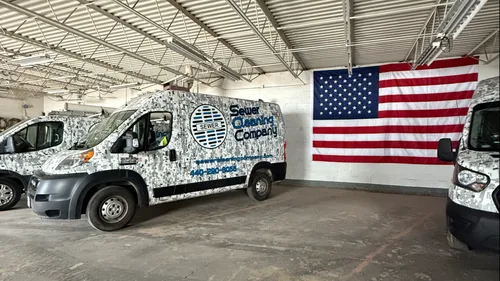
Sewer Cleaning Company
9004 Forest Ln, Chesterland, OH 44026
Sewer Cleaning Company is a plumbing and sewer specialist based in Cleveland, OH, offering 24/7 emergency services. They provide drain cleaning, hydro jetting, sewer line repair, and toilet repair to address various plumbing and sewer issues. The company recently expanded by acquiring Osbourn Plumbing, a business established in 1936, adding to their longstanding expertise. Their team focuses on thorough assessments and clear communication to resolve problems efficiently and safely.
Tom Schaefer Plumbing
4350 Glenbrook Rd, Willoughby, OH 44094
Tom Schaefer Plumbing provides plumbing, heating, and air conditioning services in Cleveland, OH. They offer a range of services including sewer camera inspections, drain cleaning, sewer line repairs, leak detection, and repiping. The company has been family-owned since 1929 and serves both residential and commercial clients. They also provide 24-hour emergency service to address urgent plumbing and HVAC issues promptly.
Common Causes of Sewer Line Failure in Parma
Understanding why your sewer line failed is the first step toward a lasting solution. In Parma, several factors commonly contribute to underground pipe problems.
Tree Root Intrusion: This is a leading cause of blockages and damage. Trees and large shrubs seek moisture, and the small cracks or loose joints in older pipes are an easy target. Roots can infiltrate the line, creating a dense mass that completely blocks flow or exerts pressure that cracks the pipe further.
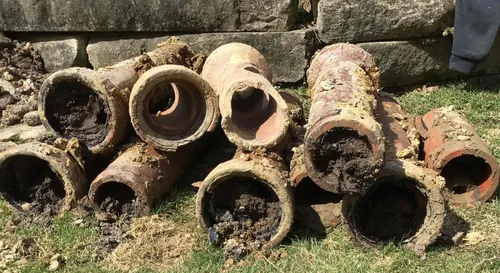
Aging and Corroding Pipes: Many homes in older Parma neighborhoods have original sewer lines made of clay tile or cast iron. Over decades, these materials can degrade. Clay pipes are brittle and prone to cracking from ground movement, while cast iron can rust and corrode from the inside out, eventually collapsing.
Ground Shifting and Soil Conditions: The soil in Northeast Ohio undergoes freeze-thaw cycles and can shift over time. This movement puts stress on underground pipes, potentially causing them to settle unevenly, misalign at the joints, or crack under pressure. Improper backfilling during original installation can accelerate this issue.
Grease, Debris, and Foreign Objects: While not a failure of the pipe itself, the buildup of grease, non-flushable items, or excessive debris can cause severe clogs that mimic or exacerbate a line break, putting additional strain on an already vulnerable system.
Diagnosing Your Sewer Line Problem
Before any repair can be planned, a precise diagnosis is crucial. Modern plumbing professionals use specialized technology to pinpoint issues without guesswork.
Sewer Camera Inspection: This is the industry standard for diagnosis. A plumber will insert a high-resolution, waterproof camera on a flexible rod into your cleanout or through a roof vent. As it travels through the line, it transmits real-time video to a monitor, revealing the exact location, nature, and severity of the problem-be it a root mass, a crack, a collapsed section, or a misaligned joint.
What the Inspection Reveals: The camera inspection tells you everything you need to know: the type of damage (root, crack, collapse), the extent of the damage (a small section vs. the entire line), the material of your existing pipe, and the depth and location of the issue (e.g., under your driveway vs. the middle of the yard). This information is vital for determining whether a trenchless or traditional repair is feasible and for providing an accurate estimate 1.
Repair Methods: Trenchless vs. Traditional
Once diagnosed, your plumbing professional will discuss the best repair strategy. The choice largely comes down to two approaches: modern trenchless technology or traditional excavation.
Trenchless Sewer Repair
Trenchless methods fix the pipe from the inside with minimal digging, typically requiring only two small access pits.
- Pipe Lining (Cured-in-Place Pipe - CIPP): A flexible, resin-saturated liner is inserted into the damaged pipe. It is then inflated and cured with heat or UV light, forming a hard, seamless "pipe within a pipe." This method seals cracks and holes, resists root intrusion, and can be used for pipes with minor to moderate damage.
- Pipe Bursting: This technique is used when the old pipe is too damaged to line or needs to be upsized. A bursting head is pulled through the old pipe, simultaneously fracturing it outward and pulling a new, durable HDPE (high-density polyethylene) pipe into place behind it 2.
Pros of Trenchless Repair:
- Minimal Disruption: Your lawn, landscaping, driveway, and sidewalks remain largely intact.
- Speed: Most trenchless repairs can be completed in one to two days.
- Durability: The new liner or pipe is often more resistant to roots and corrosion than the original.
- Cost-Effective: While the per-foot material cost can be higher, you save significantly on the massive labor and restoration costs associated with digging 3.
Cons of Trenchless Repair:
- Not for All Situations: It may not be suitable for pipes that have completely collapsed, have severe sags (bellies), or are inaccessible.
- Requires Specialized Equipment: Not every plumbing company has the technology or training for trenchless methods.
Traditional Excavation Repair
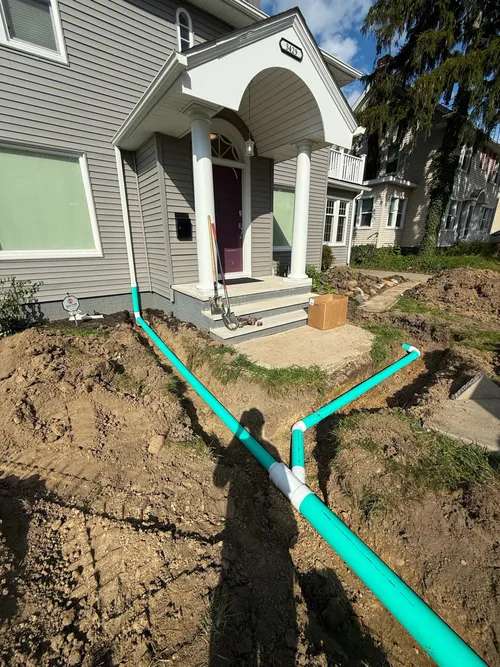
This is the conventional "dig-and-replace" method. A backhoe or other machinery is used to dig a trench along the entire length of the damaged sewer line, exposing it so it can be repaired or replaced section by section.
Pros of Traditional Repair:
- Comprehensive Solution: It allows plumbers to see the entire problem, address severe damage or full collapses, and replace the pipe with entirely new material.
- Universal Applicability: It can be used in almost any situation, regardless of the pipe's condition.
Cons of Traditional Repair:
- Major Property Disruption: It destroys yards, gardens, driveways, and walkways.
- Longer Timeline: The digging, repair, backfilling, and restoration process can take days or even weeks.
- High Restoration Costs: The repair quote often doesn't include the significant added expense of restoring your landscaping, concrete, and other hardscapes 4 5.
Find the perfect sewer line repair companies for your needs
Get personalized recommendations and expert advice
Understanding Sewer Line Repair Costs in Parma
Costs for fixing a sewer main can vary widely based on the repair method, extent of damage, depth, and location of the pipe. Here's a breakdown of what Parma homeowners might expect:
- Diagnostic Camera Inspection: Typically ranges from $250 to $500, but this cost is often applied toward the repair if you proceed.
- Minor Repairs/Spot Repairs: For isolated issues like a single cracked section or root intrusion at one joint, costs can range from $100 to $500 for the repair itself.
- Trenchless Repair (Lining or Bursting): This is usually priced per linear foot. In the Parma area, trenchless sewer repair costs generally fall between $50 and $250 per foot 6 7.
- Traditional Excavation Repair: Also often priced per foot, but the wide range reflects the variable cost of restoration. Traditional digging can cost $50 to $450 or more per foot, with the final bill heavily influenced by the need to repair concrete, sod, or other surfaces 8.
- Full Line Replacement: For a complete replacement of a residential sewer line in Parma, homeowners should budget between $3,000 and $7,000 or more. Complex jobs involving deep lines, long runs, or difficult access (under driveways, pools, or additions) can push costs toward $10,000 to $20,000 9 10.
Important Note: Always get a detailed, written estimate that specifies whether the quote includes the cost of permits, backfilling, and final restoration of your property to its original condition.
How to Choose a Sewer Repair Professional in Parma
Selecting the right contractor is as important as choosing the right repair method.
- Verify Licensing and Insurance: Ensure the company is fully licensed by the state of Ohio and carries both liability insurance and workers' compensation. This protects you and your property.
- Seek Local Experience: A company familiar with Parma's soil conditions, common pipe materials, and local building codes will be more efficient and effective.
- Ask About Technology: Inquire if they perform sewer camera inspections and offer both trenchless and traditional repair options. A company that provides both can give you an unbiased recommendation.
- Get Multiple Quotes: It is highly advisable to get at least three detailed, written estimates. Compare not just the bottom line, but the scope of work, proposed method, materials, warranty, and timeline 11.
- Check Reviews and References: Look at online reviews on independent platforms and ask the company for references from recent, similar jobs in Parma.
Preventing Future Sewer Line Issues
While some failures are inevitable due to age, you can take steps to prolong your sewer line's life:
- Be Mindful of Landscaping: Avoid planting trees with aggressive root systems near your sewer line's path (usually a straight line from your house to the street).
- Dispose of Grease Properly: Never pour cooking fats, oils, or grease down the drain.
- Only Flush the Essentials: Do not flush wipes (even "flushable" ones), feminine hygiene products, paper towels, or other non-biodegradable items.
- Consider Routine Inspections: For older homes, a periodic camera inspection (every few years) can identify small issues before they become catastrophic failures.
Frequently asked questions
Sources
Footnotes
-
Trenchless Sewer Repair | Plumbing Fort Worth - Benjamin Franklin Plumbing - https://benjaminfranklinplumbingfortworth.com/plumbing-blog/trenchless-sewer-repair-plumbing-fort-worth-4/ ↩
-
Trenchless vs. Traditional Sewer Repair - Valu-Rooter Plumbing - https://www.valu-rooter.net/trenchless-vs-traditional-sewer-repair-what-s-best-for-ohio-homes ↩
-
Trenchless vs. Traditional Sewer Repair - https://sewerlinesonly.com/trenchless-vs-traditional-sewer-repair-which-is-more-cost-effective-for-lakewood-homeowners/ ↩
-
Trenchless Sewer Repair vs. Traditional Excavation: Which is Better? - https://alphaenvironmental.net/blog/trenchless-sewer-repair-vs-traditional-excavation-which-is-better/ ↩
-
Trenchless Sewer Line Repair vs Traditional: Which Is Better - https://cactusplumbingandair.com/trenchless-sewer-line-repair-vs-traditional/ ↩
-
Is Trenchless Sewer Line Repair Cheaper? - AP Plumbing - https://applumbing.com/blog/is-trenchless-sewer-line-repair-cheaper/ ↩
-
Decoding Trenchless Sewer Repair Costs - Pipeliner Pros - https://pipelinerpros.com/trenchless-sewer-repair-cost/ ↩
-
Cost Comparison: Trenchless vs. Traditional Sewer Line Repair - https://www.advancedtrenchlesssolutions.com/blog/cost-comparison-trenchless-vs-traditional-sewer-line-repair ↩
-
Cost To Repair Sewer Line: 2023 Options & Affordable Services - https://www.superbrothers.com/cost-to-repair-sewer-line-2023-options-affordable-services/ ↩
-
Understanding Parma Sewer Replacement Cost - Wilson Plumbing - https://www.wilsonplumbingandheating.com/post/parma-sewer-replacement-cost ↩
-
How Much Does a Sewer Line Replacement Cost? - https://www.thisoldhouse.com/plumbing/sewer-line-replacement-cost ↩