Find the Best Sewer Line Repair Companies for Your Business
No obligation • Fast responses • Nationwide coverage

Why you can trust Search a Plumber
Search a Plumber is a leading United States resource for finding and evaluating professional plumbing services. Our team researches licensing, experience, and customer feedback to create unbiased, fact-driven overviews. Companies cannot pay to change ratings or placement, ensuring homeowners get trustworthy information.
Search providers near you
Top Sewer Line Repair Companies in Dayton, Ohio Ranked
A damaged sewer line is a serious issue that can disrupt your home, threaten your property, and impact your family's health. When your main sewer line fails, it's not just a clog-it's a critical infrastructure problem that requires professional expertise. This guide explains what sewer line repair involves, why it's essential for Dayton homeowners, and how you can find qualified local specialists to assess and fix the problem efficiently.
Understanding Your Sewer Line System
Your home's main sewer line is the critical pipe that carries all wastewater from your house to the city's main sewer line in the street. In Dayton, this line typically runs from your home's foundation, under your yard, driveway, or garden, and out to the property line. It's a buried asset you don't think about until something goes wrong. Recognizing that this line is your responsibility from the house to the street connection is the first step in addressing any issues.
Common Causes of Sewer Line Problems in Dayton
Dayton's older housing stock means many homes are connected to aging underground infrastructure. Understanding the root causes can help you identify problems early.
- Old Pipe Materials: Many historic Dayton neighborhoods have original clay tile or cast iron sewer pipes. These materials are prone to cracking, collapsing, and joint failure over decades of use.
- Tree Root Intrusion: This is a leading cause of blockages and damage. Roots seek out moisture and nutrients, infiltrating small cracks or loose joints in pipes. Once inside, they grow, causing severe blockages and eventually breaking the pipe apart.
- Ground Shifting and Age: Ohio's freeze-thaw cycles and general soil settling over time can cause pipes to shift, sag, or break. Simple age and degradation are significant factors, as most pipes have a finite lifespan 1.
- Sewer Gas Odors: A compromised line can allow dangerous sewer gases to escape into your yard or even back into your home through drains, which is a clear sign of a break or crack.
Signs You Need Sewer Line Repair
Don't ignore these warning signals. Early detection can prevent more extensive and costly damage.
- Multiple Slow Drains: If several fixtures (toilets, showers, sinks) are draining slowly at the same time, especially after running water, the problem is likely in the main line, not an individual branch.
- Sewage Backups: The most alarming sign is sewage backing up into floor drains, showers, or toilets. This often occurs when using a washing machine, as the surge of water overwhelms a compromised line.
- Unpleasant Odors: Persistent sewer smells in your yard, basement, or near cleanouts indicate a crack or break in the line.
- Lush or Soggy Patches in Yard: An unexplained, unusually green, soggy, or sunken area in your lawn can signal a leaking sewer line fertilizing and saturating the ground.
- Gurgling Sounds: Hearing gurgling from toilets or drains when water is running elsewhere points to a ventilation or blockage issue in the main line.
Repair Methods: Trenchless vs. Traditional Excavation
Today, homeowners have two primary options for fixing a damaged sewer line. The right choice depends on the pipe's condition, location, and your property's layout.
Trenchless Sewer Repair
Trenchless technology has revolutionized sewer line repair by minimizing digging and disruption. There are two main techniques:
- Pipe Lining (Cured-In-Place Pipe or CIPP): A flexible, resin-saturated tube is inserted into the damaged pipe and inflated. The resin cures in place, forming a hard, seamless "pipe within a pipe." This method seals cracks and holes and resists root intrusion 2.
- Pipe Bursting: A bursting head is pulled through the old, broken pipe, simultaneously fracturing it outward while pulling a new, high-density polyethylene (HDPE) pipe into place behind it. This completely replaces the old line with a new one of equal or larger diameter 3 4.
Pros of Trenchless:
- Minimal Disruption: Requires only small access pits at the beginning and end of the run, preserving landscaping, driveways, and patios.
- Faster Completion: Often completed in a day or two.
- Durable Result: The new liner or pipe is highly resistant to roots and corrosion and can improve water flow.
- Long-Term Value: While sometimes higher in upfront technical cost, it often saves thousands in landscape and hardscape restoration 5.
Cons of Trenchless:
- Not for All Cases: It may not be suitable for pipes that have completely collapsed, have severe misalignment, or are made of certain materials like Orangeburg.
- Higher Initial Tech Cost: The specialized equipment and materials can lead to a higher initial quote compared to a simple, shallow excavation.
Traditional Excavation (Open-Cut Repair)
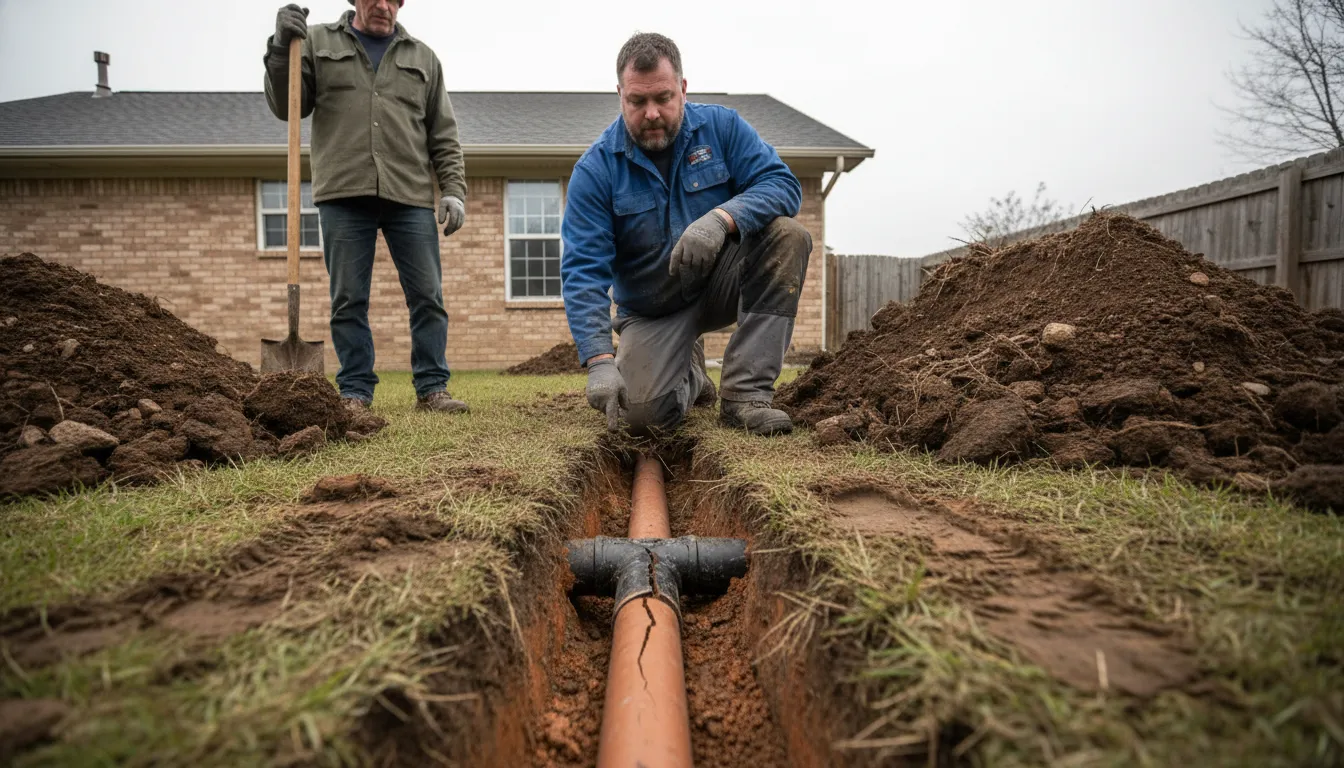
This is the conventional method, involving digging a long, deep trench along the path of the sewer line to fully expose it for repair or replacement.
Pros of Traditional:
- Comprehensive Solution: It is the only method for fixing pipes that are fully collapsed, severely misaligned, or in otherwise irreparable condition.
- Direct Access: Allows for a visual inspection of the entire pipe and the surrounding soil.
- Lower Cost for Simple Jobs: For shallow, easily accessible lines with no obstacles above, the direct labor and material costs can be lower 6.
Cons of Traditional:
- Highly Disruptive: It destroys lawns, gardens, fences, and concrete surfaces like driveways and sidewalks.
- High Restoration Costs: The expense and time to restore your property to its original condition can be significant, often exceeding the repair cost itself.
- Longer Project Time: The digging, repairing, backfilling, and restoring process takes considerably longer.
Find the perfect sewer line repair companies for your needs
Get personalized recommendations and expert advice
Cost Considerations for Dayton Homeowners
Sewer line repair is a significant investment, but understanding the cost factors can help you budget and evaluate quotes. In Dayton, costs vary widely based on the method and scope.
- Traditional Excavation (Open-Cut): Typically ranges from $7,000 to $15,000 or more, often calculated at $60+ per linear foot. The final price heavily depends on the depth, length, and-critically-the cost of restoring landscaping, concrete, or other structures above the line 7.
- Trenchless Lining or Bursting: Generally ranges from $4,000 to $12,000+. While the per-foot cost can be higher, the avoidance of massive restoration work often makes it more cost-effective overall for eligible projects 8 9 10.
Key factors influencing cost include:
- Location: Repairing a line under a concrete driveway, patio, or deep foundation is more complex and expensive than one under a lawn.
- Pipe Length and Depth: Longer and deeper lines require more materials and labor.
- Severity of Damage: A simple crack repaired via lining costs less than a fully collapsed pipe requiring bursting or excavation.
- Pipe Material and Diameter.
- Local Labor Rates and Permits: Dayton may have specific municipal permit requirements for sewer work.
Choosing the Right Service Provider
Selecting a qualified professional is crucial. Look for a licensed, insured plumber or sewer specialist with specific experience in both trenchless and traditional methods. They should conduct a thorough video camera inspection to diagnose the exact problem and location before recommending a solution. Ask for detailed, written estimates that clearly break down repair costs, permit fees, and any potential restoration charges. Check local reviews and ask for references to ensure they have a track record of quality work and clear communication in the Dayton area.
Frequently asked questions
Sources
Footnotes
-
What Is the Life Expectancy of a Sewer Pipe? - https://www.williamsplumbinganddrain.com/what-is-the-life-expectancy-of-a-sewer-pipe/ ↩
-
Trenchless Sewer Services in Dayton - Narrow Path Plumbing - https://www.narrowpathplumbing.com/services/sewer-drain/trenchless-sewers/ ↩
-
Trenchless Sewer Repair | Dayton, OH - https://therightbrothers.com/services/trenchless-sewer-repair/ ↩
-
Trenchless Sewer Repair: Lower Cost, Lower Impact Sewer Repair - https://www.sewerflowllc.com/2025/03/06/trenchless-sewer-repair-lower-cost-lower-impact-sewer-repair/ ↩
-
Trenchless Sewer Repair vs. Traditional Excavation - AQUALIS - https://aqualisco.com/trenchless-sewer-repair-vs-traditional/ ↩
-
Trenchless Sewer Repair vs. Traditional Excavation: Which is Better? - https://alphaenvironmental.net/blog/trenchless-sewer-repair-vs-traditional-excavation-which-is-better/ ↩
-
Dayton Plumbing Service Costs & Prices - ProMatcher Cost Report - https://plumbers.promatcher.com/cost/dayton-oh-plumbers-costs-prices.aspx ↩
-
Sewer Line Repair & Replacement Cost in Dayton, OH - https://cprforpipes.com/sewer-line-replacement-cost-dayton/ ↩
-
Cost Comparison: Trenchless vs. Traditional Sewer Line Repair - https://www.advancedtrenchlesssolutions.com/blog/cost-comparison-trenchless-vs-traditional-sewer-line-repair ↩
-
Decoding Trenchless Sewer Repair Costs - Pipeliner Pros - https://pipelinerpros.com/trenchless-sewer-repair-cost/ ↩