Find the Best Sewer Line Repair Companies for Your Business
No obligation • Fast responses • Nationwide coverage

Why you can trust Search a Plumber
Search a Plumber is a leading United States resource for finding and evaluating professional plumbing services. Our team researches licensing, experience, and customer feedback to create unbiased, fact-driven overviews. Companies cannot pay to change ratings or placement, ensuring homeowners get trustworthy information.
Search providers near you
Top Sewer Line Repair Companies in Akron, Ohio Ranked
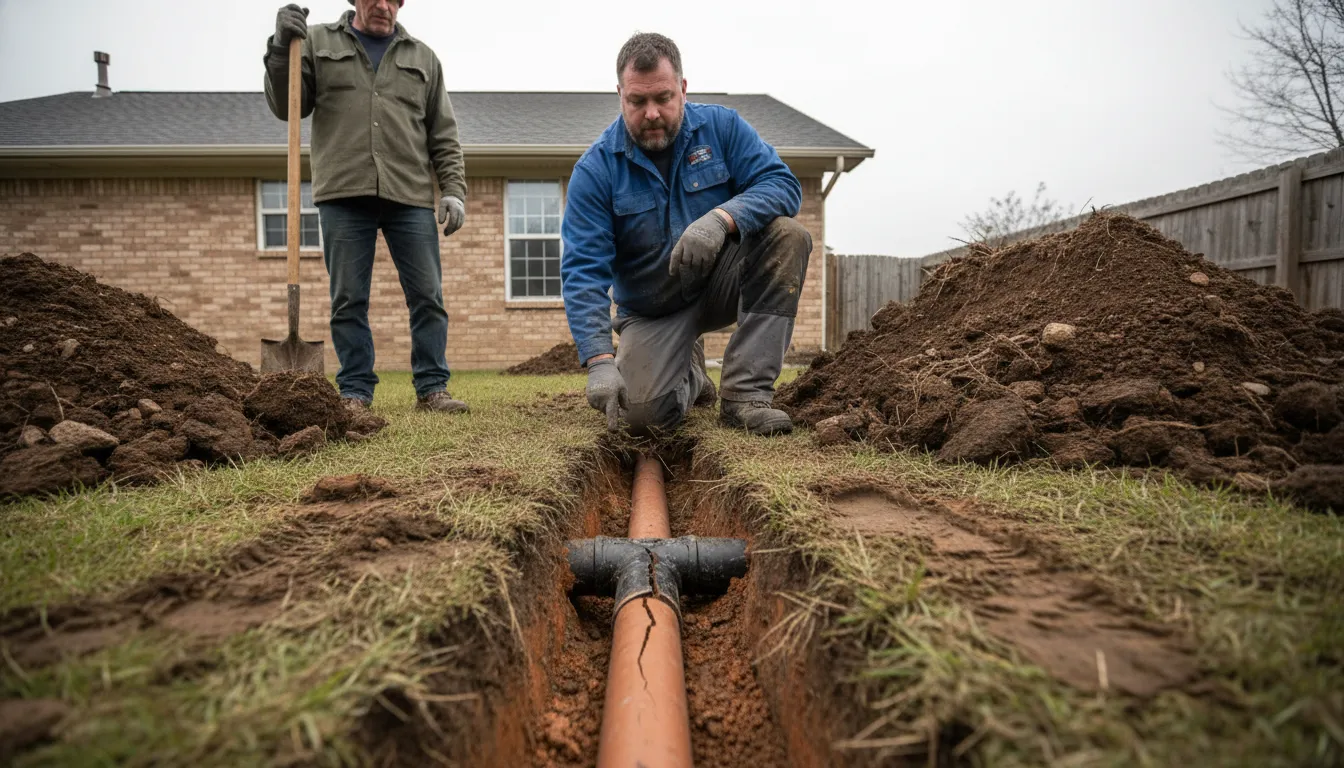
A damaged sewer line is a serious issue that can disrupt your home, threaten your property, and lead to costly consequences. Sewer line repair involves diagnosing and fixing the underground pipe that carries all your home's wastewater to the city main. For Akron homeowners, understanding the common local causes, modern repair methods, and what to expect is crucial for making an informed, cost-effective decision. This guide will help you navigate the process of finding a qualified local specialist to restore your property's essential plumbing function.
Ironclad Plumbing and Drain
Cleveland, OH
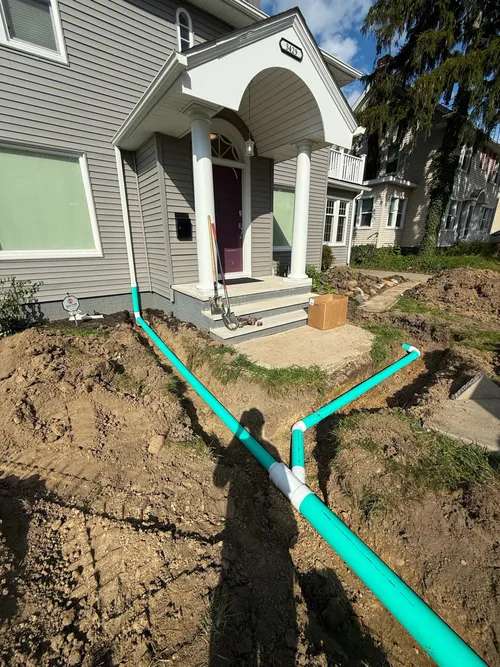
Ironclad Plumbing and Drain is a plumbing service provider based in Cleveland, OH. They specialize in sewer camera inspections, sewer line repairs, and gas line installations, along with comprehensive plumbing inspections and kitchen and bath plumbing services. Using advanced video camera technology, they can inspect deep within plumbing systems to identify and address issues with sewer and drainage lines. Their team handles a range of essential utility system projects to maintain the reliability of home infrastructure.
Roto-Rooter Plumbing & Water Cleanup
10574 Ravenna Rd Ste 2A, Twinsburg, OH 44087
Roto-Rooter Plumbing & Water Cleanup provides comprehensive residential and commercial plumbing services in Cleveland, OH. Their offerings include water heater repair and installation, drain cleaning, sewer line repair with trenchless options, leak detection, gas line installation, and garbage disposal repair. The company also specializes in emergency flood cleanup and mold remediation. They use advanced equipment such as hydro jetting for drain cleaning and offer 24/7 availability year-round to handle urgent plumbing needs. Serving the Cleveland area, Roto-Rooter has extensive experience managing complex commercial plumbing systems and residential repairs. Their expertise in trenchless sewer repair minimizes disruption during sewer line work. The company emphasizes prompt emergency response and continuous service availability, ensuring plumbing issues are addressed at any time.
Roto-Rooter Plumbing & Water Cleanup
5851 Pearl Rd #205A, Parma Heights, OH 44130
Roto-Rooter Plumbing & Water Cleanup provides comprehensive plumbing services in Cleveland, OH, specializing in residential and commercial plumbing solutions. Their offerings include sewer and drain cleaning, water heater repair and installation, leak detection, garbage disposal repair, and trenchless sewer line repair. They use advanced equipment such as video inspection cameras and hydro-jetting technology to diagnose and resolve plumbing issues efficiently. Roto-Rooter also offers 24/7 emergency plumbing services to address urgent problems like burst pipes and sewer backups. Serving Cleveland and surrounding counties, Roto-Rooter is a licensed and insured provider dedicated to maintaining reliable plumbing systems.
Plunger Plumber
5265 Commerce Pkwy W, Cleveland, OH 44130
Plunger Plumber is a family-owned plumbing company serving Cleveland, OH, and the surrounding Northeast Ohio region for over 20 years. They provide a wide range of plumbing services including sewer camera inspections, drain cleaning, gas line installation and repair, water heater installation and repair, sump pump services, and trenchless sewer line repairs. Their skilled team uses advanced technology such as hydro jetting and sewer camera inspections to diagnose and resolve plumbing issues efficiently. Plunger Plumber offers 24/7 emergency services, particularly for gas line repairs, ensuring safety and prompt response for urgent plumbing needs.
Harner Plumbing
2480 Bartlett Rd, Mantua, OH 44255
Harner Plumbing is a full-service plumbing company serving Cleveland, OH, and the surrounding Northeast Ohio region. They provide a wide range of services including plumbing repairs, water heater installation and repair, drain cleaning, sewer line repair, and trenchless sewer solutions. Their capabilities include advanced sewer video inspection and hydro jetting to effectively address tough blockages and pipe issues without extensive excavation. Harner Plumbing serves both residential and commercial clients and has built a reputation over many years for reliable and licensed plumbing work.
Understanding Your Akron Home's Sewer System
The main sewer line, or sewer lateral, is a critical but out-of-sight component of your home. It runs underground from where it exits your home's foundation, typically beneath your yard, driveway, or landscaping, and connects to the municipal sewer main located under the street. This pipe handles all the wastewater from your toilets, sinks, showers, and appliances. When it fails, the problems can surface inside your home as multiple slow drains, gurgling sounds, or sewage backups, or outside as soggy patches, foul odors, or sinkholes in your yard.
Common Causes of Sewer Line Failure in Akron
Akron's older housing stock and mature landscapes contribute to specific, frequent issues. Identifying the root cause is the first step toward a proper fix.
- Tree Root Intrusion: This is a leading problem in established neighborhoods. Roots from trees and large shrubs are naturally drawn to the moisture and nutrients in sewer pipes. They can infiltrate through tiny joints or cracks, creating dense blockages and eventually applying pressure that cracks or collapses the pipe.
- Corrosion and Deterioration: Many Akron homes built before the 1970s have sewer lines made of cast iron or vitrified clay tile. Over decades, cast iron can rust and corrode from the inside out, narrowing the pipe. Clay tiles are brittle and can crack from ground movement or root pressure.
- Ground Shifting and Settlement: Ohio's freeze-thaw cycles and soil conditions can cause the ground to shift. This movement puts stress on sewer pipes, leading to cracks, misaligned joints (where sections separate), or even complete collapses 1.
- Bellied Pipes: A section of the pipe can sink due to soil erosion or improper initial installation, creating a low spot where waste and solids collect, leading to chronic blockages.
- General Age and Wear: Like any material, pipes have a finite lifespan. Clay and cast iron pipes can last 50-100 years, but beyond that, failure becomes increasingly likely.
Diagnosing the Problem: The Essential Camera Inspection
Before any repair can be planned, an accurate diagnosis is non-negotiable. Modern specialists use a high-resolution, waterproof video camera snaked through the sewer line. This inspection, which typically costs between $175 and $350 in the Akron area, allows the technician to see the exact condition, location, and cause of the problem in real-time. You'll be able to see the footage, which provides definitive proof of issues like root masses, cracks, offsets, or corrosion. This step is critical for determining whether a repair is possible or if a full replacement is necessary, and for recommending the most effective method.
Modern Repair Methods: Trenchless vs. Traditional
Once the issue is identified, you'll have two primary repair avenues: trenchless technology or traditional excavation. The right choice depends on the damage's nature, location, and extent.
Trenchless Sewer Repair
Trenchless methods are often the preferred solution for Akron homes because they minimize disruption to your property. These techniques repair or replace the pipe from the inside with minimal digging.
- Pipe Lining (Cured-In-Place Pipe or CIPP): A flexible, resin-saturated tube is inverted or pulled into the damaged pipe. It is then inflated and cured using heat or UV light, forming a hard, seamless "pipe within a pipe." This method is excellent for sealing cracks, fixing root intrusion, and correcting minor misalignments. It can be completed in a day and is incredibly durable 2.
- Pipe Bursting: This technique is used when the old pipe is too damaged to line or needs to be upsized. A bursting head is pulled through the old pipe, fracturing it outward while simultaneously pulling in a new, high-density polyethylene (HDPE) pipe of equal or larger diameter. It's a true replacement with minimal excavation, only requiring small access pits at the beginning and end of the run.
Pros of Trenchless: Minimal landscaping, driveway, or sidewalk destruction; often completed in 1-2 days; less restoration cost and hassle; highly durable, root-resistant new lining; can be more cost-effective long-term when factoring in restoration 3. Cons of Trenchless: Higher upfront material cost; may not be suitable for pipes that have completely collapsed or have severe sags/offsets; requires a cleanable path to install the liner.
Traditional Excavation (Open-Trench Repair)
This is the conventional method, involving digging a long, deep trench along the entire length of the sewer line to physically remove the old pipe and install a new one.
Pros of Traditional: Can be the lower initial cost for the repair itself; sometimes necessary for severely collapsed pipes or complex situations where trenchless isn't feasible 4 5. Cons of Traditional: Highly invasive, destroying lawns, gardens, patios, and driveways; project timeline extends to days or weeks due to digging and restoration; final cost escalates significantly when adding backfill, sod, concrete, and asphalt work 6 7.
Find the perfect sewer line repair companies for your needs
Get personalized recommendations and expert advice
Cost Considerations for Akron Homeowners
Sewer line repair is a significant investment, but costs vary widely based on the method, pipe length, depth, and accessibility. Here's a general breakdown for the Akron area, though you should always get detailed, written estimates.
- Diagnostic Camera Inspection: $175 - $350.
- Minor Spot Repairs: For a single cracked section, costs can range from $250 to $4,000, depending on depth and access.
- Trenchless Pipe Lining: Often priced per foot, ranging from approximately $135 to $150 per foot. A typical project can cost between $1,900 and $6,000+ 8.
- Trenchless Pipe Bursting: Also typically per foot, ranging from $150 to $190 per foot. A full replacement project often falls between $6,000 and $12,000+ 9 10.
- Traditional Excavation & Replacement: The pipe replacement itself may cost $50 to $73+ per foot. However, for a full 30-50 foot line replacement, total costs including excavation and restoration can easily range from $7,500 to over $30,000 11 12 13.
Important Note: While the initial quote for traditional digging might seem lower, the added cost of restoring your landscape, concrete, or asphalt can make it equal to or more expensive than a trenchless solution in the long run. Always ask what is included in the estimate and factor in the value of your time and property disruption.
Choosing a Specialist in Akron
Selecting the right professional is as important as choosing the method. Look for a licensed, insured plumbing contractor with specific, proven experience in sewer line diagnostics and both trenchless and traditional repair. They should perform a camera inspection and review the footage with you before recommending a solution. Check for local references, reviews, and memberships in professional associations. A reputable specialist will provide a clear, detailed written estimate, explain the warranties on both labor and materials, and help you navigate any necessary permits.
Frequently asked questions
Sources
Footnotes
-
Trenchless Sewer Repair in Wadsworth & Akron, OH - https://mackinandsonsplumbing.com/plumbing/trenchless-sewer-repair/ ↩
-
Trenchless Sewer Line Repair vs Traditional: Which Is Better - https://cactusplumbingandair.com/trenchless-sewer-line-repair-vs-traditional/ ↩
-
Trenchless Sewer Repair in Akron, OH - C. Lee Services - https://cleeservices.com/service-areas/akron/trenchless-sewer-repair/ ↩
-
Trenchless vs. Traditional Sewer Repair - Valu-Rooter Plumbing - https://www.valu-rooter.net/trenchless-vs-traditional-sewer-repair-what-s-best-for-ohio-homes ↩
-
Trenchless Sewer Repair vs. Traditional Excavation: Which is Better? - https://alphaenvironmental.net/blog/trenchless-sewer-repair-vs-traditional-excavation-which-is-better/ ↩
-
Trenchless Sewer Repair: Lower Cost, Lower Impact Sewer Repair - https://www.sewerflowllc.com/2025/03/06/trenchless-sewer-repair-lower-cost-lower-impact-sewer-repair/ ↩
-
Trenchless Sewer Repair vs. Traditional Excavation - https://tdtplumbing.com/trenchless-sewer-repair/difference-to-traditional-repair/ ↩
-
Is Trenchless Sewer Line Repair Cheaper? - AP Plumbing - https://applumbing.com/blog/is-trenchless-sewer-line-repair-cheaper/ ↩
-
Cost Comparison: Trenchless vs. Traditional Sewer Line Repair - https://www.advancedtrenchlesssolutions.com/blog/cost-comparison-trenchless-vs-traditional-sewer-line-repair ↩
-
How Much Does Trenchless Sewer Line Piping Cost? [2026 Data] - https://www.angi.com/articles/trenchless-sewer-line-replacement-cost.htm ↩
-
The Cost of Sewer Line Replacement: What to Expect - https://dirtcheapsewer.com/the-cost-of-sewer-line-replacement/ ↩
-
How Much Does It Cost to Repair a Sewer Line: A Breakdown - https://yoderplumbing.com/how-much-does-it-cost-to-repair-a-sewer-line-a-breakdown/ ↩
-
Akron Plumbing Service Costs & Prices - ProMatcher Cost Report - https://plumbers.promatcher.com/cost/akron-oh-plumbers-costs-prices.aspx ↩