Find the Best Sewer Line Repair Companies for Your Business
No obligation • Fast responses • Nationwide coverage

Why you can trust Search a Plumber
Search a Plumber is a leading United States resource for finding and evaluating professional plumbing services. Our team researches licensing, experience, and customer feedback to create unbiased, fact-driven overviews. Companies cannot pay to change ratings or placement, ensuring homeowners get trustworthy information.
Search providers near you
Top Sewer Line Repair Companies in Brick, New Jersey Ranked
A damaged sewer line is a serious issue that can disrupt your home's entire plumbing system and lead to messy backups or property damage. When your main sewer line fails, it requires specialized repair or replacement to restore proper flow from your home to the municipal system. This guide explains the common causes of sewer problems in Brick, the modern repair methods available, and how you can find qualified local specialists to assess and fix your underground pipe issues.
BJC Clifton Plumbers
Newark, NJ
BJC Clifton Plumbers provides a wide range of plumbing services in Newark, NJ, including water heater repair and installation, water softener installation, sump pump repair, drain cleaning, sewer line repair, leak detection, toilet repair, and garbage disposal repair. They also specialize in boiler system maintenance, repair, and installation, offering thorough inspections and repairs to ensure efficient heating. The company serves both residential and commercial clients and offers 24/7 emergency plumbing services to address urgent needs promptly. Their team is equipped to handle general plumbing repairs, fixture replacements, and new construction plumbing installations with professional-grade products.
All Year Plumbing Heating and Air Conditioning
Jersey City, NJ
All Year Plumbing Heating and Air Conditioning provides comprehensive plumbing, heating, and HVAC services in Jersey City, NJ. They serve both residential and commercial clients, offering repairs, installations, and maintenance for water heaters, boilers, furnaces, air conditioners, drains, and sewer lines. The company is equipped to handle emergency situations with 24/7 availability and a 30-minute emergency response time. Their certified technicians are trained to work on all major HVAC brands and use advanced diagnostic tools to ensure proper service. All Year Plumbing Heating and Air Conditioning also offers specialized capabilities such as sewer line repair and drain cleaning to maintain system functionality and prevent property damage.
Understanding Your Home's Sewer System
The sewer line, or main drain line, is a crucial but hidden component of your home. It carries all wastewater from your toilets, sinks, showers, and appliances out to the public sewer main, usually located under the street. In Brick, these pipes typically run underground from your home's foundation, beneath your yard, driveway, or landscaping, to the municipal connection point. Because it's buried, problems often go unnoticed until a significant blockage or failure occurs, making it important to understand the signs of trouble.
Common Causes of Sewer Line Failure in Brick
Several factors specific to the Brick area and older New Jersey homes contribute to underground pipe problems. Recognizing these causes can help you identify issues early.
- Tree Root Intrusion: This is a major issue in established neighborhoods with mature trees. Roots seek out moisture and can infiltrate tiny cracks or loose joints in pipes, eventually growing inside and causing complete blockages or breaking the pipe apart.
- Aging and Corroding Pipes: Many homes in the region were built with clay tile or cast iron sewer pipes. Over decades, these materials can crack, collapse, or corrode from the inside, leading to reduced flow and eventual failure.
- Grease and Debris Buildup: Pouring fats, oils, and grease (FOG) down drains is a common culprit. These substances solidify inside cooler pipes, catching other debris and creating stubborn blockages that put pressure on the pipe walls.
- Ground Movement and Temperature Shifts: New Jersey's freeze-thaw cycles and soil shifting over time can cause pipes to settle improperly, misalign at joints, or crack from the pressure 1.
Modern Diagnostic Tools: The Sewer Camera Inspection
Before any repair begins, a proper diagnosis is essential. Today, specialists use high-resolution, waterproof video cameras mounted on flexible rods. This camera is fed into the sewer line through a cleanout access, providing a real-time view of the pipe's interior on a monitor. This inspection identifies the exact location, nature, and severity of the problem-whether it's a root mass, a belly (sagging section), a crack, or a collapsed pipe 2. This critical step ensures the correct and most cost-effective repair method is chosen.
Repair Method 1: Trenchless Sewer Repair
Trenchless technology has revolutionized sewer line repair by minimizing excavation. These methods are often faster and cause far less disruption to your property.
How It Works: Instead of digging a long trench, technicians create one or two small access holes at the beginning and end of the damaged section. There are two primary trenchless techniques:
- Cured-In-Place Pipe (CIPP) Lining: A flexible, resin-saturated tube is inverted or pulled into the old pipe. It is then inflated and cured with heat or UV light, forming a hard, seamless "pipe within a pipe."
- Pipe Bursting: A conical bursting head is pulled through the old, damaged pipe, fracturing it outward while simultaneously pulling a new, high-density polyethylene (HDPE) pipe into place behind it.
Advantages of Trenchless Repair:
- Minimal Property Damage: Your lawn, driveway, and landscaping remain largely intact.
- Speed: Most trenchless repairs can be completed in one to two days.
- Durability: The new pipe liners or HDPE pipes are resistant to roots and corrosion and can have a lifespan of 50 years or more.
- Lower Long-Term Cost: While the upfront technology cost can be higher, you save significantly on the extensive landscape and hardscape restoration required with traditional digging.
Considerations: Trenchless methods require a structurally sound host pipe to line. They may not be suitable for pipes that have completely collapsed, have severe misalignment, or were improperly installed originally.
Find the perfect sewer line repair companies for your needs
Get personalized recommendations and expert advice
Repair Method 2: Traditional Excavation Repair
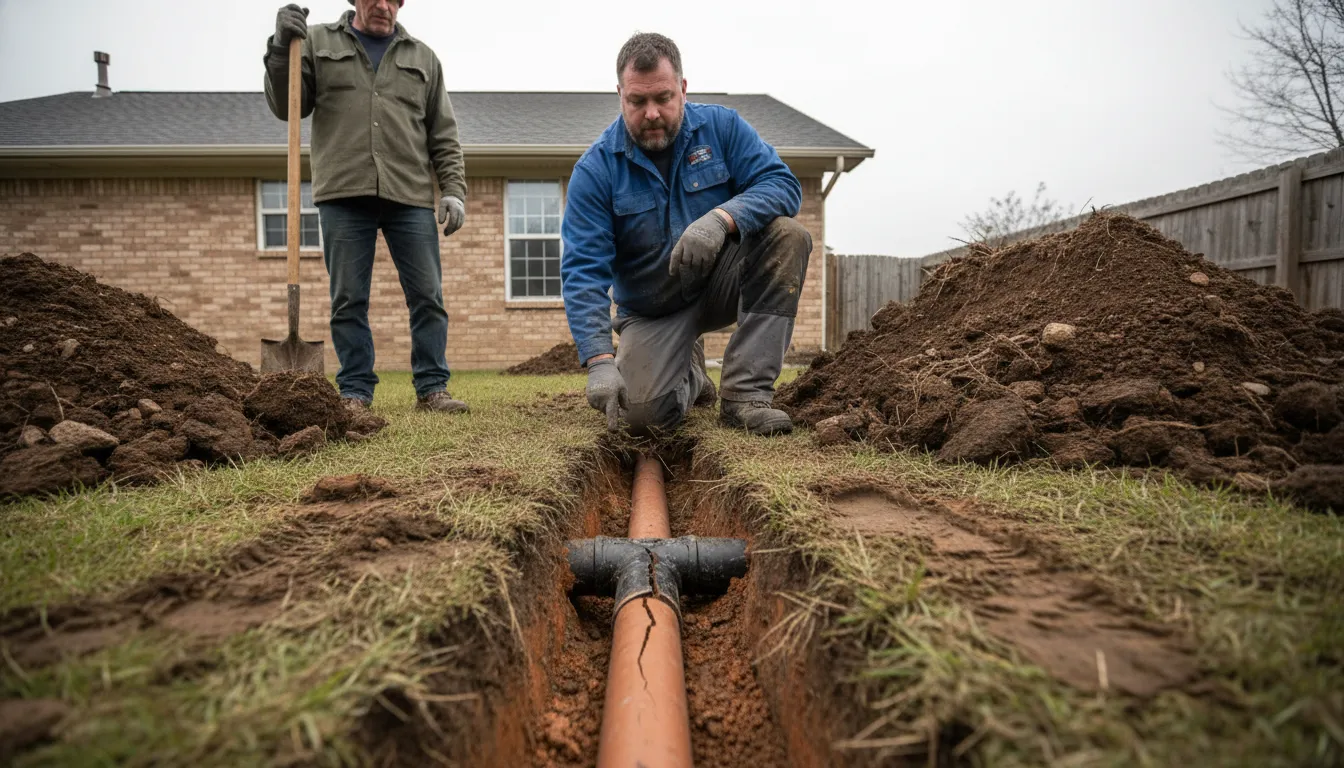
Also known as "dig and replace," this is the conventional method where a trench is excavated along the entire length of the damaged pipe to expose it, remove it, and install a new one.
When It's Necessary: Traditional excavation is often the only viable solution for sewer lines that have suffered a total collapse, have multiple severe failures, or are in locations where trenchless equipment cannot be used.
Drawbacks to Consider:
- Major Property Disruption: The process involves digging a deep, long trench across your yard, which can destroy landscaping, patios, and even sections of driveway 3.
- Time-Consuming: The digging, repair, backfilling, and subsequent restoration of your property can take days or even weeks 4.
- High Restoration Costs: The repair bill must also include the significant cost of restoring your yard, replanting, and repairing concrete or asphalt, which can add thousands to the total project cost.
Understanding Sewer Line Repair Costs in Brick
Costs vary widely based on the repair method, the length and depth of the pipe, and the difficulty of access. Here are general price ranges to help you understand the investment:
- Trenchless Repair (CIPP/Pipe Bursting): Often ranges from $70 to $250 per foot. For a typical 20-foot repair section, this could translate to a project cost between approximately $1,100 and $5,000 5.
- Traditional Excavation Repair: The pipe replacement itself may range from $50 to $450 per foot, but this does not include the substantial added costs for landscape and hardscape restoration, which can easily run into the thousands 6 7 8.
- Point Repair: For a very small, isolated section of damage, a localized "point repair" (which can sometimes be done with minimal excavation) might cost between $300 and $600, offering significant savings over a full line replacement 9.
It's important to get detailed, written estimates that clearly separate line repair costs from any necessary restoration work.
Choosing the Right Solution for Your Brick Home
For most homeowners in Brick facing common issues like root intrusion, cracks, or minor bellies, trenchless sewer repair offers a faster, cleaner, and often more cost-effective long-term solution 10 11. The minimal disruption is a significant advantage. However, a professional camera inspection is the non-negotiable first step to determine the true condition of your line. A qualified specialist will review the video with you and recommend the most appropriate method-whether it's a trenchless liner, pipe bursting, or, in cases of severe damage, targeted excavation.
Frequently asked questions
Sources
Footnotes
-
Common Causes of Sewer Line Problems in New Jersey - ICUNJ - https://icunj.us/articles/common-causes-sewer-line-problems-new-jersey.html ↩
-
Efficient Trenchless Sewer Line Repair in Northern New Jersey - https://russobrosplumbing.com/sewer/trenchless/ ↩
-
Trenchless Pipe Repair vs Traditional: Which Is Better? - https://www.bullseyeleak.com/blog/trenchless-pipe-repair-vs-traditional/ ↩
-
Trenchless Sewer Repair vs. Traditional Excavation: Which is Better? - https://alphaenvironmental.net/blog/trenchless-sewer-repair-vs-traditional-excavation-which-is-better/ ↩
-
Is Trenchless Sewer Line Repair Cheaper? - AP Plumbing - https://applumbing.com/blog/is-trenchless-sewer-line-repair-cheaper/ ↩
-
Trenchless Sewer Repair: Lower Cost, Lower Impact Sewer Repair - https://www.sewerflowllc.com/2025/03/06/trenchless-sewer-repair-lower-cost-lower-impact-sewer-repair/ ↩
-
Sewer Line Replacement Cost: 2025 Data - NJ Pipe Doctor - https://njpipedr.com/blog/sewer-line-replacement-cost/ ↩
-
How Much Does It Cost to Replace a Sewer Line? [2025 Data] - https://www.homeadvisor.com/cost/plumbing/repair-a-sewer-main/ ↩
-
Empower Your Decision: Decoding Trenchless Sewer Repair Costs - Pipeliner Pros - https://pipelinerpros.com/trenchless-sewer-repair-cost/ ↩
-
Trenchless vs. Traditional Sewer Repair - https://sewerlinesonly.com/trenchless-vs-traditional-sewer-repair-which-is-more-cost-effective-for-lakewood-homeowners/ ↩
-
Pipe Lining Cost & Benefits | Expert Plumbing by Benjamin Franklin - https://www.benjaminfranklinplumbing.com/league-city/blog/2024/december/how-much-does-pipe-lining-cost-a-detailed-cost-breakdown/ ↩