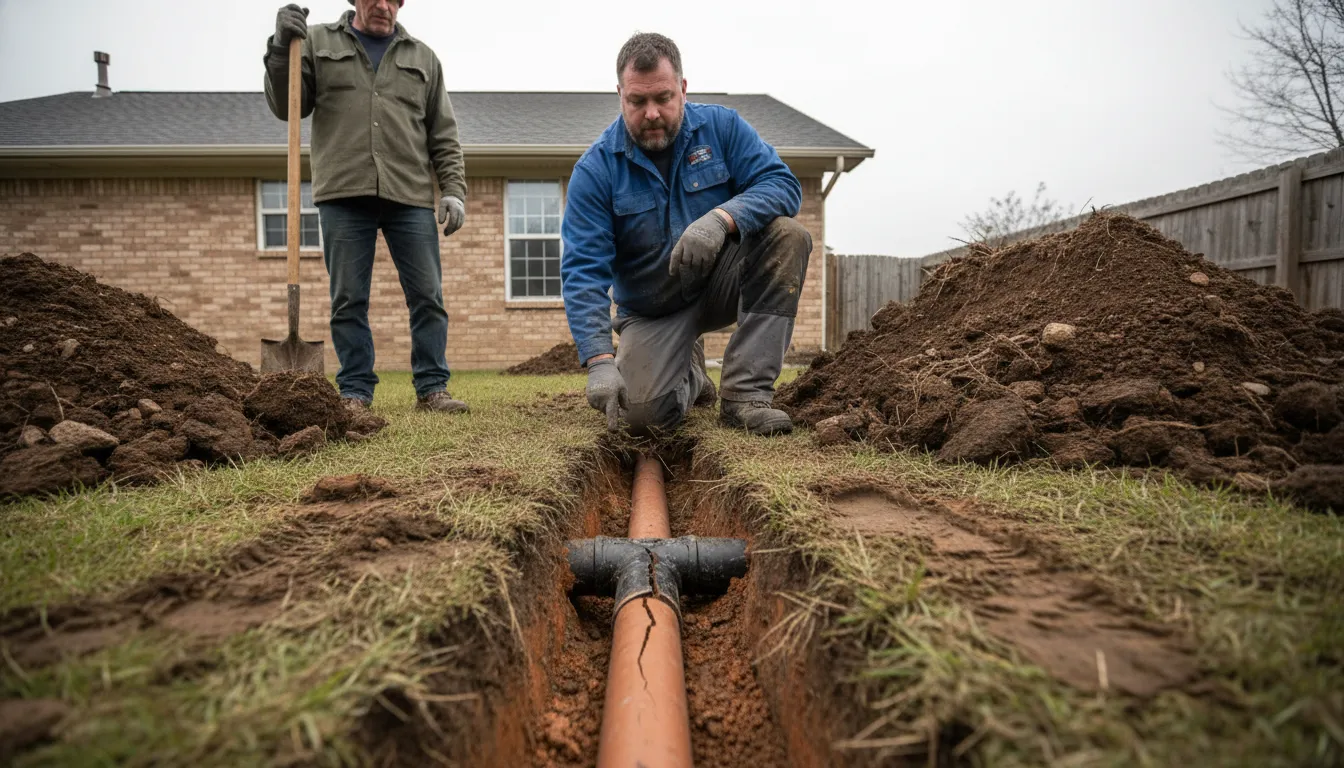
Find the Best Sewer Line Repair Companies for Your Business
No obligation • Fast responses • Nationwide coverage

Why you can trust Search a Plumber
Search a Plumber is a leading United States resource for finding and evaluating professional plumbing services. Our team researches licensing, experience, and customer feedback to create unbiased, fact-driven overviews. Companies cannot pay to change ratings or placement, ensuring homeowners get trustworthy information.
Search providers near you
Top Sewer Line Repair Companies in Omaha, Nebraska Ranked
A damaged sewer line is a serious issue that can disrupt your home, threaten your property, and create health hazards. Sewer line repair involves diagnosing and fixing the underground pipe that carries all your home's wastewater to the city's main sewer line. When this critical line fails, you need a reliable, expert solution. This guide will help you understand the common problems, repair methods, and what to look for when finding a qualified professional in Omaha to restore your home's essential plumbing function.
SmithPro Plumbing
1217 Royal Dr, Papillion, NE 68046
SmithPro Plumbing is a locally owned plumbing contractor serving Omaha, NE, and the surrounding areas. With over 25 years of experience, they provide a wide range of plumbing services including water heater repair and replacement, sewer and drain cleaning, gas line installation and repair, leak detection, sump pump repair, and water softener installation. Their team uses advanced technology to ensure plumbing systems operate efficiently and safely. SmithPro Plumbing offers same-day appointments and completes service calls within 24 hours, backed by a one-year labor warranty.
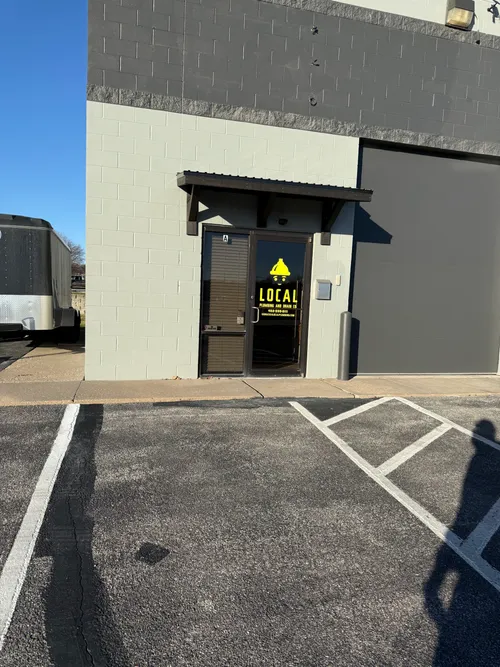
Local Plumbing and Drain Company
705 N Frontier Rd, Papillion, NE 68046
Local Plumbing and Drain Company is a plumbing service provider based in Omaha, NE, offering a range of services including water heater repair and installation, drain cleaning, sewer line repair, and leak detection. With over 10 years of experience, the company emphasizes quality workmanship and accountability, handling everything from minor leaks to full installations. They focus on building long-term customer relationships and use the latest industry techniques and technology.
PlumbRite
4403 Florence Blvd, Omaha, NE 68110
PlumbRite is a licensed plumbing contractor serving Omaha, NE, offering a wide range of services including water heater repair and installation, water softener installation, sump pump repair, drain cleaning, sewer line repair, leak detection, repiping, and gas line installation. With over 20 years of experience, PlumbRite handles both residential and commercial plumbing needs, providing 24/7 emergency service to address urgent repairs. Their team includes skilled technicians who also teach at vocational schools, ensuring work is done accurately and up to code. The company also offers plumbing protection plans for ongoing maintenance and coverage.
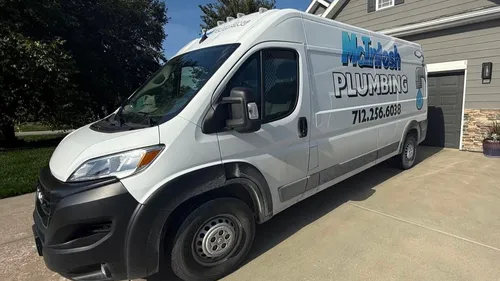
McIntosh Plumbing
110 S 18th St, Council Bluffs, IA 51501
McIntosh Plumbing is a licensed plumbing service provider based in Omaha, NE, offering a wide range of residential and commercial plumbing solutions. Their services include water heater repair and installation, tankless water heater servicing, water softener installation, drain cleaning, sewer line repair, leak detection, and garbage disposal repair. They provide 24/7 emergency plumbing services to address urgent issues promptly. McIntosh Plumbing stands behind their work with a one-year workmanship warranty, ensuring quality and reliability for their customers.
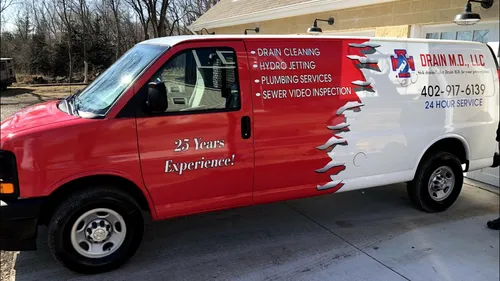
Drain M.D., LLC
5808 N 16th St, Omaha, NE 68110
Drain M.D., LLC is a plumbing and drain cleaning company based in Omaha, NE. They offer services including drain cleaning, hydro jetting, and sewer line repair to keep plumbing systems functioning properly. The company uses hydro jetting to effectively remove stubborn debris and buildup from pipes. Drain M.D., LLC is available 24/7 to address plumbing emergencies whenever they arise.
Understanding Your Omaha Sewer Line
Your home's main sewer line, or main drain line, is the primary conduit for all wastewater from your toilets, sinks, showers, and appliances. In Omaha, this pipe typically runs from your home's foundation to the city's main sewer line located at the street. It's buried several feet underground, which is why problems often go unnoticed until significant symptoms appear. Understanding its location and common failure points is the first step in addressing sewer line issues.
Common Causes of Sewer Line Failure
Several factors can lead to a sewer line breakdown in the Omaha area:
- Root Intrusion: This is a leading cause. Tree and shrub roots are naturally drawn to the moisture and nutrients inside sewer pipes. They can infiltrate through tiny cracks or pipe joints, eventually growing and creating blockages or causing the pipe to crack and collapse.
- Aging and Corrosion: Many older Omaha homes have sewer lines made of cast iron, clay, or Orangeburg pipe. Over decades, these materials can corrode, crack, or simply wear out, leading to leaks and failures.
- Ground Shifting: Nebraska's soil can shift due to freeze-thaw cycles, erosion, or general settling. This movement puts stress on underground pipes, potentially causing misalignment, cracks, or breaks 1.
- Clogs and Buildup: While often associated with drain lines inside the home, severe clogs from grease, foreign objects, or mineral scale can also occur in the main sewer line, restricting flow and increasing pressure.
Signs You Need Sewer Line Repair
Don't ignore these warning signs of a compromised main sewer line:
- Multiple Drain Backups: If more than one plumbing fixture (e.g., a toilet and a basement drain) is backing up simultaneously, it strongly points to a problem in the main line, not an individual drain.
- Slow Drains Throughout the House: When all your sinks, tubs, and toilets drain slowly, the common culprit is the main sewer line.
- Unpleasant Odors: Foul sewage smells in your yard, near drains, or in your basement are a clear indicator of a leak or break in the line.
- Unusual Lawn Conditions: Soggy, sunken, or inexplicably lush patches of grass in your yard, especially along the suspected path of the sewer line, can signal a leaking pipe.
- Gurgling Sounds: Hearing gurgling noises from your toilets or drains when using other fixtures suggests a ventilation or blockage issue in the main line.
Modern Repair Methods: Trenchless vs. Traditional
Today, homeowners in Omaha have two primary options for sewer line restoration: modern trenchless technologies and traditional excavation. The best choice depends on the damage's extent, your property's layout, and your budget.
Trenchless Sewer Repair
Trenchless technology has revolutionized sewer line repair by minimizing disruption. Instead of digging a long, deep trench, technicians use specialized equipment to repair or replace the pipe from the inside through small access points.
How Trenchless Pipe Lining Works (Cured-in-Place Pipe): A flexible, resin-saturated tube liner is inserted into the damaged pipe. It is then inflated, pressing the liner against the host pipe's interior walls. The resin is cured (often with hot water or UV light), forming a hard, durable, jointless "pipe within a pipe" 2.
How Pipe Bursting Works: This method is for full replacement. A bursting head is pulled through the old, damaged pipe, fracturing it outward while simultaneously pulling a new, high-density polyethylene (HDPE) pipe into place behind it.
Pros of Trenchless Repair:
- Minimal Disruption: Your lawn, driveway, landscaping, and hardscaping remain largely intact. There's no need for massive excavation 3.
- Faster Completion: Many trenchless repairs can be completed in a day or two, compared to the extended timeline of excavation and restoration.
- Durability: The new liner or pipe is highly resistant to root intrusion and corrosion, with a lifespan often exceeding 50 years.
- Long-Term Value: While the upfront repair cost may be higher, you save thousands on landscape, concrete, and hardscape restoration, making it cost-effective overall.
Cons of Trenchless Repair:
- Not for All Situations: If the pipe has completely collapsed or has severe misalignment, trenchless methods may not be feasible, as they require a guide path 4.
- Higher Upfront Repair Cost: The specialized materials and equipment can make the initial quote for the repair itself higher than a simple excavation job.
Traditional Excavation Repair
This is the conventional method, involving digging a trench along the entire length of the damaged sewer pipe to expose it for repair or replacement.
Pros of Traditional Excavation:
- Direct Access: Provides complete visual and physical access to the entire pipe, which is beneficial for complex or severe damage.
- Universal Solution: It can address any type of failure, including total collapses, and allows for the replacement of any pipe material with a new one.
Cons of Traditional Excavation:
- Highly Disruptive: It requires digging up your yard, and potentially driveways, walkways, or gardens. The restoration afterward is a significant, separate project 5.
- Time-Consuming: The process involves digging, repairing, backfilling, and then the lengthy (and costly) process of restoring the landscape or hard surfaces.
- Higher Overall Cost: When you factor in the cost of repairing a torn-up lawn, repaving a driveway, or rebuilding a patio, the total project cost can far exceed that of a trenchless repair.
Find the perfect sewer line repair companies for your needs
Get personalized recommendations and expert advice
Cost Considerations for Sewer Line Repair in Omaha
The cost of sewer line repair or replacement in Omaha varies widely based on the method, the extent of damage, the pipe's length and depth, and the required permits. It's crucial to get detailed, written estimates that outline all costs.
- Overall Project Range: A full sewer line replacement in Omaha can range from $700 to over $5,800, with many projects falling in the $2,200 - $3,200 range.
- Cost by Method:
- Traditional Excavation: Often priced at $50 to $200 per linear foot. This price typically does not include the substantial added cost of restoring landscaping, concrete, or other surfaces destroyed during digging 6.
- What Influences Price: Key factors include the location of the break (under a driveway vs. the middle of the lawn), the depth of the pipe, local permit fees, the need for new cleanouts, and the time of year.
Choosing a Qualified Omaha Professional
Selecting the right contractor is as important as choosing the repair method. Look for a licensed, insured, and experienced plumbing specialist in sewer line work.
- Specialization: Seek out companies that specifically advertise sewer line repair, trenchless technology, or excavation services. They will have the proper equipment and expertise.
- Inspection First: A reputable professional will always perform a video camera inspection of your sewer line first. This is non-negotiable. It provides a clear diagnosis, shows the exact location and nature of the problem, and helps determine the best repair method.
- Detailed Estimates: Get written estimates from at least two or three companies. The estimate should detail the proposed method (including brand names of materials like liner), the cost breakdown, the project timeline, and a clear explanation of what is and isn't included (e.g., permit fees, restoration).
- Warranties: Ask about warranties on both the labor and the materials. A strong warranty on a trenchless liner (often 50 years) reflects confidence in the product and workmanship.
Frequently asked questions
Sources
Footnotes
-
Main Line vs. Drain Line Issues: Signs & Solutions in Omaha, NE - https://www.mrrooter.com/omaha/about-us/blog/2022/november/main-sewer-line-vs-drain-line-issues-signs-solut/ ↩
-
Trenchless Sewer Line Repair Services | Omaha Drain - https://www.omaha-drain.com/plumbing/sewer-pipe-repair/trenchless ↩
-
4 Reasons to Consider Trenchless Technologies - ICC - https://www.iccsafe.org/building-safety-journal/bsj-technical/4-reasons-to-consider-trenchless-technologies/ ↩
-
What Are The Pros and Cons of Trenchless Sewer Repair? - https://www.southernairnow.com/blog/what-are-the-pros-and-cons-of-trenchless-sewer-repair/ ↩
-
Sewer Pipe Lining vs Residential Excavation: Homeowner Guide - https://www.128plumbing.com/sewer-pipe-lining-vs-residential-excavation/ ↩
-
How Much Does a Sewer Line Replacement Cost? - This Old House - https://www.thisoldhouse.com/plumbing/sewer-line-replacement-cost ↩
-
Trenchless Sewer Repair & Replacement in Omaha - https://www.americanrooter.biz/trenchless-sewer-repair-replacement/ ↩
-
Trenchless Sewer Services in Omaha, NE - https://www.justcallburton.com/drains-sewers/trenchless-sewer-services/ ↩
-
Sewer Line Replacement in Omaha, NE - Costs 01 / 2026 - Homeyou - https://www.homeyou.com/ne/sewer-line-replacement-omaha-costs ↩