Find the Best Sewer Line Repair Companies for Your Business
No obligation • Fast responses • Nationwide coverage

Why you can trust Search a Plumber
Search a Plumber is a leading United States resource for finding and evaluating professional plumbing services. Our team researches licensing, experience, and customer feedback to create unbiased, fact-driven overviews. Companies cannot pay to change ratings or placement, ensuring homeowners get trustworthy information.
Search providers near you
Top Sewer Line Repair Companies in Grand Island, Nebraska Ranked
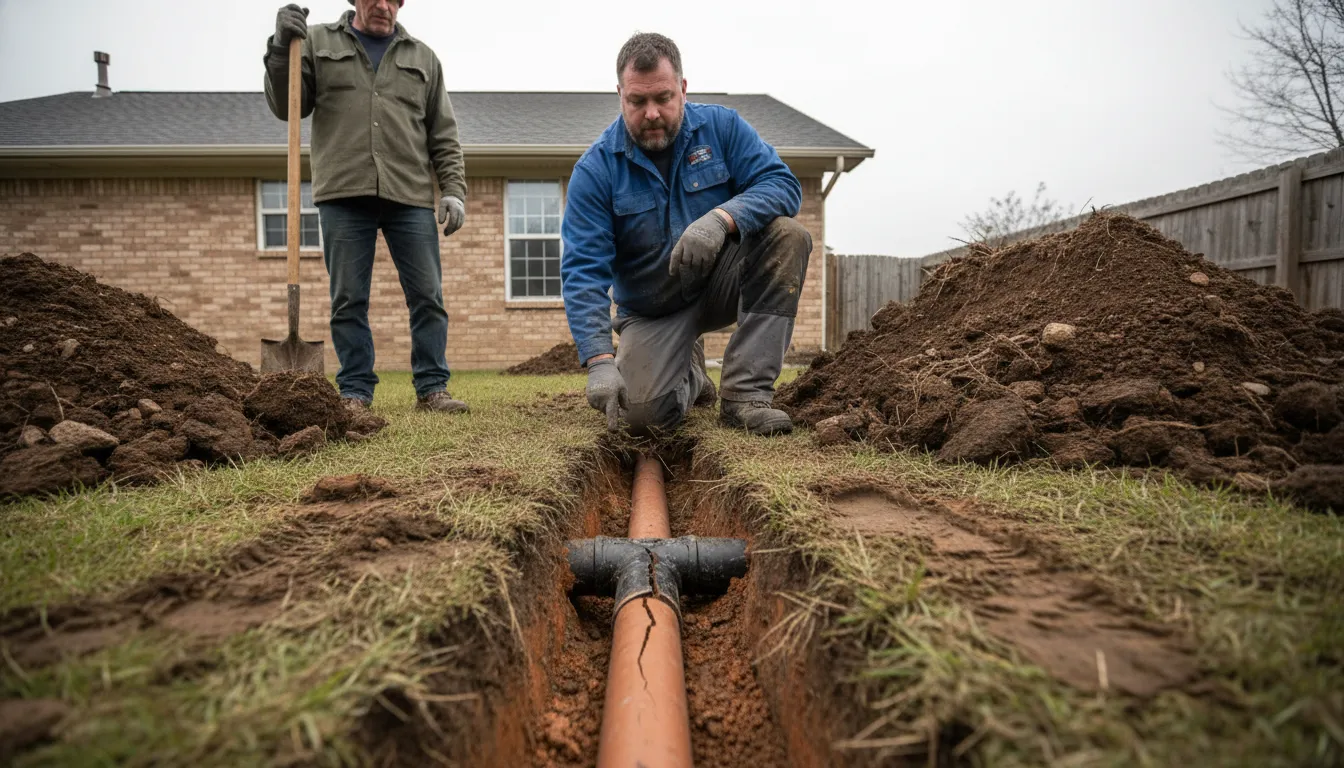
Dealing with a sewer line problem can be a stressful and disruptive experience for any homeowner. When your main sewer line is damaged, it affects the entire home's plumbing system, leading to slow drains, backups, and potential property damage. In Grand Island, common issues like aging cast iron pipes, invasive tree roots, and shifting Nebraska soils make sewer line repair a critical service for maintaining a safe and functional home. This guide will help you understand your options, from traditional excavation to modern trenchless methods, so you can make an informed decision when selecting a local professional to restore your property's essential infrastructure.
Understanding Your Sewer Line System
Your home's sewer line is a crucial underground pipe that carries all wastewater from your house to the city's main sewer line. In Grand Island, these pipes typically run from your home's foundation, underneath your front or backyard, driveway, or patio, before connecting to the municipal main in the street or alley. Knowing the location and material of your pipe is the first step in diagnosing a problem. Most older homes in the area were built with cast iron pipes, which are durable but prone to corrosion and eventual failure over decades of use 1. Other common local issues include intrusion from tree roots seeking moisture, which is prevalent in neighborhoods with mature trees, and damage from the heavy, shifting soils native to Nebraska.
Common Signs You Need Sewer Line Repair
How do you know if you have a sewer line issue and not just a simple clog? Several warning signs indicate a problem with the main line itself:
- Multiple Drain Backups: If more than one fixture (like a toilet, shower, and sink) is backing up simultaneously, especially on the lowest level of your home, the issue is likely in the main line.
- Slow Drains Throughout the House: A pervasive slow-draining issue that affects multiple drains, even after using chemical cleaners or plunging, points to a blockage or break in the sewer pipe.
- Unpleasant Odors: Foul sewage smells in your yard, near drain cleanouts, or even inside your home can signal a crack or break in the pipe.
- Lush or Soggy Patches in Yard: An unexplained, unusually green and soggy area in your lawn, particularly along the path of the sewer line, can indicate a leaking pipe that is fertilizing the grass.
- Gurgling Sounds: Hearing gurgling noises from your toilets or drains when using water elsewhere in the house suggests air is trapped in the line due to a blockage.
Ignoring these signs can lead to more severe damage, including foundation issues, sinkholes in your yard, and significant indoor flooding.
Repair Methods: Trenchless vs. Traditional Excavation
When facing a sewer line repair, Grand Island homeowners have two primary approaches: modern trenchless technology or traditional excavation. The best choice depends on the pipe's condition, location, and your budget and property concerns.
Trenchless Sewer Repair (Pipe Lining & Pipe Bursting)
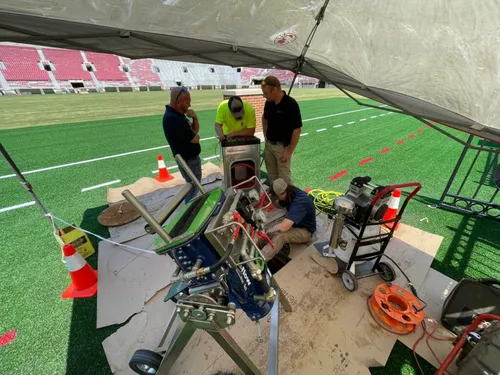
Trenchless sewer repair is a minimally invasive method that fixes pipes from the inside with little to no digging. The most common technique is Cured-In-Place Pipe (CIPP) lining, where a flexible, resin-saturated tube is inserted into the old pipe and inflated. The resin hardens, creating a new, seamless pipe within the old one 2.
Pros:
- Minimal Disruption: Requires only small access pits, preserving your landscaping, driveway, sidewalks, and patio.
- Faster Completion: Most lining projects can be completed in a single day.
- Cost-Effective Long-Term: While material costs can be higher, you save significantly on the extensive labor and restoration costs associated with digging. It can be 30-50% cheaper overall than full excavation replacement when restoration is factored in 3.
- Durable Solution: The new liner is resistant to roots and corrosion, often with a 50-year lifespan.
Cons:
- Not for All Damage: It cannot repair a pipe that has fully collapsed or is severely misaligned.
- Slightly Reduced Diameter: The liner slightly reduces the pipe's inner diameter, though this is often negligible for proper flow.
Best For: Pipes with leaks, cracks, holes, or root intrusion where the structural integrity is still intact 4.
Traditional Excavation (Open-Trench Repair)
This is the conventional method where a backhoe or other equipment digs a large trench along the entire length of the damaged pipe to expose it for repair or full replacement.
Pros:
- Comprehensive Fix: Can address any type of damage, including fully collapsed pipes or sections that need complete replacement.
- Direct Access: Provides technicians with direct visual and physical access to the entire problem area.
Cons:
- Highly Disruptive: Involves digging up large sections of your yard, potentially destroying lawns, gardens, trees, and hardscapes like driveways.
- Lengthy Restoration: The repair itself may be quick, but backfilling the trench and restoring your property to its original state adds significant time and cost.
- Higher Overall Cost: When factoring in excavation, backfill, and complete restoration of landscaping and surfaces, the total bill is often much higher.
Best For: Severely damaged, collapsed, or misaligned lines where trenchless methods are not feasible.
Find the perfect sewer line repair companies for your needs
Get personalized recommendations and expert advice
Cost Factors for Sewer Line Repair in Grand Island
The cost of sewer line replacement or repair in Grand Island varies widely based on the method, extent of damage, and property specifics. Here's a general breakdown based on common project scopes 5:
- Small Section Repair (10-20 ft via excavation): $2,500 - $4,500
- Typical Full Line Repair (40-60 ft):
- Via Excavation: $4,500 - $8,000+
- Via Trenchless Lining (CIPP): $6,000 - $10,000+
- Long Line or Complex Repair (80-100+ ft): $8,000 - $13,000+
For trenchless lining, costs are often calculated per foot, ranging from $80 to $250, depending on diameter and conditions. A typical 50-foot trenchless lining job might total around $6,500, including all preparation and cleanup 6 7.
Key factors that influence your final estimate include:
- Pipe Length & Depth: Longer, deeper pipes require more materials and labor.
- Pipe Diameter: Larger diameter pipes cost more to line or replace.
- Accessibility: Easy access to cleanouts and the line reduces labor time.
- Obstacles: Repairing a line under a driveway, patio, or mature tree adds complexity and cost.
- Restoration Needs: The cost to re-sod your lawn, re-pour concrete, or re-landscape after excavation is a major variable.
Choosing a Qualified Professional
Selecting the right contractor is as important as choosing the repair method. Look for a licensed, insured plumber or sewer specialist with specific experience in both trenchless and traditional methods. They should conduct a thorough video camera inspection of your line to accurately diagnose the problem and recommend the most appropriate solution. Always ask for detailed, written estimates that break down labor, materials, permits, and restoration costs. A reputable professional will clearly explain the pros and cons of each option for your specific situation and provide references or examples of past work in the Grand Island area.
Preventative Maintenance for Your Sewer Line
While some failures are inevitable due to age, you can take steps to prolong the life of your sewer line:
- Mind Your Landscaping: Know where your sewer line runs and avoid planting trees with aggressive root systems near it.
- Be Careful What You Flush: Only human waste and toilet paper should go down the toilet. Avoid flushing "flushable" wipes, feminine products, paper towels, and cooking grease.
- Consider Regular Inspections: For older homes (40+ years), a periodic video inspection every few years can identify small issues like root hairs or early corrosion before they become major problems.
- Install a Backwater Valve: This device can help prevent sewage from the city main from backing up into your home during heavy rains or flooding.
Frequently asked questions
Sources
Footnotes
-
Cost to Replace Cast Iron Drain Pipe Under Slab - https://www.benjaminfranklinplumbing.com/league-city/blog/2024/december/cost-to-replace-cast-iron-drain-pipe-under-slab-key-factors-and-pricing-guide/ ↩
-
Is Trenchless Sewer Repair Worth It? - Clog Busters - https://clogbustersllc.com/is-trenchless-sewer-repair-worth-it/ ↩
-
Cheapest Way to Replace Sewer Line: 5 Proven Money-Saving Tips - https://www.pdsplumbingandair.com/cheapest-way-to-replace-sewer-line/ ↩
-
What Are The Pros and Cons of Trenchless Sewer Repair? - https://www.southernairnow.com/blog/what-are-the-pros-and-cons-of-trenchless-sewer-repair/ ↩
-
Sewer Pipe Liner Cost: Key Factors and Budgeting Tips - https://www.benjaminfranklinplumbing.com/league-city/blog/2025/april/sewer-pipe-liner-cost-key-factors-and-budgeting-tips/ ↩
-
Blog Posts - NuFlow Nebraska No Dig, Pipe Lining Company - https://nuflownebraska.com/blog-posts/ ↩
-
How Much Does Pipe Lining Cost: A Detailed Cost Breakdown - https://www.benjaminfranklinplumbing.com/league-city/blog/2024/december/how-much-does-pipe-lining-cost-a-detailed-cost-breakdown/ ↩