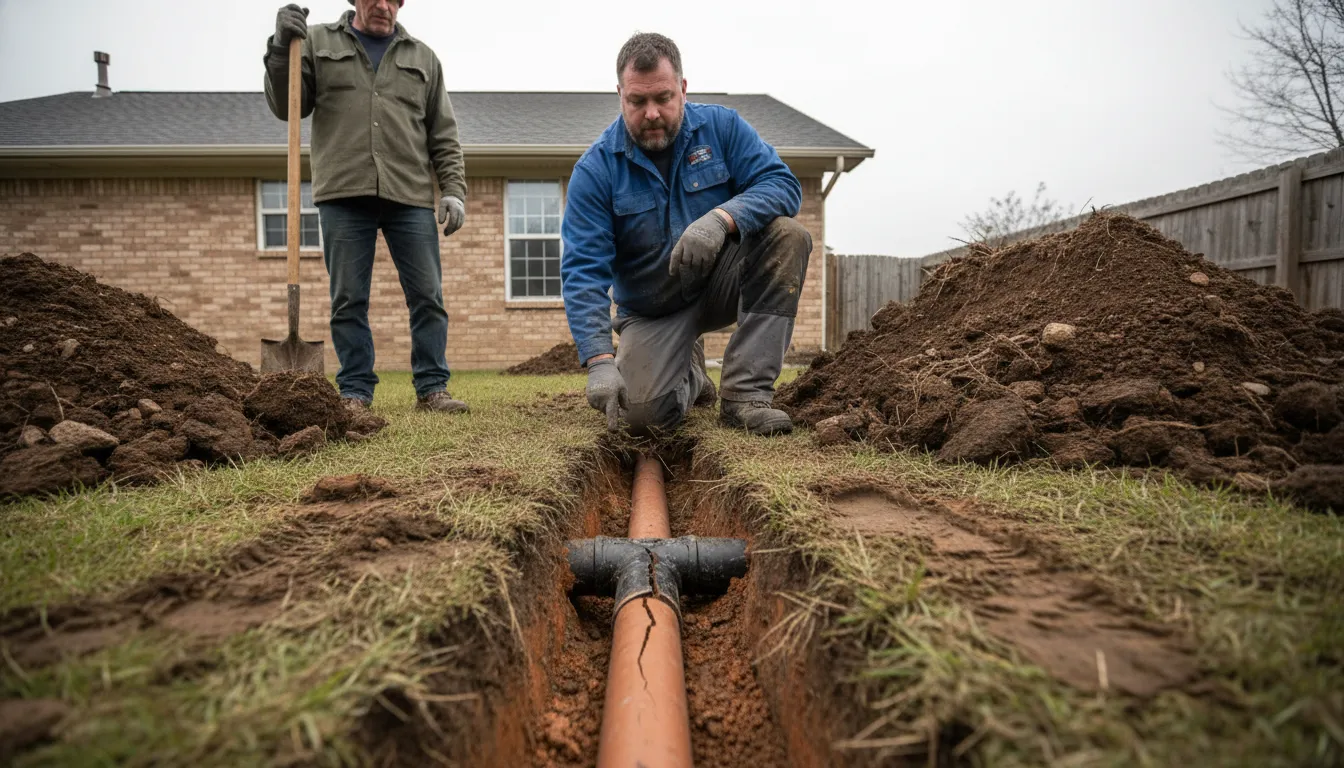
Find the Best Sewer Line Repair Companies for Your Business
No obligation • Fast responses • Nationwide coverage

Why you can trust Search a Plumber
Search a Plumber is a leading United States resource for finding and evaluating professional plumbing services. Our team researches licensing, experience, and customer feedback to create unbiased, fact-driven overviews. Companies cannot pay to change ratings or placement, ensuring homeowners get trustworthy information.
Search providers near you
Top Sewer Line Repair Companies in Kannapolis, North Carolina Ranked
A damaged sewer line is a serious issue that can disrupt your home, threaten your property, and impact your family's health. When your main drain line fails, it requires immediate and professional attention. This guide explains the common causes of sewer problems in Kannapolis, details the modern repair methods available, and provides the information you need to make an informed decision when selecting a local specialist for your underground pipe repair or replacement.
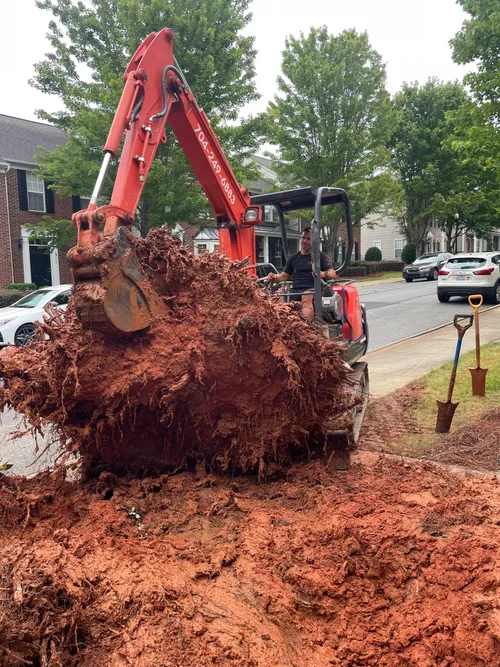
Service Pro Plumbing
6744 Drakestone Rd, Concord, NC 28027
Service Pro Plumbing is a family-owned and operated plumbing company serving Charlotte, NC, and surrounding areas including Concord, Kannapolis, and Mooresville. Established in 2008 with over 20 years of industry experience, they provide residential and light commercial plumbing services. Their offerings include water heater repair and installation, drain cleaning, leak detection, sewer line repair, hydro jetting, and trenchless sewer repair. They are certified in backflow testing and equipped for underground leak detection. Service Pro Plumbing is licensed, bonded, and insured, focusing on quality workmanship and customer satisfaction.
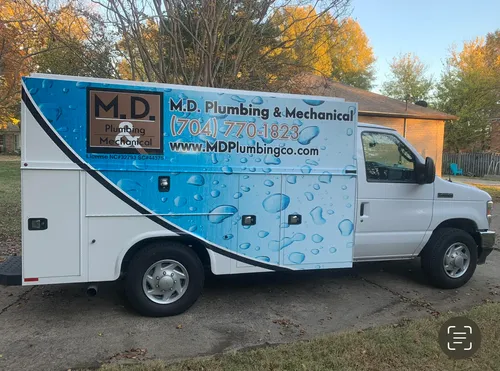
M.D. Plumbing & Mechanical
2240 Stevens Mill Rd, Matthews, NC 28104
M.D. Plumbing & Mechanical is a female-owned, family-run plumbing and mechanical service provider based in Charlotte, NC. With over 30 years of experience, they offer a wide range of residential and commercial plumbing services including water heater installation and repair, drain cleaning, sewer line repair, leak detection, and bathroom remodeling. The company uses advanced technologies such as trenchless sewer repair and state-of-the-art leak detection to minimize disruption and improve efficiency. Licensed and insured in both North and South Carolina, M.D. Plumbing & Mechanical emphasizes personalized service and expert care to meet the unique needs of their customers in Charlotte and surrounding areas.
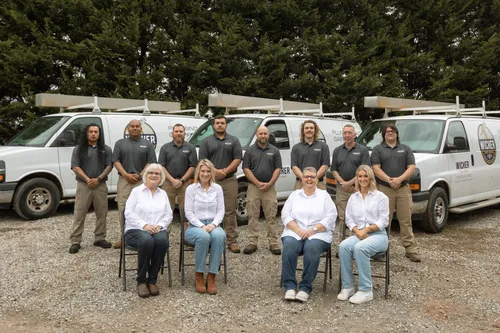
Wicker Trade Service Inc - Plumbing & Gas Piping
Charlotte, NC
Wicker Trade Service Inc - Plumbing & Gas Piping is a plumbing and gas piping company serving Charlotte, NC. Established in 2010, they offer a wide range of services including water heater installation and repair, tankless water heater installation, sewer line repair, gas line installation and repair, drain cleaning, hydro jetting, leak detection, repiping, and garbage disposal repair. Their certified technicians provide comprehensive plumbing and gas piping solutions for both residential and commercial clients. The company emphasizes safety and quality, particularly in their gas line services, and offers emergency plumbing repairs with 24/7 availability to address urgent issues promptly.
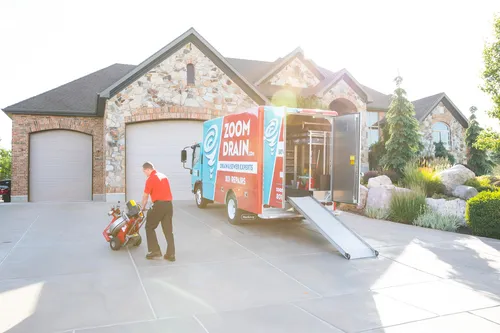
Zoom Drain
114 Eastbend Ct Ste 2, Mooresville, NC 28117
Zoom Drain is a plumbing company based in Charlotte, NC, specializing in drain and sewer services for residential and commercial customers. They offer a range of services including drain cleaning, sewer line repair, sump pump repair, toilet repair, and hydro jetting, which uses high-pressure water jets to clear tough clogs such as tree roots and grease. Serving the Charlotte area, Zoom Drain has been operating since 1995 and provides 24/7 emergency drain cleaning services to address urgent plumbing issues.
All Star Plumbing
147 Cedar Pointe Dr, Mooresville, NC 28117
All Star Plumbing is a family-owned plumbing company based in Mooresville, North Carolina, serving the surrounding areas within a 25-mile radius, including Charlotte. With 38 years of experience under the ownership of Bob Zarybnicky, the company specializes in residential plumbing services such as water heater repair and installation, drain cleaning, sewer line repair, leak detection, repiping, and backflow testing. They also offer hydro jetting and emergency plumbing services available day or night to address urgent issues promptly. The company focuses on providing comprehensive plumbing solutions tailored to residential needs, ensuring efficient and reliable system operation.
Understanding Your Sewer System in Kannapolis
Your home's sewer line is a critical, yet out-of-sight, component of your plumbing. It carries all wastewater from your toilets, sinks, showers, and appliances out from your home's foundation to the municipal sewer main, usually located under the street. In Kannapolis, these lines typically run 3 to 6 feet underground, often passing beneath lawns, driveways, gardens, and near tree lines.
Because it's buried, you can't see problems developing until they become severe. Recognizing how the local environment affects these pipes is the first step in proactive maintenance and understanding why repairs are necessary.
Common Causes of Sewer Line Damage in Kannapolis
Several factors unique to the North Carolina Piedmont region contribute to the failure of underground drainage pipes. Knowing these can help you identify risks to your property.
- Tree Root Intrusion: This is a leading cause of blockages and breaks in our area. Thirsty tree roots from oaks, maples, and pines are naturally drawn to the moisture and nutrients inside sewer pipes. They can infiltrate through tiny cracks or loose joints, eventually growing large enough to completely block the flow or crack the pipe open.
- Aging and Deteriorating Pipe Materials: Many older homes in Kannapolis were built with clay tile or Orangeburg pipes. 1 Clay pipes are brittle and can crack from ground pressure, while Orangeburg (a tar-impregnated fiber conduit) softens and collapses over time. These materials have a limited lifespan of 50-60 years and are prone to failure.
- Shifting Red Clay Soil: The heavy, expansive red clay common in Cabarrus County is a significant factor. 2 This soil swells when wet and shrinks during droughts, creating constant movement and pressure on buried pipes. This stress can lead to misaligned joints, cracks, and even complete pipe collapse.
- Grease and Debris Blockages: While not a structural failure, the buildup of cooking grease, non-flushable wipes, and other debris can cause persistent clogs that mimic or exacerbate a damaged line, putting extra strain on aging pipes. 3
Signs You Need Sewer Line Repair
Don't ignore these warning signals. Early detection can mean the difference between a simpler, less expensive repair and a major excavation project.
- Multiple Slow or Clogged Drains: If more than one fixture (like a toilet and a shower) is draining slowly or backing up simultaneously, the problem is likely in the main line, not an individual branch.
- Unpleasant Odors: Foul sewage smells in your yard, basement, or coming from drains indicate a break or leak in the line.
- Unusual Lawn Conditions: Soggy, sunken, or inexplicably lush and green patches in your yard, especially when it hasn't rained, can signal a leaking sewer line saturating the soil. 4
- Gurgling Noises: Sounds coming from toilets or drains when you run water elsewhere in the house indicate trapped air in the line from a blockage or break.
- Foundation Cracks or Settlement: In severe cases, water from a broken sewer line can erode soil under your home's foundation, leading to cracks or settling. 5
If you notice any of these signs, the next critical step is a professional diagnosis before the problem worsens.
Diagnostic Tools: The Sewer Camera Inspection
Before any repair method is chosen, a thorough inspection is essential. Professional plumbers use a high-resolution, waterproof camera mounted on a flexible rod. This camera is fed through a cleanout access point and travels the entire length of your sewer line, sending real-time video to a monitor.
This inspection allows the technician to:
- Pinpoint the exact location and depth of the problem.
- Identify the cause (roots, crack, collapse, bellied pipe).
- Assess the condition of the entire pipe.
- Determine the most effective and economical repair method.
Getting a camera inspection is a non-invasive diagnostic tool that provides the evidence needed for an accurate quote and repair plan. 6
Modern Repair Methods: Trenchless vs. Traditional
Once the problem is diagnosed, you will typically be presented with two primary repair approaches: trenchless (no-dig) technology or traditional excavation. The best choice depends on the damage's location, severity, and your property's layout.
Trenchless Sewer Repair
Trenchless methods are often preferred for their minimal disruption and can be more cost-effective when considering restoration.
-
Pipe Lining (Cured-in-Place Pipe - CIPP): A flexible, resin-saturated tube is inverted or pulled into the damaged pipe. It is then inflated and cured (usually with hot air or UV light) to form a rigid, seamless "pipe within a pipe." 7
- Pros: Very little digging (only small access pits), preserves landscaping and hardscapes, strengthens the existing pipe, resists root intrusion, and is typically completed in a day.
- Cons: Requires a navigable pipe (not fully collapsed), may slightly reduce inner diameter, and requires specialized equipment and training.
-
Pipe Bursting: A conical bursting head is pulled through the old, damaged pipe, fracturing it outward while simultaneously pulling a new, high-density polyethylene (HDPE) pipe into place behind it. 8
- Pros: Installs a brand new pipe with equal or larger diameter, completely replaces deteriorated materials like clay or Orangeburg, and is still less invasive than full excavation.
- Cons: Requires slightly larger access pits than lining, may not be suitable under certain structures, and the ground must be able to absorb the shattered fragments.
Traditional Excavation (Open-Trench Repair)
This is the conventional method, involving digging a trench along the entire length of the damaged pipe section to expose it for repair or replacement.
- Pros: Allows for a complete visual inspection of the pipe and surrounding soil, is the only option for fully collapsed or severely misaligned pipes, and enables replacement with any type of new pipe material. 9 10
- Cons: Highly disruptive to lawns, gardens, driveways, and walkways. The process is time-consuming, labor-intensive, and incurs significant additional costs for landscape and hardscape restoration after the plumbing work is complete. 11 12
Find the perfect sewer line repair companies for your needs
Get personalized recommendations and expert advice
Cost Considerations for Sewer Repair in Kannapolis
Costs can vary widely based on the repair method, the extent of damage, access difficulty, and local labor rates. It's crucial to get multiple detailed quotes from licensed professionals.
- Trenchless Repair Costs: Generally priced per linear foot. In the Kannapolis area, you can expect trenchless lining or bursting to range from $55 to $250 per foot. 13 14 While the per-foot cost can be higher than excavation, you often save thousands on avoiding landscape restoration.
- Excavation Repair Costs: Also typically priced per foot, but with a much wider range due to depth and restoration needs. Traditional digging can cost $50 to $450 or more per foot. 15 16 This quote rarely includes the cost to re-sod your lawn, re-pour concrete, or rebuild retaining walls, which must be factored into the total project cost.
- Minor Repairs: For a single, accessible point repair (like fixing a cracked joint), costs may range from $100 to $500. 17
Remember: The cheapest upfront quote is not always the most economical long-term choice. A proper camera inspection and a detailed written estimate that outlines the method, materials, and any potential restoration work are essential.
Choosing a Local Sewer Repair Specialist
Selecting the right professional is as important as choosing the right method. Look for a licensed, insured plumber or sewer contractor with specific experience in the repair method they recommend. Ask for references, proof of insurance, and details about their diagnostic process. A reputable professional will always recommend a camera inspection first and be transparent about all potential costs.
Frequently asked questions
Sources
Footnotes
-
Sewer Line Repair for NC Homes | Emergency Service Available - https://callnublue.com/drain-sewer/repair/ ↩
-
Sewer Repair - https://littekenplumbing.com/sewer-repair/ ↩
-
Sewer Line Repair & Replacement NC | HEC Plumbing LLC - https://hecplumbing.com/sewer-line-repair-replacement/ ↩
-
Underground Pipes: Guide in Dealing with Leaks - https://www.puroclean.com/zephyrhills-fl-puroclean-certified-restoration-specialists/blog/underground-pipes-leak/ ↩
-
How Much Does Slab Leak Repair Cost? (2025 Guide) - https://www.thisoldhouse.com/foundations/slab-leak-repair-cost ↩
-
Professional Plumbing Services for Kannapolis, NC Residents - https://www.benjaminfranklinplumbing.com/areas-we-service/kannapolis-nc/ ↩
-
Trenchless vs. Traditional Sewer Repair - https://sewerlinesonly.com/trenchless-vs-traditional-sewer-repair-which-is-more-cost-effective-for-lakewood-homeowners/ ↩
-
Trenchless Sewer Line Repair vs. Sewer Line Excavation - https://dandfplumbing.com/sewer-line-repair-vs-sewer-line-excavation/ ↩
-
Sewer Repair Cost: Trenchless Vs Traditional Methods - https://www.superbrothers.com/sewer-repair-cost-trenchless-vs-traditional-methods/ ↩
-
Trenchless Sewer Line Repair vs Traditional: Which Is Better - https://cactusplumbingandair.com/trenchless-sewer-line-repair-vs-traditional/ ↩
-
Sewer Pipe Lining vs Residential Excavation - 128 Plumbing - https://www.128plumbing.com/sewer-pipe-lining-vs-residential-excavation/ ↩
-
Trenchless Sewer Repair vs. Traditional Excavation: Which is Better? - https://alphaenvironmental.net/blog/trenchless-sewer-repair-vs-traditional-excavation-which-is-better/ ↩
-
Is Trenchless Sewer Line Repair Cheaper? - AP Plumbing - https://applumbing.com/blog/is-trenchless-sewer-line-repair-cheaper/ ↩
-
Empower Your Decision: Decoding Trenchless Sewer Repair Costs - Pipeliner Pros - https://pipelinerpros.com/trenchless-sewer-repair-cost/ ↩
-
The Cost of Sewer Line Replacement: What to Expect - https://dirtcheapsewer.com/the-cost-of-sewer-line-replacement/ ↩
-
Cost Comparison: Trenchless vs. Traditional Sewer Line Repair - https://www.advancedtrenchlesssolutions.com/blog/cost-comparison-trenchless-vs-traditional-sewer-line-repair ↩
-
Cost To Repair Sewer Line: 2023 Options & Affordable Services - https://www.superbrothers.com/cost-to-repair-sewer-line-2023-options-affordable-services/ ↩