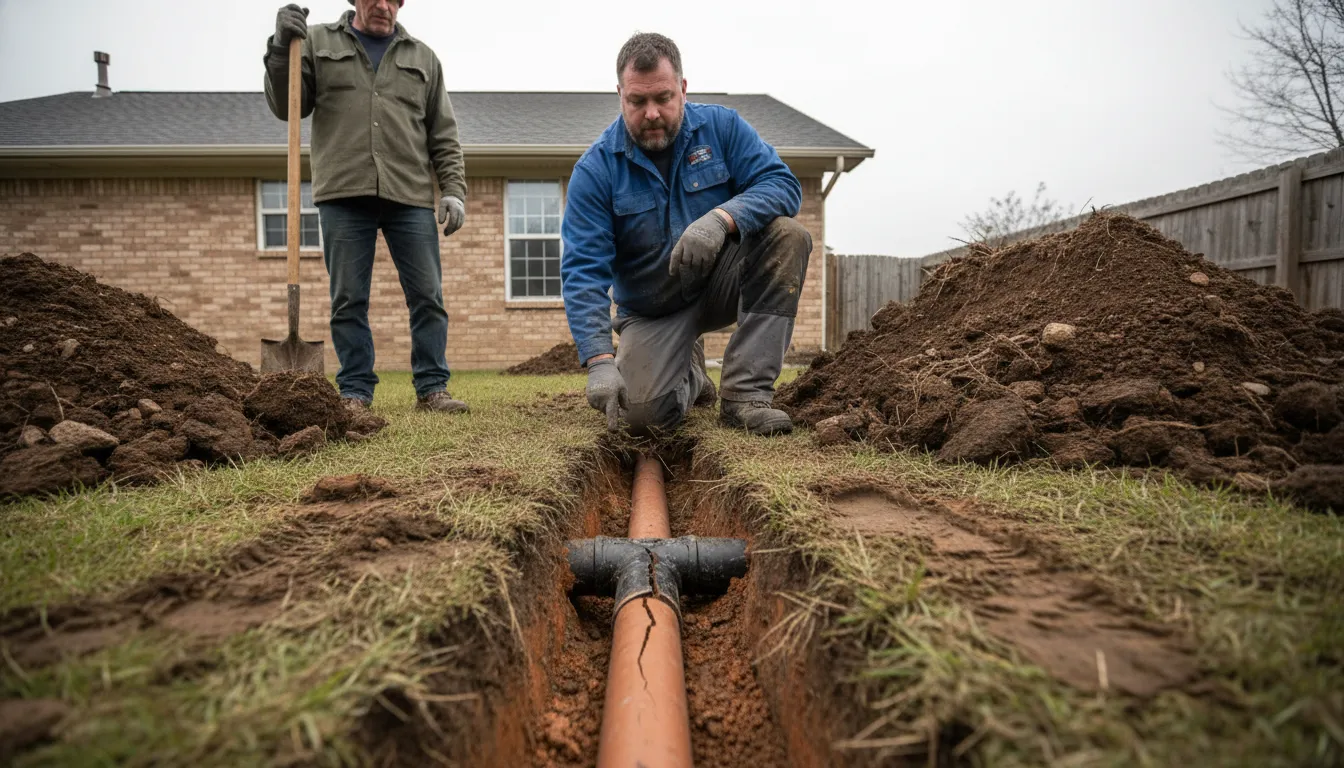
Find the Best Sewer Line Repair Companies for Your Business
No obligation • Fast responses • Nationwide coverage

Why you can trust Search a Plumber
Search a Plumber is a leading United States resource for finding and evaluating professional plumbing services. Our team researches licensing, experience, and customer feedback to create unbiased, fact-driven overviews. Companies cannot pay to change ratings or placement, ensuring homeowners get trustworthy information.
Search providers near you
Top Sewer Line Repair Companies in Huntersville, North Carolina Ranked
A failing sewer line is a serious issue that can disrupt your home and lead to costly property damage. Sewer line repair involves fixing or replacing the underground pipe that carries all your home's wastewater to the city's main sewer system. When this critical line is compromised, timely and effective repair is essential to protect your property's value and your family's health. This guide explains the common causes of sewer line problems in Huntersville, details the modern repair methods available, and provides actionable advice to help you navigate the process of finding a qualified local specialist.
Service Pro Plumbing
6744 Drakestone Rd, Concord, NC 28027
Service Pro Plumbing is a family-owned and operated plumbing company serving Charlotte, NC, and surrounding areas including Concord, Kannapolis, and Mooresville. Established in 2008 with over 20 years of industry experience, they provide residential and light commercial plumbing services. Their offerings include water heater repair and installation, drain cleaning, leak detection, sewer line repair, hydro jetting, and trenchless sewer repair. They are certified in backflow testing and equipped for underground leak detection. Service Pro Plumbing is licensed, bonded, and insured, focusing on quality workmanship and customer satisfaction.
Clavey Plumbing & Drains, LLC
Charlotte, NC
Clavey Plumbing & Drains, LLC is a family-owned plumbing company serving Charlotte, NC, and nearby areas including Waxhaw, Gastonia, and Indian Trail. They provide residential and commercial plumbing services such as water heater repair and installation, water softener installation, drain cleaning, sewer line repair, and gas line installation. With over 20 years of experience, the company uses advanced equipment to handle a variety of plumbing needs and ensures systems remain functional and efficient.
M.D. Plumbing & Mechanical
2240 Stevens Mill Rd, Matthews, NC 28104
M.D. Plumbing & Mechanical is a female-owned, family-run plumbing and mechanical service provider based in Charlotte, NC. With over 30 years of experience, they offer a wide range of residential and commercial plumbing services including water heater installation and repair, drain cleaning, sewer line repair, leak detection, and bathroom remodeling. The company uses advanced technologies such as trenchless sewer repair and state-of-the-art leak detection to minimize disruption and improve efficiency. Licensed and insured in both North and South Carolina, M.D. Plumbing & Mechanical emphasizes personalized service and expert care to meet the unique needs of their customers in Charlotte and surrounding areas.
Wicker Trade Service Inc - Plumbing & Gas Piping
Charlotte, NC
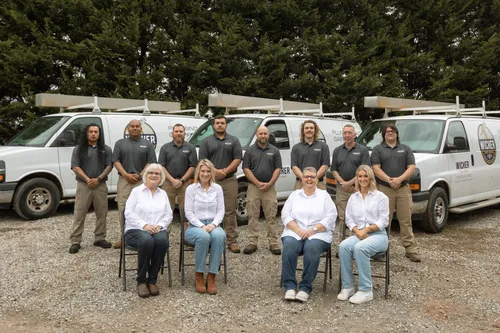
Wicker Trade Service Inc - Plumbing & Gas Piping is a plumbing and gas piping company serving Charlotte, NC. Established in 2010, they offer a wide range of services including water heater installation and repair, tankless water heater installation, sewer line repair, gas line installation and repair, drain cleaning, hydro jetting, leak detection, repiping, and garbage disposal repair. Their certified technicians provide comprehensive plumbing and gas piping solutions for both residential and commercial clients. The company emphasizes safety and quality, particularly in their gas line services, and offers emergency plumbing repairs with 24/7 availability to address urgent issues promptly.
Zoom Drain
114 Eastbend Ct Ste 2, Mooresville, NC 28117
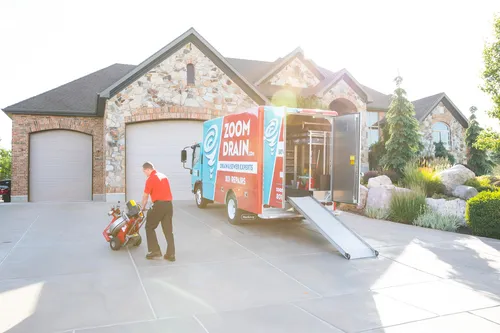
Zoom Drain is a plumbing company based in Charlotte, NC, specializing in drain and sewer services for residential and commercial customers. They offer a range of services including drain cleaning, sewer line repair, sump pump repair, toilet repair, and hydro jetting, which uses high-pressure water jets to clear tough clogs such as tree roots and grease. Serving the Charlotte area, Zoom Drain has been operating since 1995 and provides 24/7 emergency drain cleaning services to address urgent plumbing issues.
Understanding Your Home's Sewer System
Your home's sewer system is a network of pipes you rarely think about until there's a problem. Knowing its basic layout is the first step in diagnosing an issue.
- Main Sewer Line: This is the primary pipe that runs from your home's foundation, often under your yard or driveway, to the public sewer connection at the street. It handles all the wastewater from your house.
- Branch Lines: These are the smaller pipes that connect individual fixtures-like toilets, sinks, and showers-to the main sewer line within your property.
In Huntersville, these lines can be made from various materials, including modern PVC, older cast iron, or even obsolete materials like Orangeburg (bituminized fiber pipe). The age and material of your pipes are significant factors in their longevity and susceptibility to failure.
Common Causes of Sewer Line Failure in Huntersville
Several factors specific to our region and older homes can lead to sewer line distress. Recognizing these can help you identify problems early.
- Tree Root Infiltration: This is a leading cause of blockages and damage. Roots from mature trees are naturally drawn to the moisture and nutrients in sewer pipes. They can infiltrate through tiny cracks or pipe joints, causing major clogs and eventually breaking the pipe apart.
- Aging and Corroding Pipes: Older homes in the area may have cast iron or clay pipes that have simply reached the end of their lifespan. Cast iron can corrode and weaken over decades, while clay tiles are brittle and prone to cracking or collapsing.
- Ground Shifting and Settlement: Soil movement due to freeze-thaw cycles, drought, or construction activity can put stress on underground pipes, causing them to crack, separate at the joints, or sag (creating a "belly" where waste collects) 1 2.
- Grease and Debris Buildup: Pouring fats, oils, and grease down drains is a common mistake. These substances solidify inside pipes, gradually restricting flow and causing stubborn blockages 3.
Diagnosing the Problem: The Sewer Camera Inspection
Before any repair can be planned, an accurate diagnosis is non-negotiable. The modern tool for this is a sewer camera inspection. A professional will insert a high-resolution, waterproof camera on a flexible rod into your cleanout or through a roof vent. This allows them to see the exact condition, location, and cause of the problem in real-time 4.
This inspection is crucial because it determines the best repair strategy. It answers key questions: Is the pipe cracked, collapsed, or just blocked? Where is the damage located? How long is the damaged section? Skipping this step is like a doctor prescribing major surgery without an X-ray.
Modern Repair Methods: Trenchless vs. Traditional Excavation
Once the problem is identified, you and your plumbing professional will discuss repair options. The two primary approaches are trenchless sewer repair and traditional excavation. Each has distinct advantages and ideal use cases.
Trenchless Sewer Repair
Trenchless technology has revolutionized sewer line work by minimizing the need for extensive digging. There are two main techniques:
- Pipe Lining (Cured-in-Place Pipe or CIPP): A flexible, resin-saturated tube is inserted into the damaged pipe and inflated. The resin cures in place, forming a hard, seamless "pipe within a pipe." This method seals cracks and holes and resists root intrusion.
- Pipe Bursting: A conical bursting head is pulled through the old, damaged pipe, fracturing it outward while simultaneously pulling a new, durable pipe (usually HDPE) into place behind it. This method completely replaces the old line with a new one of equal or larger diameter 5.
Pros of Trenchless Methods:
- Minimal Disruption: Very little digging is required, usually just at the access and exit points. This preserves your lawn, landscaping, driveway, and hardscaping.
- Speed: Many trenchless repairs can be completed in a single day.
- Durability: The new liners or pipes are highly resistant to corrosion and root intrusion.
Cons of Trenchless Methods:
- Not for All Situations: It may not be suitable for pipes that have completely collapsed or have severe misalignment 6.
- Specialized Equipment: Requires trained technicians and specific machinery.
- Potential Access Issues: Existing interior plumbing configurations may need modification to accommodate the lining process.
Traditional Excavation (Open-Trench Repair)
This is the conventional method where a trench is dug along the entire length of the damaged pipe section to expose it, remove it, and install a new one.
Pros of Traditional Excavation:
- Comprehensive Solution: Allows for a full visual inspection of the pipe and surrounding soil. It's the only option for severely collapsed or inaccessible pipes 7 8.
- Direct Access: Enables repairs to specific, isolated sections if the rest of the line is in good condition.
- Material Flexibility: Any type of new pipe material can be installed.
Cons of Traditional Excavation:
- Major Property Disruption: Requires a large, deep trench across your property, destroying lawns, gardens, sidewalks, and driveways 9 10.
- Longer Timeline: The digging, repair, and backfilling process takes longer.
- Significant Restoration Costs: The repair cost is only part of the bill; you must also budget to restore your landscaping and any hard surfaces that were dug up 11.
Find the perfect sewer line repair companies for your needs
Get personalized recommendations and expert advice
Cost Considerations for Sewer Line Repair
The cost of fixing your sewer main can vary widely based on the method, extent of damage, depth, and location of the pipe. The sewer camera inspection is key to getting an accurate estimate 12.
- Trenchless Repair Costs: Often priced per foot. Pipe lining might range from around $60 - $150 per foot, while pipe bursting can be $100 - $250+ per foot due to the more intensive process 13 14.
- Traditional Excavation Costs: Also typically priced per foot, generally starting around $50 - $450+ per foot. Crucially, this base price often does not include the substantial additional costs of restoring your yard, repaving a driveway, or repairing irrigation systems 15 16.
- Total Project Range: For a full line replacement, total costs can range from several thousand dollars to well over $10,000, depending on the length of the line and chosen method 17 18.
While trenchless methods may have a higher upfront cost per foot, they can be more cost-effective overall when you factor in the avoided landscape restoration expenses and the value of your time and hassle.
Choosing the Right Service Provider in Huntersville
Selecting a qualified professional is critical. Look for a licensed, insured plumber or sewer specialist with specific experience in the repair method you're considering. Don't hesitate to:
- Ask for Proof of Insurance and Licenses.
- Request References or look for online reviews from local customers.
- Get Detailed, Written Estimates from at least two or three companies. The estimate should clearly break down labor, materials, permit fees, and restoration costs 19.
- Ask About Warranties on both the repair work and the materials used.
Local providers familiar with Huntersville's soil conditions, common pipe materials, and municipal codes can provide invaluable insight. For example, some local companies emphasize sustainable, long-lasting solutions that are worth considering for their long-term value.
Long-Term Maintenance and Prevention
After a repair, you can take steps to protect your investment:
- Be Mindful of What Goes Down Drains: Avoid flushing anything besides toilet paper and human waste. Never pour grease, oils, or coffee grounds down sinks.
- Manage Tree Roots: If you have large trees near your sewer line, consider periodic root treatment with safe, foaming herbicides applied by a professional to slow root growth into the line.
- Consider a Sewer Scope Inspection if you're purchasing an older home. This due diligence can reveal existing problems before you take ownership 20.
Frequently asked questions
Sources
Footnotes
-
Defects that Inspectors Look for in a Home's Sewer Line - https://prospectivehomeinspections.com/defects-that-inspectors-look-for-in-a-homes-sewer-line/ ↩
-
Common Sewer Issues Found in Inspections - https://titaninspectionservices.com/common-sewer-issues-found-in-inspections/ ↩
-
7 Common Signs Your Sewer Line May Need Replacing - https://perfectplumbingheatingair.com/blog/7-common-signs-your-sewer-line-may-need-replacing/ ↩
-
Sewer Repair Methods: A Comprehensive Comparison - https://redrocktrenchless.com/sewer-repair-methods-a-comprehensive-comparison/ ↩
-
Trenchless Sewer Repair vs. Traditional Excavation: Which is Better? - https://alphaenvironmental.net/blog/trenchless-sewer-repair-vs-traditional-excavation-which-is-better/ ↩
-
Trenchless Sewer Repair vs. Traditional Excavation - AQUALIS - https://aqualisco.com/trenchless-sewer-repair-vs-traditional/ ↩
-
Trenchless Sewer Line Repair vs Traditional: Which Is Better - https://cactusplumbingandair.com/trenchless-sewer-line-repair-vs-traditional/ ↩
-
Trenchless Sewer Line Repair vs Traditional - Service Force Plumbing - https://serviceforceplumbing.com/trenchless-sewer-line-repair-vs-traditional-which-is-better/ ↩
-
Trenchless Sewer Line Repair vs. Sewer Line Excavation - https://dandfplumbing.com/sewer-line-repair-vs-sewer-line-excavation/ ↩
-
Trenchless vs. Traditional Sewer Repair - https://sewerlinesonly.com/trenchless-vs-traditional-sewer-repair-which-is-more-cost-effective-for-lakewood-homeowners/ ↩
-
Sewer Pipe Lining vs Residential Excavation - 128 Plumbing - https://www.128plumbing.com/sewer-pipe-lining-vs-residential-excavation/ ↩
-
What Trenchless Sewer Repair Costs & What Impacts the Price - https://www.sunsethc.com/what-trenchless-sewer-repair-really-costs-and-what-impacts-the-price/ ↩
-
Empower Your Decision: Decoding Trenchless Sewer Repair Costs - Pipeliner Pros - https://pipelinerpros.com/trenchless-sewer-repair-cost/ ↩
-
Is Trenchless Sewer Line Repair Cheaper? - AP Plumbing - https://applumbing.com/blog/is-trenchless-sewer-line-repair-cheaper/ ↩
-
Cost Comparison: Trenchless vs. Traditional Sewer Line Repair - https://www.advancedtrenchlesssolutions.com/blog/cost-comparison-trenchless-vs-traditional-sewer-line-repair ↩
-
How Much Does It Cost to Fix a Sewer Line in 2025 - VEVOR - https://www.vevor.com/diy-ideas/how-much-does-it-cost-to-fix-a-sewer-line/ ↩
-
The Cost of Sewer Line Replacement: What to Expect - https://dirtcheapsewer.com/the-cost-of-sewer-line-replacement/ ↩
-
How Much Does a Sewer Line Replacement Cost? - https://www.thisoldhouse.com/plumbing/sewer-line-replacement-cost ↩
-
Sewer & Water Line Services | Concord & Huntersville, NC - https://sustainable-plumbing.com/sewer-water-lines/ ↩
-
Sewer Scope Inspection: What Buyers Should Know - Redfin - https://www.redfin.com/blog/sewer-scope-inspection/ ↩