Find the Best Sewer Line Repair Companies for Your Business
No obligation • Fast responses • Nationwide coverage

Why you can trust Search a Plumber
Search a Plumber is a leading United States resource for finding and evaluating professional plumbing services. Our team researches licensing, experience, and customer feedback to create unbiased, fact-driven overviews. Companies cannot pay to change ratings or placement, ensuring homeowners get trustworthy information.
Search providers near you
Top Sewer Line Repair Companies in Burnsville, Minnesota Ranked
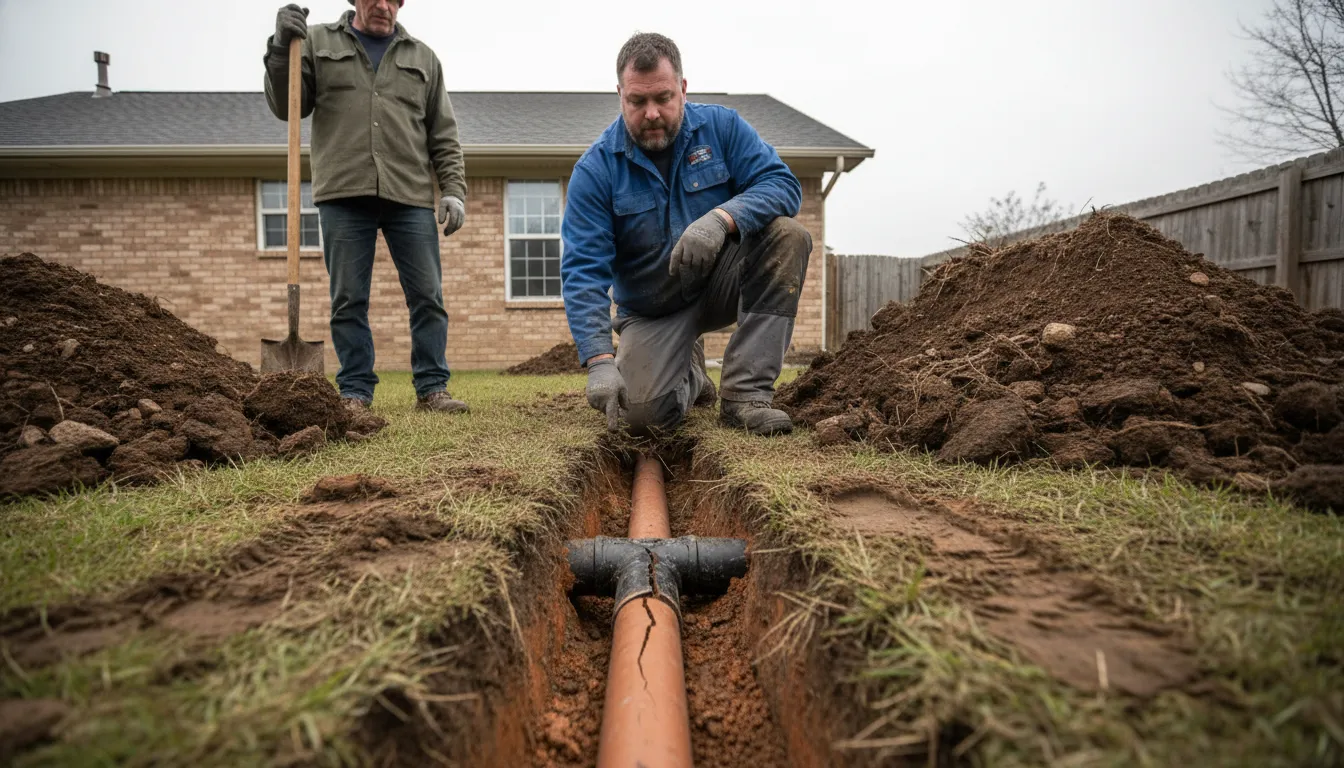
A damaged sewer line is a serious issue that can disrupt your home, threaten your property, and impact public health. Sewer line repair involves diagnosing and fixing the underground pipe that carries all your home's wastewater to the city's main sewer system. In Burnsville, where soil conditions and climate present unique challenges, understanding your repair options is crucial. This guide explains the common causes of sewer line failure, compares modern and traditional repair methods, and provides the information you need to connect with qualified local specialists who can restore proper function to your home's essential plumbing infrastructure.
Hurlburt Heating & Plumbing
1000 County Rd E Suite 115, Shoreview, MN 55126
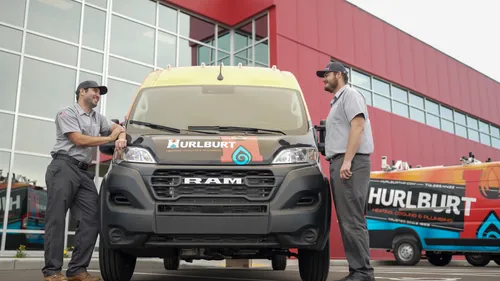
Hurlburt Heating & Plumbing is a family-owned home services provider serving St Paul, MN, and surrounding areas. Since 1959, they have offered plumbing, HVAC, and electrical services, including water heater repair, water softener installation, drain cleaning, and sewer line repair. Their experienced technicians use modern tools to address a wide range of home service needs. With a long history in the region, Hurlburt combines local knowledge with comprehensive capabilities to support homeowners year-round.
Cichy's Water & Sewer
3346 Snelling Ave, Minneapolis, MN 55406
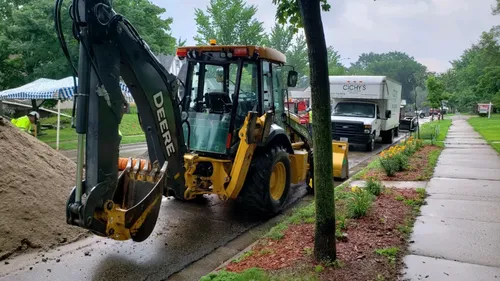
Cichy's Water & Sewer is a family-owned underground plumbing company serving St Paul, MN, and the surrounding Minneapolis area since 1989. They specialize in sewer line repair, water line replacement, and trenchless sewer repair, offering customized solutions to protect homes from underground plumbing issues. Their services include sewer video inspections, spot and trenchless sewer repairs, sewer cleaning with Picote descaling, and storm sewer line repair and installation. With over 30 years of experience, Cichy's Water & Sewer provides durable underground plumbing solutions tailored to each property.
Roto-Rooter Plumbing & Water Cleanup
1821 University Ave W #317, St Paul, MN 55104
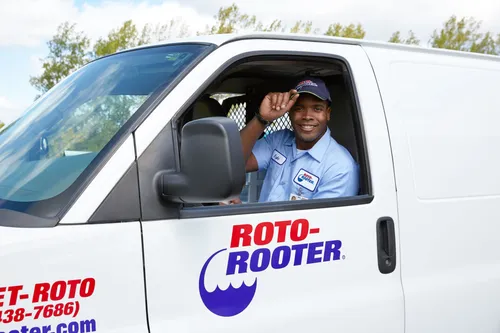
Roto-Rooter Plumbing & Water Cleanup provides a wide range of plumbing services in St. Paul, MN, including residential and commercial plumbing, drain cleaning, sewer line repair, water heater installation and repair, water softener and filtration system installation, and leak detection. They offer specialized capabilities such as video camera sewer inspections and trenchless sewer repair methods to minimize disruption during repairs. Serving the St. Paul metro area, their team is available 24/7, 365 days a year to address plumbing emergencies and routine maintenance needs.
Roto-Rooter Plumbing & Water Cleanup
6440 Flying Cloud Dr #111, Eden Prairie, MN 55344
Roto-Rooter Plumbing & Water Cleanup provides comprehensive plumbing services in Minneapolis, MN, including water heater repair and installation, sump pump repair, drain cleaning, sewer line repair, leak detection, repiping, and toilet and garbage disposal repairs. The company offers 24-hour emergency plumbing services, including after-hours and holiday availability, and specializes in trenchless sewer repair using advanced equipment. With over 85 years of experience, Roto-Rooter is equipped to handle a wide range of plumbing challenges and water damage cleanup.
Hurlburt Heating & Plumbing
7300 Hudson Blvd N #180, Oakdale, MN 55128
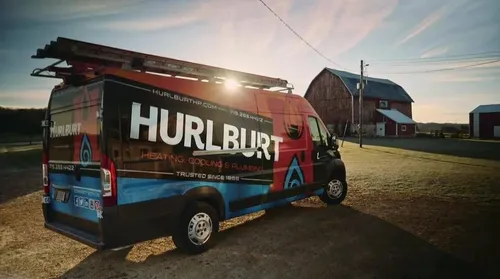
Hurlburt Heating & Plumbing is a family-owned home services provider serving St Paul, MN, and surrounding areas. Since 1959, they have offered plumbing, electrical, and HVAC services, including water heater repair, water softener installation, drain cleaning, and sewer line repair. Their team uses modern tools and technology to address plumbing issues efficiently while providing personalized service. With over six decades of experience, Hurlburt is well-equipped to handle a wide range of home service needs.
Understanding Your Sewer Line in Burnsville
The sewer lateral is the private pipe that runs from your home's foundation to the public sewer main, usually located under your yard, driveway, or sidewalk. Its depth can vary significantly. When this line fails, wastewater can back up into your home or leak into the surrounding soil, creating health hazards and property damage. In Burnsville and across Minnesota, several specific factors commonly lead to the need for sewer line repair or replacement.
Common Causes of Sewer Line Failure
- Tree Root Intrusion: This is one of the most frequent problems. Roots from trees and shrubs are naturally drawn to the moisture and nutrients in sewer pipes, especially at joints in older lines. They can enter through small cracks and eventually cause complete blockages or break the pipe apart.
- Pipe Corrosion and Deterioration: Many older homes in the area have sewer lines made of clay tile or cast iron. Over decades, these materials can corrode, crack, or collapse. Clay pipes are brittle and prone to root intrusion at their joints, while cast iron can rust through entirely.
- Ground Freezing and Thawing: Minnesota's extreme winters pose a significant risk. Shallow sewer lines are susceptible to freezing, which can block flow or cause the pipe to crack from the expansion of ice.
- Ground Shifting and Settlement: The soil in our region can expand, contract, and shift with seasonal moisture changes. This movement can put stress on sewer pipes, causing them to crack, break, or become misaligned (a problem known as "bellying") 1.
- General Aging and Wear: Like any component of your home, sewer lines have a finite lifespan. Persistent clogs, slow drains throughout the house, and frequent backups are often the final signs of a system that has simply worn out.
Diagnosing Sewer Line Problems
Before any repair can be planned, an accurate diagnosis is essential. Professional plumbers use specialized sewer camera inspection equipment. A high-resolution camera is fed through the line, providing a real-time video feed that reveals the exact location, nature, and severity of the problem-whether it's a root mass, a crack, a collapse, or a belly. This inspection is the critical first step in determining the most effective and cost-efficient repair strategy for your specific situation 2 3.
Sewer Line Repair Methods: Trenchless vs. Traditional
Once the problem is identified, you and your plumbing professional will discuss the best method for repair. The two primary approaches are trenchless (or "no-dig") technology and traditional excavation. Each has its advantages and ideal use cases.
Trenchless Sewer Repair
Trenchless methods are modern solutions designed to fix or replace pipes with minimal disruption to your landscaping, driveway, and daily life.
- Cured-In-Place Pipe (CIPP) Lining: This is a form of pipe relining. A flexible, resin-saturated tube is inverted or pulled into the damaged pipe. It is then inflated and cured (often with hot water or UV light) to form a hard, durable "pipe within a pipe." This method seals cracks and holes, prevents root intrusion, and is excellent for repairing corroded or leaking lines that are still structurally sound.
- Pipe Bursting: This technique is used for pipe replacement. A conical bursting head is pulled through the old, damaged pipe, fracturing it outward while simultaneously pulling a new, high-density polyethylene (HDPE) pipe into place behind it. It replaces the old line with a new one of equal or larger diameter without digging a continuous trench.
Pros of Trenchless Repair:
- Minimal Disruption: Requires only small access pits at the beginning and end of the run, preserving lawns, gardens, patios, and driveways.
- Speed: Most trenchless repairs can be completed in one to two days.
- Durability: The new pipe liners or HDPE pipes are resistant to roots and corrosion and have a long lifespan.
- Less Restoration Cost: Since your property is largely untouched, there's little to no cost for restoring landscaping or hardscapes 4 5.
Cons of Trenchless Repair:
- Not for All Situations: It may not be suitable for pipes that have completely collapsed or have severe misalignment.
- Higher Upfront Material Cost: The specialized equipment and materials can make the initial quote higher than a simple traditional dig, though this is often offset by the lack of restoration costs 6.
Traditional Excavation Repair
This is the conventional method, involving the digging of a long, deep trench to fully expose the damaged sewer line for spot repair or complete replacement.
Pros of Traditional Excavation:
- Direct Access: Provides full visual access to the entire pipe, which can be beneficial for complex or severe damage.
- Universal Solution: Can address any problem, including total collapses or situations where the pipe needs to be re-routed.
- Potential for Lower Direct Cost: For very short repairs that are easily accessible, the direct labor and material cost can sometimes be lower than trenchless options 7 8.
Cons of Traditional Excavation:
- Major Property Disruption: Results in a large, open trench across your yard, often requiring the destruction of sod, gardens, trees, and sometimes sections of driveway or sidewalk.
- Lengthy Process and High Restoration Cost: The digging, repair, backfilling, and subsequent restoration of the landscape and hardscapes is time-consuming and adds significant expense to the overall project.
- Inconvenience: The large work zone can disrupt your use of the property for an extended period 9.
Find the perfect sewer line repair companies for your needs
Get personalized recommendations and expert advice
Cost Considerations for Sewer Repair in Burnsville
The cost of sewer line work varies widely based on the method, extent of damage, pipe depth, and your property's specific conditions. Below is a general cost framework based on Minnesota pricing, but always obtain detailed, written estimates for your project 10 11.
- Minor Repairs/Blockage Clearing: Addressing a single root intrusion or localized blockage typically ranges from $1,000 to $5,000.
- Traditional Excavation (Spot Repair): For a short section repair via digging, homeowners might expect costs between $3,000 and $7,000.
- Traditional Excavation (Full Replacement): Replacing a long section of sewer line via a full trench can range from $8,000 to $15,000 or more, especially if it runs under driveways or deep landscapes.
- Trenchless Repair (Lining or Bursting): These methods often cost between $4,000 and $15,000+. A common way to estimate is by the foot, typically $80 to $250 per linear foot, depending on the technique and diameter 12 13 14.
Key Factors Influencing Cost:
- Extent and Location of Damage: A simple crack is less expensive than a fully collapsed pipe 10 feet down.
- Pipe Depth and Material: Deeper pipes require more labor and safety precautions. The existing material can affect the repair approach.
- Permits: Burnsville may require permits for sewer work, which add to the cost.
- Restoration: For traditional digs, the cost to re-sod your lawn, re-pour concrete, or re-lay pavers is a major add-on.
- Season: Frozen ground in winter can make excavation more difficult and expensive.
Choosing the Right Service Provider
Given the complexity and cost of sewer line work, selecting the right professional is critical. It is strongly recommended that you:
- Get a Camera Inspection: Never agree to a major repair without a video camera diagnosis.
- Obtain Multiple Bids: Seek detailed estimates from at least three licensed, insured, and bonded plumbing contractors in the Burnsville area.
- Compare Methods and Warranties: Ensure each bid clearly states the proposed method (trenchless vs. traditional), the scope of work, the materials used, and the warranty provided on both labor and materials.
- Verify Licensing: Confirm the contractor holds a valid Minnesota plumbing license and carries adequate insurance.
Frequently asked questions
Sources
Footnotes
-
How Much Does Sewer Line Replacement Cost in Minneapolis, MN? - https://www.angi.com/articles/how-much-does-sewer-line-replacement-or-repair-cost/mn/minneapolis ↩
-
Sewer Line Repair Costs In Minnesota Revealed - https://redrocktrenchless.com/sewer-line-repair-costs-minnesota/ ↩
-
Sewer Repair Options: Trenchless vs. Traditional Methods | TYCO - https://tycoplumbingco.com/sewer-repair-options-trenchless-vs-traditional-methods/ ↩
-
Trenchless Sewer Repair: Lower Cost, Lower Impact Sewer Repair - https://www.sewerflowllc.com/2025/03/06/trenchless-sewer-repair-lower-cost-lower-impact-sewer-repair/ ↩
-
Trenchless Sewer Line Repair vs Traditional: Which Is Better - https://cactusplumbingandair.com/trenchless-sewer-line-repair-vs-traditional/ ↩
-
Sewer Lining | Burnsville, MN - Official Website - https://burnsvillemn.gov/2377/Sewer-Lining ↩
-
Trenchless Sewer Repair vs. Traditional Excavation - https://tdtplumbing.com/trenchless-sewer-repair/difference-to-traditional-repair/ ↩
-
Trenchless Sewer Repair vs. Traditional Excavation: Which is Better? - https://alphaenvironmental.net/blog/trenchless-sewer-repair-vs-traditional-excavation-which-is-better/ ↩
-
Trenchless Sewer Line Repair Vs Traditional - Best Method - https://redrocktrenchless.com/trenchless-sewer-line-repair-vs-traditional-methods/ ↩
-
Trenchless vs. Traditional Sewer Repair - https://sewerlinesonly.com/trenchless-vs-traditional-sewer-repair-which-is-more-cost-effective-for-lakewood-homeowners/ ↩
-
Comparing Traditional Sewer Repair Costs In Minnesota - https://redrocktrenchless.com/comparing-traditional-sewer-repair-costs-minnesota/ ↩
-
Sewer Line Repair Costs In Minnesota Explained - https://redrocktrenchless.com/sewer-line-repair-costs-minnesota-explained/ ↩
-
Empower Your Decision: Decoding Trenchless Sewer Repair Costs - Pipeliner Pros - https://pipelinerpros.com/trenchless-sewer-repair-cost/ ↩
-
Cost Comparison: Trenchless vs. Traditional Sewer Line Repair - https://www.advancedtrenchlesssolutions.com/blog/cost-comparison-trenchless-vs-traditional-sewer-line-repair ↩