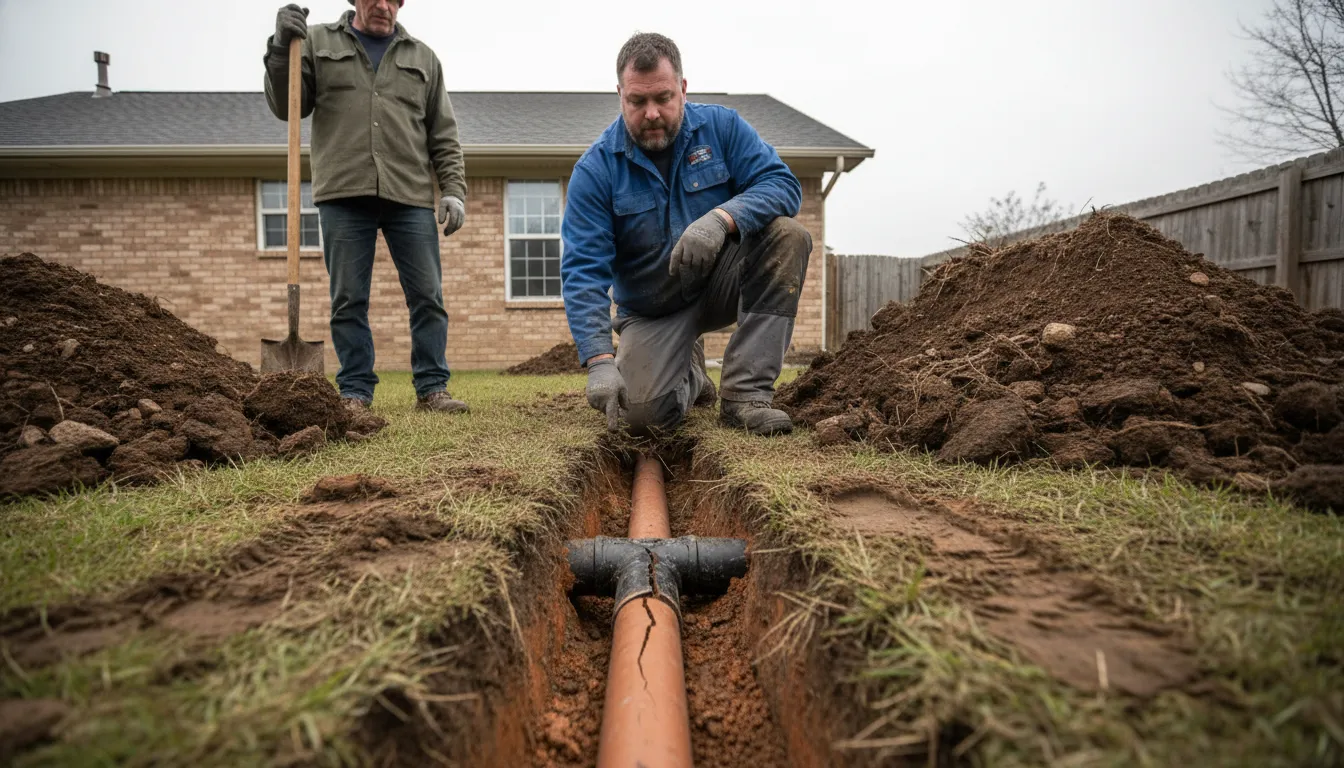
Find the Best Sewer Line Repair Companies for Your Business
No obligation • Fast responses • Nationwide coverage

Why you can trust Search a Plumber
Search a Plumber is a leading United States resource for finding and evaluating professional plumbing services. Our team researches licensing, experience, and customer feedback to create unbiased, fact-driven overviews. Companies cannot pay to change ratings or placement, ensuring homeowners get trustworthy information.
Search providers near you
Top Sewer Line Repair Companies in Waipahu, Hawaii Ranked
A damaged sewer line is a serious issue that can disrupt your home and pose health risks. Sewer line repair involves fixing or replacing the underground pipe that carries waste from your home to the city main or septic system. In Waipahu, local expertise is crucial due to unique soil conditions and common causes of failure. This guide helps you understand your options, from modern trenchless methods to traditional excavation, so you can make an informed decision when connecting with a qualified local professional.
Roto-Rooter Plumbing & Water Cleanup
2106 Lauwiliwili St Ste 101j, Kapolei, HI 96707
Roto-Rooter Plumbing & Water Cleanup offers comprehensive residential and commercial plumbing services in Honolulu, HI. Their experienced team handles a wide range of plumbing needs, including sewer line inspections and repairs, water heater installation and repair, drain cleaning, leak detection, and gas line installation. They specialize in trenchless sewer repair and provide emergency plumbing services available 24/7 throughout the year. With expertise in floodwater cleanup and mold remediation, Roto-Rooter is equipped to manage urgent water damage situations efficiently. Serving Kapolei and surrounding communities, they combine local knowledge with advanced tools like hydro jetting to address plumbing challenges effectively.
535 Plumbing LLC
1130 N Nimitz Hwy Suite B-180, Honolulu, HI 96817
535 Plumbing LLC is a family-owned plumbing company based in Honolulu, HI, serving residential, commercial, and new construction clients. Founded in 2015 by Shane Mizusawa, the company offers a wide range of services including water heater installation and repair, drain cleaning, sewer line repair, trenchless sewer repair, leak detection, repiping, and hydro jetting. They use advanced technology such as sewer camera inspections and pipe relining to diagnose and solve plumbing issues efficiently. 535 Plumbing is available every day, including holidays, and accommodates after-hours service requests to meet diverse scheduling needs.
Rock-O-Rooter, LLC
Honolulu, HI
Rock-O-Rooter, LLC is a full-service plumbing company based in Honolulu, HI, specializing in drain cleaning, sewer line repairs, and trenchless piping solutions. They offer hydro jetting and epoxy coating services for cast iron pipe rejuvenation, serving residential and commercial clients in the area. The company focuses on efficient and reliable plumbing repairs and installations, addressing a wide range of drainage and sewer issues with experienced local plumbers.
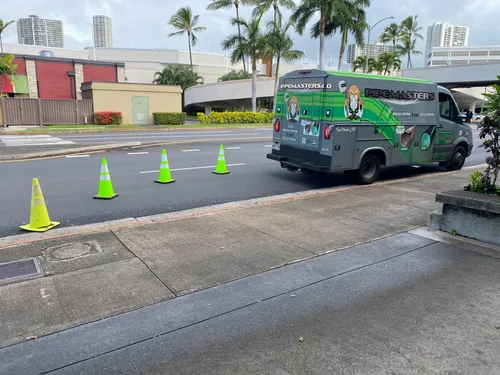
Pipe Masters LLC
820 W Hind Dr #240345, Honolulu, HI 96824
Pipe Masters LLC is a locally owned plumbing contractor serving Honolulu, HI, and the wider Oahu area, including outer islands. Established in 2008, they provide a wide range of plumbing services such as water heater repair and installation, drain cleaning, sewer line repair, trenchless sewer repair, leak detection, and repiping. The company uses advanced technologies including trenchless pipe replacement methods and electronic leak detection, and offers the only hot water hydro-jetting service in Hawaii. Pipe Masters also manages all necessary permits and ensures compliance with Honolulu's building codes, addressing the unique challenges posed by the island's climate and infrastructure. They provide emergency plumbing services with rapid response across Oahu.
Shoreline Plumbing
Honolulu, HI
Shoreline Plumbing is a locally owned plumbing company serving Honolulu, HI, and surrounding Oahu communities. They offer a wide range of plumbing services including water heater installation and repair, drain cleaning, sewer line repair, leak detection, and fixture upgrades. The team specializes in both traditional and tankless water heaters, providing thorough inspections and reliable repairs to maintain home comfort. Shoreline Plumbing also handles sewer line assessments and root intrusion solutions to keep plumbing systems flowing smoothly. Their approach emphasizes clear communication, honest pricing, and long-lasting results, aiming to prevent recurring plumbing issues rather than quick fixes.
Understanding Your Sewer Line System
Your main sewer line is a critical, yet out-of-sight, component of your home's plumbing. It runs underground from your house to the connection point at the street (city main) or a septic tank, often passing beneath driveways, landscaping, and foundations. In Waipahu and across Hawaii, these pipes face specific challenges. Older homes may have cast iron or clay pipes that are prone to corrosion and cracking over time. The primary culprits for failure here are tree root intrusion, which is common due to Hawaii's soil composition, shifting soil, persistent blockages, and internal pipe calcification 1 2. Recognizing early signs like frequent drain clogs, gurgling toilets, or soggy patches in your yard can help you address problems before they escalate.
Common Causes of Sewer Line Failure in Waipahu
Knowing what typically damages pipes in our area can help with prevention and diagnosis.
- Tree Root Intrusion: This is a leading cause. Roots seek moisture and can infiltrate tiny cracks or loose joints in pipes, eventually causing major blockages or breaks.
- Pipe Corrosion and Age: Older homes may have cast iron or Orangeburg pipes. Cast iron can rust through, while other materials simply degrade and collapse over decades 3.
- Shifting Soil: Hawaii's soil can expand, contract, and shift, putting pressure on pipes and causing them to crack, misalign, or break.
- Ground Settlement: Over time, the ground around a pipe can settle, creating voids or putting uneven stress on the line.
- Grease and Debris Buildup: Improper disposal of fats, oils, and non-flushable items can create severe blockages that damage pipe walls.
Diagnostic Process: The Video Inspection
Before any repair begins, a professional assessment is essential. Modern plumbers use a specialized sewer camera to perform a video inspection. This tool is snaked through your cleanout or toilet to travel the length of the pipe, providing a real-time view of the interior on a monitor 4. This no-dig diagnosis allows the technician to pinpoint the exact location, nature, and extent of the damage-whether it's a root mass, a crack, a belly (sagging section), or a complete collapse. This critical step determines the most effective and cost-efficient repair strategy for your specific situation 5.
Repair Method 1: Trenchless Sewer Repair
Trenchless technology has revolutionized sewer line fixes by minimizing property disruption. There are two primary trenchless techniques, often ideal for Waipahu's long or deep lines.
Pipe Lining (Cured-In-Place Pipe or CIPP)
This method involves inserting a flexible, resin-saturated tube into the damaged pipe. The tube is inflated, pressing the resin against the old pipe's walls, and then cured with heat or UV light to form a hard, seamless "pipe within a pipe".
- Pros: Extremely minimal digging (only small access pits), often completed in a day, and creates a jointless lining resistant to roots and corrosion with a lifespan of 50 years or more 6.
- Cons: Cannot be used on completely collapsed pipes. The new liner slightly reduces the internal diameter of the pipe. It often has a higher upfront material cost.
Pipe Bursting
This technique is used for total replacement. A bursting head is pulled through the old, broken pipe, fracturing it outward while simultaneously pulling a new, high-density polyethylene (HDPE) pipe into place behind it.
- Pros: Installs a brand-new, durable pipe without digging a long trench. Suitable for replacing severely damaged lines.
- Cons: Requires slightly larger access pits at each end. May not be feasible if there are many utility lines or other obstructions very close to the old pipe.
Find the perfect sewer line repair companies for your needs
Get personalized recommendations and expert advice
Repair Method 2: Traditional Excavation Repair
The conventional method involves using a backhoe or other equipment to dig an open trench along the path of the sewer line to fully expose the damaged section for repair or replacement.
- Pros: It is a straightforward solution that allows for a complete visual inspection. It can be the most cost-effective approach for repairing a single, shallow, and easily accessible break.
- Cons: This method is highly disruptive. It destroys landscaping, driveways, patios, and possibly parts of your lawn, requiring extensive and costly restoration afterward. The process is also more time-consuming and labor-intensive 7 8.
Comparing Costs: Trenchless vs. Traditional in Waipahu
Costs for sewer line repair vary widely based on the length of pipe, depth, extent of damage, and chosen method. While trenchless methods typically have a higher per-foot material cost, the total project cost can be competitive when factoring in the avoided landscape restoration.
- Trenchless Pipe Lining: Generally ranges from $80 to $250+ per foot, with total projects often falling between $6,000 and $12,000 or more 9.
- Trenchless Pipe Bursting: Similar range, typically $60 to $200+ per foot 10.
- Traditional Excavation Repair: The cost is highly variable. For a small, localized repair, it may be less expensive. However, for a full line replacement requiring a long trench, the costs of labor, machinery, and-critically-property restoration can make the total bill very high, sometimes exceeding trenchless options 11.
It's important to get detailed estimates that include all aspects of the job. A trenchless repair might have a higher line item for the repair itself but little to no cost for restoring your yard. An excavation quote may seem lower but must include a realistic estimate for repaving, replanting, and regrading.
Choosing the Right Method for Your Home
The best repair method depends on your specific circumstances:
- Choose Trenchless if: The pipe is damaged but not fully collapsed, the line is long or runs under hardscapes (driveways, pools), you want to preserve mature landscaping, or you need a faster solution with minimal cleanup 12.
- Traditional Excavation May Be Suitable if: The damage is very shallow and localized (e.g., a single break near the cleanout), the pipe has completely collapsed, or there are multiple severe offsets that lining cannot navigate 13.
Ultimately, the recommendation from a professional after a video inspection is the most valuable guide. Local Waipahu and Honolulu plumbers understand the island's soil conditions, common pipe materials, and permitting processes, which is invaluable for a successful repair.
Maintaining Your Sewer Line Post-Repair
After investing in a repair, protect it with good habits:
- Avoid Planting Trees with aggressive root systems near your sewer line.
- Dispose of Grease Properly: Never pour cooking oil or grease down the drain.
- Be Mindful of Flushing: Only flush human waste and toilet paper.
- Consider Regular Inspections: For older homes, a periodic video inspection can catch small issues before they become big problems.
Frequently asked questions
Sources
Footnotes
-
No-Dig Repair for Broken Sewer Pipes & Cracked Sewer Lines - https://www.hksolutionsgroup.com/cmesewerrepair/about/resources/cracked-pipe-repair ↩
-
Trenchless Pipe Lining | Fayette Heating & Air - https://fayetteheating.com/plumbing/drain-cleaning/trenchless-pipe-lining/ ↩
-
Cast Iron Drain Pipe Replacement - https://www.benjaminfranklinplumbing.com/league-city/blog/2025/april/cost-to-replace-cast-iron-drain-pipe-under-slab-key-factors-and-estimates/ ↩
-
TOP 10 BEST Sewer Line Repair in Honolulu, HI - Yelp - https://m.yelp.com/search?find_desc=Sewer+Line+Repair&find_loc=Honolulu%2C+HI ↩
-
Innovative Sewer Pipe Relining Northern Beaches - Top Plumbers - https://pearlaplumbingandelectrical.com.au/blog/understanding-sewer-pipe-relining-in-the-northern-beaches-in-2025/ ↩
-
How Long Does CIPP Trenchless Sewer Repair Last? - https://plumbingsacramento.com/how-long-does-cipp-trenchless-sewer-repair-last/ ↩
-
Trenchless vs. Traditional Sewer Line Repair - Allens Plumbing - https://www.allensplumbinghi.com/blog/trenchless-sewer-repair-vs-traditional-whats-best-for-your-honolulu-home/ ↩
-
What Are The Pros and Cons of Trenchless Sewer Repair? - https://www.southernairnow.com/blog/what-are-the-pros-and-cons-of-trenchless-sewer-repair/ ↩
-
How Much Does Pipe Lining Cost: A Detailed Cost Breakdown - https://www.benjaminfranklinplumbing.com/league-city/blog/2024/december/how-much-does-pipe-lining-cost-a-detailed-cost-breakdown/ ↩
-
Cost Comparison: Trenchless vs. Traditional Sewer Line Repair - https://www.advancedtrenchlesssolutions.com/blog/cost-comparison-trenchless-vs-traditional-sewer-line-repair ↩
-
Cheapest Way to Replace Sewer Line: 5 Proven Money-Saving Tips - https://www.pdsplumbingandair.com/cheapest-way-to-replace-sewer-line/ ↩
-
Is Pipe Relining Worth It? - Sewer Line Repair / Sewer Pipe Lining - https://4neighborhood.com/is-pipe-relining-worth-it/ ↩
-
Trenchless Sewer Repair vs. Traditional Excavation - https://alphaenvironmental.net/blog/trenchless-sewer-repair-vs-traditional-excavation-which-is-better/ ↩