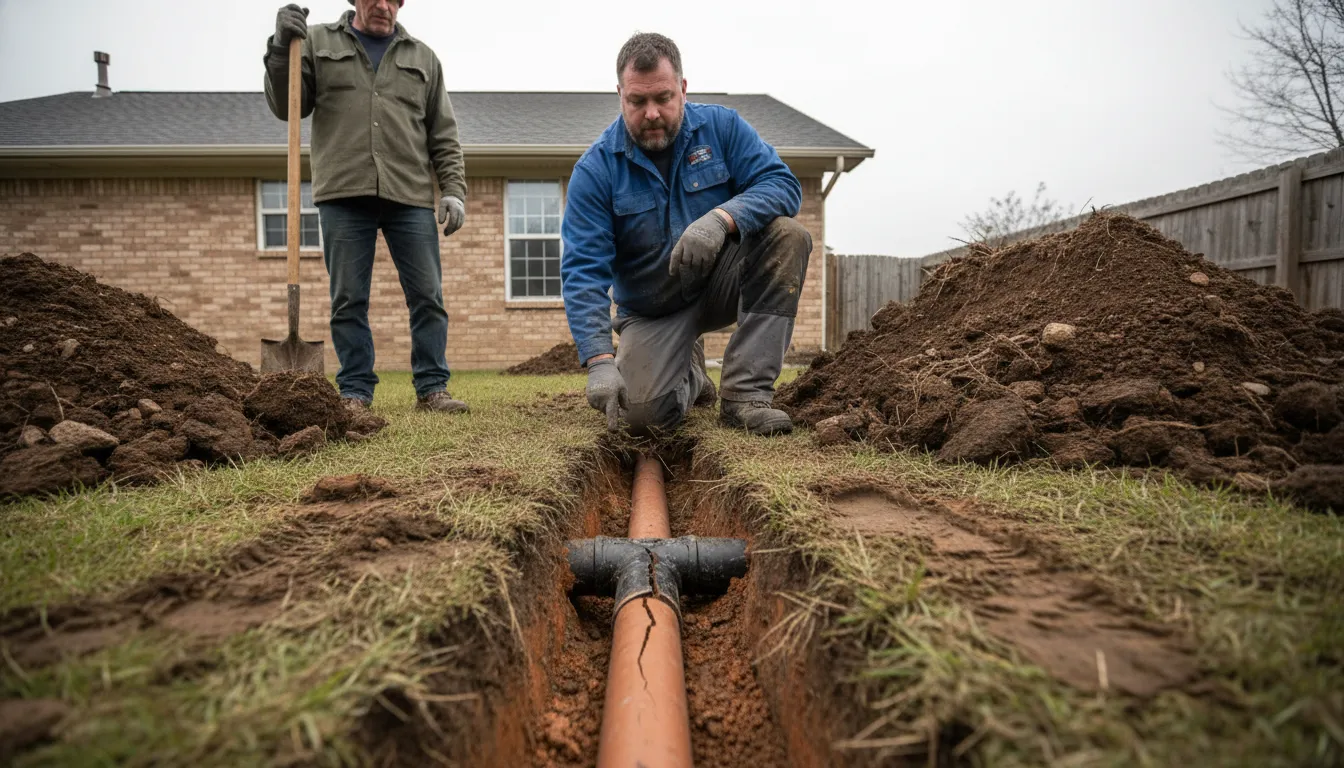
Find the Best Sewer Line Repair Companies for Your Business
No obligation • Fast responses • Nationwide coverage

Why you can trust Search a Plumber
Search a Plumber is a leading United States resource for finding and evaluating professional plumbing services. Our team researches licensing, experience, and customer feedback to create unbiased, fact-driven overviews. Companies cannot pay to change ratings or placement, ensuring homeowners get trustworthy information.
Search providers near you
Top Sewer Line Repair Companies in Greenwich, Connecticut Ranked
A failing sewer line is a serious issue that can disrupt your home and property. Sewer line repair addresses the underground pipe that carries wastewater from your house to the municipal sewer main. When this critical line is damaged, it can lead to backups, foul odors, and significant property damage. This guide explains the common causes of sewer line failure in Greenwich, outlines the modern repair methods available, and helps you understand how to find a qualified local specialist to assess and fix the problem.
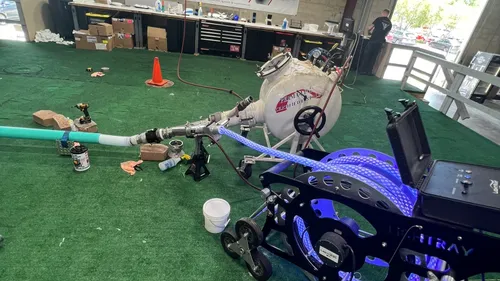
Royal Rooter and Drain Cleaning LLC
74 Jefferson Ave, Lodi, NJ 07644
Royal Rooter and Drain Cleaning LLC provides plumbing services in New York, NY, specializing in sewer camera inspections, drain cleaning, hydro jetting, and sewer line repairs. Their team uses camera inspections to accurately locate sewer issues and offers trenchless repair methods such as UV lining to minimize property disruption. Hydro jetting is available when pipes are suitable for this powerful cleaning technique.
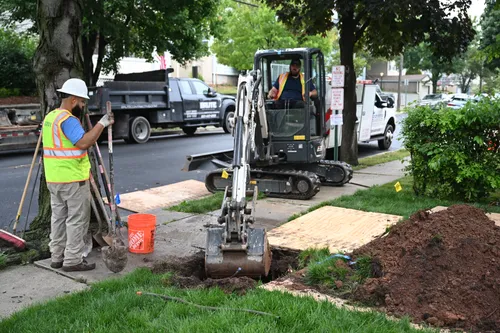
BRUTE Contracting Water Main & Sewer Contractors
16 Park Way Suite 201, Upper Saddle River, NJ 07458
BRUTE Contracting Water Main & Sewer Contractors is a family-owned business specializing in sewer and water line installation, repair, and replacement in New York, NY. They serve both residential and commercial customers, using state-of-the-art commercial equipment to ensure efficient and reliable solutions. With over 20 years of experience, BRUTE Contracting has completed more than 2,000 projects and is fully licensed and insured. The company offers free consultations to tailor services to client needs.
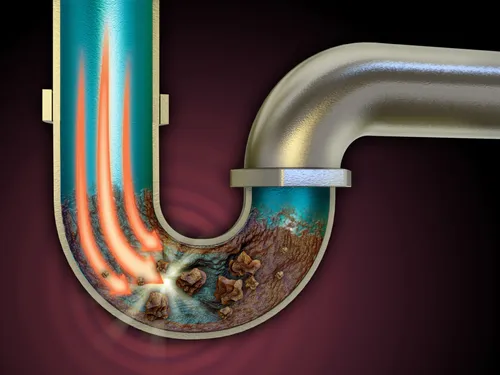
24/7 Drain & Sewer
New York, NY
24/7 Drain & Sewer is a plumbing company serving New York, NY, specializing in drain and sewer services. They offer a range of solutions including drain cleaning, hydro jetting, video pipe inspections, and sewer line repairs. The company uses modern equipment and techniques to address plumbing issues efficiently. They serve the northeastern part of New Jersey with a focus on thorough and effective plumbing work. 24/7 Drain & Sewer is available around the clock to handle urgent plumbing needs.
A&E NYC Plumbing
40 Fulton St, New York, NY 10038
A&E NYC Plumbing offers a wide range of plumbing services in New York, NY, including water heater repair and installation, drain cleaning, sewer line repair, leak detection, and gas line installation. They also handle faucet and toilet repairs, garbage disposal maintenance, and repiping projects. The company is licensed and insured, providing both residential and commercial plumbing solutions with a focus on safety and technical expertise. Their team is experienced in managing complex plumbing systems and offers free onsite estimates for more involved jobs.
JP Plumbing and Sewer
22 Ambrose Pl, Yonkers, NY 10701
JP Plumbing and Sewer provides a wide range of residential and commercial plumbing services in New York, NY. Their offerings include sewer camera inspections, water heater installations, drain cleaning, sewer line repairs, and leak detection. The company is fully insured and operates 24/7 to handle emergency plumbing needs. They focus on using quality tools and techniques to deliver lasting plumbing solutions with certified expertise.
Understanding Your Sewer Line in Greenwich
Your home's main sewer line is a crucial, yet out-of-sight, component of your plumbing system. It runs underground from your home's foundation to the public sewer connection, typically located near the street. In Greenwich, the age and history of many properties mean the materials and condition of these lines can vary significantly.
Older homes in the area often have sewer pipes made of clay or cast iron. While durable in their time, these materials are prone to specific issues: clay pipes can crack and shift, while cast iron is susceptible to corrosion and rust over decades. Newer constructions typically use PVC pipe, which is more resistant to root intrusion and decay. Knowing what lies beneath your property is the first step in diagnosing potential problems.
Common Causes of Sewer Line Failure
Several factors can lead to a sewer line needing repair or replacement. In Greenwich's mature landscapes, the following are the most frequent culprits:
- Tree Root Intrusion: This is a leading cause of blockages and breaks. Roots from large trees are naturally drawn to the moisture and nutrients in older clay or cast iron pipes. They can infiltrate small cracks or joints, eventually growing to completely obstruct or fracture the pipe.
- Corrosion and Material Degradation: Cast iron pipes, common in mid-century homes, rust from the inside out. This corrosion can create holes, rough interiors that catch debris, and ultimately lead to pipe collapse. Similarly, vintage clay pipes can degrade, becoming brittle and prone to cracking.
- Ground Shifting and Settlement: Soil movement due to freeze-thaw cycles, erosion, or construction activity can cause pipes to settle unevenly. This misalignment, known as a "belly" or offset joint, prevents proper water flow and leads to waste buildup and blockages.
- Aging and General Wear: Like all infrastructure, sewer lines have a finite lifespan. Decades of use, ground pressure, and internal corrosion simply wear pipes out, making them more vulnerable to failure from any of the above causes.
Recognizing the Warning Signs
Early detection of a sewer line issue can prevent a minor repair from becoming a major excavation project. Be alert for these warning signs:
- Multiple Drain Clogs: If more than one fixture (like a toilet, shower, and sink) is draining slowly or backing up simultaneously, especially after using a washing machine, the problem is likely in the main line.
- Unpleasant Odors: Persistent sewer gas smells in your yard, basement, or drains indicate a crack or break in the pipe system.
- Soggy or Lush Patches in Yard: Unexplained soggy areas, sinkholes, or patches of grass that are unusually green and lush can signal a leaking sewer line fertilizing your lawn.
- Unusual Sounds: Gurgling noises from toilets or drains when water is running elsewhere in the house can point to a ventilation or blockage issue in the main line 1.
If you notice any of these signs, the next critical step is a professional video camera inspection to accurately diagnose the issue.
Modern Repair Methods: Trenchless vs. Traditional
Once a problem is identified, you generally have two repair pathways: modern trenchless methods or traditional excavation. The best choice depends on the damage's nature, location, and extent.
Trenchless Sewer Repair
Trenchless technology has revolutionized sewer line repair by minimizing disruption to your property. There are two primary techniques:
- Pipe Lining (Cured-in-Place Pipe - CIPP): A flexible, resin-saturated tube is inserted into the damaged pipe and inflated. The resin cures in place, forming a hard, seamless "pipe within a pipe." This method is excellent for repairing cracks, holes, and corrosion while slightly reducing the pipe's inner diameter.
- Pipe Bursting: This method is used for complete replacement without digging. A conical bursting head is pulled through the old, broken pipe, fracturing it outward while simultaneously pulling a new HDPE (high-density polyethylene) pipe into place. It's ideal for replacing severely damaged or undersized lines.
Pros of Trenchless Repair:
- Minimal Disruption: Requires only small access pits, preserving landscaping, driveways, and hardscaping.
- Speed: Most projects can be completed in a day or two.
- Durability: The new liner or pipe is resistant to roots and corrosion, often with a 50-year lifespan.
- Cost-Effective: While material costs can be higher, you save thousands on landscape restoration 2.
Cons of Trenchless Repair:
- Not for All Situations: It cannot fix a completely collapsed pipe or one with severe misalignment (a "belly").
- Access Requirements: Needs existing cleanout points or the creation of small access pits.
Traditional Excavation Repair
This is the conventional "dig-and-replace" method. A trench is excavated along the entire length of the damaged pipe segment to expose it, remove it, and install a new one.
Pros of Traditional Excavation:
- Complete Access: Allows for a full visual inspection of the pipe and surrounding soil.
- Universal Solution: Can address any problem, including total collapses, severe bellies, or situations where trenchless equipment cannot be used.
Cons of Traditional Excavation:
- Major Property Disruption: Destroys lawns, gardens, patios, and walkways.
- Higher Restoration Costs: The repair cost is only part of the bill; restoring your property can add thousands.
- Longer Timeline: The process of digging, repairing, and restoring takes significantly longer 3.
Find the perfect sewer line repair companies for your needs
Get personalized recommendations and expert advice
Cost Considerations for Sewer Repair in Greenwich
Sewer line repair is a significant investment, and costs in Greenwich can vary widely based on the method chosen, the length and depth of the pipe, and the specific challenges of your property.
- Trenchless Repair Costs: Generally priced per linear foot. Pipe lining can range from $80 to $250 per foot, while pipe bursting may be on the higher end of that scale or slightly above due to the equipment involved 4.
- Traditional Excavation Costs: Also priced per foot, but with a much wider range-from $50 to $450 or more per foot-heavily influenced by digging difficulty (rock, tree roots, depth) 5. The critical factor is the restoration cost, which includes backfilling, re-sodding, and repairing hardscapes, often adding several thousand dollars to the total.
- Full Replacement: For a typical residential line, a complete replacement using either method often falls within a range of $8,000 to $15,000 or more 6 7 8.
It's important to view these as estimates. A detailed quote from a professional after a camera inspection is essential for an accurate price.
Choosing the Right Solution for Your Home
The decision between trenchless and traditional methods isn't always straightforward. Here's a simple guide:
- Choose Trenchless Repair If: The camera inspection shows cracks, corrosion, or root intrusion but the pipe is still structurally intact and properly aligned. It's the best choice for minimizing property impact and often offers a faster, cleaner solution 9 10.
- Choose Traditional Excavation If: The pipe has fully collapsed, has a severe sag, or is in an area inaccessible to trenchless equipment. While disruptive, it is sometimes the only viable option for a permanent fix 11 12.
Ultimately, a reputable specialist will recommend the most effective and long-lasting solution for your specific situation, explaining the pros and cons of each approach.
The Importance of Professional Diagnosis
Never guess with your sewer line. A professional video camera inspection is a non-invasive, relatively low-cost service that provides a clear view of the pipe's interior condition, pinpointing the exact location, nature, and severity of the problem 13 14. This diagnosis is the foundation for an accurate repair plan and a fair, transparent estimate. It ensures you pay for the repair you actually need, not a more extensive one assumed due to symptoms alone.
Frequently asked questions
Sources
Footnotes
-
Warning Signs of a Breaking Sewer Line Explained - https://principledplumbing.com/warning-signs-of-a-breaking-sewer-line-explained/ ↩
-
Trenchless Sewer Repair vs. Traditional Excavation - AQUALIS - https://aqualisco.com/trenchless-sewer-repair-vs-traditional/ ↩
-
Trenchless vs. Traditional Sewer Repair - https://sewerlinesonly.com/trenchless-vs-traditional-sewer-repair-which-is-more-cost-effective-for-lakewood-homeowners/ ↩
-
Is Trenchless Sewer Line Repair Cheaper? - AP Plumbing - https://applumbing.com/blog/is-trenchless-sewer-line-repair-cheaper/ ↩
-
Trenchless Sewer Repair vs. Traditional Excavation - https://tdtplumbing.com/trenchless-sewer-repair/difference-to-traditional-repair/ ↩
-
Decoding Trenchless Sewer Repair Costs - Pipeliner Pros - https://pipelinerpros.com/trenchless-sewer-repair-cost/ ↩
-
How Much Does It Cost To Replace A Sewer Line? - CME - https://www.hksolutionsgroup.com/cmesewerrepair/about/resources/sewer-line-replacement-cost ↩
-
Cost Comparison: Trenchless vs. Traditional Sewer Line Repair - https://www.advancedtrenchlesssolutions.com/blog/cost-comparison-trenchless-vs-traditional-sewer-line-repair ↩
-
Trenchless Sewer Repair: Lower Cost, Lower Impact Sewer ... - https://www.sewerflowllc.com/2025/03/06/trenchless-sewer-repair-lower-cost-lower-impact-sewer-repair/ ↩
-
Solutions for Sewer Line Repair: Trenchless Options - https://www.serviceprofessor.com/trenchless-sewer-line-repair/ ↩
-
Sewer Pipe Lining vs Residential Excavation - 128 Plumbing - https://www.128plumbing.com/sewer-pipe-lining-vs-residential-excavation/ ↩
-
Trenchless Sewer Line Repair vs. Sewer Line Excavation - https://dandfplumbing.com/sewer-line-repair-vs-sewer-line-excavation/ ↩
-
Is Trenchless Sewer Repair Right For Your Home? - Mattioni Plumbing - https://www.callmattioni.com/blog/t-trenchless-sewer-repair/ ↩
-
Sewer Repair Options: Trenchless vs. Traditional Methods | TYCO - https://tycoplumbingco.com/sewer-repair-options-trenchless-vs-traditional-methods/ ↩