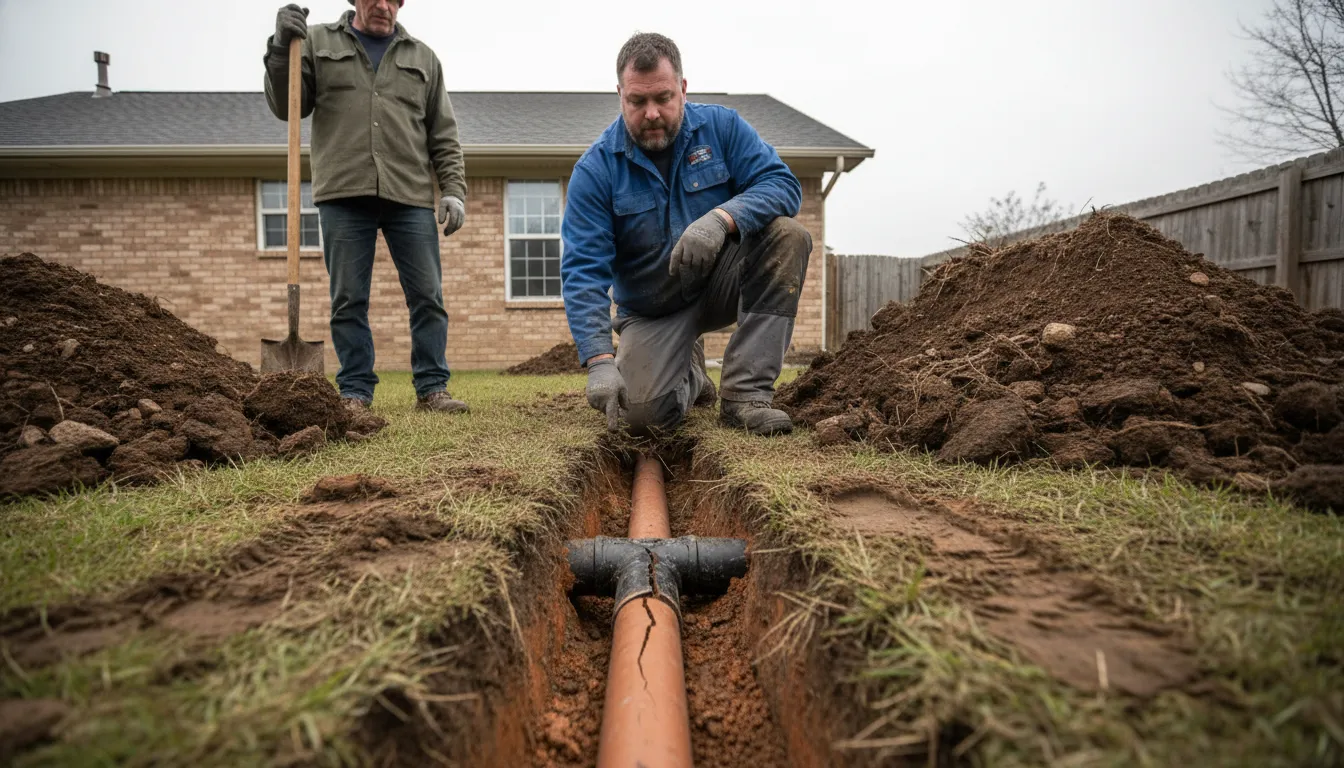
Find the Best Sewer Line Repair Companies for Your Business
No obligation • Fast responses • Nationwide coverage

Why you can trust Search a Plumber
Search a Plumber is a leading United States resource for finding and evaluating professional plumbing services. Our team researches licensing, experience, and customer feedback to create unbiased, fact-driven overviews. Companies cannot pay to change ratings or placement, ensuring homeowners get trustworthy information.
Search providers near you
Top Sewer Line Repair Companies in Loveland, Colorado Ranked
A failing sewer line is a serious issue that can disrupt your home, threaten your property, and lead to significant health hazards. Sewer line repair involves diagnosing and fixing the underground pipe that carries all your home's wastewater away. In Loveland, where soil conditions and aging infrastructure can pose unique challenges, understanding your repair options is crucial. This guide explains the common causes of sewer line failure, compares modern trenchless methods with traditional excavation, and provides local cost insights to help you make an informed decision when you need to find a qualified professional.
King Rooter & Plumbing | Plumber Boulder, CO | Drain Cleaning | Sewer & Water Line | Tankless Water Heater Repair
1434 Spruce St Suite 100, Boulder, CO 80302
King Rooter & Plumbing is a plumbing service provider based in Denver, CO, offering a wide range of plumbing solutions including drain cleaning, sewer and water line repair, water heater installation and repair, and gas line installation. They use advanced technologies such as sewer camera inspections and trenchless sewer repair with NuFlow pipe relining to minimize property disruption. With over 50 years of combined experience, King Rooter & Plumbing has been serving the Denver and Boulder metro areas since 2007. They provide same-day and emergency plumbing services to address urgent needs promptly.
Everett Plumbing and Drain INC.
Denver, CO
Everett Plumbing and Drain INC. is a family-owned plumbing company serving Denver, CO. They specialize in sewer camera inspections, drain cleaning, hydro jetting, sewer line repair, trenchless sewer repair, and leak detection. The company uses advanced technology to diagnose and repair sewer and plumbing issues, offering solutions like hydro jetting and full excavation to address problems effectively. With 25 years of local experience, Everett Plumbing and Drain INC. provides 24/7 emergency services to help homeowners manage urgent plumbing needs.
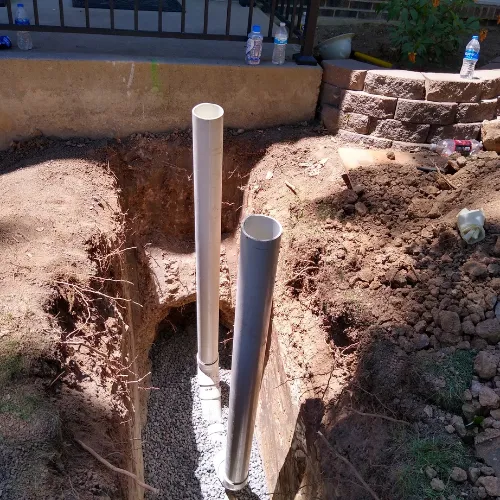
Drain Solvers The Pros
630 15th Ave, Longmont, CO 80501
Drain Solvers The Pros is a plumbing company based in Denver, CO, specializing in drain cleaning and sewer line repair. They serve a range of nearby communities including Berthoud, Fort Collins, Johnstown, and Longmont. The company focuses on plumbing solutions with an emphasis on drain and sewer system maintenance and repair.
Understanding Your Home's Sewer System
The main sewer line, or sewer lateral, is your home's critical wastewater conduit. It runs from the foundation of your house, underneath your yard, and connects to the public city sewer main, usually located near the street or in an alley. This pipe handles everything from sinks and showers to toilets and washing machines. When it fails, the problems can surface inside your home as multiple slow drains, gurgling sounds from fixtures, or sewage backups, and outside as soggy patches, foul odors, or sinkholes in your yard.
Common Causes of Sewer Line Failure in Loveland
Several factors contribute to sewer line problems in our area:
- Aging Pipes: Many older Loveland homes have sewer lines made of clay tile or cast iron. These materials degrade over decades, becoming brittle and prone to cracking and collapse.
- Tree Root Intrusion: This is a leading cause of blockages and damage. Roots seek out moisture and nutrients, infiltrating tiny cracks or joints in the pipe. Once inside, they expand, causing major blockages and eventually breaking the pipe apart.
- Ground Shifting and Soil Conditions: Colorado's soil can expand, contract, and shift with freeze-thaw cycles and moisture changes. This movement puts stress on pipes, leading to misaligned joints, cracks, or a "belly" (a low spot where waste collects and causes chronic clogs).
- General Wear and Corrosion: Over time, even modern PVC pipes can be damaged by ground pressure or improper installation.
The Critical First Step: Sewer Camera Inspection
Before any repair can be planned, an accurate diagnosis is essential. A professional sewer camera inspection involves sending a high-resolution, waterproof camera on a flexible rod through your cleanout or roof vent and down the line. The technician watches a live feed, pinpointing the exact location, nature, and severity of the problem-whether it's a root mass, a crack, a complete break, or a belly.
This service, which typically costs around $350 and often includes a high-pressure water jetting cleaning, is a vital investment. It eliminates guesswork, ensures the proposed solution matches the actual problem, and can even be used to verify the quality of a repair after it's completed.
Your Repair Options: Trenchless vs. Traditional
Once the issue is identified, you and your plumbing professional will discuss the best repair method. The choice primarily comes down to two approaches: modern trenchless technology or traditional excavation.
Trenchless Sewer Repair
Trenchless methods are designed to fix or replace the pipe with minimal digging, preserving your landscaping, driveway, and hardscape.
1. Cured-In-Place Pipe (CIPP) Lining: This is a form of pipe relining. A flexible, resin-saturated tube is inverted or pulled into the damaged pipe. It is then inflated and cured (often with hot water or UV light) to form a hard, seamless "pipe-within-a-pipe." CIPP lining seals cracks and holes, strengthens the existing line, and is resistant to root intrusion.
- Pros: Extremely minimally invasive, often completed in a day, creates a jointless new interior surface, and is highly durable.
- Cons: Requires a structurally sound host pipe to line; cannot be used if the pipe has fully collapsed or is severely misaligned 1.
2. Pipe Bursting: This is a trenchless replacement technique. A conical bursting head is pulled through the old, damaged pipe, fracturing it outward into the surrounding soil. Simultaneously, a new pipe (usually HDPE) is pulled in behind the head, replacing the old line.
- Pros: Installs a brand new, larger-diameter pipe with no digging along the pipe's length. Ideal for replacing severely damaged clay or cast iron lines.
- Cons: Requires access pits at the beginning and end of the run. May not be suitable if there are many other utilities very close to the sewer line 2 3 4.
Traditional Excavation (Open-Trench Repair)
This is the conventional method where a backhoe or other equipment digs a trench along the entire length of the damaged pipe section to expose it. The old pipe is removed and a new one is laid in its place before the trench is backfilled.
- Pros: It is a straightforward solution that can handle any type of damage, including total collapses. For very shallow, short repairs, the initial pipe replacement cost can be lower.
- Cons: The disruption is significant. It destroys lawns, gardens, patios, driveways, and sidewalks. The project timeline is longer due to digging and, critically, the landscape and hardscape restoration costs can be substantial, often doubling or tripling the total project cost 5. The work is also more susceptible to weather delays.
Find the perfect sewer line repair companies for your needs
Get personalized recommendations and expert advice
Cost Considerations for Sewer Line Repair in Loveland
Costs vary widely based on the repair method, the length and depth of the pipe, soil conditions, and the extent of damage. Here are general estimates for the Northern Colorado area:
- Sewer Camera Inspection (with cleaning): ~$350 6.
- Trenchless Repair (Lining or Bursting): Often priced per linear foot, ranging from $55 to $250+. A typical project can range from $1,100 to $5,000 or more 7 8.
- Traditional Excavation Repair: While the pipe replacement itself might start lower, the total cost escalates with excavation depth, length, and restoration. Major projects involving long trenches and repaving can reach $12,000 to $25,000+ 9.
- Full Sewer Line Replacement: Average costs in the region for a full replacement, depending on the method chosen, typically fall between $2,500 and $7,000+, with an average around $4,690 10 11.
Key Takeaway: When comparing bids, ensure you are comparing the total project cost. A lower bid for traditional dig repair may not include the thousands of dollars needed to restore your yard, concrete, or irrigation system.
Choosing the Right Solution for Your Home
So, which method is better? The answer depends entirely on your specific situation.
- Consider Trenchless Methods if your pipe is structurally sound enough to line or if you want to avoid destroying a mature landscape, new driveway, or expensive hardscaping. The long-term value of avoiding restoration often makes trenchless the more cost-effective choice overall 12.
- Traditional Excavation May Be Necessary if the pipe has completely collapsed, has a severe vertical misalignment (a major belly or drop), or is located in an area with minimal surface disruption (e.g., under a dirt backyard with no obstacles). It may also be the only option if other utilities are too densely packed for trenchless equipment to navigate safely.
The most important step is to consult with a reputable, experienced local plumbing company that offers both trenchless and traditional solutions. They can provide an unbiased recommendation based on the camera inspection footage, giving you a clear path forward to restore your home's essential plumbing function.
Frequently asked questions
Sources
Footnotes
-
Trenchless Sewer Repair vs. Traditional Excavation - AQUALIS - https://aqualisco.com/trenchless-sewer-repair-vs-traditional/ ↩
-
Sewer Line Repair in Longmont CO - Mountain Valley Plumbing - https://www.mtnvalleyplumbing.com/professional-loveland-sewer-line-repair/ ↩
-
Trenchless Sewer Repair vs. Traditional Excavation - https://alphaenvironmental.net/blog/trenchless-sewer-repair-vs-traditional-excavation-which-is-better/ ↩
-
Trenchless Sewer Line Repair vs Traditional: Which Is Better - https://cactusplumbingandair.com/trenchless-sewer-line-repair-vs-traditional/ ↩
-
Professional Sewer Line Repair in Loveland, CO - https://www.mtnvalleyplumbing.com/sewer-line-repair-in-loveland-co/ ↩
-
Trenchless vs. Traditional Sewer Repair - https://sewerlinesonly.com/trenchless-vs-traditional-sewer-repair-which-is-more-cost-effective-for-lakewood-homeowners/ ↩
-
Trenchless Sewer Repair: Lower Cost, Lower Impact Sewer Repair - https://www.sewerflowllc.com/2025/03/06/trenchless-sewer-repair-lower-cost-lower-impact-sewer-repair/ ↩
-
Empower Your Decision: Decoding Trenchless Sewer Repair Costs - https://pipelinerpros.com/trenchless-sewer-repair-cost/ ↩
-
Cost Comparison: Trenchless vs. Traditional Sewer Line Repair - https://www.advancedtrenchlesssolutions.com/blog/cost-comparison-trenchless-vs-traditional-sewer-line-repair ↩
-
Sewer Repair Denver: Fast Fixes for Broken Sewer Lines - https://sewerex.com/sewer-repair-denver-complete-guide-to-fixing-your-sewer-line-fast/ ↩
-
Sewer & Water Line Replacement Costs & Repair in Northern ... - https://boonstraexcavation.com/water-sewer-line/ ↩
-
Sewer Repair Options: Trenchless vs. Traditional Methods | TYCO - https://tycoplumbingco.com/sewer-repair-options-trenchless-vs-traditional-methods/ ↩