Find the Best Sewer Line Repair Companies for Your Business
No obligation • Fast responses • Nationwide coverage

Why you can trust Search a Plumber
Search a Plumber is a leading United States resource for finding and evaluating professional plumbing services. Our team researches licensing, experience, and customer feedback to create unbiased, fact-driven overviews. Companies cannot pay to change ratings or placement, ensuring homeowners get trustworthy information.
Search providers near you
Top Sewer Line Repair Companies in Greeley, Colorado Ranked
A damaged sewer line is more than an inconvenience; it's a threat to your home's sanitation, foundation, and property value. When your main sewer drain fails, it can lead to foul backups, soggy yards, and significant structural headaches. In Greeley, common culprits like expansive soil, aging clay pipes, and persistent tree roots make sewer line issues a frequent concern for homeowners. This guide explains everything you need to know about diagnosing, repairing, and replacing your sewer lateral-the pipe running from your home to the city main-and how to connect with qualified local specialists who can assess your specific situation.
303 Drain Now
311 Mesa Ave, Lochbuie, CO 80603
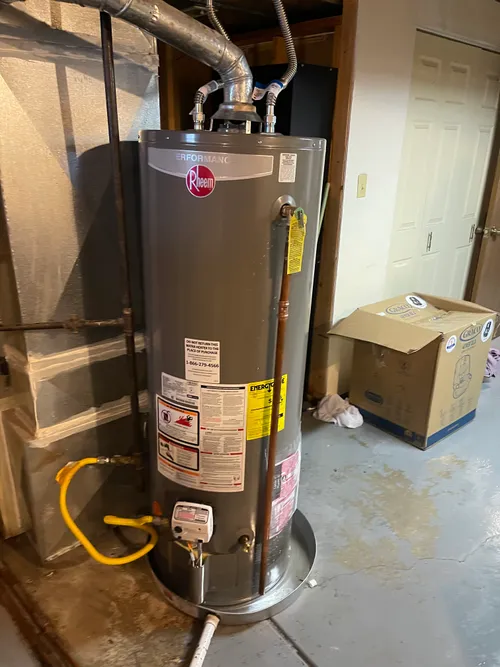
303 Drain Now is a family-owned plumbing business serving Denver, CO, with over 25 years of experience. They provide a wide range of plumbing services including sewer camera inspections, water heater installation and repair, drain cleaning, sewer line repair, leak detection, and toilet repairs. The company offers specialized capabilities such as advanced drain and sewer cleaning equipment to handle clogs and main line repairs efficiently. Founded and operated by Master Plumber Harold Watts, 303 Drain Now also supports property managers with maintenance programs designed to minimize downtime and costly repairs. Their team is available 24/7 for emergency plumbing needs.
Drain Solvers The Pros
630 15th Ave, Longmont, CO 80501
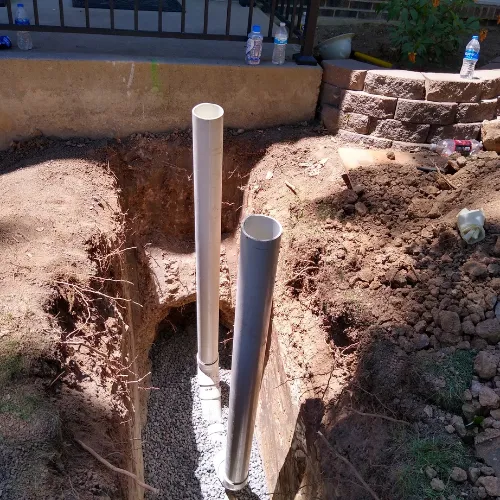
Drain Solvers The Pros is a plumbing company based in Denver, CO, specializing in drain cleaning and sewer line repair. They serve a range of nearby communities including Berthoud, Fort Collins, Johnstown, and Longmont. The company focuses on plumbing solutions with an emphasis on drain and sewer system maintenance and repair.
What Causes Sewer Line Problems in Greeley?
Understanding why your main drain line is failing is the first step toward a lasting solution. Several factors unique to our region contribute to these failures.
- Tree Root Intrusion: This is a leading cause of sewer line blockages and breaks. Roots seek out moisture and nutrients, easily infiltrating tiny cracks or loose joints in older pipes. Once inside, they grow rapidly, causing complete blockages and eventually breaking the pipe apart.
- Aging Pipe Materials: Many older Greeley homes have sewer lines made of clay tile or cast iron. Clay pipes are brittle and prone to cracking from soil movement, while cast iron corrodes and collapses over time.
- Soil Conditions: The soil along the Front Range can be expansive, shifting with changes in moisture. This movement puts tremendous pressure on underground pipes, leading to misaligned joints, cracks, and even total pipe collapse 1.
- Ground Settlement and "Bellies": Over decades, the ground beneath a pipe can settle unevenly. This creates a low spot, or "belly," where waste and water collect instead of flowing freely. This stagnation leads to corrosion, blockages, and eventual pipe failure.
- General Wear and Tear: Like all infrastructure, sewer lines have a finite lifespan. Constant use, temperature fluctuations, and the weight of the earth above them eventually take their toll.
Signs You Need Sewer Drain Repair
Don't wait for a sewage backup in your basement to act. Early warning signs can save you from a more expensive and disruptive repair down the line.
- Multiple Drain Clogs: If more than one plumbing fixture (like a toilet, shower, and sink) are draining slowly or backing up simultaneously, the problem is likely in the main sewer line, not an individual drain.
- Unpleasant Odors: Foul sewage smells in your yard, basement, or coming from drains are a clear indicator of a break or leak in the line.
- Soggy or Lush Patches in Yard: An unexplained soggy area, sinkhole, or patch of grass that is noticeably greener and faster-growing than the rest of your lawn can signal a leaking sewer line fertilizing the ground.
- Unusual Sounds: Gurgling noises from your toilets or drains when using other fixtures can indicate a blockage or venting issue in the main line.
- Increased Pest Activity: Sewage leaks attract insects and rodents. A sudden increase in pests around your home's foundation or yard can be a secondary sign.
Repair Methods: Trenchless vs. Traditional Excavation
Once a problem is diagnosed via a professional camera inspection, you'll typically have two primary repair paths: modern trenchless technology or traditional excavation.
Trenchless Sewer Repair
Trenchless methods are designed to fix or replace the pipe with minimal disruption to your landscaping, driveway, and hardscape.
- Pipe Lining (Cured-in-Place Pipe - CIPP): A flexible, resin-saturated tube is inserted into the damaged pipe and inflated. The resin cures in place, forming a seamless, jointless "pipe within a pipe" that is often stronger than the original.
- Pros: Minimal digging (only small access holes), often completed in a day, preserves landscaping, driveway, and sidewalks, and resists future root intrusion.
- Cons: Higher upfront material cost, requires the existing pipe to have a navigable path for the liner, and may not be suitable for pipes that have completely collapsed or are severely misaligned.
- Pipe Bursting: This method is for full replacement. A bursting head is pulled through the old pipe, fracturing it outward while simultaneously pulling a new, high-density polyethylene (HDPE) pipe into place behind it 2.
- Pros: Installs a brand-new, durable pipe with slightly increased diameter, still requires only small access pits, and is effective for replacing severely damaged lines.
- Cons: Slightly more disruptive than lining, may not be feasible under certain structures without additional excavation.
Traditional Excavation (Open-Trench Repair)
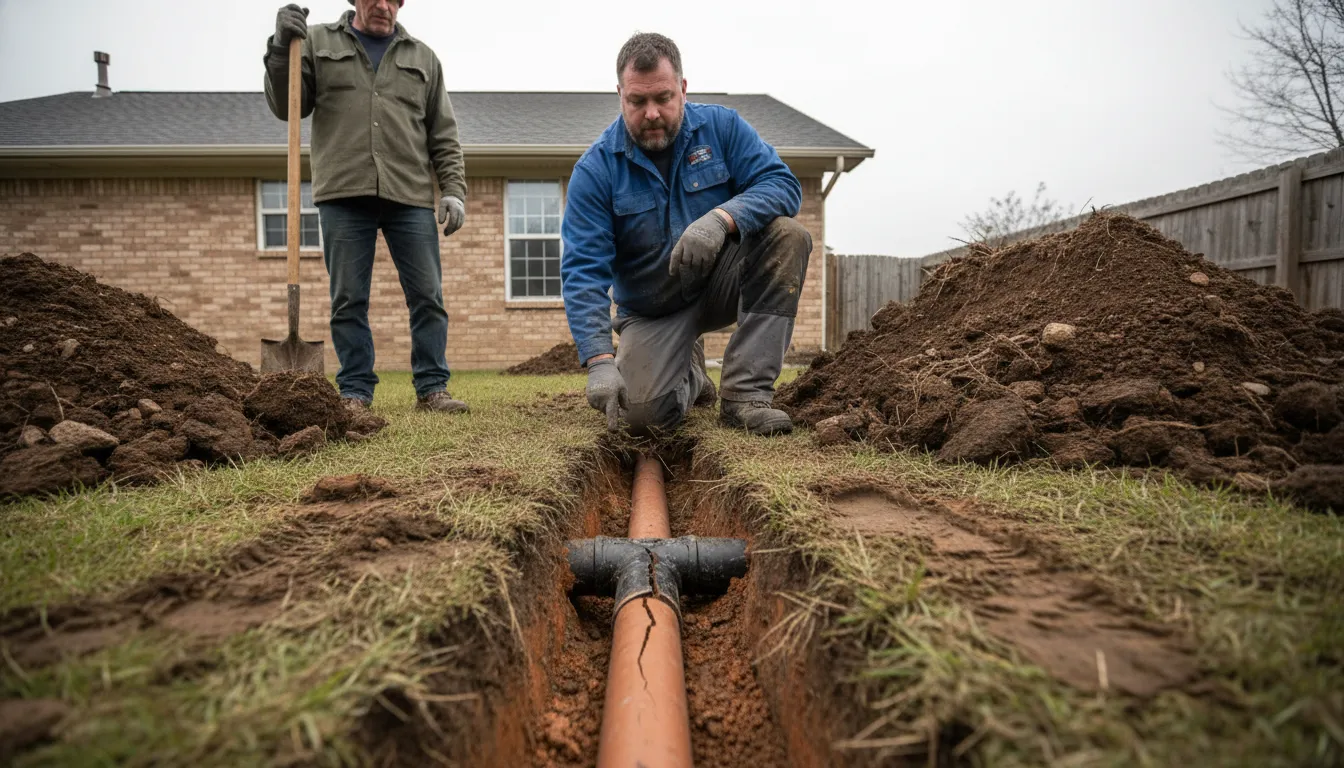
This is the conventional method, involving digging a long, deep trench to fully expose the damaged sewer line for repair or section replacement.
- Pros: Allows for a direct visual inspection of the entire problem, is often the only option for pipes that have totally collapsed or are inaccessible to trenchless equipment, and can have a lower initial repair cost for short sections.
- Cons: Extremely disruptive to your property. The trench can destroy lawns, gardens, trees, patios, and driveways. It requires significant labor, time, and heavy machinery, and comes with substantial hidden restoration costs 3.
Find the perfect sewer line repair companies for your needs
Get personalized recommendations and expert advice
Understanding Sewer Line Repair Costs in Greeley
Costs can vary widely based on the repair method, extent of damage, pipe location, and depth. It's crucial to get detailed quotes that include all potential expenses.
- Diagnostic Camera Inspection: $250 - $500. This essential first step provides a video diagnosis of the problem's location and severity, informing the repair plan 4 5.
- Minor Repairs: $100 - $500. This covers clearing a root clog or fixing a small leak at an accessible joint.
- Traditional Excavation Repair/Replacement: For a full traditional replacement, costs can range from $4,000 to over $20,000+ 6. Replacing a single damaged section via excavation typically ranges from $1,000 to $4,000+ for the plumbing work alone 7.
- Trenchless Repair (Lining or Bursting): Generally ranges from $3,000 to $12,000+ for the average residential line 8 9. The cost is influenced by pipe length, diameter, and condition.
- The Critical "Hidden Cost" of Excavation: A quote for traditional digging often excludes landscape restoration. Restoring a torn-up yard, repairing a concrete driveway, or rebuilding a fence can add $1,500 to $8,000 or more to your final bill 10 11 12. Always factor this in when comparing a trenchless quote (which avoids this cost) to an excavation quote.
Choosing the Right Service Provider
Selecting a qualified professional is the most important decision you'll make. Look for a Greeley-based specialist who offers:
- Comprehensive Inspections: They should insist on a video camera inspection before providing any quote or recommending a solution 13.
- Method Options: A reputable company will be proficient in both trenchless and traditional methods and can impartially explain which is truly best for your situation.
- Detailed, Written Estimates: Quotes should be transparent, breaking down labor, materials, permit fees, and-if applicable-estimated restoration costs.
- Proper Licensing and Insurance: Verify they hold current Colorado plumbing licenses and carry ample liability and workers' compensation insurance.
- Local Experience: A provider familiar with Greeley's soil conditions, common pipe materials, and local building codes will navigate the repair more efficiently.
Frequently asked questions
Sources
Footnotes
-
Understanding Sewer Line Repair: Avoiding Nightmare ... - https://ai.originphce.com/blogs/Understanding-Sewer-Line-Repair---Avoiding-Nightmare-Scenarios-in-Greeley ↩
-
Trenchless Sewer Repair vs. Traditional Excavation - AQUALIS - https://aqualisco.com/trenchless-sewer-repair-vs-traditional/ ↩
-
Sewer Repair Options: Trenchless vs. Traditional Methods | TYCO - https://tycoplumbingco.com/sewer-repair-options-trenchless-vs-traditional-methods/ ↩
-
Sewer Line Repair in Denver, CO - Trenchless Pipe Relining - https://plumblineservices.com/plumbing/drain-cleaning/sewer-and-drain-repair ↩
-
Greeley Sewer Repair - Lion Home Service - https://lionhomeservice.com/greeley-sewer-repair/ ↩
-
The Cost of Sewer Line Replacement: What to Expect - https://dirtcheapsewer.com/the-cost-of-sewer-line-replacement/ ↩
-
Repipe Specialists Greeley - Lion Home Service - https://lionhomeservice.com/greeley-repiping/ ↩
-
Decoding Trenchless Sewer Repair Costs - Pipeliner Pros - https://pipelinerpros.com/trenchless-sewer-repair-cost/ ↩
-
Cost To Repair Sewer Line: 2023 Options & Affordable Services - https://www.superbrothers.com/cost-to-repair-sewer-line-2023-options-affordable-services/ ↩
-
Trenchless vs. Traditional Sewer Repair - https://sewerlinesonly.com/trenchless-vs-traditional-sewer-repair-which-is-more-cost-effective-for-lakewood-homeowners/ ↩
-
Is Trenchless Sewer Line Repair Cheaper? - AP Plumbing - https://applumbing.com/blog/is-trenchless-sewer-line-repair-cheaper/ ↩
-
Cost Comparison: Trenchless vs. Traditional Sewer Line Repair - https://www.advancedtrenchlesssolutions.com/blog/cost-comparison-trenchless-vs-traditional-sewer-line-repair ↩
-
Greeley Trenchless Sewer Repair - https://www.lionrooterandsewer.com/drain-sewer-services/trenchless-sewers/ ↩