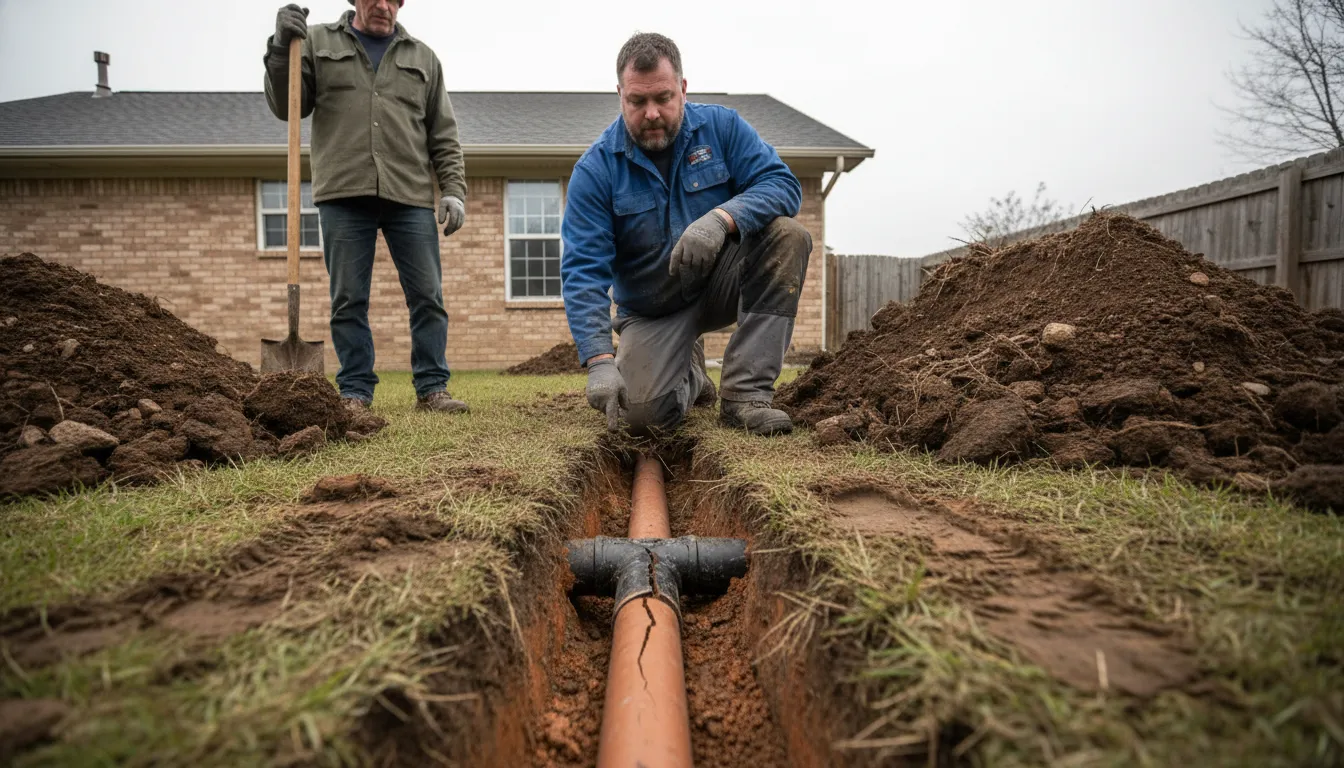
Find the Best Sewer Line Repair Companies for Your Business
No obligation • Fast responses • Nationwide coverage

Why you can trust Search a Plumber
Search a Plumber is a leading United States resource for finding and evaluating professional plumbing services. Our team researches licensing, experience, and customer feedback to create unbiased, fact-driven overviews. Companies cannot pay to change ratings or placement, ensuring homeowners get trustworthy information.
Search providers near you
Top Sewer Line Repair Companies in Yucaipa, California Ranked
A damaged sewer line is a serious issue that can disrupt your home and pose health risks. Sewer line repair involves fixing the underground pipe that carries wastewater from your home to the municipal main. Understanding your options is crucial for making an informed, cost-effective decision. This guide outlines the common problems, repair methods, and key considerations for Yucaipa homeowners to help you navigate the process of finding a qualified local professional.
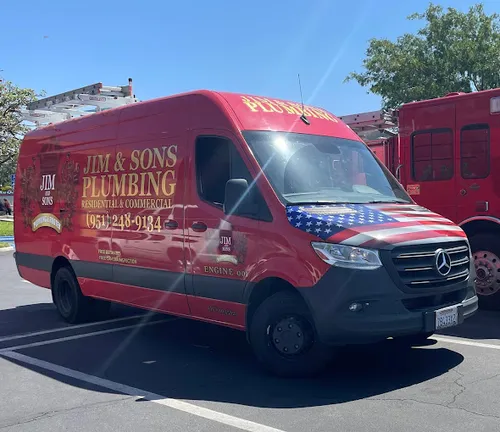
Jim & Sons Plumbing & Rooter
9345 Narnia Dr, Riverside, CA 92503
Jim & Sons Plumbing & Rooter is a family-owned plumbing company serving Riverside, CA, and the surrounding Inland Empire region. Since 1983, they have provided residential and commercial plumbing services including water heater repair and installation, drain cleaning, sewer line repair, leak detection, repiping, gas line installation, and garbage disposal repair. They specialize in trenchless sewer repair techniques such as pipe bursting and cured-in-place lining, which allow sewer line renewal without excavation, preserving landscaping and minimizing environmental impact. The company offers same-day service and is fully licensed and insured.
Plumbing Matters Rooter & Plumbing Services Incorporated
17285 Ridge Canyon Dr, Riverside, CA 92506
Plumbing Matters Rooter & Plumbing Services Incorporated is a family-owned plumbing company serving Riverside, CA, and the Inland Empire. They offer a range of services including sewer camera inspections, water heater repair and installation, drain cleaning, sewer line repair, leak detection, and toilet repair. The company uses advanced technology for leak detection and provides fully licensed and insured plumbing services. With over seven years of experience, they focus on personalized solutions and maintain open communication with customers. Plumbing Matters is available 24/7 for emergency plumbing needs.
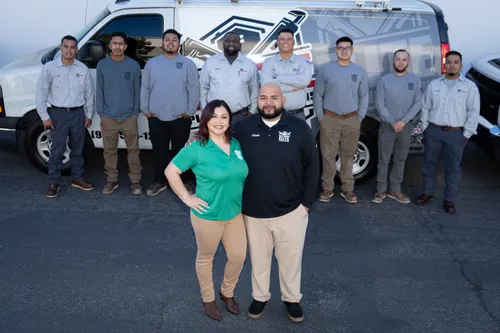
Elite Plumbing & Drains LLC
1440 3rd St Unit 20, Riverside, CA 92507
Elite Plumbing & Drains LLC is a plumbing company based in Riverside, CA, offering a range of services including sewer camera inspections, drain cleaning, sewer line repair, and trenchless sewer repair. They serve both residential and commercial customers in the Riverside area. The company uses advanced technology and trenchless methods to provide efficient, no-dig solutions for sewer and drain problems. Elite Plumbing & Drains LLC is available 24/7 for emergency services and provides a workmanship guarantee for their work.
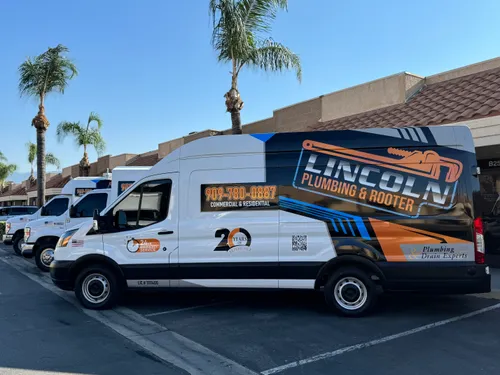
Lincoln Plumbing & Rooter, INC
738 S Waterman Ave c45, San Bernardino, CA 92408
Lincoln Plumbing & Rooter, INC provides plumbing services in Riverside, CA, serving both residential and commercial clients. Their offerings include drain cleaning, sewer line repair, leak detection, and toilet repair. The company specializes in sewer line repair and uses advanced leak detection techniques to identify hidden issues. With years of experience, Lincoln Plumbing & Rooter is committed to maintaining efficient plumbing systems and preventing future problems through comprehensive maintenance and repairs.
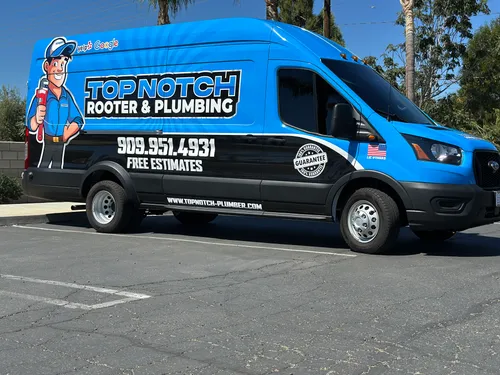
Top Notch Rooter & Plumbing
118 E Airport Dr, San Bernardino, CA 92408
Top Notch Rooter & Plumbing is a family-owned plumbing company serving Riverside, CA, and the Inland Empire. They specialize in sewer line repair and general plumbing services, offering personalized care and attention to each customer. The company focuses on providing reliable solutions for plumbing emergencies and sewer line replacements with a commitment to quality work and customer support.
Understanding Your Home's Sewer System
From your house to the street, the main sewer line is a critical but hidden component of your property. This pipe runs underground, connecting all your home's drains to the public sewer system. In Yucaipa, these lines often travel beneath yards, driveways, and gardens. When this line fails, it affects every drain in your house. Knowing the basics of how this system works and where it's located is the first step in diagnosing and addressing sewer problems.
Common Causes of Sewer Line Failure
Several factors can lead to a sewer line backup or break, especially in older Yucaipa neighborhoods. Identifying the root cause helps determine the best repair strategy.
- Tree Root Intrusion: This is a leading cause of blockages. Roots from trees and shrubs are naturally drawn to the moisture and nutrients in sewer pipes. They can infiltrate tiny cracks or loose joints, eventually growing thick enough to cause a complete clog or break the pipe 1.
- Pipe Age and Material: Many older homes have sewer lines made of clay tile or cast iron. Clay pipes are brittle and can crack from ground pressure, while cast iron is susceptible to corrosion and rust over decades, eventually leading to collapse 2.
- Ground Shifting and Settlement: Soil movement, whether from seismic activity, erosion, or freeze-thaw cycles, can put pressure on pipes, causing them to crack, misalign at the joints, or even collapse.
- Grease and Debris Buildup: Pouring fats, oils, and grease (FOG) down drains is a common mistake. These substances solidify inside pipes, catching other debris and creating stubborn blockages that restrict flow 3 4.
Modern vs. Traditional Repair Methods
Today, homeowners have two primary paths for fixing a damaged sewer line: trenchless technology and traditional excavation. The right choice depends on the damage's location, severity, and your property's layout.
Trenchless Sewer Repair
Trenchless methods are designed to fix or replace pipes with minimal digging. The two main techniques are:
- Pipe Lining (Cured-in-Place Pipe or CIPP): A flexible tube coated with epoxy resin is inserted into the damaged pipe and inflated. The resin hardens, creating a new, seamless pipe-within-a-pipe.
- Pipe Bursting: A bursting head is pulled through the old pipe, fracturing it outward while simultaneously pulling a new, durable pipe (like HDPE) into place.
Pros of Trenchless Repair:
- Minimal Disruption: Requires only small access pits, preserving landscaping, driveways, and hardscapes.
- Speed: Most jobs can be completed in one to two days.
- Durability: The new liner or pipe is resistant to roots and corrosion, with a lifespan often exceeding 50 years.
- Often Cost-Effective: When factoring in the avoided costs of restoring your property, trenchless can be more economical.
Cons of Trenchless Repair:
- Not for All Damage: It cannot fix a pipe that has fully collapsed or has severe misalignment, as the liner or bursting tool needs a clear path 5.
- Specialized Equipment: Requires trained technicians and specific technology.
Traditional Excavation Repair
This is the conventional "dig-and-replace" method. Contractors use backhoes or excavators to dig a trench along the path of the sewer line to expose and replace the damaged section 6.
Pros of Traditional Excavation:
- Direct Access: Allows for a complete visual inspection and is the only option for pipes that are totally collapsed or inaccessible.
- Proven Method: A straightforward solution that all plumbing contractors can perform.
Cons of Traditional Excavation:
- Major Property Damage: Destroys lawns, gardens, patios, and possibly driveways, requiring extensive and costly restoration 7 8.
- Time-Consuming: The digging, repair, and backfilling process takes longer, and restoration adds additional days or weeks 9.
- Higher Overall Cost: While the pipe replacement itself may be comparable, the added labor for excavation and landscape repair increases the total project cost significantly 10.
Find the perfect sewer line repair companies for your needs
Get personalized recommendations and expert advice
Cost Considerations for Sewer Line Repair in Yucaipa
Sewer line repair is a significant investment, and costs in Yucaipa can vary widely based on the chosen method and the job's specifics.
- Minor Repairs or Clearing: Addressing a simple clog or a small leak may cost between $150 and $500 11.
- Trenchless Repair: For lining or bursting, homeowners can expect a range of $4,000 to $13,000, with a common per-foot cost of $135 to $285 12. This method is often noted to be 30-40% cheaper upfront than full excavation when restoration costs are considered.
- Traditional Excavation Repair/Replacement: Digging up and replacing a sewer line typically falls between $6,000 and $12,000+, with complex jobs under foundations or with difficult access exceeding $20,000 13 14 15.
Key factors influencing price include the extent of damage, length of pipe needing repair, depth and accessibility of the line, local labor rates, and any required city permits.
How to Choose the Right Repair Solution
Making the best choice for your home involves a professional assessment. Here is a recommended process:
- Get a Video Inspection: Always start with a sewer camera inspection. A small camera is snaked through the line, providing a real-time video feed to pinpoint the exact location, cause, and severity of the problem. This is non-negotiable for an accurate diagnosis.
- Evaluate Trenchless First: For most cases of cracks, root intrusion, or corroded pipes that haven't fully collapsed, trenchless repair is the preferred choice due to its minimal disruption, speed, and long-term durability 16 17.
- Reserve Excavation for Severe Cases: Traditional digging is the necessary solution for pipes that have completely collapsed, have major sags, or are in locations where trenchless equipment cannot be used.
- Compare Detailed Quotes: Obtain written estimates from licensed, insured professionals that detail the repair method, materials, labor, permit fees, and-for excavation-the scope and cost of property restoration.
Maintaining Your Sewer Line Post-Repair
After investing in a repair, protect it with good habits. Avoid planting trees with aggressive root systems near the line. Never pour grease, oil, or coffee grounds down drains. Consider using enzyme-based drain treatments periodically to help break down organic matter. Being proactive can extend the life of your new sewer line for decades.
Frequently asked questions
Sources
Footnotes
-
What Are The Leading Causes Of Collapsed Sewer Lines? - https://www.nuflowstlouis.com/what-are-the-leading-causes-of-collapsed-sewer-lines/ ↩
-
What Is the Life Expectancy of a Sewer Pipe? - https://www.williamsplumbinganddrain.com/what-is-the-life-expectancy-of-a-sewer-pipe/ ↩
-
Broken Sewer Pipe Under House: Causes and Effective Solutions - https://www.benjaminfranklinplumbing.com/league-city/blog/2024/december/broken-sewer-pipe-under-house-causes-and-effective-solutions/ ↩
-
Service Line Coverage: 7 Essential Facts for 2025 - https://mitchelljoseph.com/service-line-coverage/ ↩
-
Sewer Repair Options: Trenchless vs. Traditional Methods | TYCO - https://tycoplumbingco.com/sewer-repair-options-trenchless-vs-traditional-methods/ ↩
-
Trenchless Sewer Line Repair vs. Sewer Line Excavation - https://dandfplumbing.com/sewer-line-repair-vs-sewer-line-excavation/ ↩
-
Sewer Pipe Lining vs Residential Excavation - 128 Plumbing - https://www.128plumbing.com/sewer-pipe-lining-vs-residential-excavation/ ↩
-
Trenchless vs. Traditional Sewer Repair in San Diego - https://epoxypipeline.com/blog/trenchless-vs-traditional-sewer-repair-comparison/ ↩
-
Trenchless Sewer Line Repair vs Traditional - Service Force Plumbing - https://serviceforceplumbing.com/trenchless-sewer-line-repair-vs-traditional-which-is-better/ ↩
-
Cost Comparison: Trenchless vs. Traditional Sewer Line Repair - https://www.advancedtrenchlesssolutions.com/blog/cost-comparison-trenchless-vs-traditional-sewer-line-repair ↩
-
Sewer Line Repair Cost Guide in Bay Area - https://www.bellowsservice.com/how-much-do-main-line-sewer-repairs-cost/ ↩
-
Trenchless Sewer Repair vs. Traditional Methods in the Bay ... - https://total-uc.com/trenchless-vs-traditional-sewer-repair/ ↩
-
Sewer Repair Cost: Trenchless Vs Traditional Methods - https://www.superbrothers.com/sewer-repair-cost-trenchless-vs-traditional-methods/ ↩
-
Empower Your Decision: Decoding Trenchless Sewer Repair Costs - Pipeliner Pros - https://pipelinerpros.com/trenchless-sewer-repair-cost/ ↩
-
The Cost of Sewer Line Replacement: What to Expect - https://dirtcheapsewer.com/the-cost-of-sewer-line-replacement/ ↩
-
Trenchless Sewer Repair vs. Traditional Excavation: Which is Better? - https://alphaenvironmental.net/blog/trenchless-sewer-repair-vs-traditional-excavation-which-is-better/ ↩
-
Trenchless Sewer Line Repair vs Traditional: Which Is Better - https://cactusplumbingandair.com/trenchless-sewer-line-repair-vs-traditional/ ↩