Find the Best Sewer Line Repair Companies for Your Business
No obligation • Fast responses • Nationwide coverage

Why you can trust Search a Plumber
Search a Plumber is a leading United States resource for finding and evaluating professional plumbing services. Our team researches licensing, experience, and customer feedback to create unbiased, fact-driven overviews. Companies cannot pay to change ratings or placement, ensuring homeowners get trustworthy information.
Search providers near you
Top Sewer Line Repair Companies in Tracy, California Ranked
A damaged sewer line is a serious issue that can disrupt your home and pose health risks. Sewer line repair involves fixing the underground pipe that carries wastewater from your home to the city's main sewer system. When this critical line fails, it's essential to find a reliable, local professional who can accurately diagnose the problem and recommend the most effective solution. This guide will help you understand the common causes, repair methods, and key considerations for sewer line repair in Tracy, so you can make an informed decision when connecting with a qualified specialist.
Almighty Plumbing
1309 Mokelumne Dr, Antioch, CA 94531
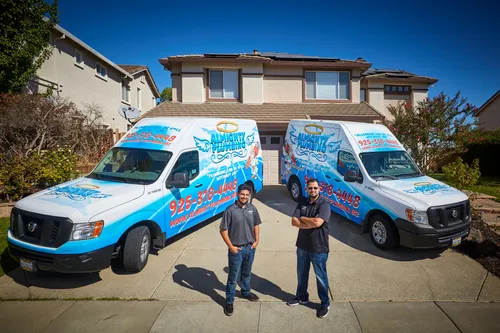
Almighty Plumbing is a family-owned and operated plumbing company serving Oakland, CA, and the greater East Bay area. They provide a wide range of plumbing services including water heater repair and installation, tankless water heater services, water softener installation, drain cleaning, sewer line repair, repiping, and garbage disposal repair. The company also specializes in bathroom remodeling and water filtration system installation. With a focus on honest, fair service tailored to customer needs, Almighty Plumbing offers multi-year warranties on repairs and installations. They also provide emergency plumbing services to address urgent issues promptly.
URV Projects Plumbing Service
1048 Serpentine Ln # 312, Pleasanton, CA 94566
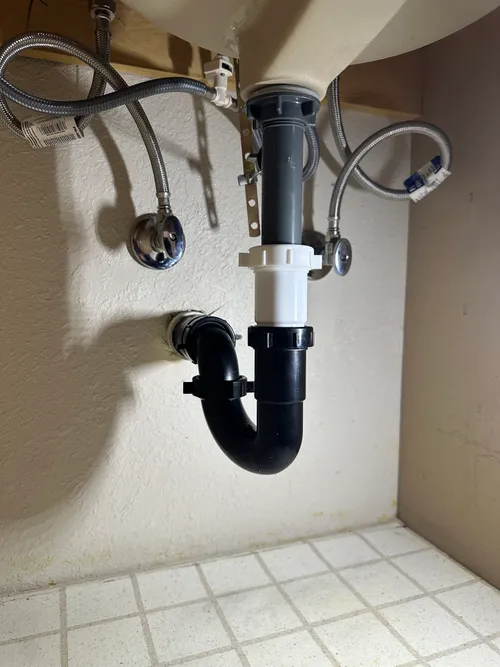
URV Projects Plumbing Service is a licensed and insured full-service plumbing company serving Fremont, CA, and nearby cities. They offer a wide range of residential plumbing services including water heater repair and installation, water softener installation, drain cleaning, sewer line repair, and leak detection. The company is experienced in handling complex plumbing projects that require detailed planning and skilled workmanship. Their team uses advanced techniques for leak detection and provides reliable water heater services to ensure consistent hot water supply. URV Projects Plumbing Service is known for using high-quality materials and delivering guaranteed work.
Streamline Plumbing
San Francisco, CA
Streamline Plumbing is a licensed sewer contractor based in San Francisco, CA, specializing in trenchless sewer repair and replacement. Serving residential, commercial, and industrial clients throughout the Bay Area, they have completed over 10,000 sewer replacements since 1990 using low-impact lateral sewer replacement techniques. The company offers 24/7 emergency sewer repair services to address urgent plumbing needs any time of day or night.
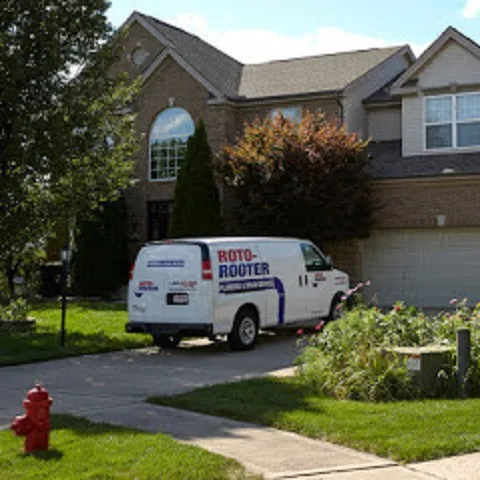
Roto-Rooter Plumbing & Water Cleanup
95 W 11th St #204A, Tracy, CA 95376
Roto-Rooter Plumbing & Water Cleanup offers a wide range of plumbing services in San Jose, CA, including sewer and drain cleaning, water heater repair and installation, sump pump services, and sewer line repair with trenchless options. The company serves both residential and commercial customers, providing specialized solutions such as hydro jetting and gas line installation. Founded in 1935, Roto-Rooter brings decades of experience and advanced technology to plumbing challenges. They also provide 24/7 emergency plumbing services for urgent needs like burst pipes and sewer backups.
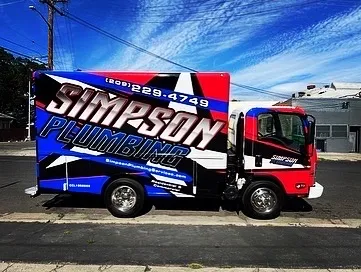
Simpson Plumbing
7574 Carmelo Ave, Tracy, CA 95304
Simpson Plumbing is a family-owned plumbing company serving Stockton, CA, and surrounding areas including Tracy and Modesto. With over 19 years of experience, they provide a wide range of plumbing services for residential and commercial customers. Their offerings include drain cleaning, sewer line repair, water heater installation and repair, leak detection, hydro jetting, and trenchless sewer repair. Simpson Plumbing is licensed, bonded, and insured, and offers 24/7 emergency plumbing services to address urgent needs promptly.
Understanding Your Sewer Line in Tracy
In Tracy, your residential sewer line, or main drain line, runs underground from your home's foundation to the street where it connects to the municipal sewer system. These pipes are typically buried several feet deep, often passing under yards, driveways, and sidewalks. Most homes in the area have sewer lines made of older materials like cast iron or clay, which are particularly susceptible to the local environmental challenges.
Common Causes of Sewer Line Failure
Knowing what causes sewer line problems can help with prevention and early detection. The primary culprits in Tracy include:
- Tree Root Intrusion: This is a leading cause of blockages and damage. Roots seek out moisture and can infiltrate tiny cracks or loose joints in pipes, eventually growing and causing major blockages or even breaking the pipe apart.
- Aging Pipes: Many Tracy homes have original sewer lines made of cast iron (which corrodes over time) or clay (which can crack and shift). As these materials degrade, they become weak and prone to failure.
- Seismic Activity and Soil Shifts: California's seismic activity and the region's hard, expansive soils can cause the ground to shift, putting stress on underground pipes and leading to misalignment, cracks, or collapses.
- General Wear and Tear: Over decades, constant use, ground pressure, and minor settling can gradually deteriorate a sewer line.
Modern Repair Methods: Trenchless vs. Traditional
Today, homeowners have two primary avenues for sewer line restoration: modern trenchless technologies and traditional excavation. The right choice depends entirely on the condition and location of your damaged pipe.
Trenchless Sewer Repair
Trenchless methods are often the preferred choice for repairing sewer lines because they minimize disruption to your property.
- Pipe Lining (Cured-in-Place Pipe - CIPP): This process involves inserting a flexible, resin-coated tube into the damaged pipe. The tube is inflated and cured (often with heat or UV light) to form a hard, seamless "pipe-within-a-pipe." This method seals cracks and holes without digging.
- Pipe Bursting: Used for more severely damaged lines, this technique involves pulling a new pipe through the old one while simultaneously fracturing the old pipe outward. It completely replaces the line but requires only small access pits at each end.
Pros of Trenchless Repair:
- Minimal Disruption: Preserves landscaping, driveways, patios, and other surface structures.
- Faster Completion: Many jobs can be completed in a day or two.
- Durable Result: The new liner or pipe is highly resistant to root intrusion and corrosion 1.
- Often More Cost-Effective: While the technology cost can be higher, you save significantly on the extensive labor and restoration costs associated with digging 2 3.
Cons of Trenchless Repair:
- Not Suitable for All Damage: It may not be feasible if the pipe has completely collapsed or has severe misalignment.
- Higher Initial Technology Cost: The specialized equipment and materials can mean a higher upfront quote compared to simple excavation for a short section.
Traditional Excavation (Open-Trench Repair)
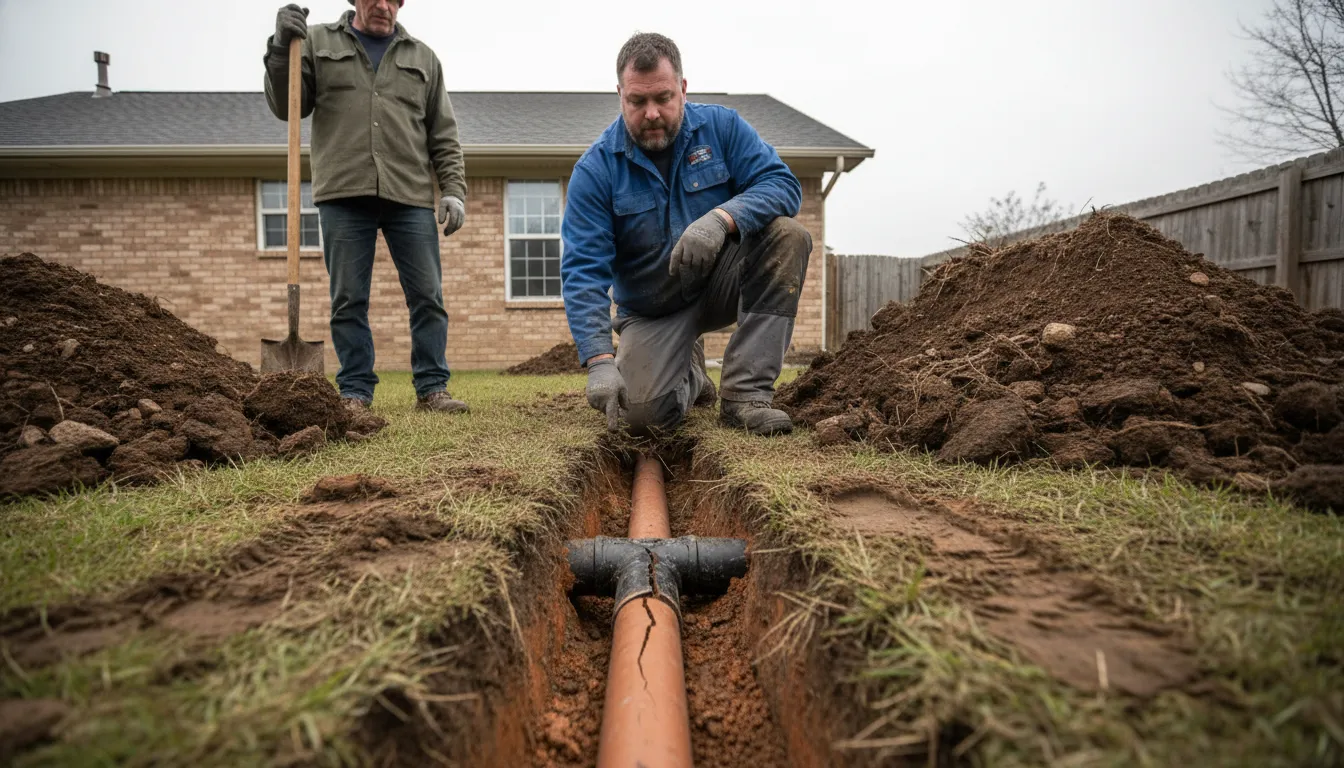
This is the conventional method, involving digging a long, deep trench to fully expose the damaged sewer line for repair or replacement.
Pros of Traditional Repair:
- Direct Access: Provides complete visual and physical access to the pipe, ideal for complex repairs, severe collapses, or sections with multiple failures.
- Universal Solution: Can be used in almost any situation, regardless of pipe condition.
Cons of Traditional Repair:
- Major Property Disruption: Requires digging through yards, concrete, and other hardscapes, leading to significant restoration work afterward 4 5.
- Time-Consuming: The process of digging, repairing, backfilling, and restoring the landscape is much longer.
- Higher Overall Cost: When factoring in excavation equipment, labor, and the full cost of restoring your property, the total price often exceeds that of trenchless solutions.
Find the perfect sewer line repair companies for your needs
Get personalized recommendations and expert advice
Cost Considerations for Tracy Homeowners
The cost of sewer line repair in Tracy varies widely based on the method, extent of damage, and pipe location. A critical first step that influences all costs is a professional video camera inspection, which typically ranges from $200 to $500. This investment is crucial to avoid unnecessary and costly excavation for a misdiagnosed problem.
- Trenchless Repair Costs: Generally range from $4,000 to $13,000 or more, often calculated per foot (approximately $135-$285 per foot). The final price depends on the length of the pipe and the specific technology used.
- Traditional Excavation Costs: Typically range from $6,000 to $20,000+ 6 7. While the repair itself might seem less expensive, the cost of restoring landscaping, concrete driveways, sidewalks, and other affected areas can cause the total to surpass trenchless options 8 9.
Making the Right Choice for Your Home
Facing a sewer line issue can be stressful. Follow this decision-making framework to ensure you get the best, most cost-effective solution.
- Diagnose Before You Dig: Always start with a video inspection. A reputable professional will use a camera to show you the exact problem, its location, and the condition of the entire pipe run. This evidence is essential for an accurate quote and method recommendation.
- Prefer Trenchless When Possible: If the inspection reveals a pipe that is damaged but structurally intact (not collapsed), trenchless lining or bursting is often the most sensible long-term investment for Tracy homes. It addresses the common issues of roots and aging pipes while protecting your property from destruction 10.
- Reserve Excavation for Severe Cases: Traditional digging should be considered when the pipe has fully collapsed, has a major misalignment, or is in a location where trenchless equipment cannot be used effectively. It's a more invasive but sometimes necessary solution 11.
- Get Multiple Detailed Quotes: Contact several local specialists. A proper quote should be based on a camera inspection and should clearly break down costs for the repair itself and any necessary restoration work, especially for excavation.
Proactive Maintenance and Warning Signs
Catching a problem early can save you from a major repair. Be alert to these warning signs of a failing sewer line:
- Frequent drain clogs or backups in multiple fixtures (toilets, tubs, sinks).
- Gurgling sounds coming from drains or toilets.
- Unpleasant sewage odors in your yard or home.
- Patches of unusually lush, green grass or sinkholes in your yard.
- Slow drainage throughout the house.
For maintenance, consider periodic camera inspections, especially if you have large trees near your sewer line, and avoid planting deep-rooted vegetation near the pipe's path.
Frequently asked questions
Sources
Footnotes
-
Trenchless Sewer Line Repair vs Traditional: Which Is Better - https://cactusplumbingandair.com/trenchless-sewer-line-repair-vs-traditional/ ↩
-
Is Trenchless Sewer Line Repair Cheaper? - AP Plumbing - https://applumbing.com/blog/is-trenchless-sewer-line-repair-cheaper/ ↩
-
Trenchless Sewer Repair: Lower Cost, Lower Impact Sewer ... - https://www.sewerflowllc.com/2025/03/06/trenchless-sewer-repair-lower-cost-lower-impact-sewer-repair/ ↩
-
Sewer Pipe Lining vs Residential Excavation - 128 Plumbing - https://www.128plumbing.com/sewer-pipe-lining-vs-residential-excavation/ ↩
-
Trenchless Sewer Repair vs. Traditional Excavation - AQUALIS - https://aqualisco.com/trenchless-sewer-repair-vs-traditional/ ↩
-
Sewer Line Replacement vs Repair: A Cost-Benefit Analysis ... - https://www.alpineplumbingandair.com/sewer-line-replacement-vs-repair-a-cost-benefit-analysis-for-california-homes/ ↩
-
The Cost of Sewer Line Replacement: What to Expect - https://dirtcheapsewer.com/the-cost-of-sewer-line-replacement/ ↩
-
Trenchless Sewer Repair vs. Traditional Methods in the Bay ... - https://total-uc.com/trenchless-vs-traditional-sewer-repair/ ↩
-
Cost Comparison: Trenchless vs. Traditional Sewer Line Repair - https://www.advancedtrenchlesssolutions.com/blog/cost-comparison-trenchless-vs-traditional-sewer-line-repair ↩
-
Trenchless Sewer Repair vs. Traditional Excavation: Which is Better? - https://alphaenvironmental.net/blog/trenchless-sewer-repair-vs-traditional-excavation-which-is-better/ ↩
-
Sewer Repair Options: Trenchless vs. Traditional Methods | TYCO - https://tycoplumbingco.com/sewer-repair-options-trenchless-vs-traditional-methods/ ↩